Artwork
Endpaper with Scenes of the Trades
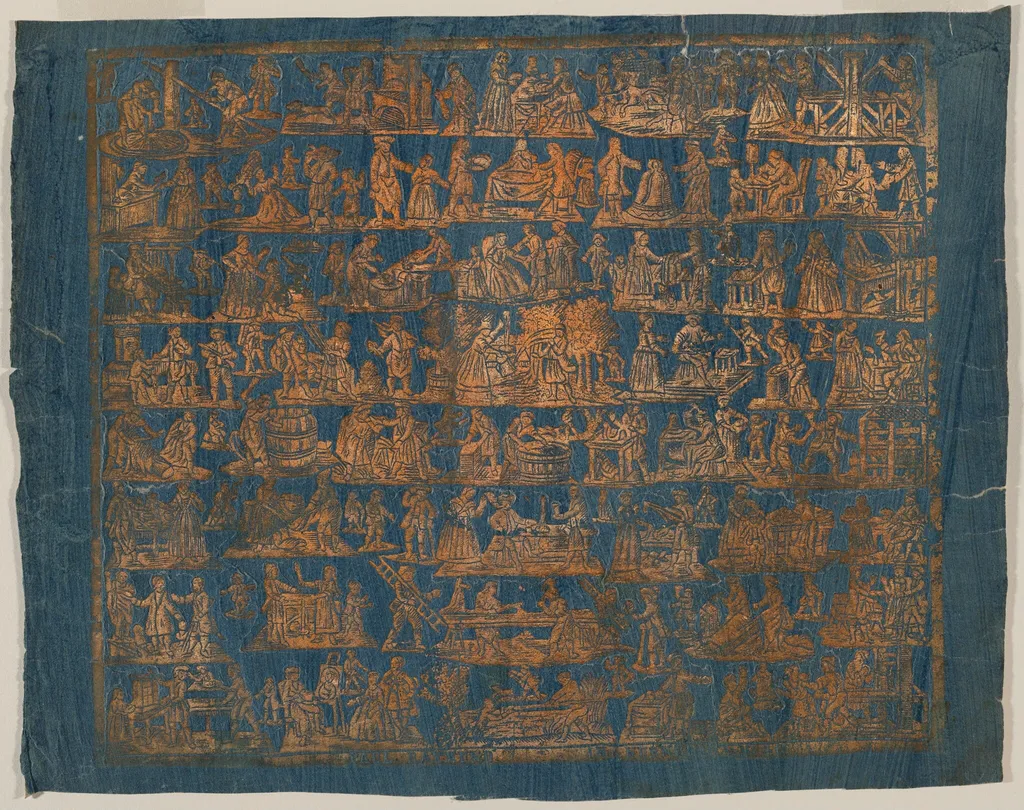
Endpaper with Scenes of the Trades is an ink print by the Romanticist artist Paul Reimund. It dates from 1790 and is held in the collection of the National Gallery of Art.
About this work
Overview
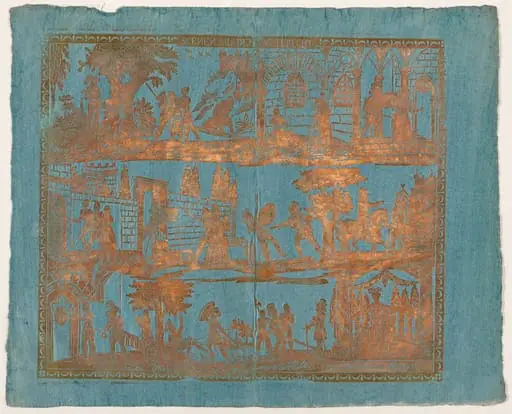
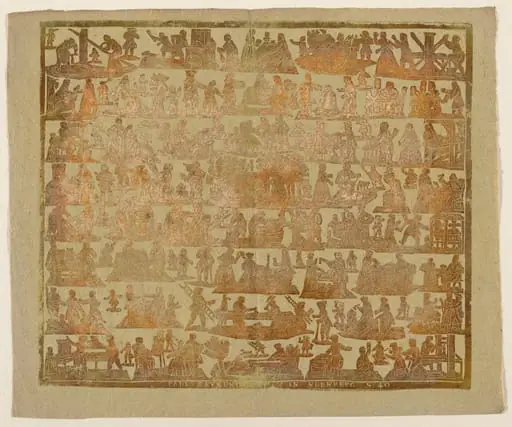
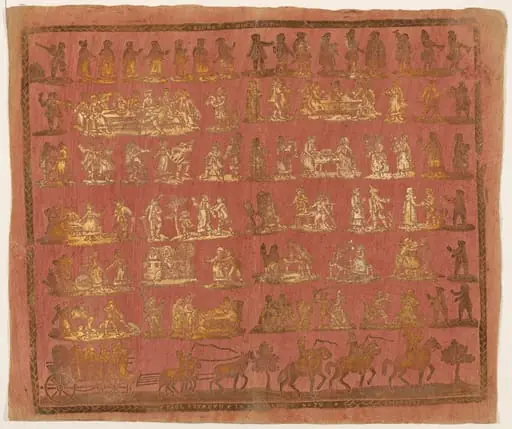
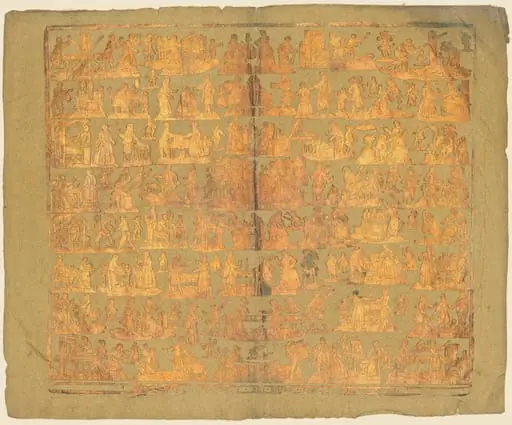
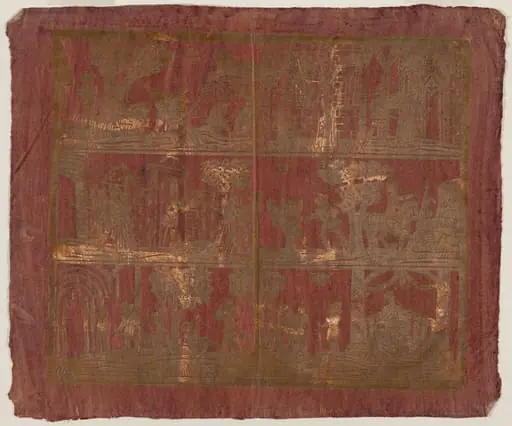
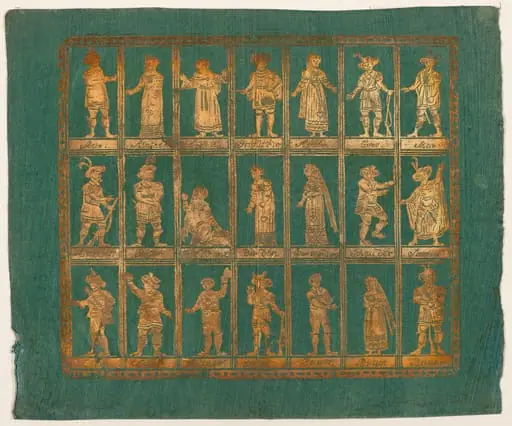
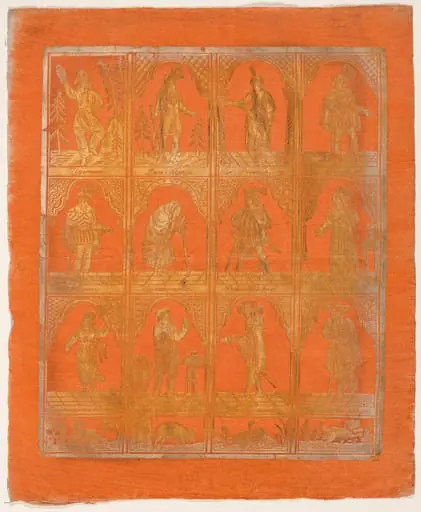
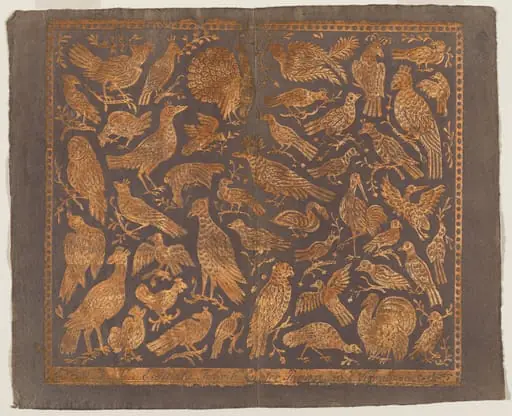
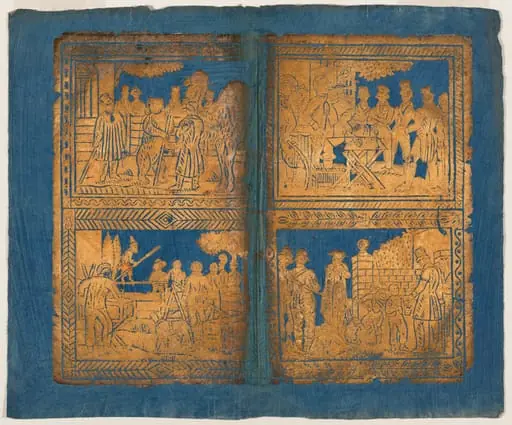
Paul Reimund’s 1790 woodcut, titled Endpaper with Scenes of the Trades, consists of a long, narrow strip of hand‑washed blue paper printed with gold metallic ink. The work functions as an endpaper, its compact format filled with a series of miniature vignettes that depict various occupations.
Subject & Meaning
Each small tableau presents a different trade—carpenters sawing timber, bakers shaping loaves, physicians attending to patients, among others. The juxtaposition of bustling and tranquil moments offers a panoramic view of everyday labor, emphasizing the diversity of work in late‑eighteenth‑century society.
Technique & Style
Reimund employed a woodcut process, carving each scene into a block that was then inked with gold metallic pigment. The metallic ink contrasts sharply with the muted blue of the paper, allowing fine details to emerge despite the work’s diminutive scale. A thin gold border frames each vignette, unifying the composition.
History & Provenance
Created in 1790, the piece reflects the period’s interest in documenting occupational life. The hand‑washed blue paper suggests a modest, possibly domestic origin, while the use of gold ink indicates a desire for visual richness within a functional book element.
Context
Endpapers of this type were often used in deluxe volumes to enhance the book’s aesthetic appeal. Reimund’s choice to depict trades aligns with Enlightenment‑era cataloguing of knowledge, presenting a visual encyclopedia of contemporary professions.
Legacy
The work remains a valuable example of late‑eighteenth‑century printmaking, illustrating both the technical possibilities of woodcut with metallic inks and the period’s cultural focus on the representation of everyday labor.
Artist & collection