Artwork
Endpaper with Three Bands of Courtly Scenes
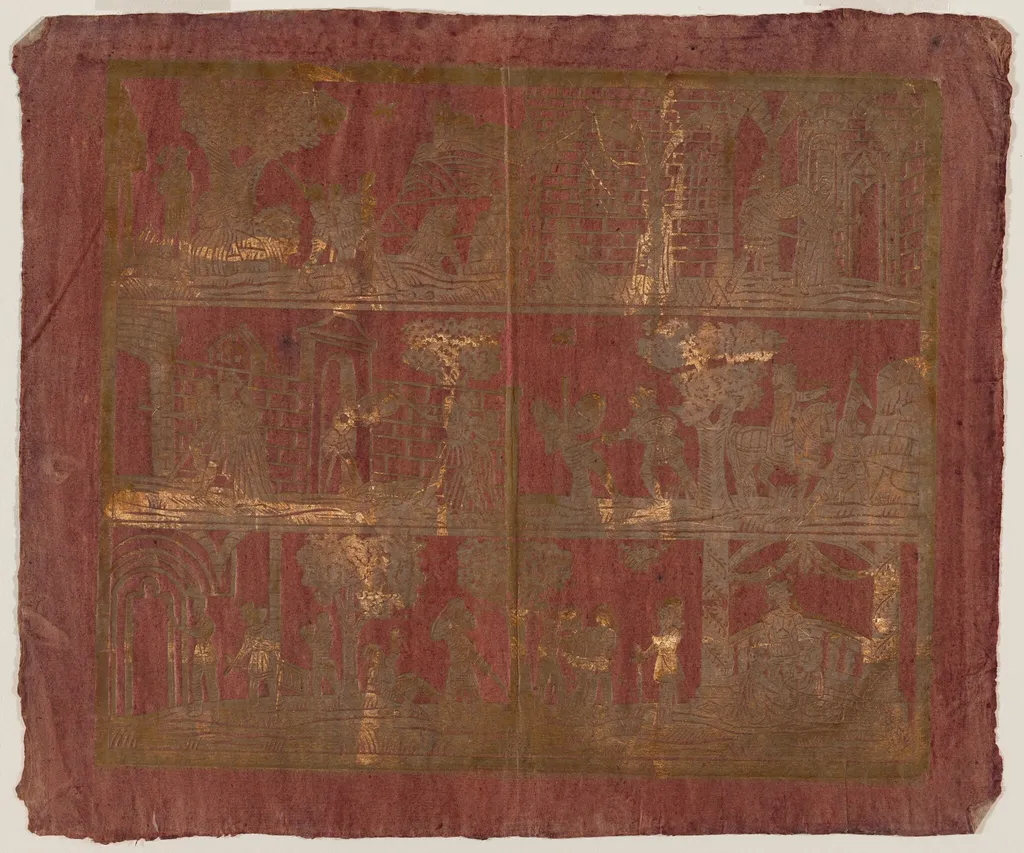
Endpaper with Three Bands of Courtly Scenes is an ink print by the Baroque artist German 18th Century. It dates from 1750 and is held in the collection of the National Gallery of Art.
About this work
Overview
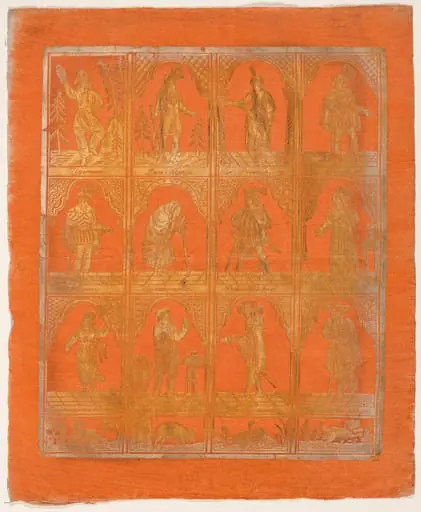
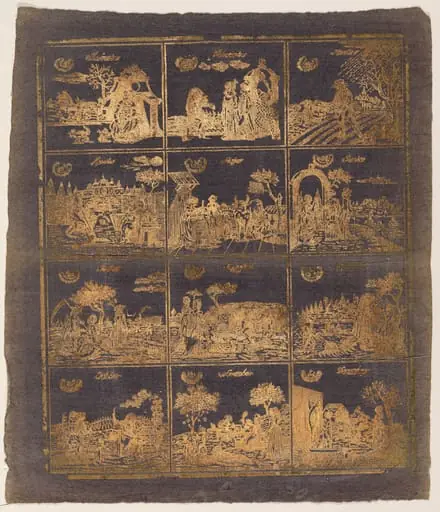
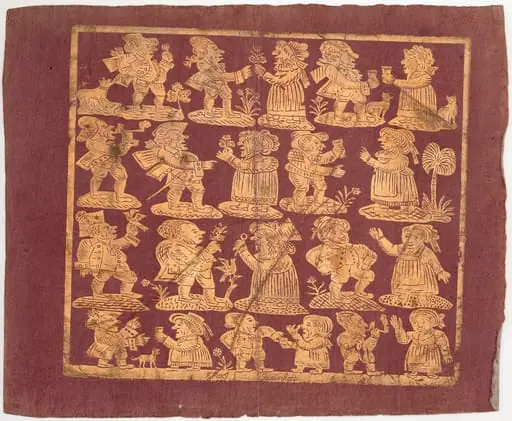
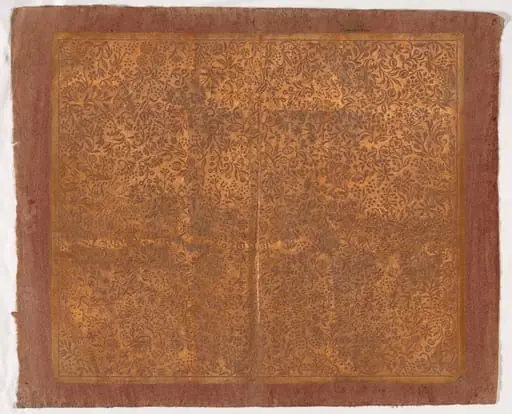
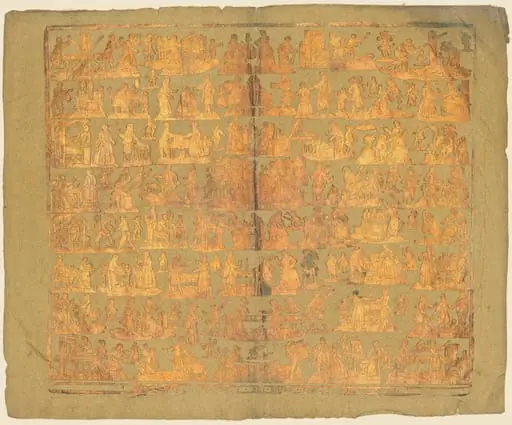
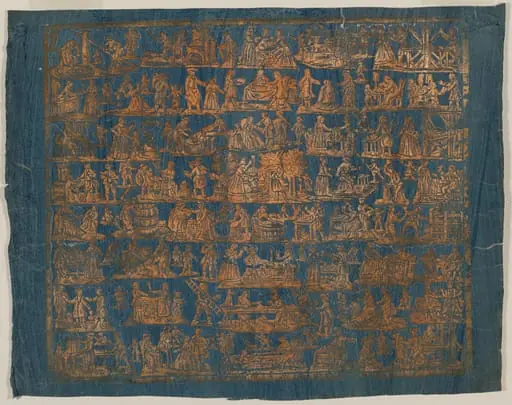
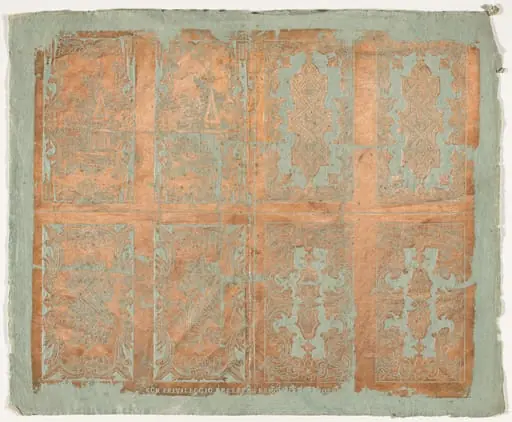
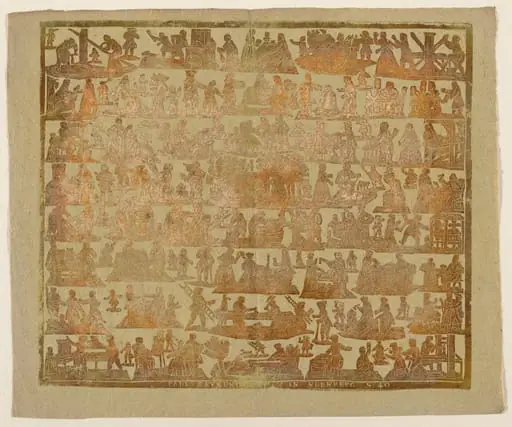
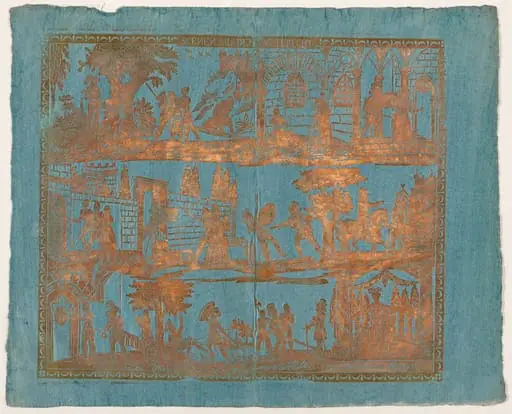
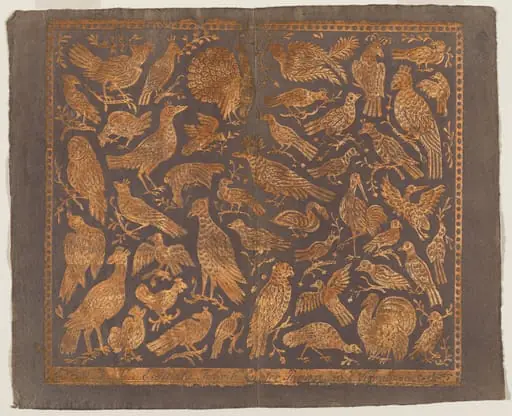
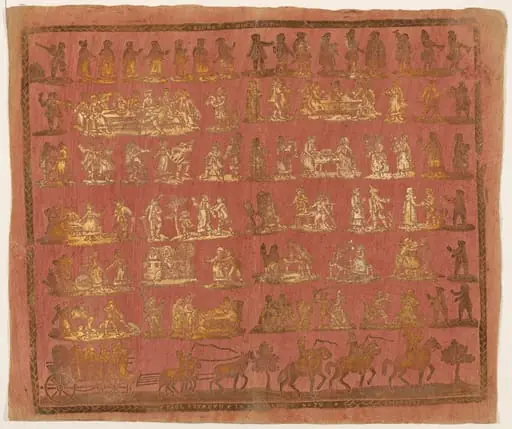
This printed endpaper features three horizontal bands of courtly scenes executed in woodcut technique using gold metallic ink on rose-colored paper.
This printed endpaper features three horizontal bands of courtly scenes executed in woodcut technique using gold metallic ink on rose-colored paper. The design is compact and decorative, intended for bookbinding rather than standalone display. The gold pigment, though faded, retains a luminous contrast against the deep red substrate, emphasizing the intricate yet stylized figures arranged in orderly rows.
Subject & Meaning
The scenes depict aristocratic life across three registers: equestrian processions in the upper band, architectural gatherings beneath arches in the center, and leisurely figures beneath trees below. These vignettes suggest courtly rituals—hunting, strolling, or social assembly—but lack narrative progression. Their purpose was ornamental, evoking refinement and status rather than telling a specific story.
Technique & Style
Crafted via woodcut, the image relies on bold, linear carving to define figures and structures. The figures appear rigid and flattened, typical of early printmaking conventions where detail was sacrificed for reproducibility. Gold ink, applied by hand over washed paper, enhances visual richness without modeling volume, reinforcing a decorative, two-dimensional aesthetic common in manuscript embellishment.
History & Provenance
Produced likely in late medieval or early Renaissance Europe, such endpapers were used to line the inside covers of luxury books or codices. The use of gold ink and hand-washed paper indicates commission by a wealthy patron or institution. Few examples survive intact, as these elements were often discarded or damaged during rebinding or use.
Context
This piece reflects a broader tradition of using printed ornamentation in book arts, where woodcuts served both functional and symbolic roles. Gold ink, expensive and labor-intensive, signaled prestige. Similar decorative bands appear in liturgical texts and noble libraries, linking this object to the material culture of elite literacy and devotional practice.
Legacy
Though not widely studied as fine art, such endpapers illustrate the intersection of print technology and manuscript aesthetics. They preserve evidence of pre-industrial craftsmanship and the value placed on subtle, repetitive ornament in early book design. Their survival offers insight into how visual culture was embedded in everyday scholarly and religious objects.
Artist & collection
Artist
This artist kept meticulous endpapers—like secret notebooks—filled with tiny gold figures standing in a row.