Artwork
Willow and Waterfall
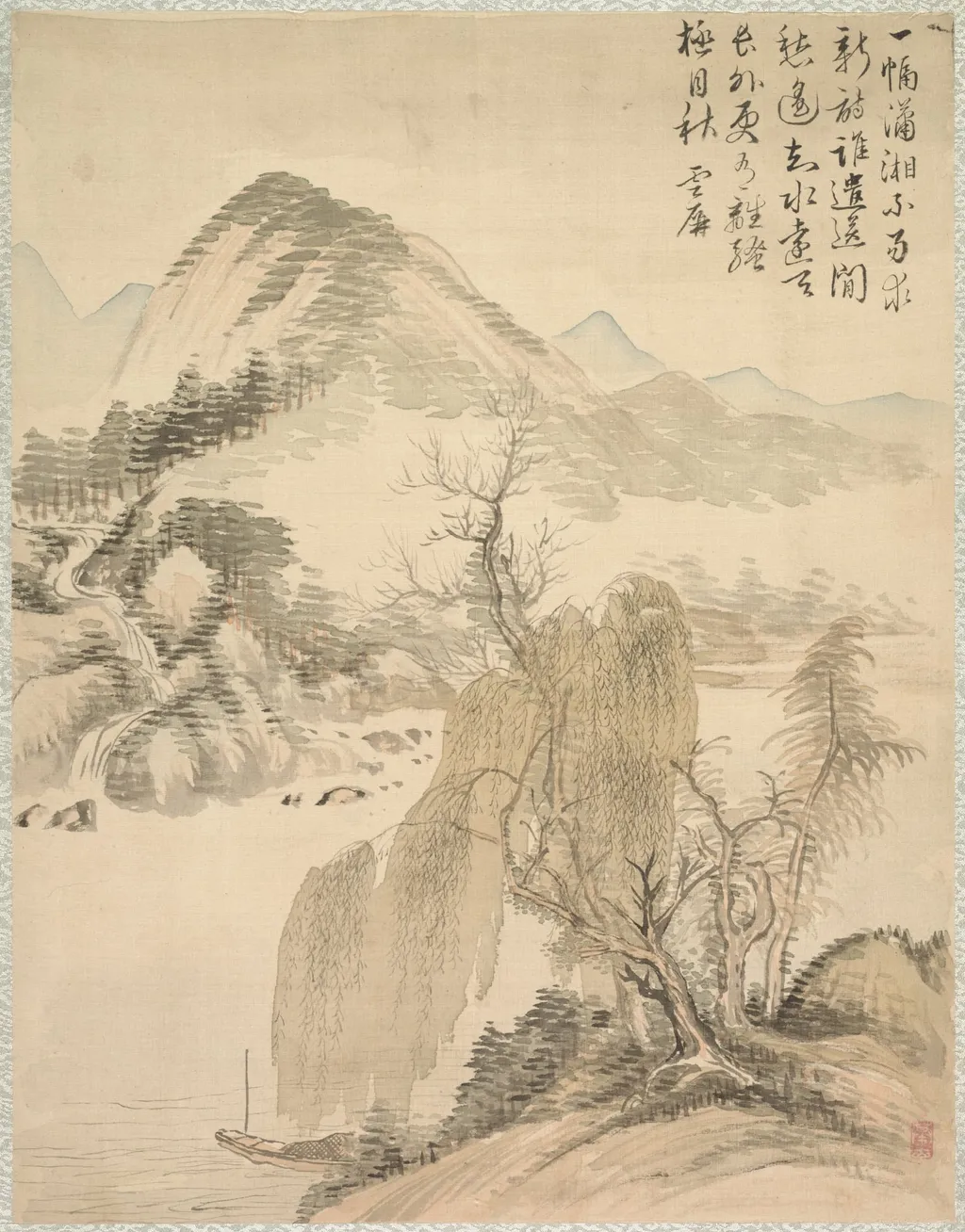
Willow and Waterfall is a work on paper by the Romanticist artist Tsubaki Chinzan. It dates from 1847 and is held in the collection of the Cleveland Museum of Art.
About this work
If you like this, look up *subject: japan, edo period (1615–1868)* to see more landscapes from the same time.
A thin waterfall spills over dark rocks while a willow tree bends beside it. The scene is quiet, with soft ink lines and pale washes of color.
Chinzan didn’t paint this from life. He copied it from a Chinese artist named Zhai Dakun, who worked a generation earlier. The album this painting comes from is full of these careful copies—each one a study, not an original.
If you like this, look up *subject: japan, edo period (1615–1868)* to see more landscapes from the same time.
Overview
This work is one of twelve landscape studies in a portfolio by Japanese artist Tsubaki Chinzan, created during the Edo period. Rather than depicting observed scenery, each piece reinterprets compositions originally made by the Chinese painter Zhai Dakun. Chinzan meticulously replicated not only the imagery but also the inscriptions, treating the album as a disciplined exercise in stylistic emulation rather than original creation.
Subject & Meaning
The scene depicts a slender waterfall cascading over dark, angular rocks, with a slender willow tree bending gently beside it. The composition conveys stillness and quietude, reflecting traditional East Asian ideals of harmony between nature and contemplative observation. The subject matter is not an invention but a deliberate revival of Zhai Dakun’s earlier aesthetic, emphasizing reverence for inherited artistic models.
Technique & Style
Chinzan employed soft ink washes and delicate, restrained brushwork to evoke atmospheric depth without bold contrast. The forms are defined by subtle gradations rather than sharp outlines, aligning with literati painting conventions. His technique mirrors Zhai’s approach, prioritizing tonal nuance and spatial ambiguity over detailed realism, reinforcing the album’s role as a study in inherited brush traditions.
History & Provenance
The portfolio was compiled in Japan during the late 18th or early 19th century, a time when Japanese artists increasingly engaged with Chinese literati models through printed albums and imported works. Zhai Dakun’s paintings, though little known in Japan, circulated in copies and were studied by artists like Chinzan. This album survives as evidence of cross-regional artistic transmission within East Asia’s scholarly painting circles.
Context
During the Edo period, Japanese artists often engaged with Chinese painting traditions as part of scholarly cultivation. Copying the work of earlier masters was not seen as derivative but as a path to mastery. Chinzan’s album reflects this pedagogical practice, situating him within a broader network of East Asian literati who valued continuity, textual fidelity, and ancestral technique over individual innovation.
Legacy
Chinzan’s portfolio contributes to the historical record of how Japanese artists absorbed and transmitted Chinese artistic models. While not widely exhibited today, such albums remain important for understanding the transmission of literati aesthetics across borders. They illustrate how artistic identity in Edo-period Japan was often shaped through careful engagement with foreign precedents rather than through radical originality.
Own this work as a print
Artist & collection

Artist
Tsubaki Chinzan, originally Tasuku was a Japanese painter in the nanga style. His other art names include Hekiin Sambō, Kyūan (休庵), Shikyūan (四休庵) and Takukadō (琢華堂).

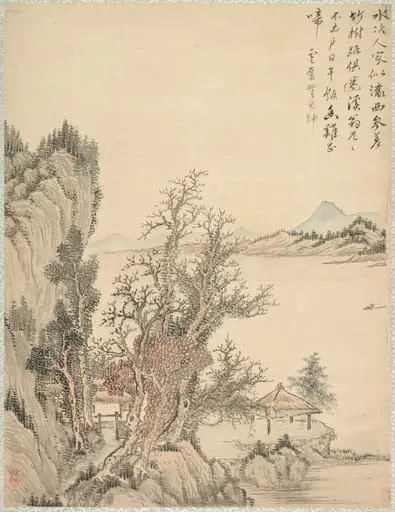 Dwelling by the Shore
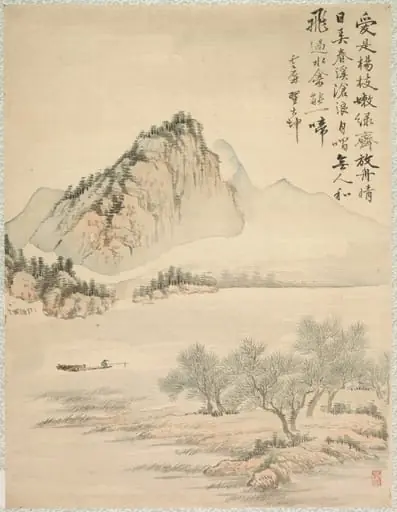 Drifting in a Boat
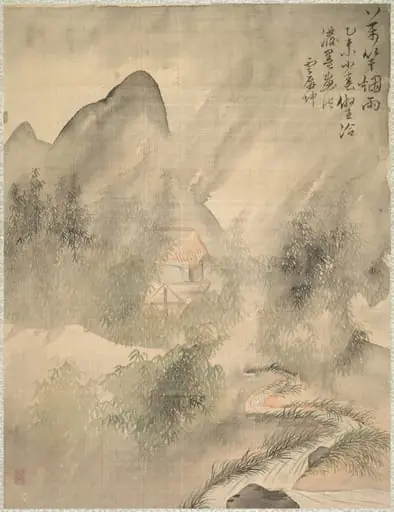 Ten Thousand Bamboos in the Mist and Rain
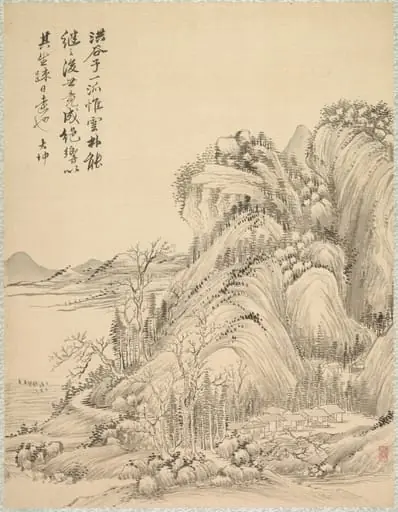 Dwellings beneath Folded Hills
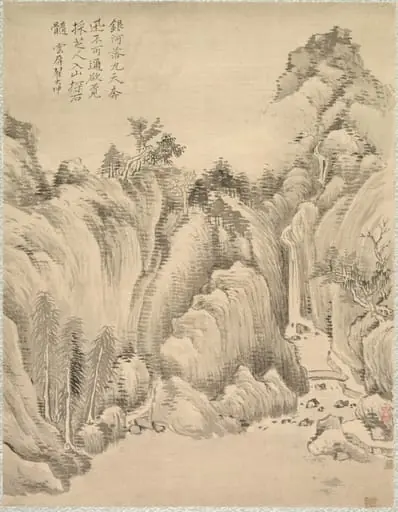 Waterfall and Rocks
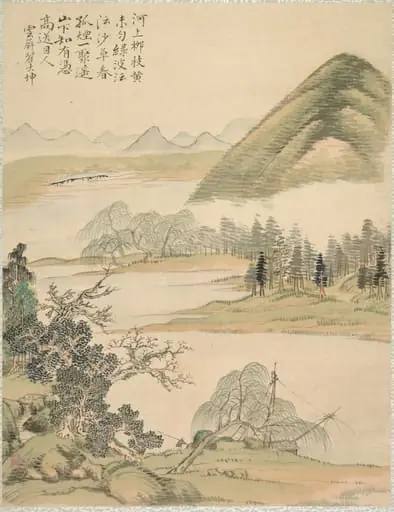 Willow Branches in Spring
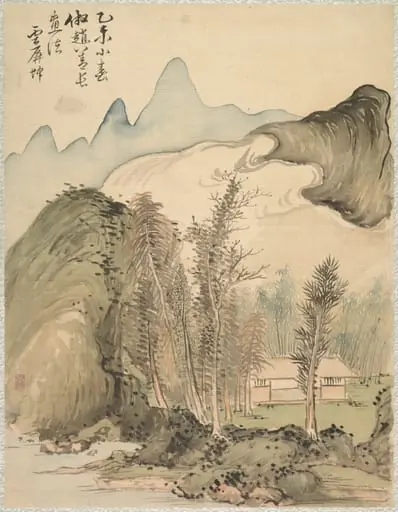 Hut Amidst the Trees
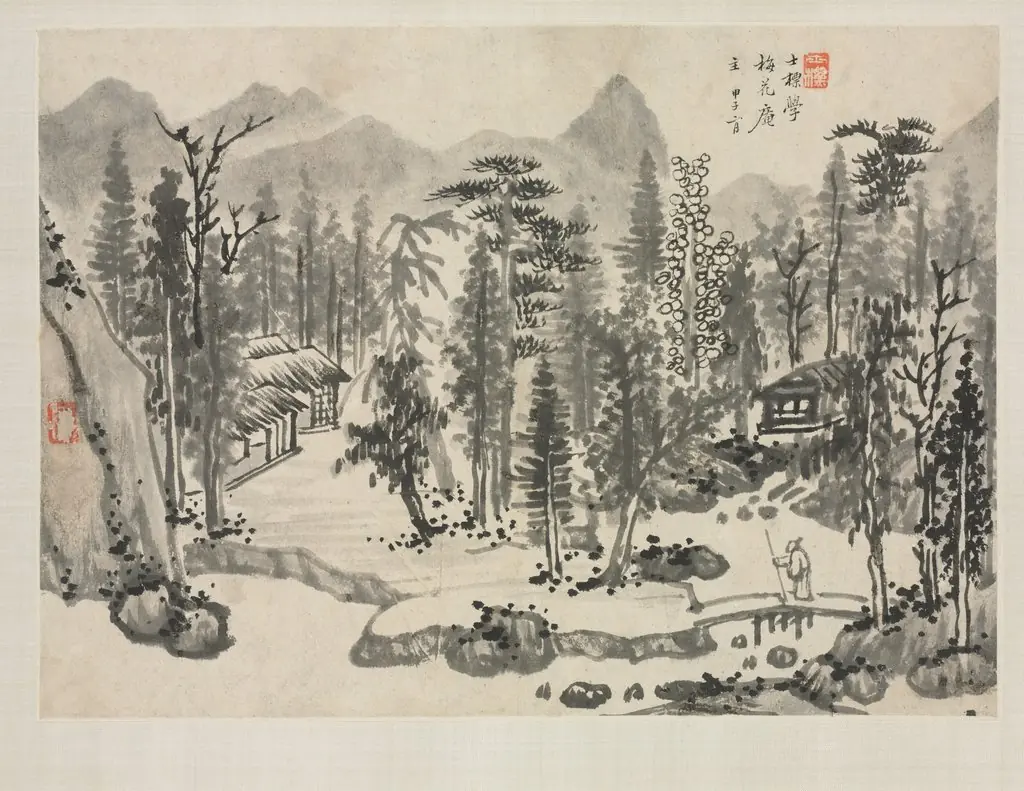 Landscape Album in Various Styles: Landscape after Wu Zhen
 Landscape Album in Various Styles: Landscape after Wu Zhen
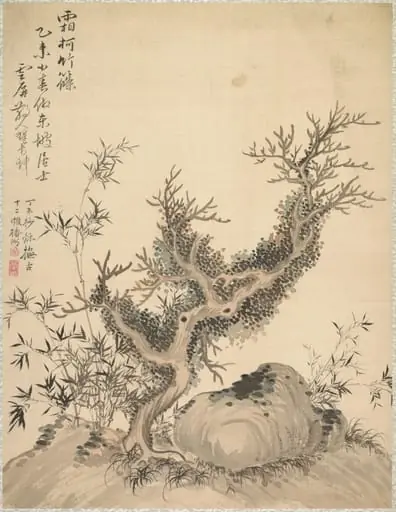 Frosted Branches and Dwarf Bamboo