Artwork
Crucifixion
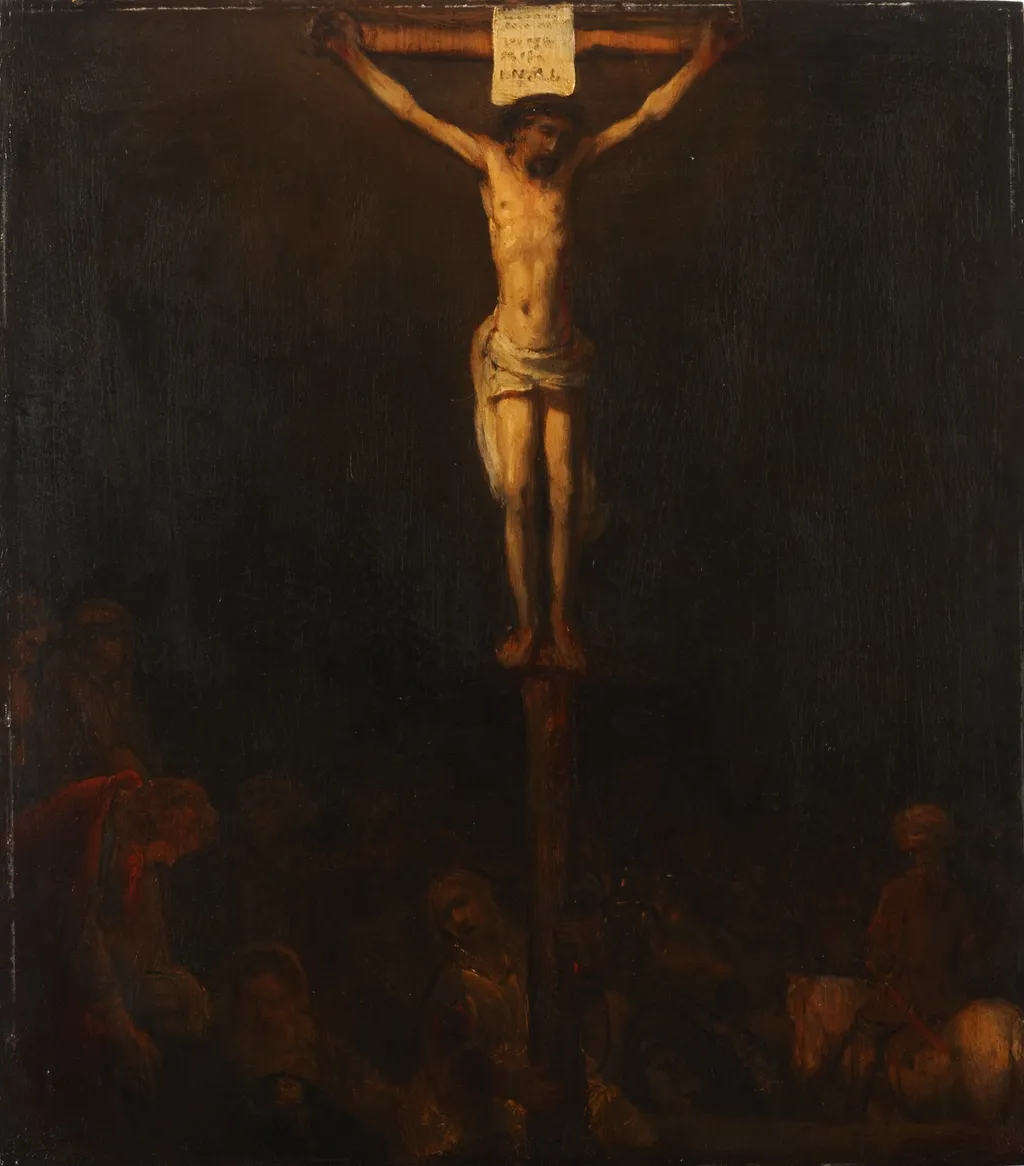
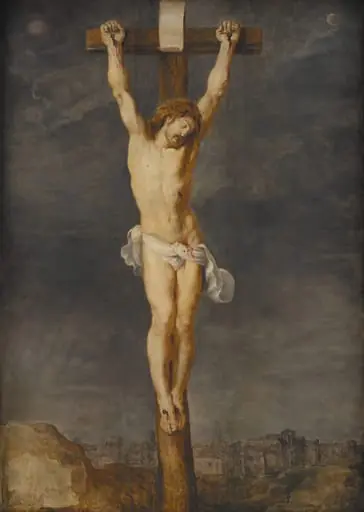
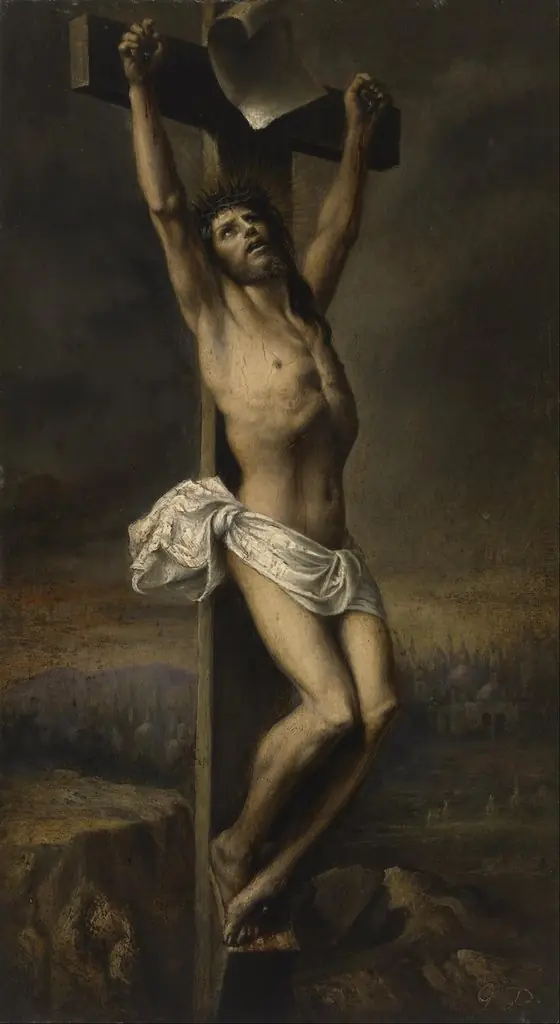
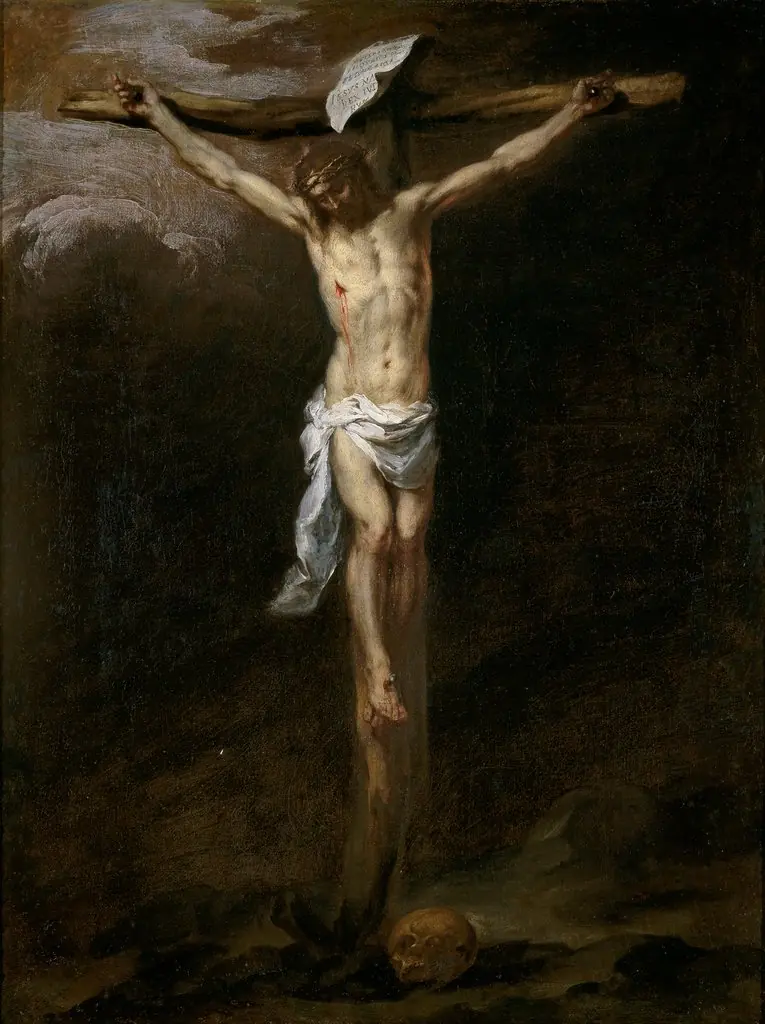
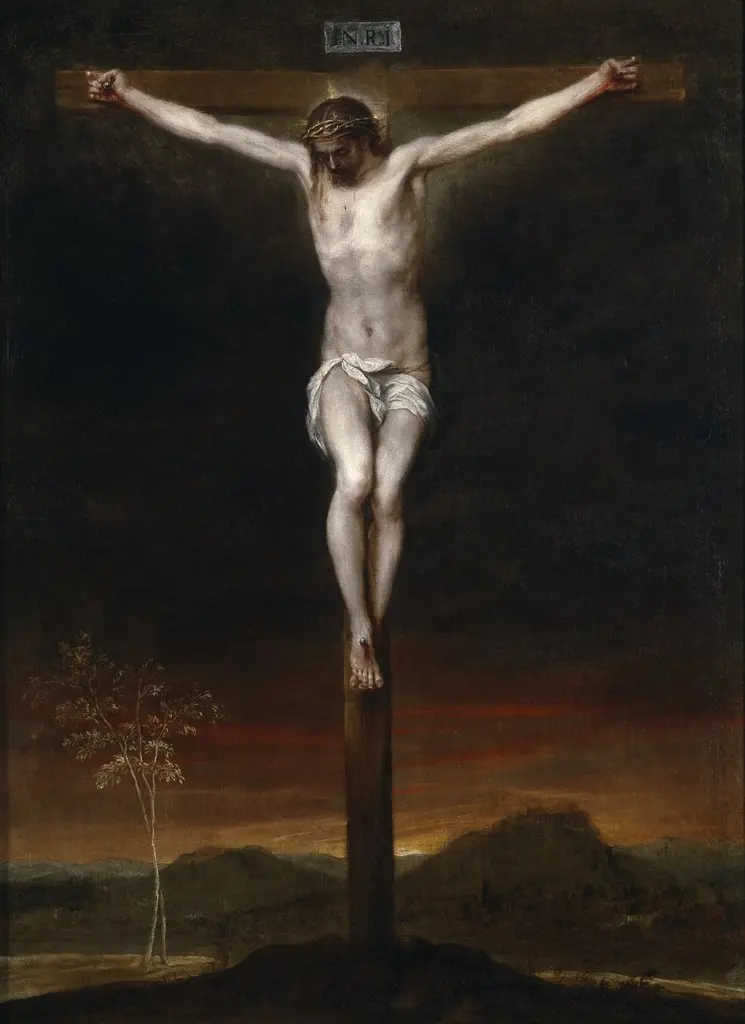
Crucifixion is an oil painting by the Dutch Golden Age artist Rembrandt. It dates from 1657 and is held in the collection of the Clark Art Institute.
About this work
Overview
Painted in 1657, this oil work by Rembrandt van Rijn captures the moment of Christ’s crucifixion with restrained intensity.
Painted in 1657, this oil work by Rembrandt van Rijn captures the moment of Christ’s crucifixion with restrained intensity. Unlike many contemporary depictions, it omits dramatic spectacle, focusing instead on solitude and stillness. The painting belongs to Rembrandt’s mature period, when his style grew more introspective and materially layered. It resides today in the Clark Art Institute’s permanent collection.
Subject & Meaning
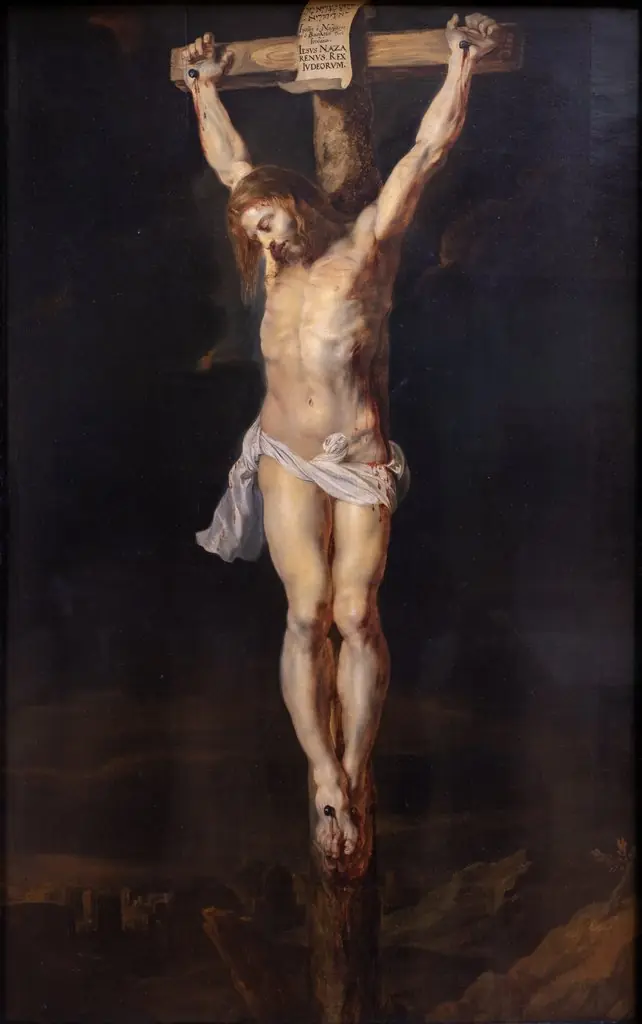
The scene presents Christ alone on the cross, his body rendered with quiet vulnerability rather than heroic grandeur. No angels, mourners, or symbolic elements crowd the composition. The minimal presence of distant observers underscores isolation, inviting contemplation of suffering stripped of ritual. The absence of overt divinity emphasizes human endurance, aligning with Rembrandt’s interest in inner spiritual experience over doctrinal display.
Technique & Style
Rembrandt employs chiaroscuro to isolate the figure, using thin glazes and thick impasto to model flesh under dim, directional light. The dark, near-abstract background absorbs all but the body’s contours, heightening emotional focus. Brushwork varies from fine detailing around the face to broad, almost sketchlike strokes in the lower regions, suggesting both immediacy and physical weight. The effect is tactile, not theatrical.
History & Provenance
Commissioned during Rembrandt’s financially strained years, the painting remained in private hands until the 20th century. It entered the Clark Art Institute’s collection in 1955 through the bequest of Sterling and Francine Clark. Its provenance includes documented ownership by Dutch collectors and later European dealers, though its early exhibition history is sparse, reflecting its quiet reception in its time.
Context
Created amid the Dutch Republic’s religious pluralism, the work diverges from the ornate altarpieces of Catholic Europe. Rembrandt’s approach reflects Protestant emphasis on personal devotion and scriptural intimacy. While other artists emphasized spectacle, he turned inward, using light and shadow to evoke psychological presence rather than doctrinal certainty — a shift characteristic of his later religious works.
Legacy
Though not widely exhibited in its early decades, the painting gained recognition in the 20th century for its emotional austerity and technical innovation. It influenced later artists drawn to psychological realism and the expressive potential of darkness. Today, it stands as a quiet testament to Rembrandt’s ability to convey profound humanity through minimal means, far from the grand narratives of his contemporaries.
Own this work as a print
Artist & collection
Artist
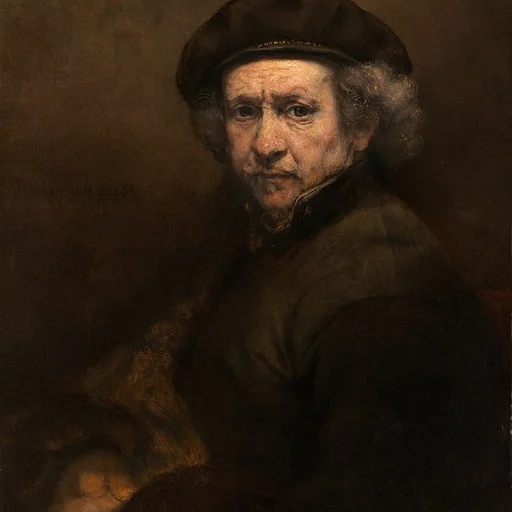
Rembrandt Harmenszoon van Rijn (15 July 1606 – 4 October 1669), known mononymously as Rembrandt, was a Dutch Golden Age painter, printmaker, and draughtsman.