Artwork
Descent from the Cross
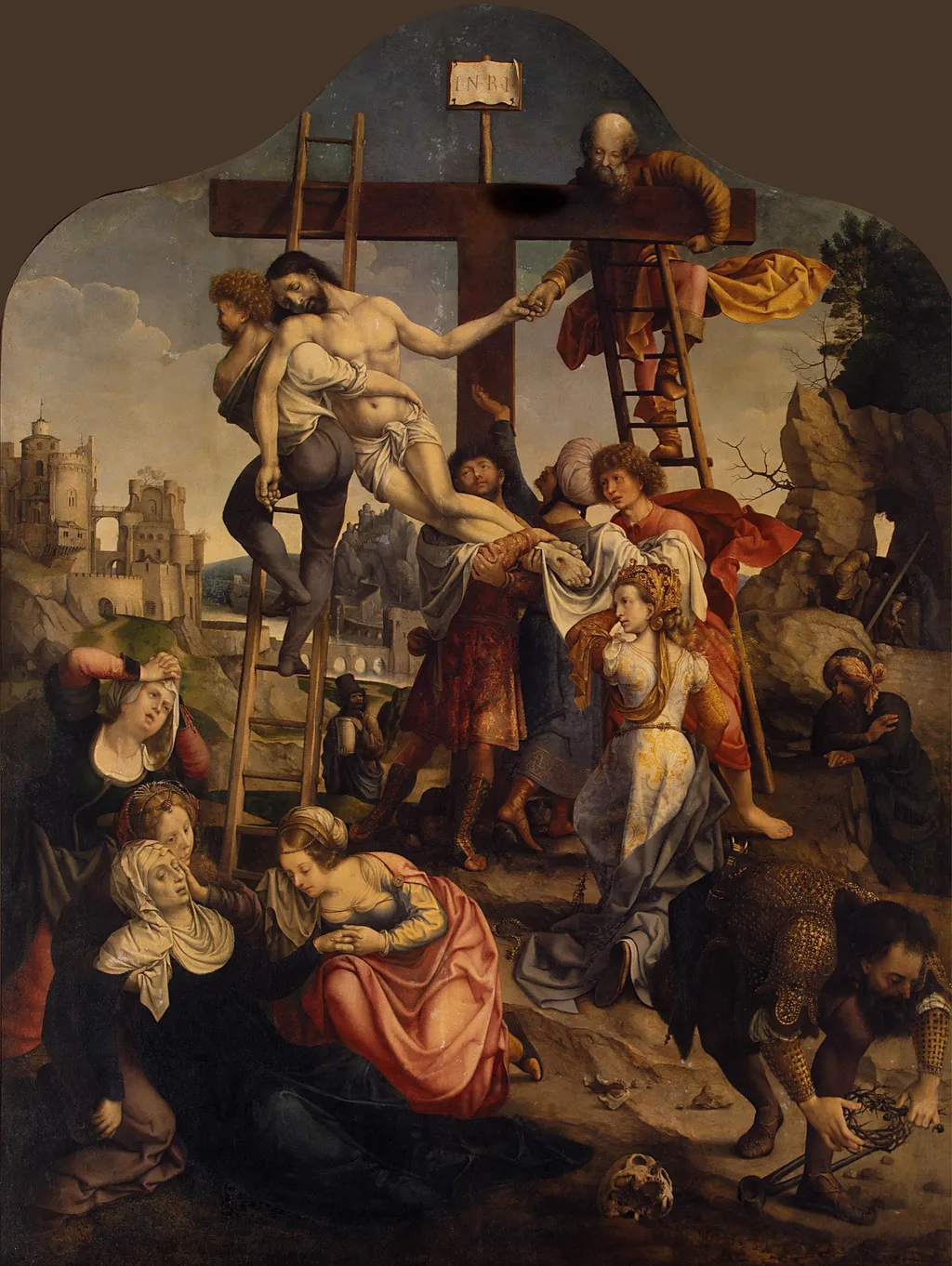
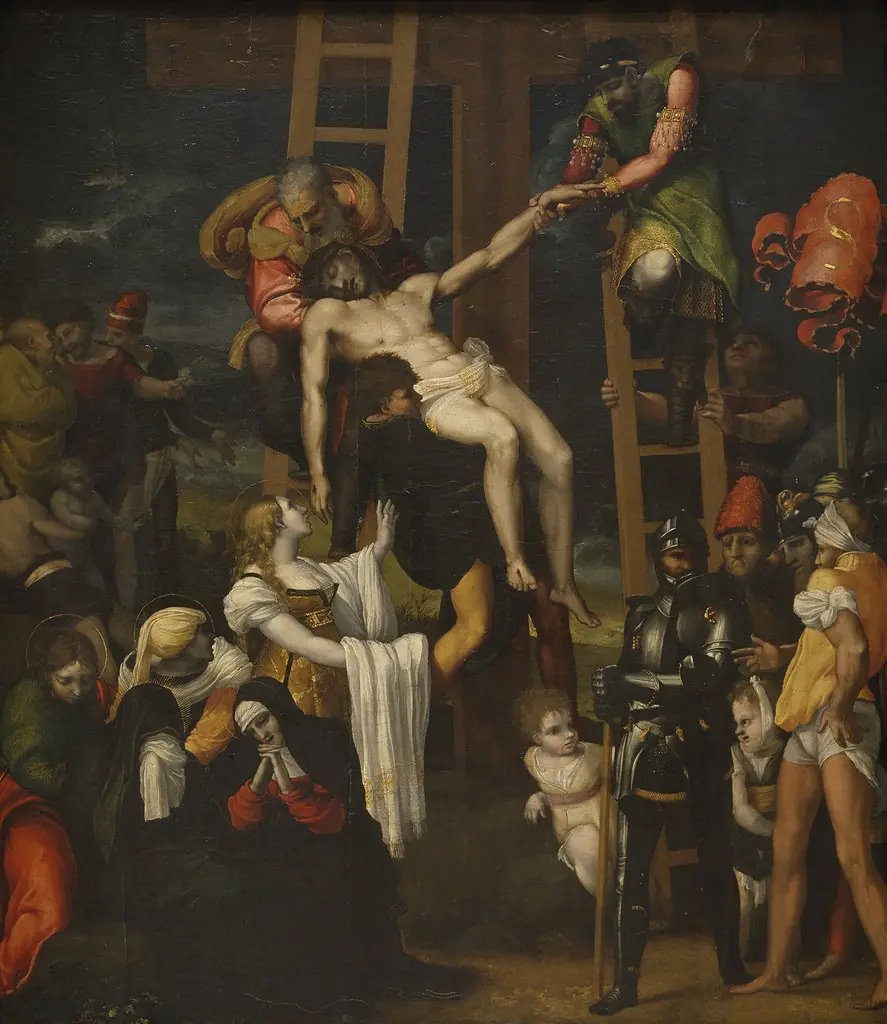
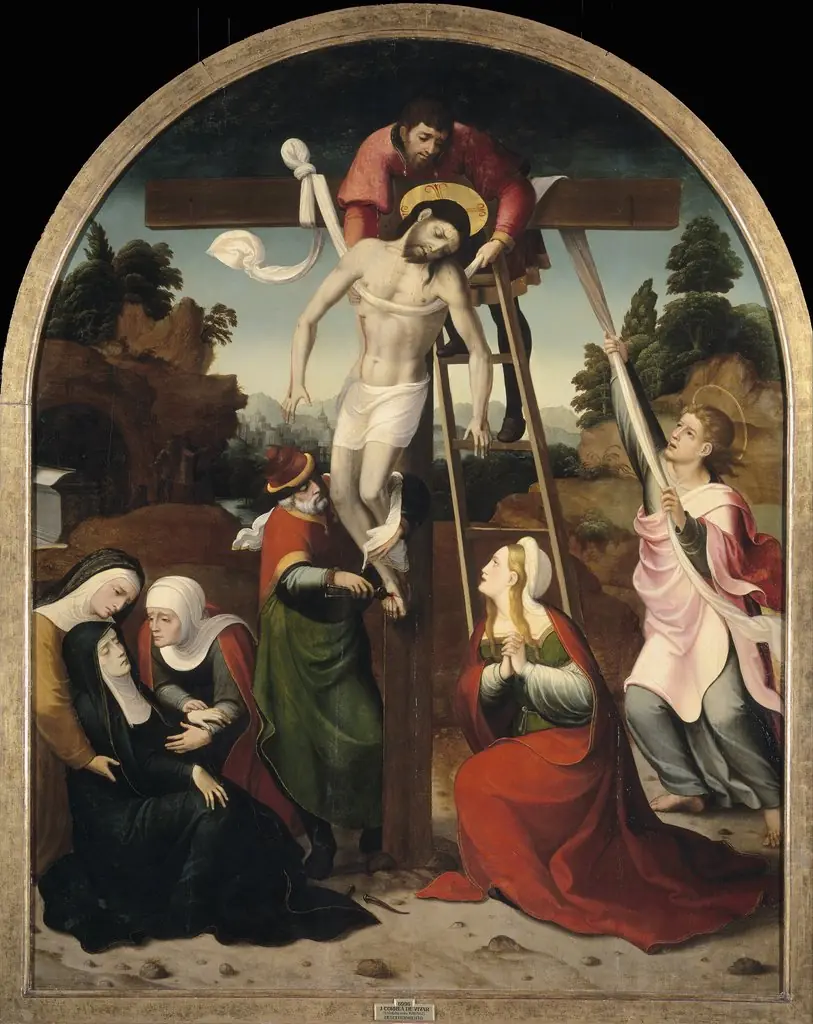
Descent from the Cross is an oil painting by the Northern Renaissance artist Jan Gossaert. It dates from 1520 and is held in the collection of the Hermitage Museum.
About this work
Overview
Jan Gossaert, also known as Jan Mabuse, painted the *Descent from the Cross* in 1520. Executed in oil on panel, the work belongs to the Northern Renaissance and is now part of the State Hermitage Museum’s collection.
Subject & Meaning
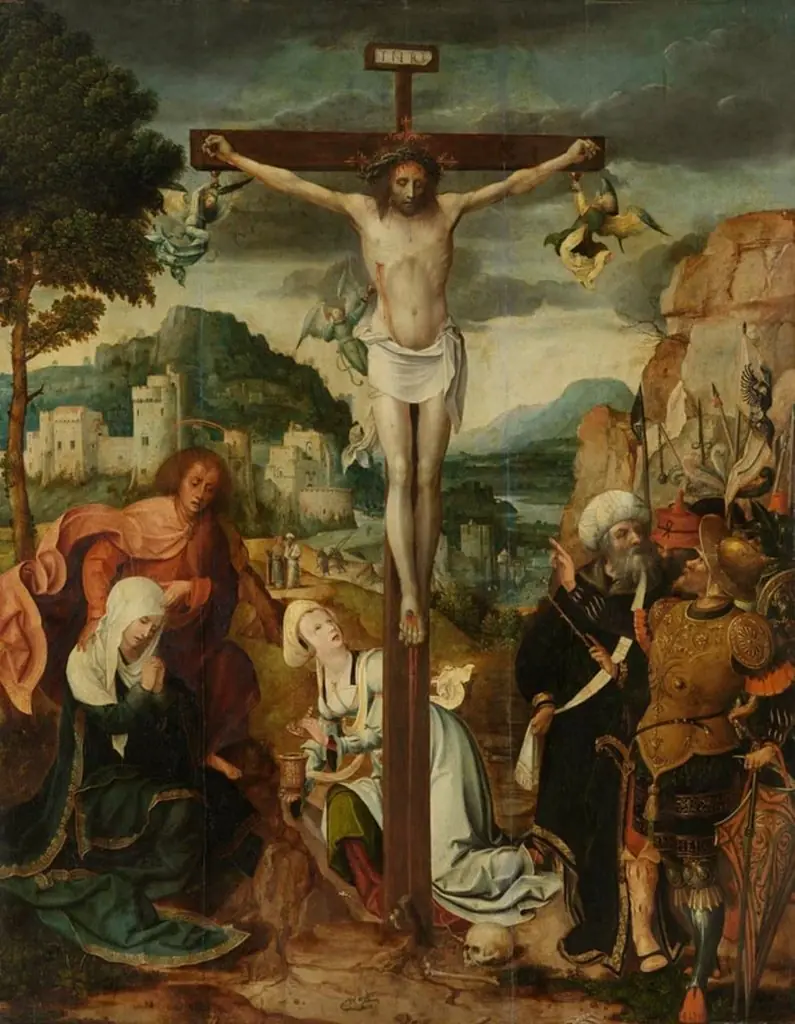
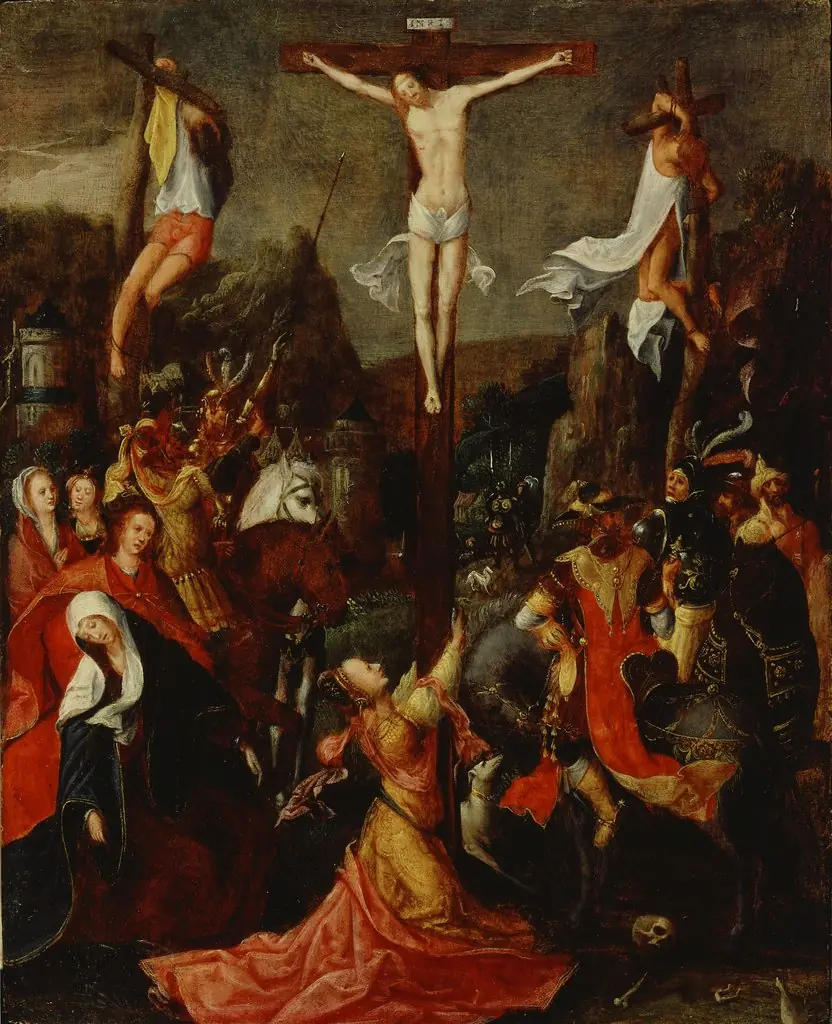
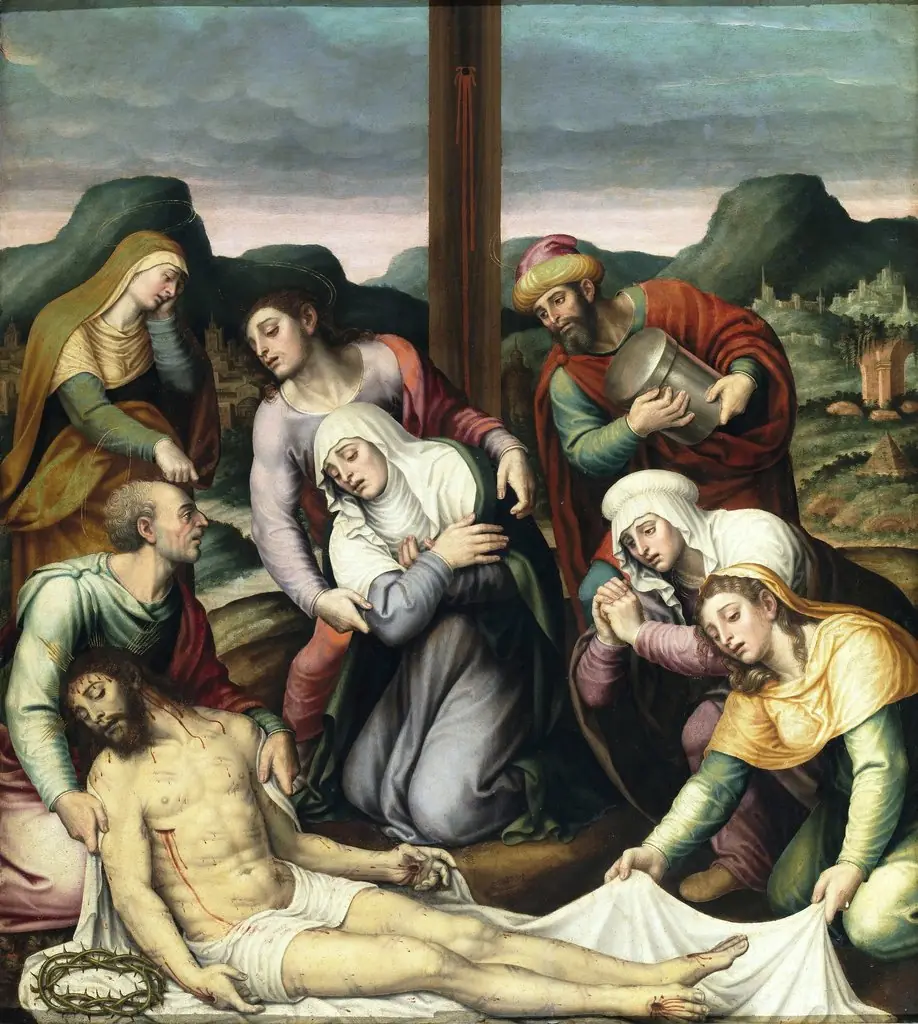
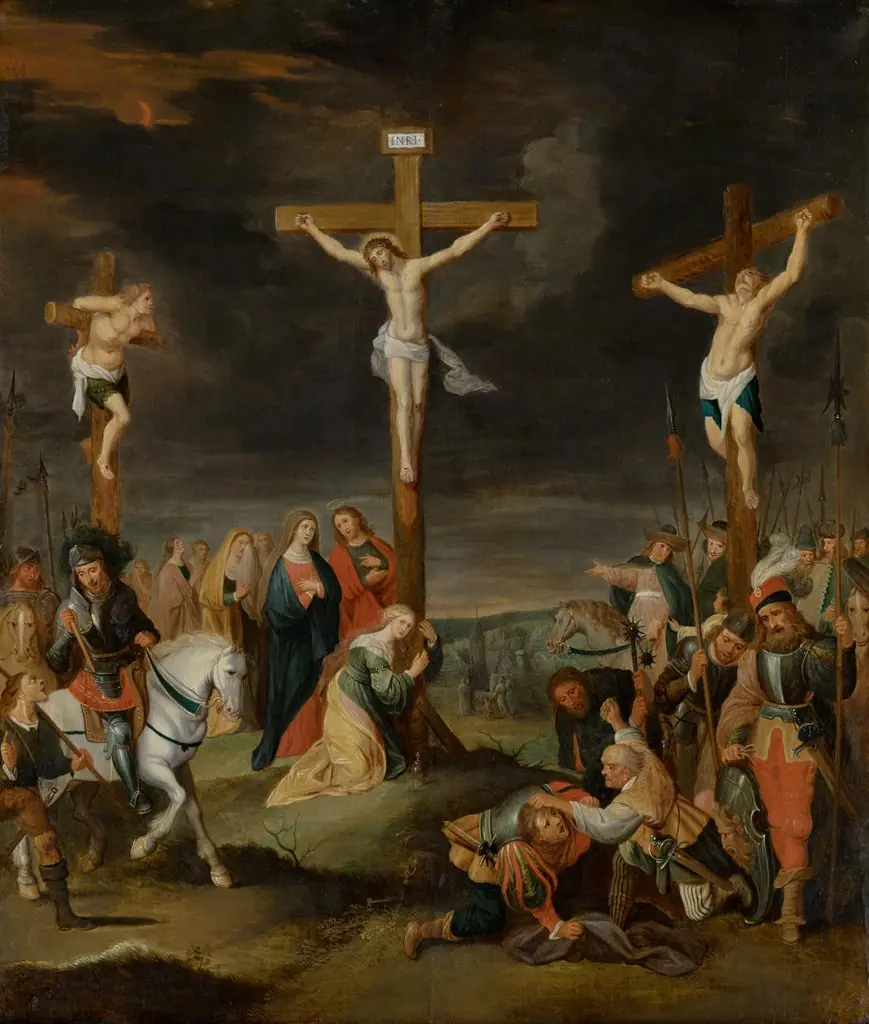
The composition portrays the biblical moment when Christ’s body is being lowered from the cross. A central, unclothed figure is supported by two attendants, while a group of mourners in contemporary dress watches, their expressions conveying sorrow and reverence.
Technique & Style
Gossaert employs a pronounced chiaroscuro, allowing light to illuminate faces and drapery while deeper shadows model the forms. The handling of oil creates a sense of volume and spatial depth, reflecting the artist’s assimilation of Italian Renaissance modeling within a Northern visual language.
History & Provenance
After completing the painting, Gossaert, who had traveled to Rome in 1508‑09 and absorbed Italian artistic practices, incorporated those influences into his work. The canvas entered the State Hermitage Museum’s holdings, where it remains on display.
Context
The piece exemplifies the Romanist movement, a Northern European trend that merged Italian stylistic elements—such as balanced composition and naturalistic anatomy—with local traditions. Gossaert’s *Descent* illustrates this cross‑cultural synthesis during the early sixteenth century.
Artist & collection
Artist
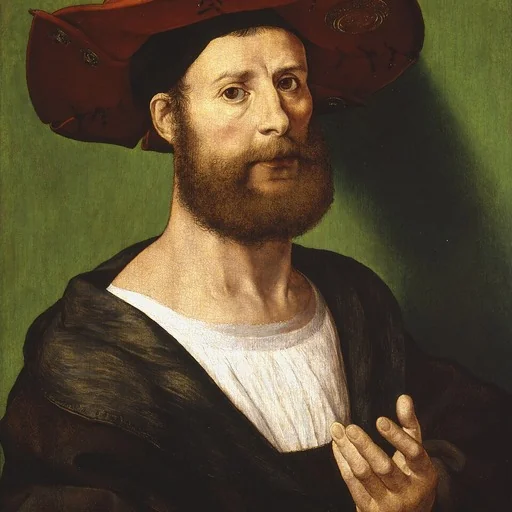
Jan Gossaert (c. 1478 – 1 October 1532) was a French-speaking painter from the Low Countries also known as Jan Mabuse (the name he adopted from his birthplace, Maubeuge) or Jennyn van Hennegouwe (Hainaut), as he called…