Artwork
Batjocorirea lui Christos
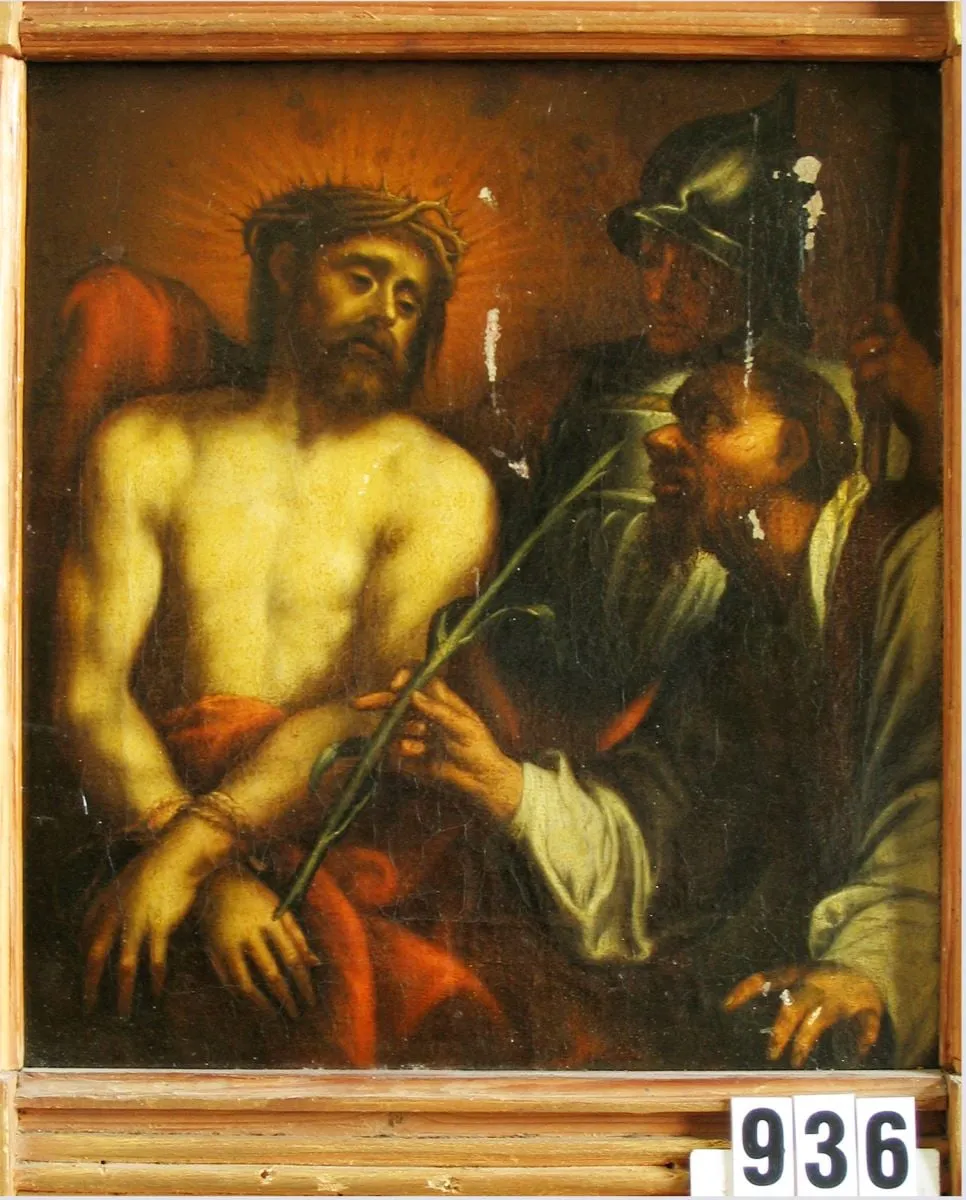
Batjocorirea lui Christos is a print by the Baroque artist Harmensz van Rijn Rembrandt. It is held in the collection of the Brukenthal National Museum. This work portrays a solitary figure bound and crowned with thorns, seated in quiet resignation.
About this work
Overview
The composition relies on strong contrasts of light and shadow to heighten emotional weight without overt narrative detail.
This work portrays a solitary figure bound and crowned with thorns, seated in quiet resignation. A second figure in green, holding a staff, interacts with him, suggesting an act of mockery or interrogation. The dark background and focused illumination emphasize the central figure, isolating him in a moment of stillness. The composition relies on strong contrasts of light and shadow to heighten emotional weight without overt narrative detail.
Subject & Meaning
The central figure, identified by the crown of thorns and bound hands, evokes Christ in his Passion. The presence of the figure in green, using a staff to touch his face, implies a moment of humiliation, possibly referencing the mocking by Roman soldiers or a guard. The absence of other figures and the dim setting strip the scene of spectacle, focusing instead on inner suffering and silent endurance.
Technique & Style
The artist employs chiaroscuro to model the figure’s form, creating volume and depth through sharp transitions between light and shadow. The halo of light around the head contrasts with the surrounding darkness, drawing attention without embellishment. The restrained palette and minimal background reinforce the painting’s introspective tone, prioritizing emotional resonance over decorative detail.
History & Provenance
The painting’s origin and creator remain undocumented in available records. Its title, 'Batjocorirea lui Christos,' suggests Romanian linguistic roots, possibly indicating regional devotional practice or local artistic tradition. No known exhibition history or collector lineage has been established, leaving its creation context and early reception largely untraced.
Context
This image aligns with Eastern European religious iconography that emphasizes Christ’s suffering as a subject of personal meditation. Unlike Western Baroque depictions of dramatic martyrdom, this work avoids theatricality, favoring quiet intensity. Its simplicity may reflect devotional practices in rural or lesser-documented communities where emotional immediacy outweighed formal grandeur.
Legacy
The painting contributes to a quiet tradition of Passion imagery that values contemplation over spectacle. Though not widely known or reproduced, its restrained approach offers a counterpoint to more elaborate religious art. Its survival suggests a local or private devotional function, preserving a mode of spiritual representation that prioritizes introspection over public display.
Artist & collection
Artist
Dutch Golden Age printmaker and painter Rembrandt captured faces and moments in ink and oil.

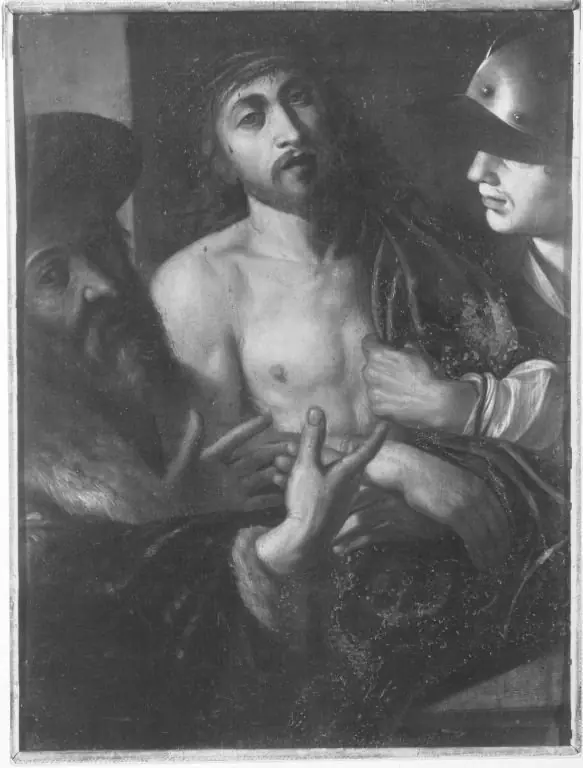 Ecce homo
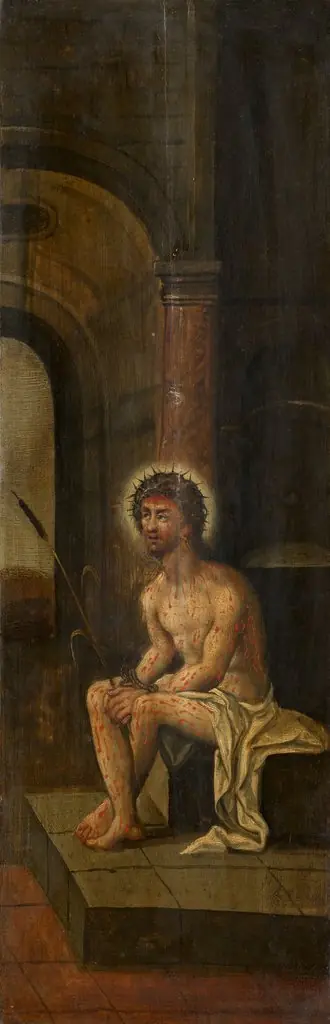 Christ Sitting on the cold Stone
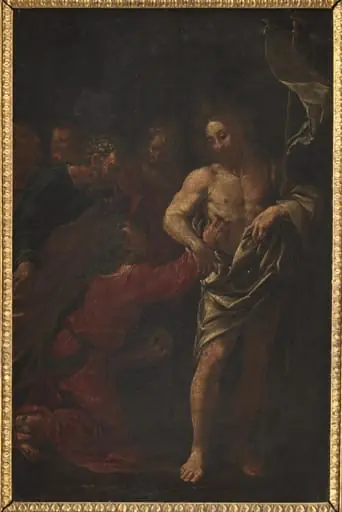 The Incredulity of Saint Thomas
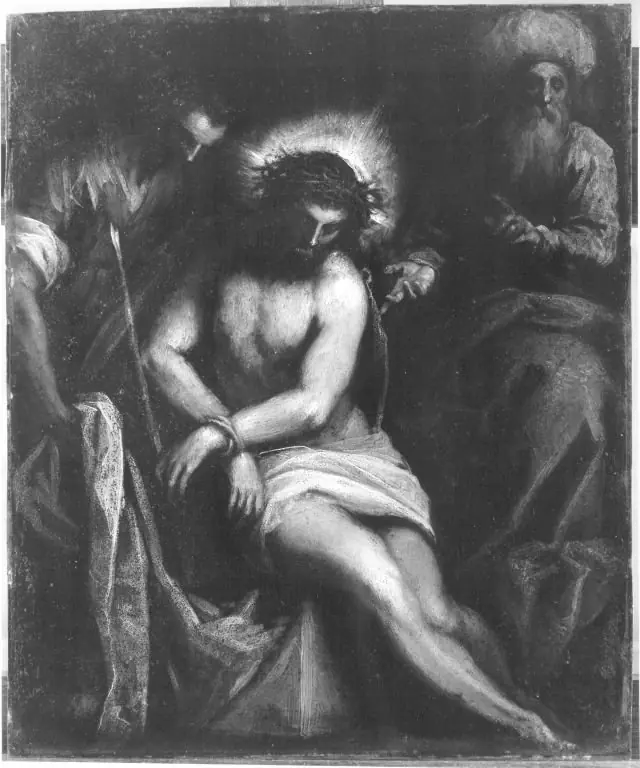 Ecce homo
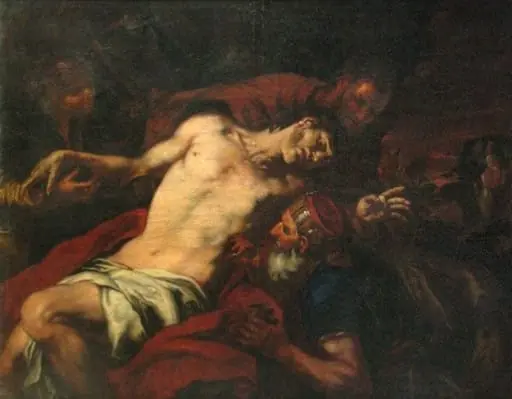 Samariteanul milostiv ; pandant: Vindecarea orbului și pandant: Întoarcerea fiului risipitor
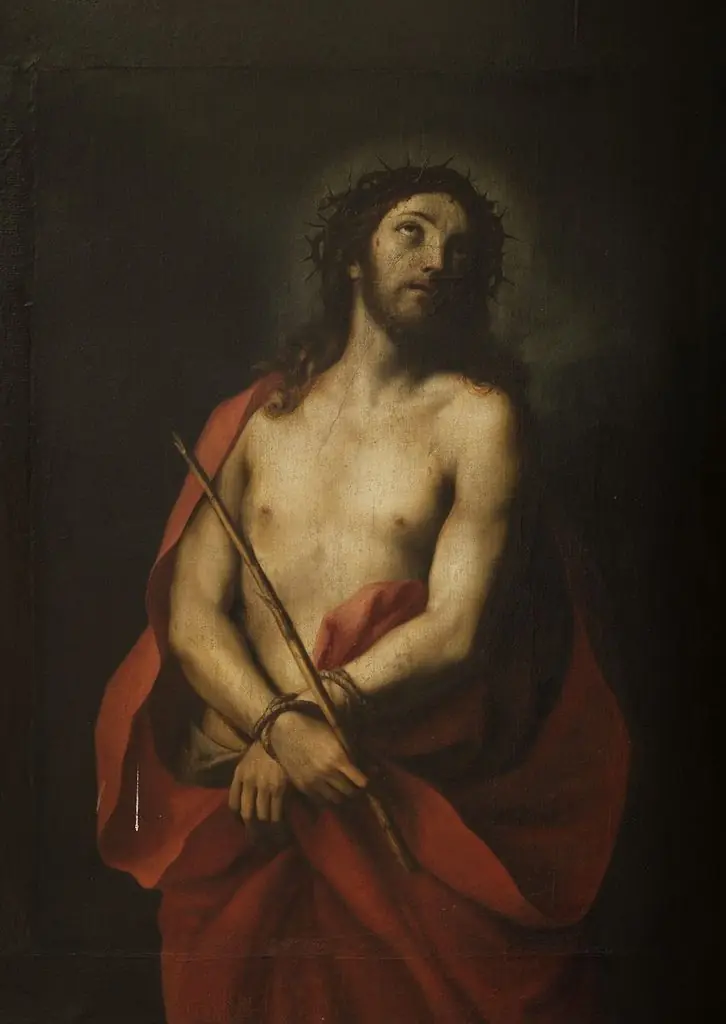 Ecce Homo
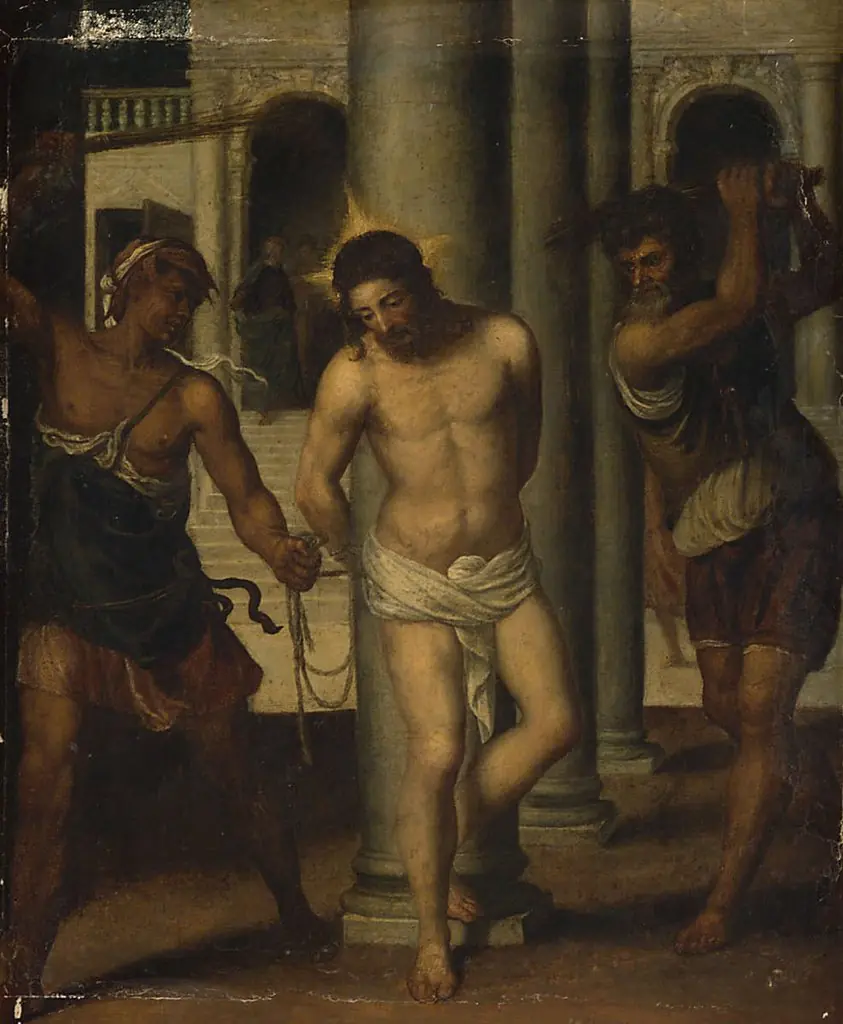 Flagellation of Christ
 Iosif din Arimatea sprijinind trupul lui Iisus
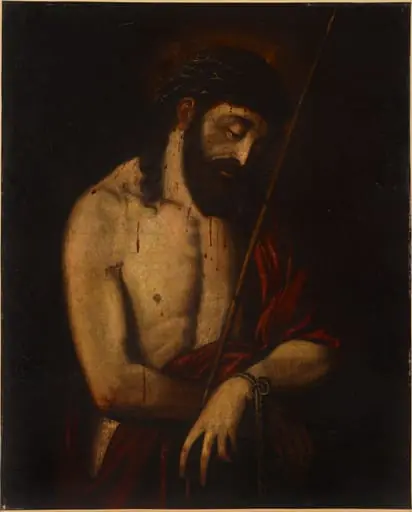 Orjantappuroin kruunattu Kristus
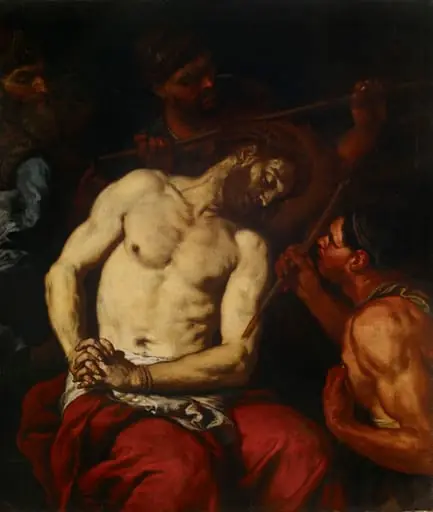 Orjantappurakruunaus
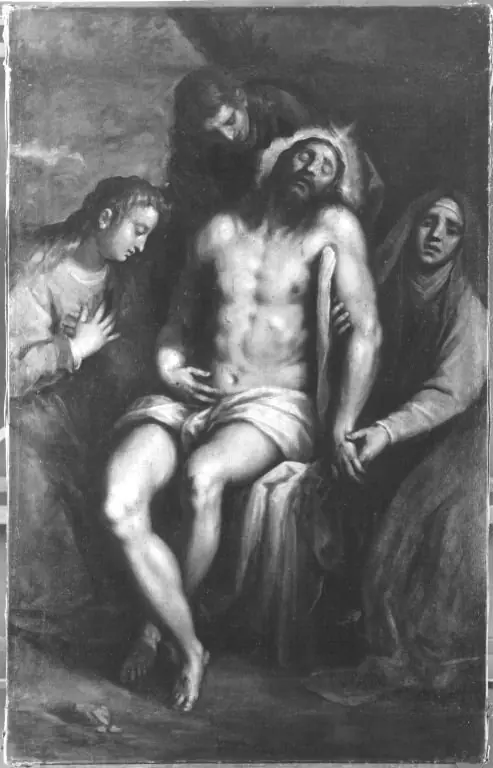 Beweinung Christi
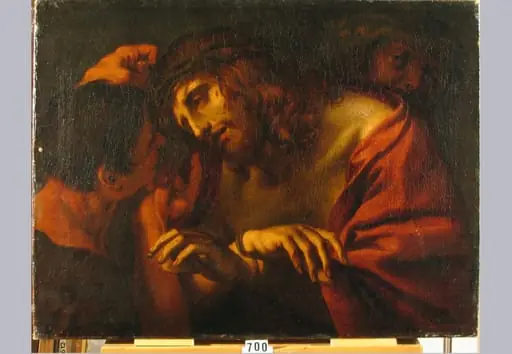 Batjocorirea lui Christos (în registrul inventar: Batjocorirea lui Isus)