Artwork
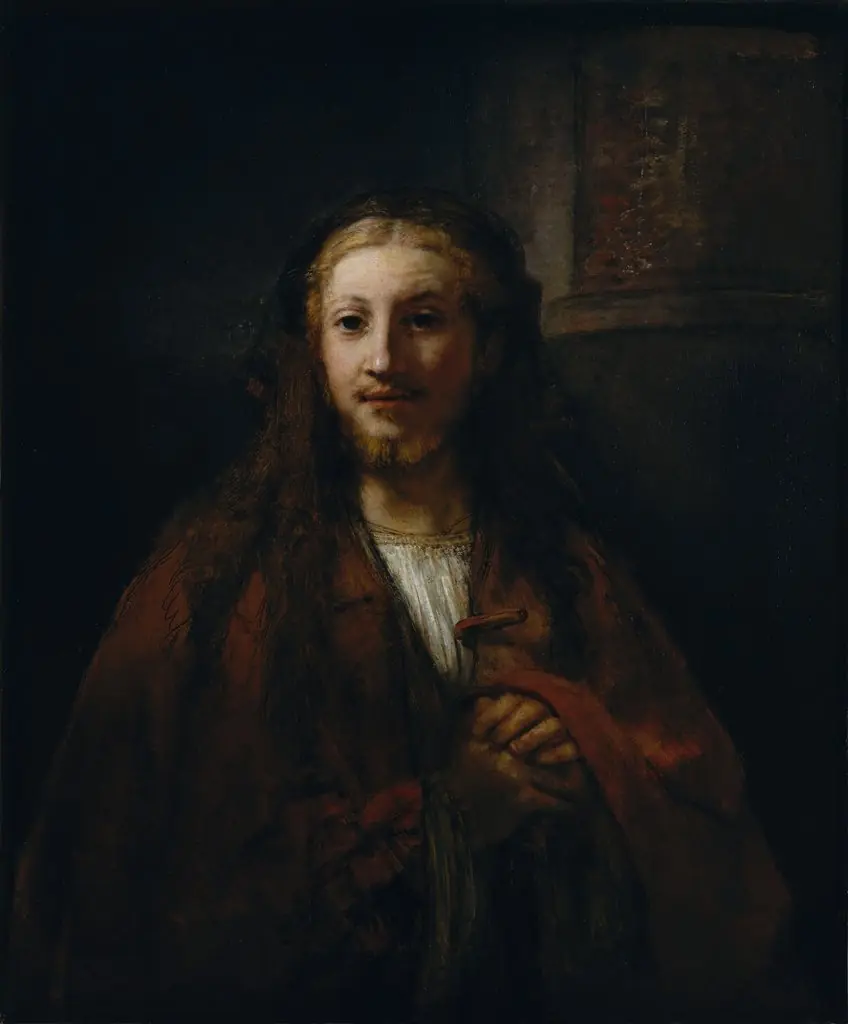
Head of Christ (after 'Dinner at Emmaus' in Louvre)
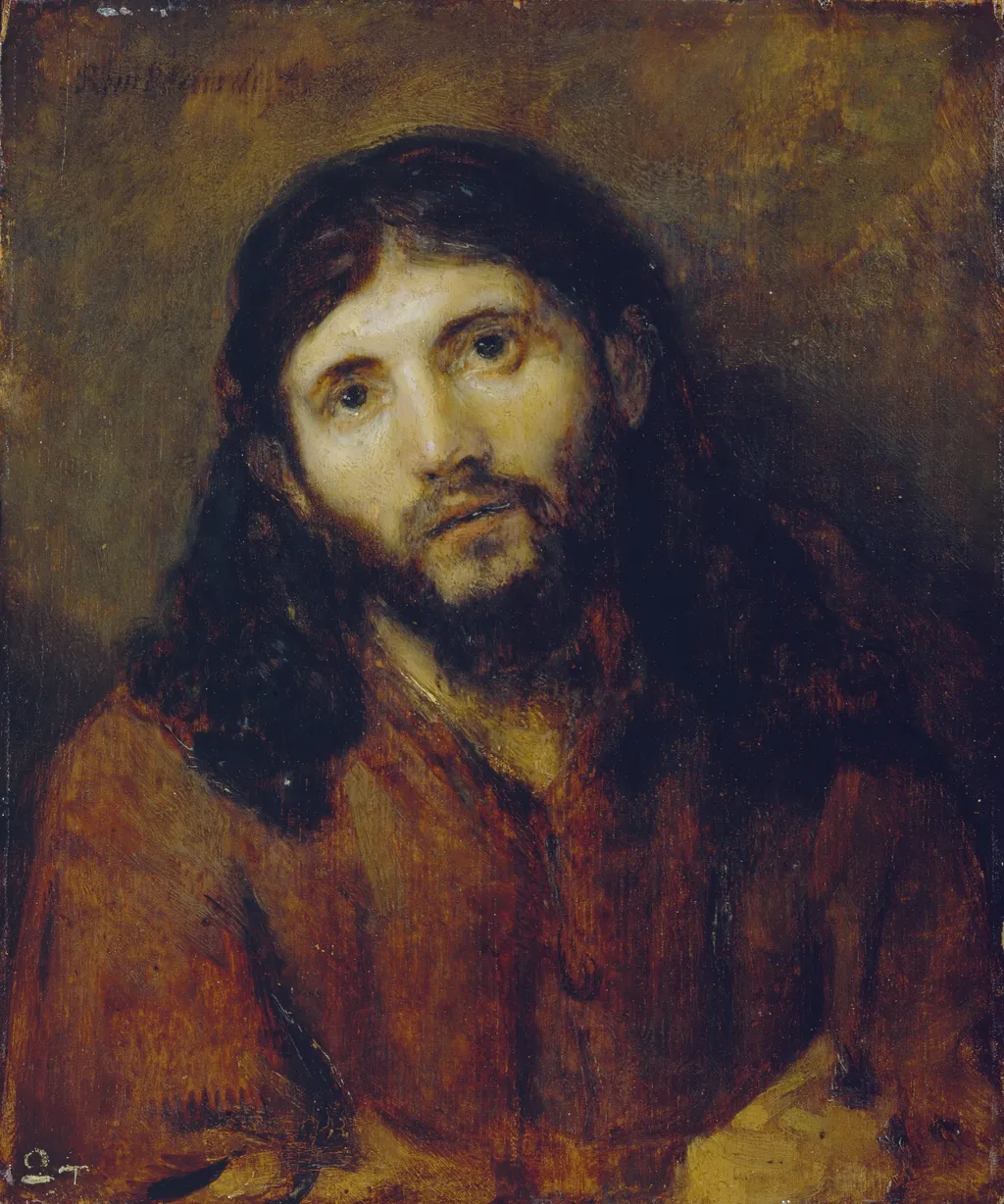
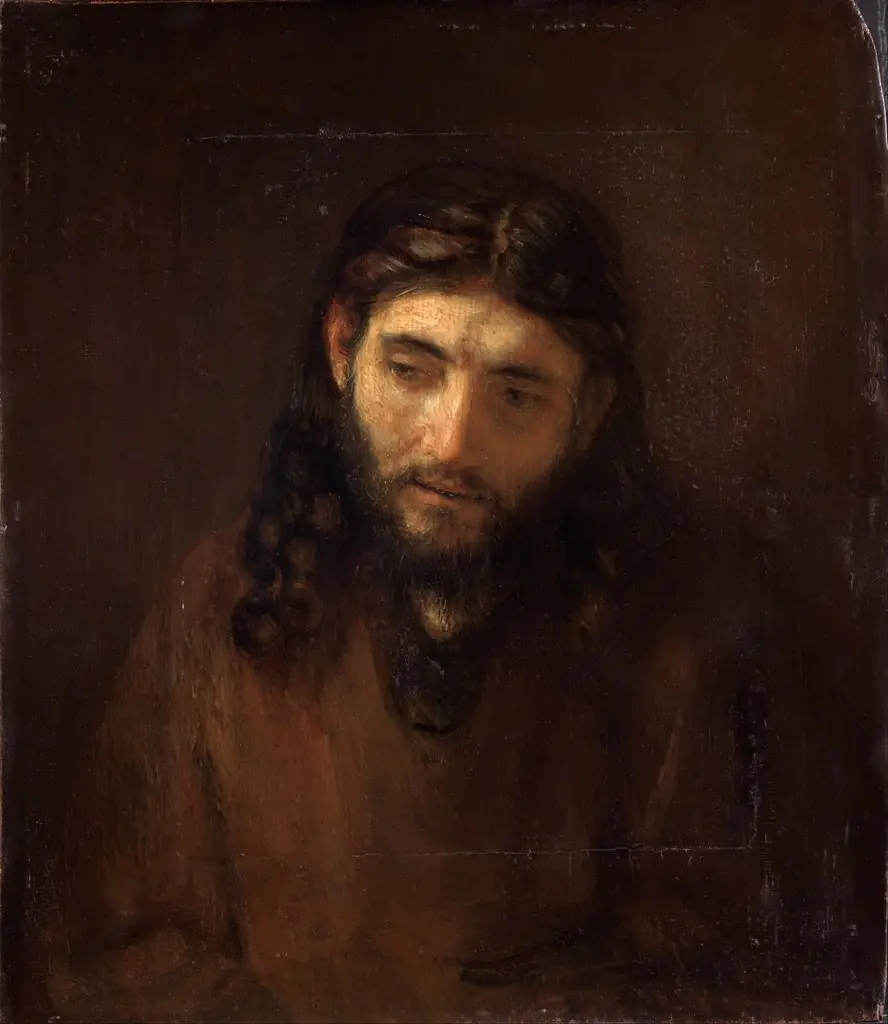
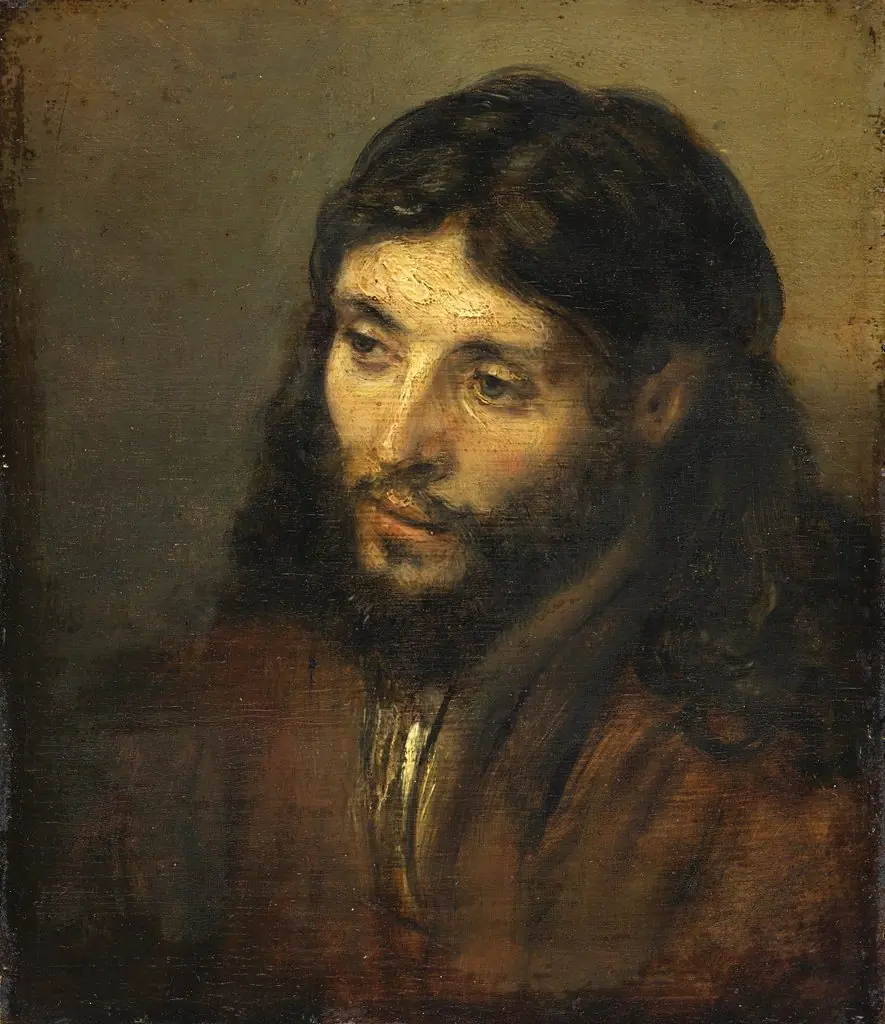
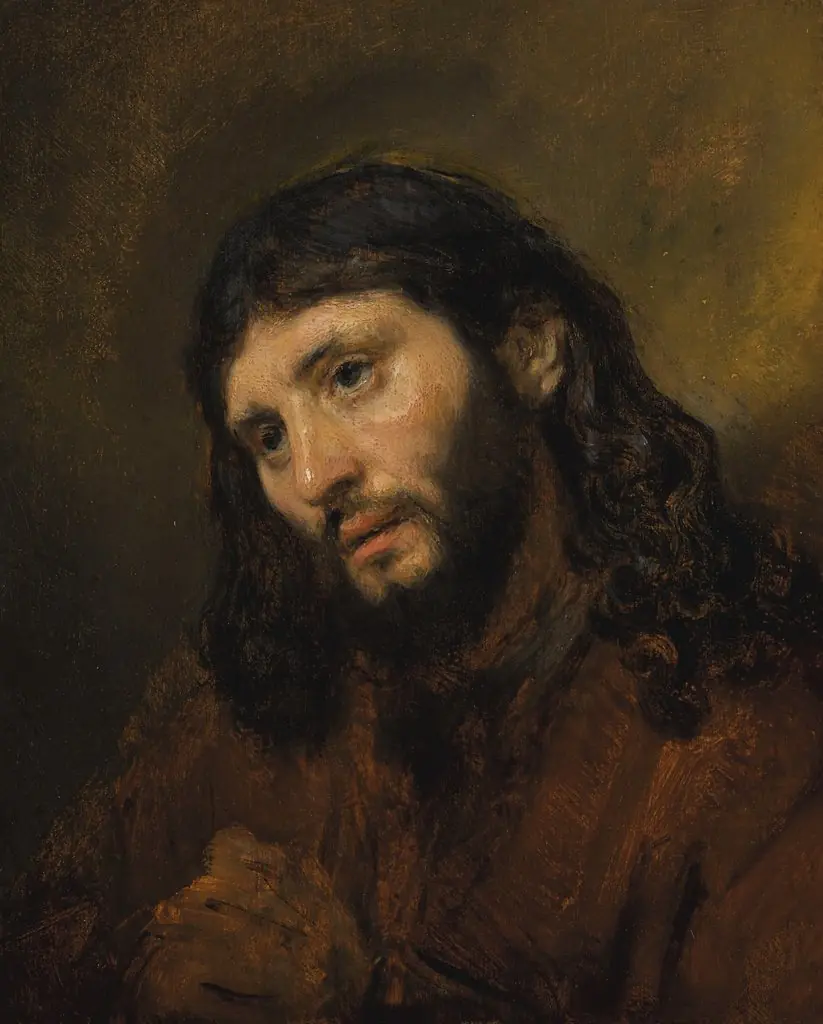
Head of Christ (after 'Dinner at Emmaus' in Louvre) is an oil painting by the Dutch Golden Age artist Rembrandt. It dates from 1650 and is held in the collection of the Detroit Institute of Arts.
About this work
Overview
Created circa 1650, this oil painting by Rembrandt van Rijn presents a close‑up portrait of a bearded figure identified as Christ. The work belongs to the Detroit Institute of Arts and belongs to the artist’s later period, when he frequently explored religious subjects through intimate, expressive studies.
Subject & Meaning
The image isolates the head of Jesus, emphasizing his solemn expression and the contemplative mood often associated with the biblical scene of the Supper at Emmaus. The subdued attire and restrained gesture focus attention on the spiritual presence rather than narrative detail.
Technique & Style
Rembrandt employs a pronounced chiaroscuro, lighting the face from one side while the opposite half recedes into darkness. Thick impasto on the skin and garment creates a tactile surface, allowing the brushwork to convey texture and the emotional weight of the figure.
History & Provenance
The painting is a derivative study after Rembrandt’s larger composition of the Dinner at Emmaus, now housed in the Louvre. It entered the Detroit Institute of Arts collection in the 20th century, reflecting the museum’s acquisition of works that illustrate the master’s approach to religious portraiture.
Context
During the Dutch Golden Age, Rembrandt’s religious works often combined dramatic lighting with psychological depth. This head study aligns with his broader practice of extracting a single, expressive element from larger narrative scenes, a method he applied across his extensive oeuvre of roughly three hundred paintings and numerous prints.
Own this work as a print
Artist & collection
Artist
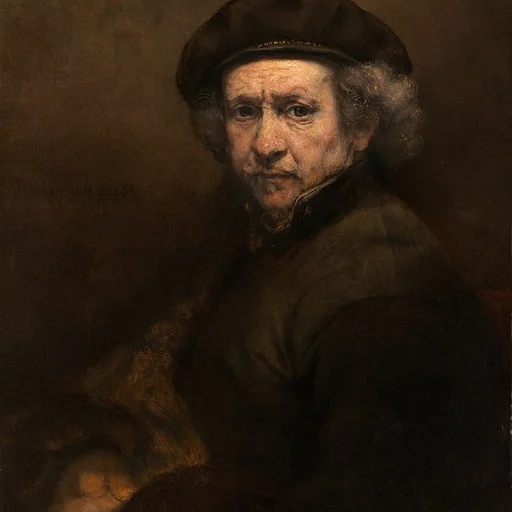
Rembrandt Harmenszoon van Rijn (15 July 1606 – 4 October 1669), known mononymously as Rembrandt, was a Dutch Golden Age painter, printmaker, and draughtsman.