Artwork
The Tribute Money
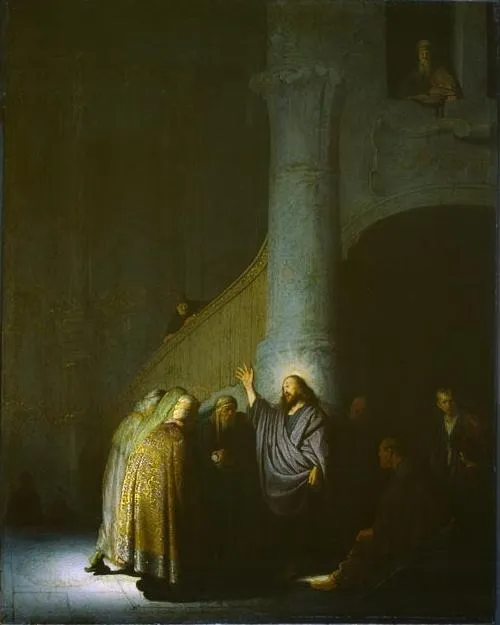
The Tribute Money is an oil painting by the Dutch Golden Age artist Rembrandt. It dates from 1631 and is held in the collection of the National Gallery of Canada.
About this work
Overview
Painted in 1631 by Rembrandt van Rijn, *The Tribute Money* is an oil-on-panel work depicting a biblical episode from the Gospel of Matthew.
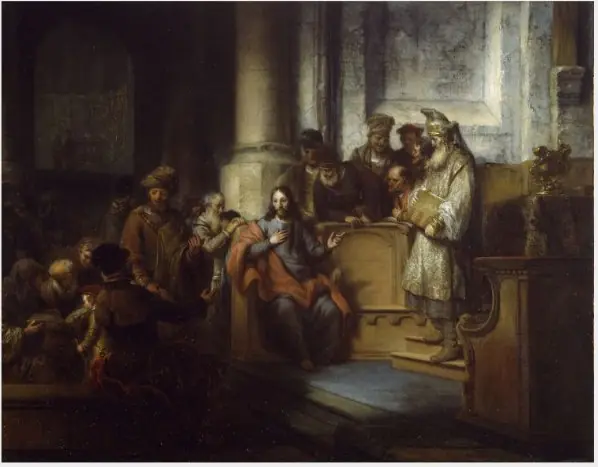
Painted in 1631 by Rembrandt van Rijn, *The Tribute Money* is an oil-on-panel work depicting a biblical episode from the Gospel of Matthew. It captures a moment of quiet tension as Christ and his disciples confront a question about paying taxes to Roman authorities. The composition centers on a single figure raising his hand, surrounded by attentive onlookers in a modest interior. The painting reflects Rembrandt’s early mastery in conveying psychological depth through gesture and lighting.
Subject & Meaning
The scene illustrates Christ’s response to the Pharisees’ question: 'Is it lawful to pay taxes to Caesar?' His gesture, paired with Peter’s attentive stance, suggests a moment of moral clarity amid political pressure. The figures’ varied expressions convey curiosity, hesitation, and reverence, emphasizing the weight of the question. Rather than dramatizing conflict, Rembrandt focuses on the internal gravity of the exchange, aligning with his interest in human introspection over spectacle.
Technique & Style
Rembrandt employs chiaroscuro to model forms and direct attention, with light falling from the upper left to illuminate the central figures and their gestures. The stone architecture and textured fabrics are rendered with subtle tonal shifts, enhancing spatial depth. Brushwork varies from smooth transitions in skin tones to rougher strokes in clothing and stone, creating tactile contrast. The muted palette and confined space heighten the intimacy of the moment, characteristic of his early religious narratives.
History & Provenance
The painting entered the collection of the National Gallery of Canada in 1988, acquired from a private European collection. Prior to that, it was documented in 19th-century Dutch holdings and later passed through several private owners in the Netherlands and Belgium. Its attribution to Rembrandt has been consistently supported by technical analysis and stylistic comparison with his early works from the 1630s, though it was once misattributed to lesser contemporaries.
Context
Created during Rembrandt’s Leiden period, the painting reflects the influence of Caravaggisti and Dutch interest in biblical realism. At the time, religious subjects were often rendered with psychological nuance rather than grandeur, responding to Protestant sensibilities that favored quiet devotion. The setting’s simplicity and focus on individual response align with broader trends in Dutch art, where sacred stories were made immediate through everyday settings and human emotion.
Legacy
Though less widely known than Rembrandt’s later works, *The Tribute Money* exemplifies his early ability to transform scriptural narrative into a moment of psychological resonance. Its restrained composition and masterful use of light influenced subsequent generations of Dutch painters seeking emotional authenticity in religious scenes. The painting remains a key example of how Rembrandt elevated biblical storytelling through intimate observation rather than theatrical display.
Artist & collection
Artist
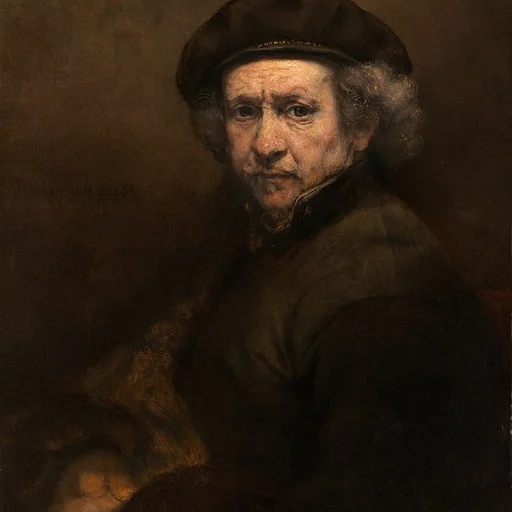
Rembrandt Harmenszoon van Rijn (15 July 1606 – 4 October 1669), known mononymously as Rembrandt, was a Dutch Golden Age painter, printmaker, and draughtsman.