Artwork
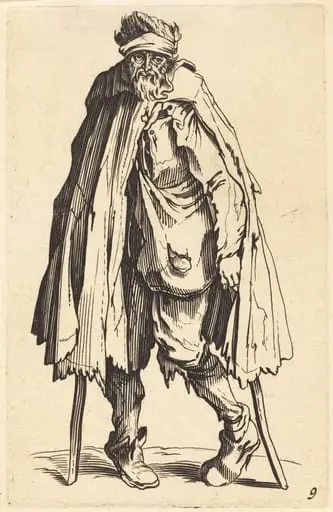
Beggar with Bare Head and Feet
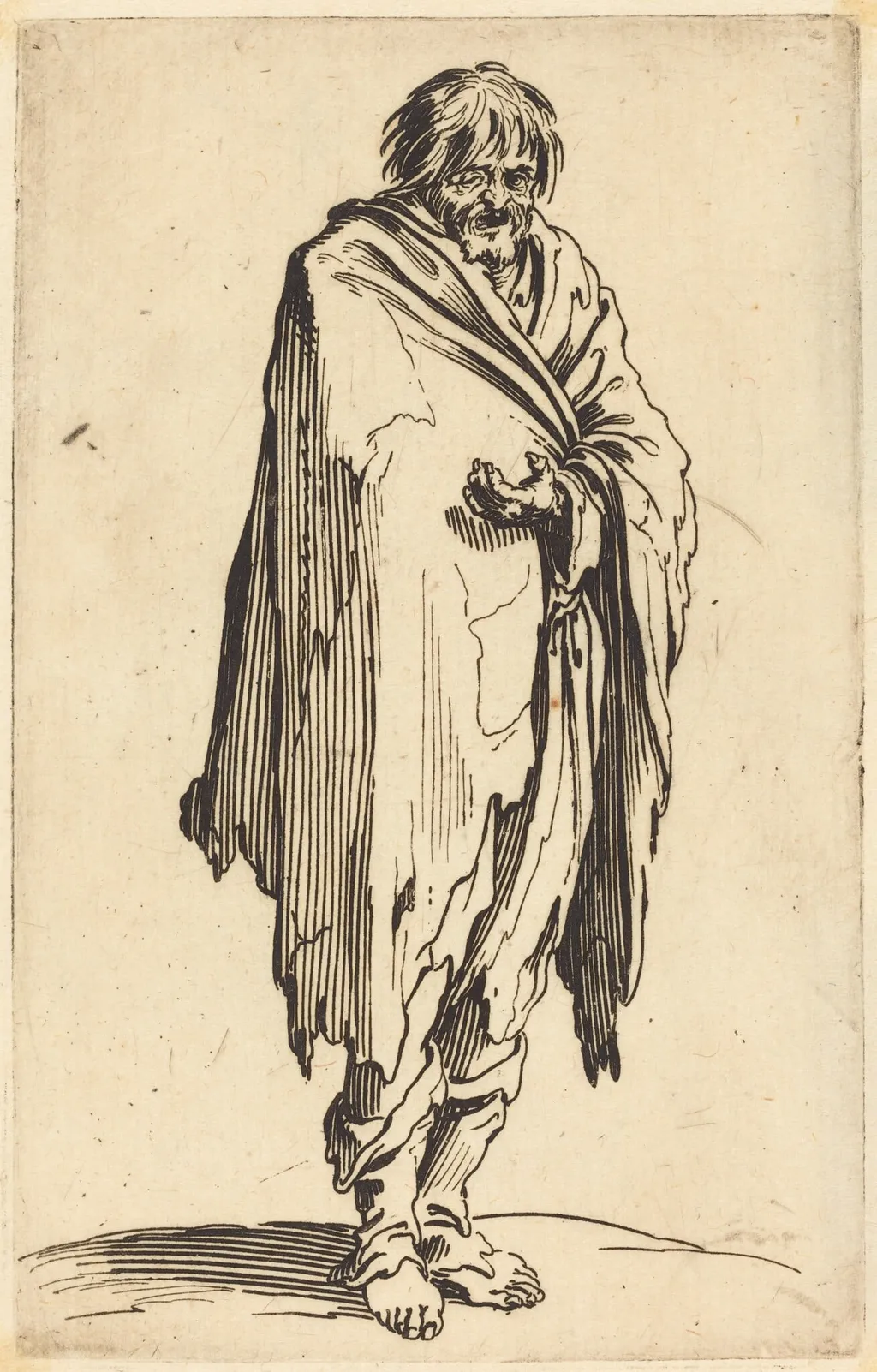
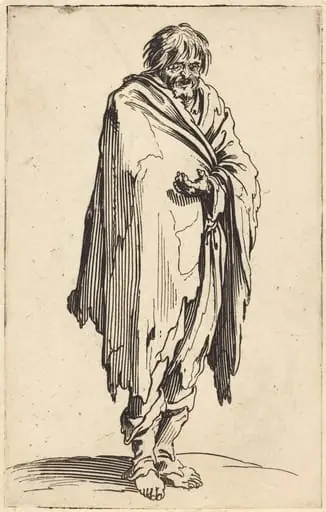
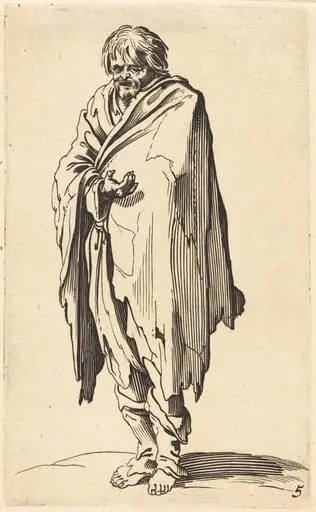
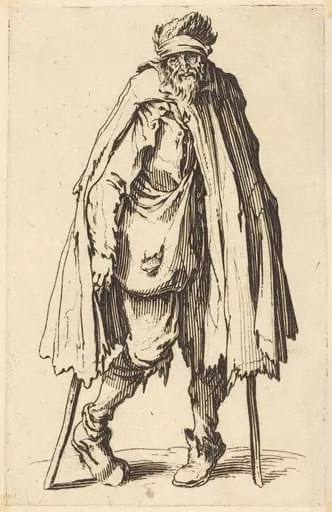
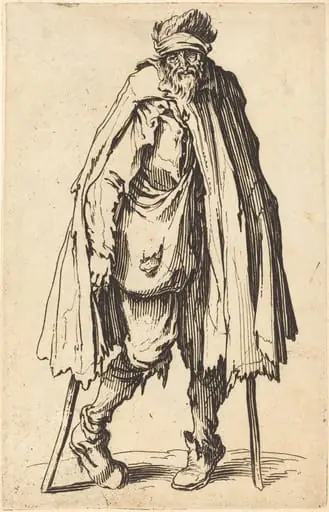
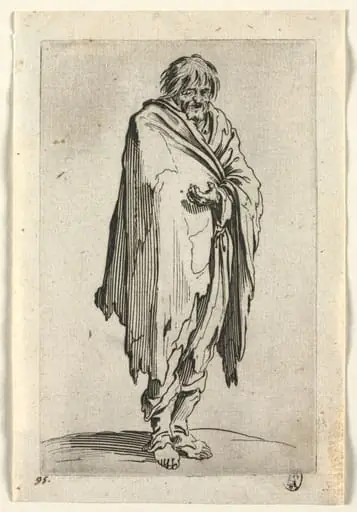
Beggar with Bare Head and Feet is an ink print by the Baroque artist Jacques Callot. It dates from 1622 and is held in the collection of the National Gallery of Art.
About this work
Overview
As one of over 1,400 prints by the Lorrainer artist, it exemplifies his dedication to observing the lives of society’s overlooked.
Created around 1622 by Jacques Callot, this etching on laid paper captures a solitary beggar with exposed head and feet. As one of over 1,400 prints by the Lorrainer artist, it exemplifies his dedication to observing the lives of society’s overlooked. The work belongs to a larger series documenting street figures, rendered with precision and emotional restraint, avoiding overt sentimentality while preserving the dignity of its subject.
Subject & Meaning
The figure is an elderly man, barefoot and cloaked in tattered fabric, standing on uneven ground. His posture suggests exhaustion, yet his gaze is direct, avoiding pity. Callot presents him not as a caricature but as a person shaped by circumstance. The absence of context—no village, no crowd—focuses attention on individual hardship, reflecting a broader interest in the quiet resilience of marginalized communities in early 17th-century Europe.
Technique & Style
Callot employed etching to achieve fine, irregular lines that mimic the texture of worn cloth and weathered skin. The scratchy, urgent strokes convey immediacy, as if drawn from life. Ink pooled in the bitten grooves of the copper plate creates deep shadows, enhancing the figure’s solidity. The rough ground line and lack of horizon emphasize isolation, while the uneven line quality mirrors the subject’s unstable existence.
History & Provenance
The print emerged during Callot’s most active period in Nancy and Florence, when he was refining his etching technique and documenting social realities. It was likely part of a private collection of studies, circulated among artists and patrons interested in observational art. No specific early ownership is documented, but its survival in multiple museum holdings suggests early recognition of its technical and humanistic value.
Context
In the early 1600s, Lorraine was a contested region caught between French and Spanish influence, with widespread displacement and poverty. Callot’s prints, including this one, respond to the visible effects of war, migration, and economic decline. Unlike idealized religious or mythological scenes, his focus on beggars and soldiers offered a counter-narrative to official imagery, aligning with emerging humanist interests in everyday truth.
Legacy
Callot’s etchings influenced later generations of printmakers, particularly in their unflinching portrayal of social conditions. This work, though modest in scale, contributed to the legitimacy of genre subjects in printmaking. Its rawness and attention to detail helped shift artistic priorities from grandeur to observation, laying groundwork for 18th-century social realism and the modern tradition of documentary print art.
Artist & collection
Artist
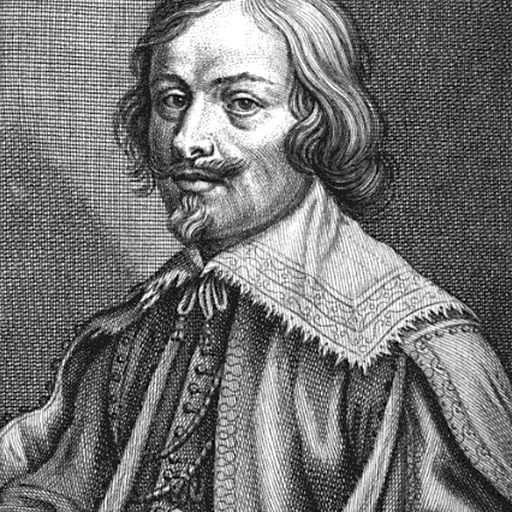
Jacques Callot was a baroque printmaker and draftsman from the Duchy of Lorraine.

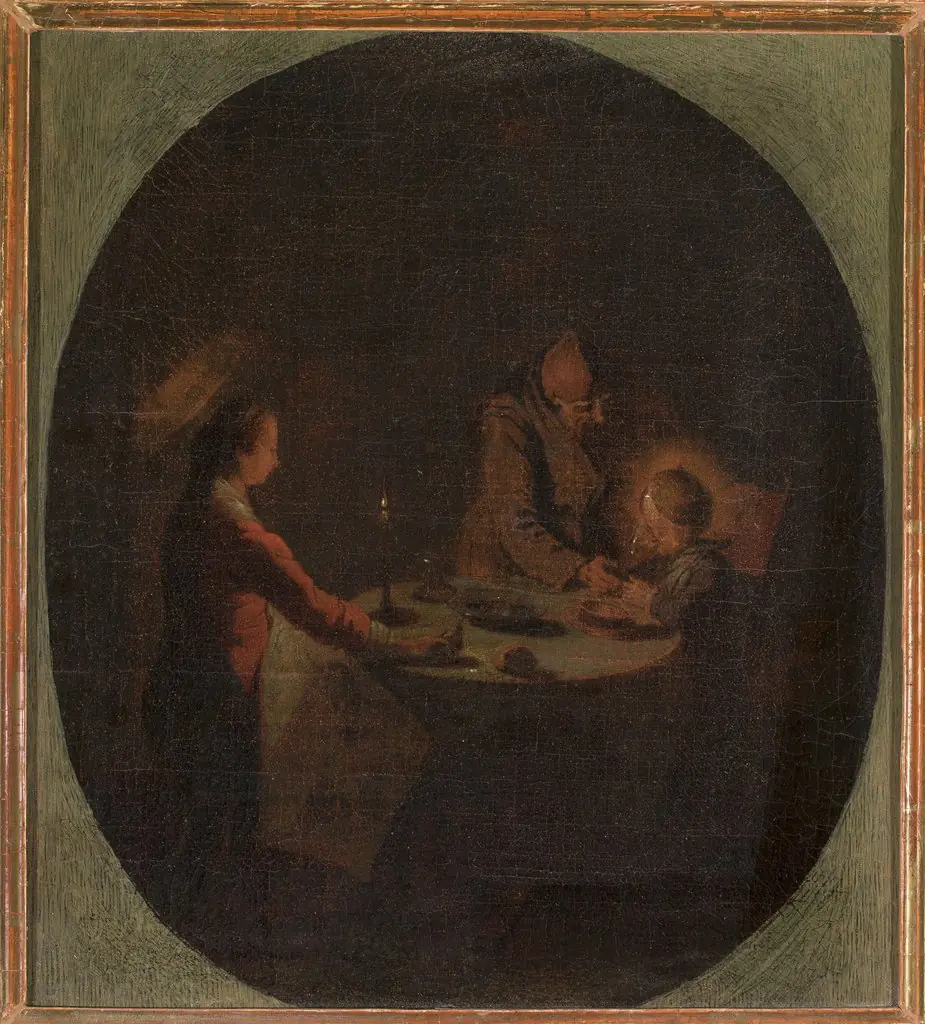 Holy Family at supper
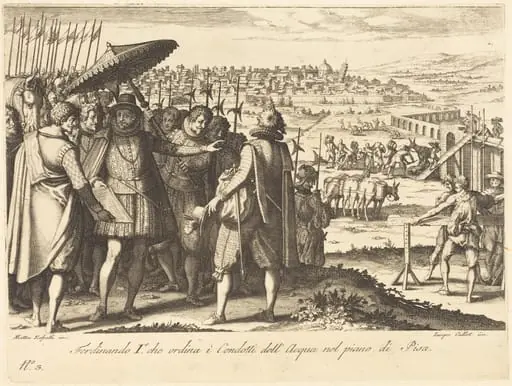 Restoration of the Aqueduct at Pisa
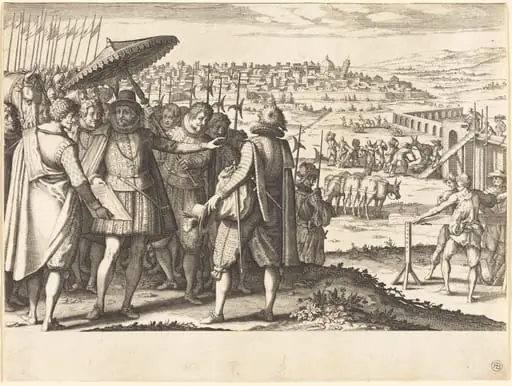 Restoration of the Aqueduct at Pisa
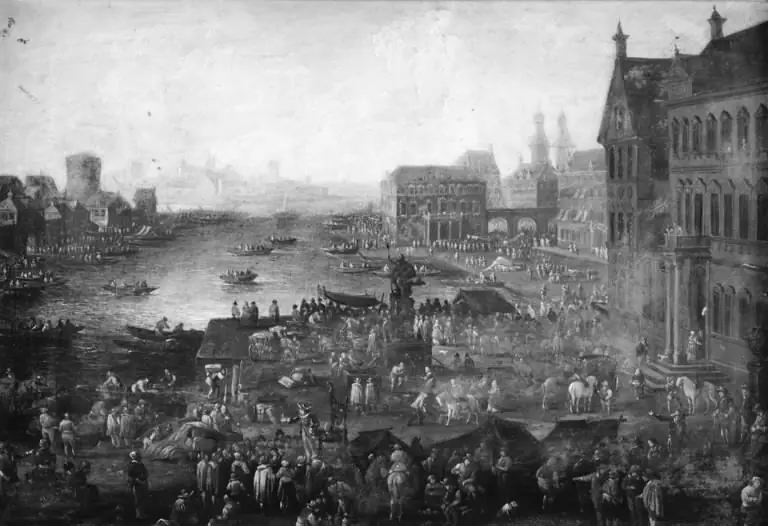 Square in Paris with Many Figures
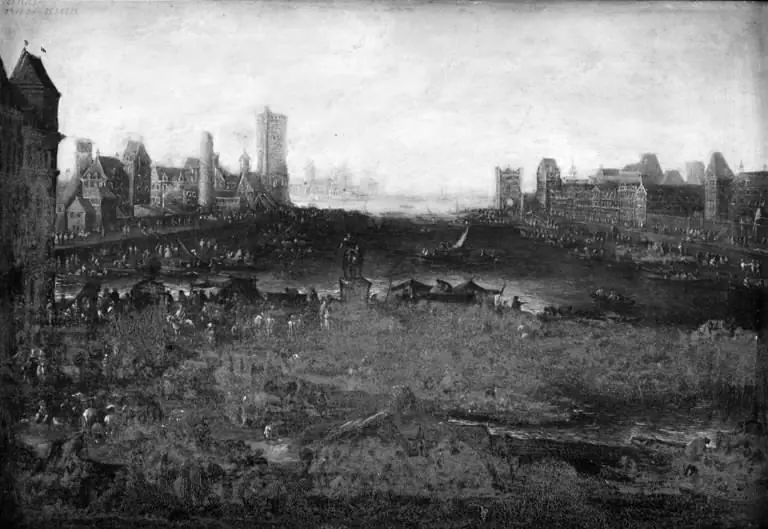 Square in Paris with Many Figures
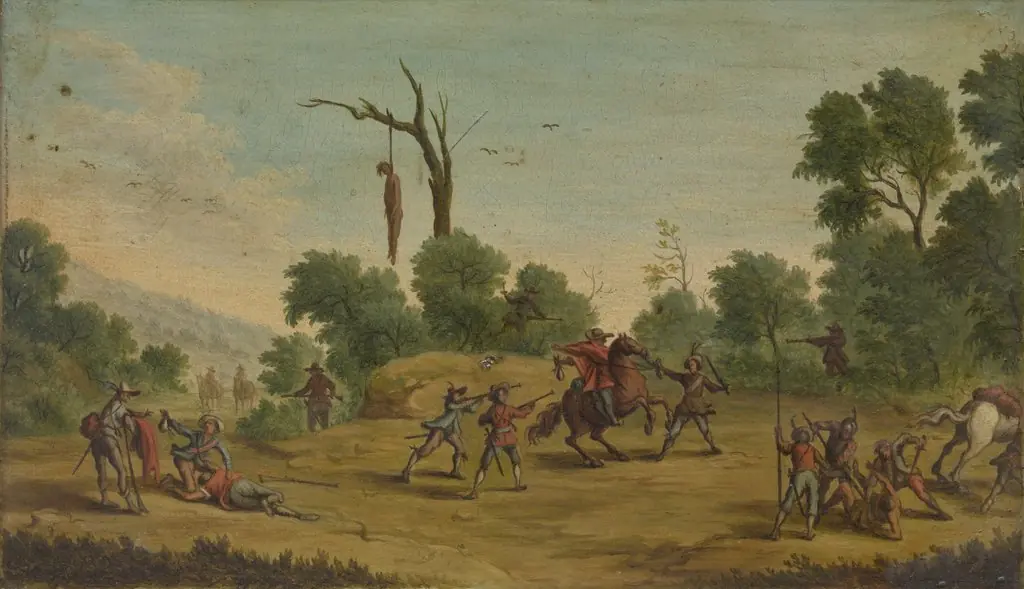 Horsemen Attacked by Robbers
 HOW WILL A COVERED PART BE CORRECTED?HOW WIKA A COVERED HEART DEED CORRECTED?
![Christ Walking on the Water [second plate], by Jacques Callot](https://artifactworldgallery.com/img/jacques-callot--christ-walking-on-the-water-second-plate--2069f3bfe4cb2126-w320.webp) Christ Walking on the Water [second plate]
Christ Walking on the Water [second plate]