Artwork
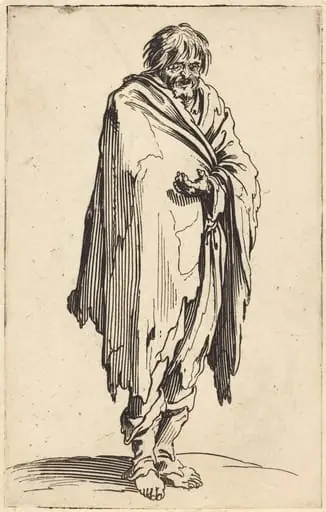
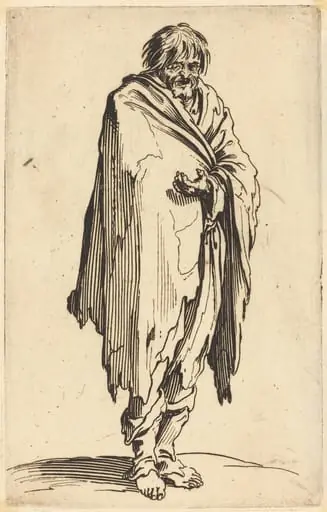
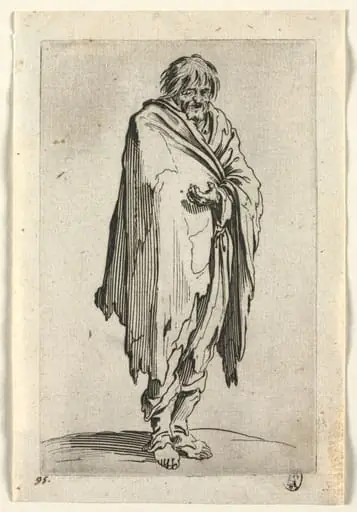
Beggar with Bare Head and Feet
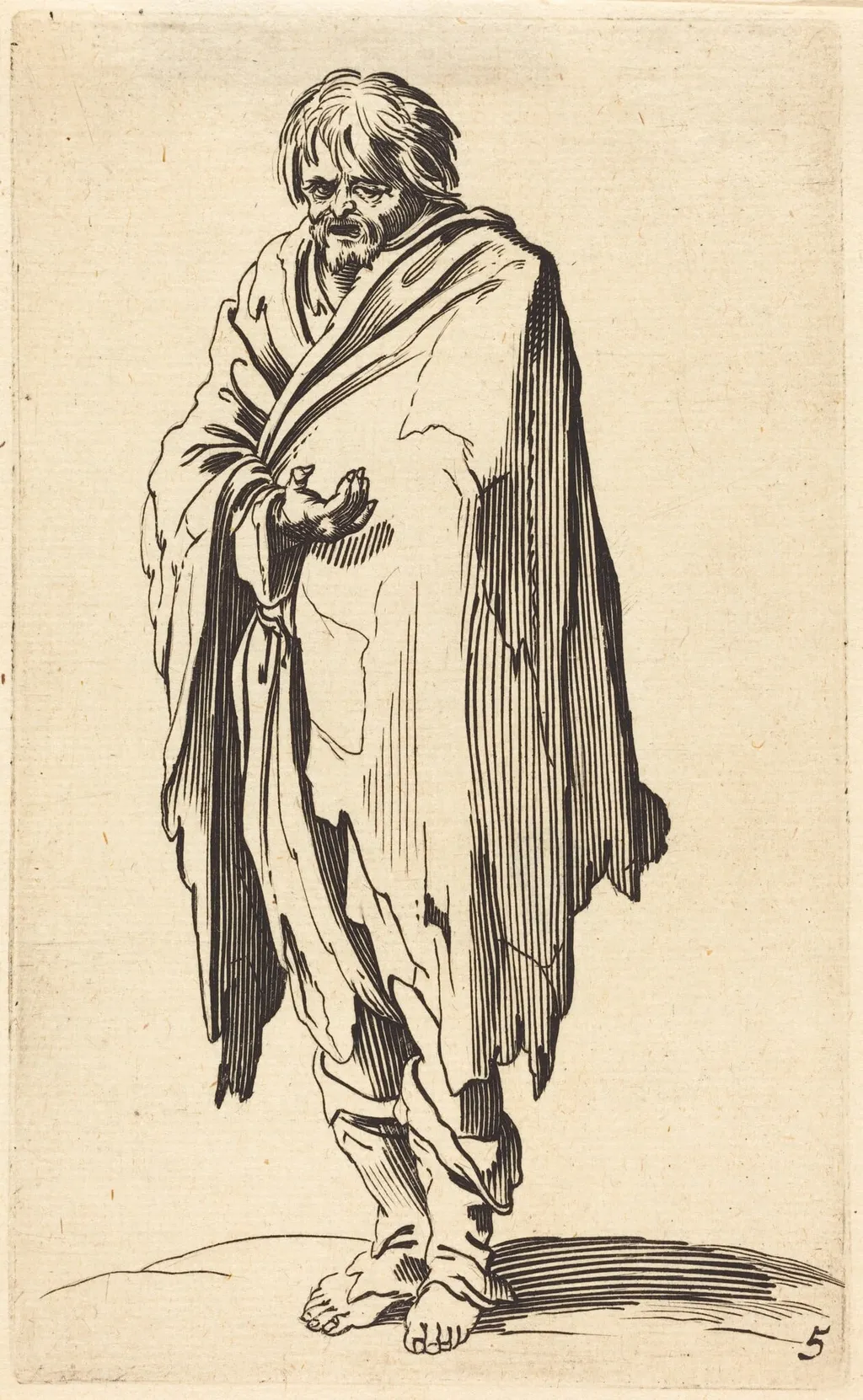
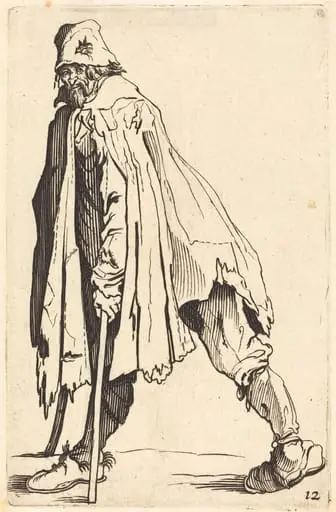
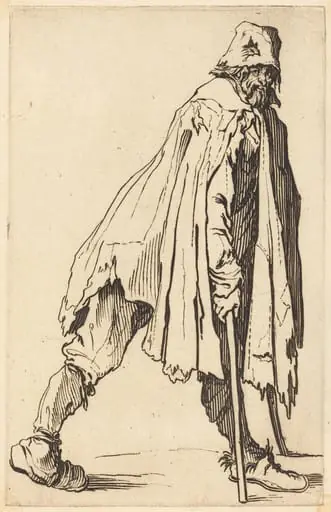
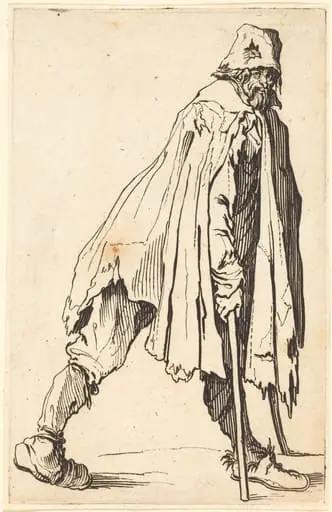
Beggar with Bare Head and Feet is an ink print by the Baroque artist French 17th Century. It dates from 1622 and is held in the collection of the National Gallery of Art. The work is an etching executed on laid paper, presenting a solitary figure cloaked in a heavy, draped garment.
About this work
Overview
The work is an etching executed on laid paper, presenting a solitary figure cloaked in a heavy, draped garment. The subject stands barefoot, one hand gripping the cloak while the other hangs loosely at his side. The composition is rendered with uneven, scratch‑like lines that give the image a textured, almost incised appearance, emphasizing the roughness of the figure’s condition.
Subject & Meaning
The lone figure appears to be a beggar, suggested by the tattered cloak and the absence of footwear, symbols traditionally associated with poverty. The posture—holding the garment and standing still—conveys a sense of vulnerability and resignation, inviting contemplation of social marginality and the human condition within an urban or rural setting.
Technique & Style
The artist employed a deep‑cut etching method, incising the plate so that the resulting lines are dark and pronounced, resembling scratches on the paper surface. This approach departs from smooth tonal washes, favoring a stark, graphic quality that accentuates texture and line over subtle shading, characteristic of many 19th‑century printmaking practices.
Context
Etchings of beggars and other marginalized figures were common in European printmaking, often serving as social commentary or moralizing genre scenes. The work aligns with this tradition, using the medium’s capacity for fine line work to highlight the stark reality of the subject’s existence, while the rough line work reflects the harshness of his environment.
Artist & collection

Artist
Seventeenth-century French printmakers turned ink into story. Their tools were burin and acid, paper their stage. Look at the Beggar Woman with Rosary (1622), etched on laid paper, her hands folded around faith, or The…