Artwork
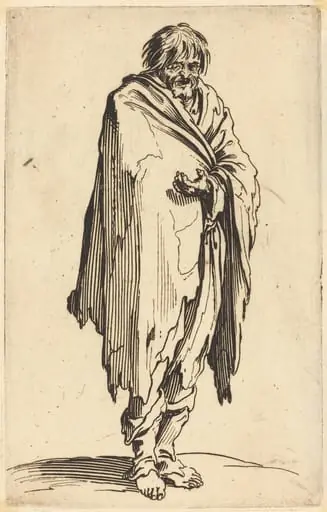
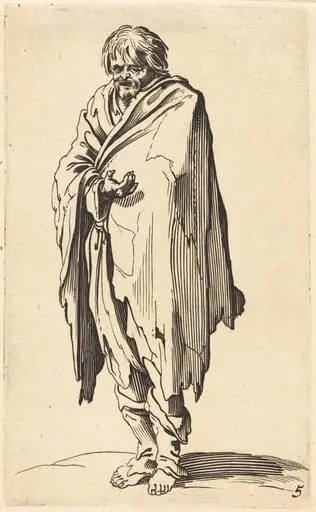
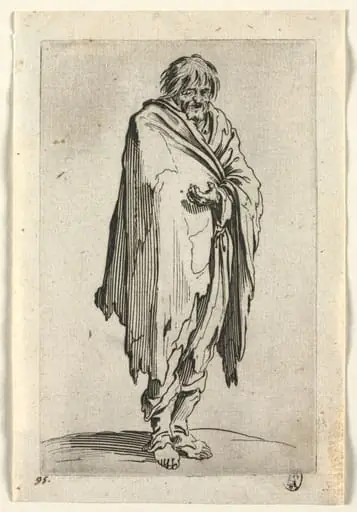
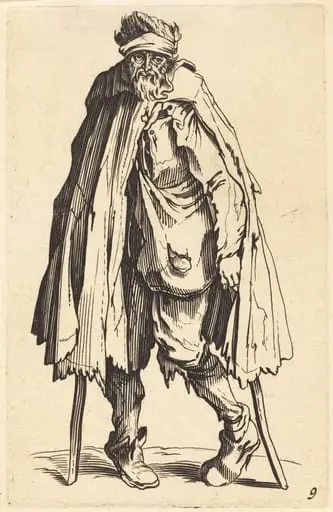
Beggar with Bare Head and Feet
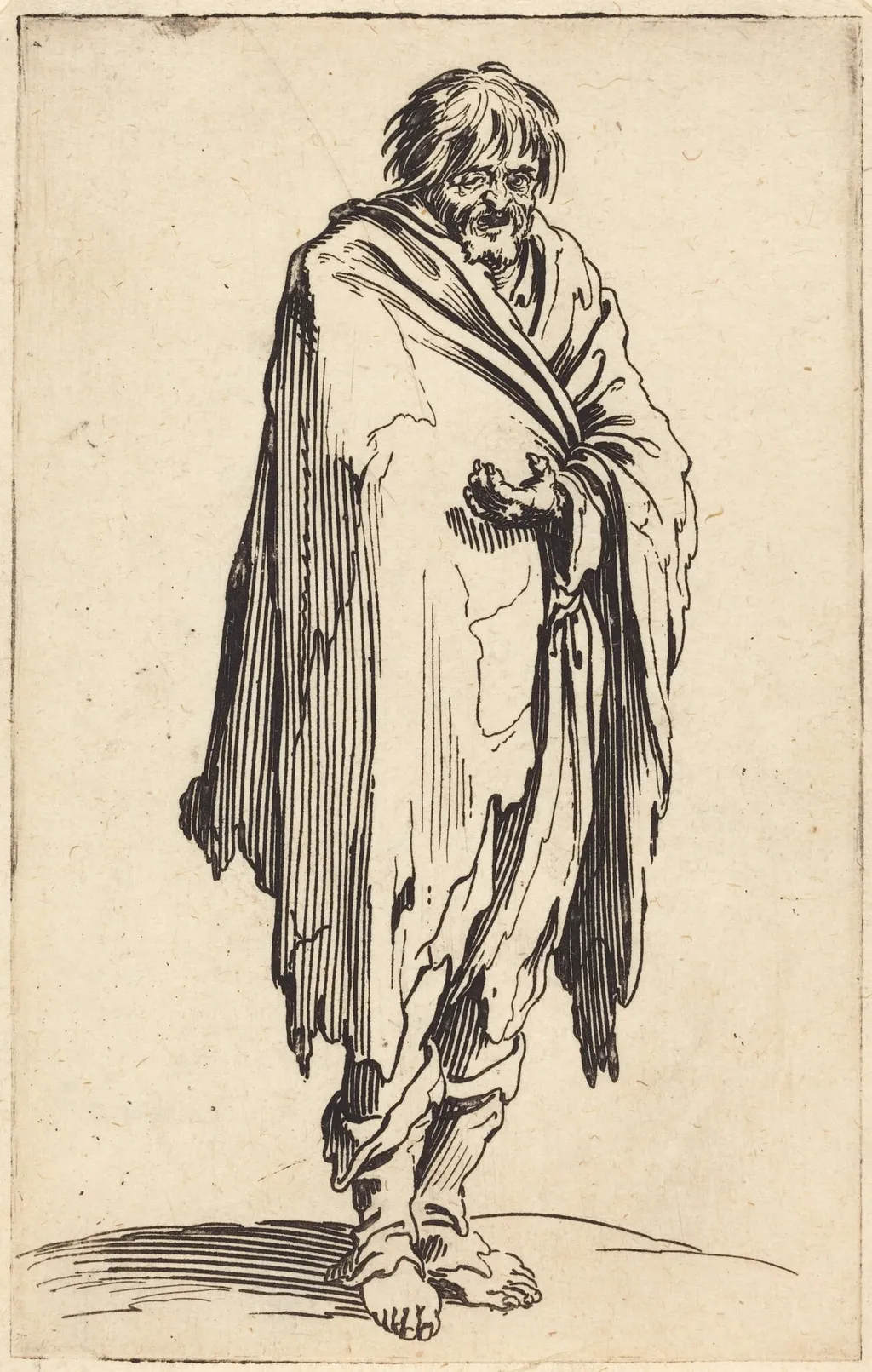
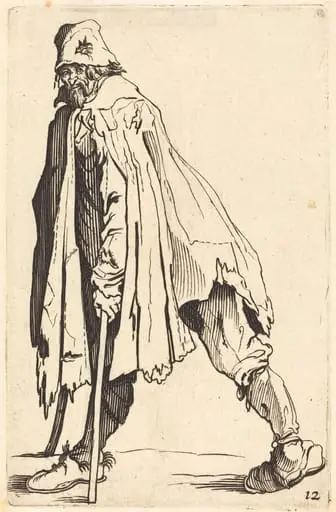
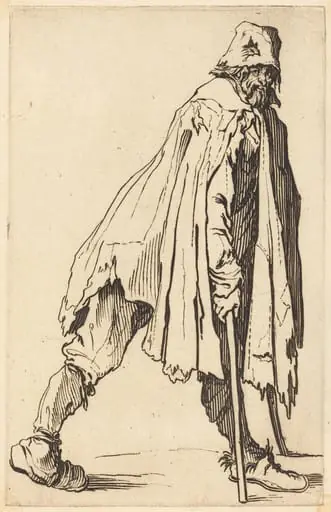
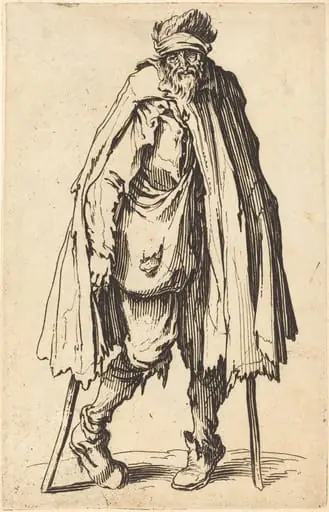
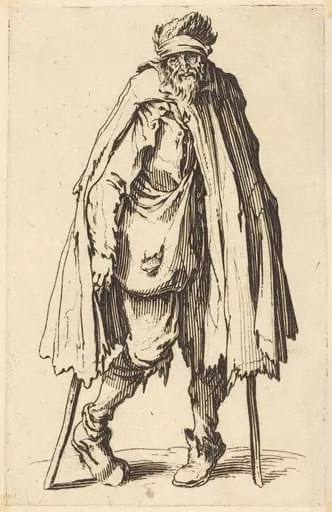
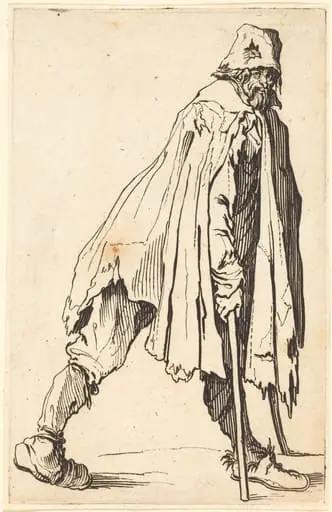
Beggar with Bare Head and Feet is an ink print by the Baroque artist Jacques Callot. It dates from 1622 and is held in the collection of the National Gallery of Art.
About this work
Overview
Jacques Callot, a French printmaker active in the early 17th century, produced the etching *Beggar with Bare Head and Feet* circa 1622. Executed on laid paper, the work is a small-scale, monochrome print that captures a solitary, disheveled figure in a stark, outdoor setting.
Subject & Meaning
The image presents a barefoot man wrapped in a torn cloak, his exposed arm and wild hair emphasizing vulnerability. His open mouth and furrowed expression suggest a cry or gasp, inviting viewers to contemplate the harsh conditions faced by itinerant beggars in Callot’s era.
Technique & Style
Callot employed traditional etching, incising lines into a copper plate and allowing ink to fill the grooves. The resulting prints display pronounced chiaroscuro, with the ragged cloak rendered in dynamic, uneven strokes that convey movement and texture.
History & Provenance
Part of Callot’s prolific output—over 1,400 known etchings—the piece reflects his interest in documenting everyday life alongside religious, military, and courtly subjects. The print has circulated among collectors of early modern prints and is recorded in several museum inventories.
Context
Created in the Duchy of Lorraine during the Baroque period, the work aligns with contemporary artistic trends that favored detailed observation of social strata. Callot’s focus on marginalized figures offers a counterpoint to the grandiose religious and heroic themes prevalent in the era.
Artist & collection

Artist
Jacques Callot was a baroque printmaker and draftsman from the Duchy of Lorraine.

 Holy Family at supper
 Restoration of the Aqueduct at Pisa
 Restoration of the Aqueduct at Pisa
 Square in Paris with Many Figures
 Square in Paris with Many Figures
 Horsemen Attacked by Robbers
 HOW WILL A COVERED PART BE CORRECTED?HOW WIKA A COVERED HEART DEED CORRECTED?
![Christ Walking on the Water [second plate], by Jacques Callot](https://artifactworldgallery.com/img/jacques-callot--christ-walking-on-the-water-second-plate--2069f3bfe4cb2126-w320.webp) Christ Walking on the Water [second plate]
Christ Walking on the Water [second plate]