Artwork
Christ Driving the Money Changers from the Temple
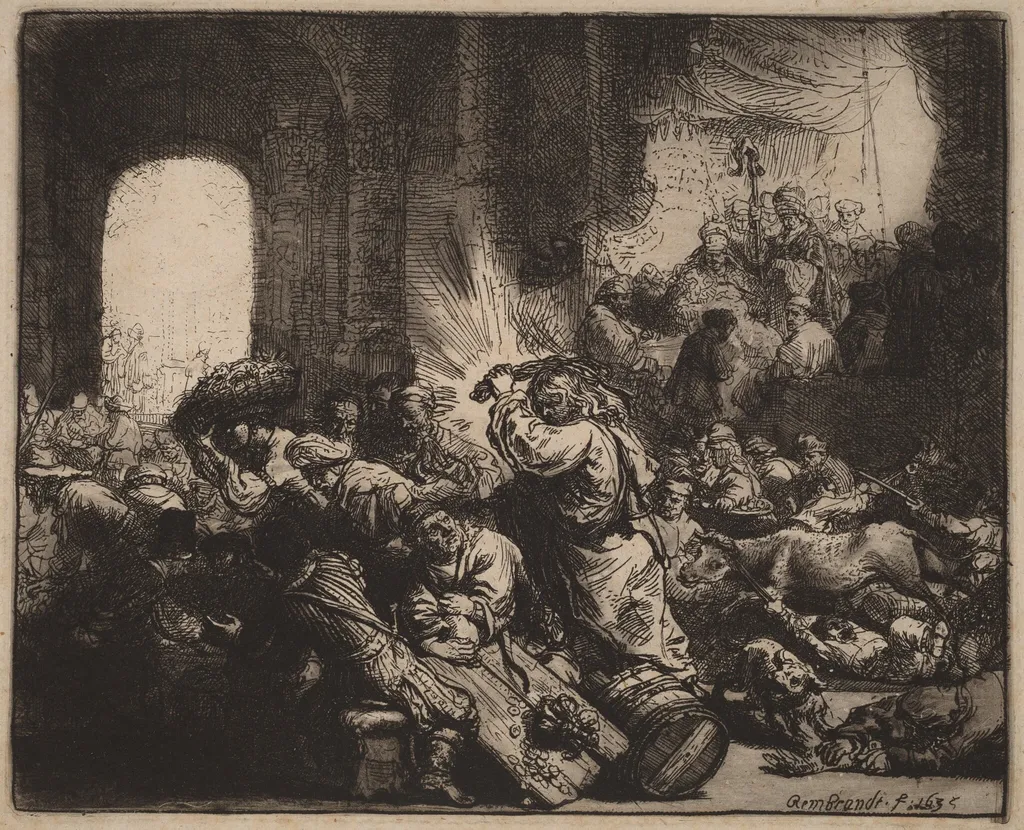
Christ Driving the Money Changers from the Temple is an ink print by the Baroque artist Rembrandt. It dates from 1635 and is held in the collection of the National Gallery of Art.
About this work
Overview
Christ Driving the Money Changers from the Temple is an etching executed on laid paper by Rembrandt van Rijn in 1635. The work depicts a tumultuous episode from the New Testament, rendered in the stark chiaroscuro typical of the artist’s printmaking during the mid‑1630s.
Subject & Meaning
At the composition’s core a figure identified as Christ overturns the tables of merchants, scattering both vendors and their wares amid a crowded interior. The surrounding onlookers react with alarm, some shielding their faces, others fleeing, underscoring the biblical theme of purifying the sacred space.
Technique & Style
Rembrandt employed the traditional etching process, incising the design into a copper plate, inking the recessed lines, and pressing the plate onto laid paper. The method permits deep, velvety blacks alongside delicate line work, producing the dramatic contrast of light and shadow that heightens the scene’s tension.
Context
The print belongs to a period when Rembrandt frequently explored religious narratives through printmaking, using the medium to reach a broader audience beyond his painted oeuvre. Its subject reflects contemporary Protestant concerns about the corruption of worship spaces.
History & Provenance
First issued shortly after its creation, the etching circulated among collectors in the Dutch Republic. Surviving impressions are held in major European and American institutions, confirming its continued presence in the art market since the 17th century.
Own this work as a print
Artist & collection
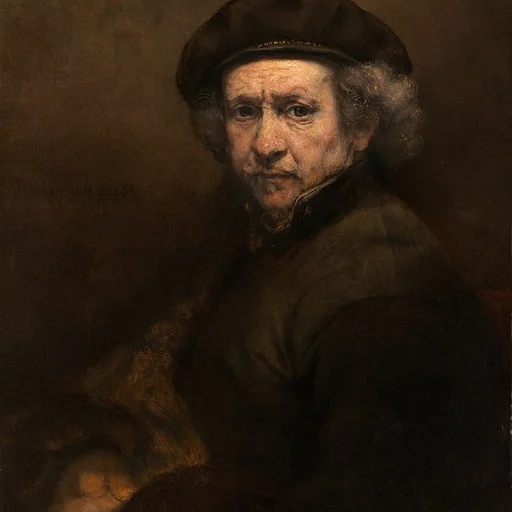
Artist
Rembrandt Harmenszoon van Rijn (15 July 1606 – 4 October 1669), known mononymously as Rembrandt, was a Dutch Golden Age painter, printmaker, and draughtsman.

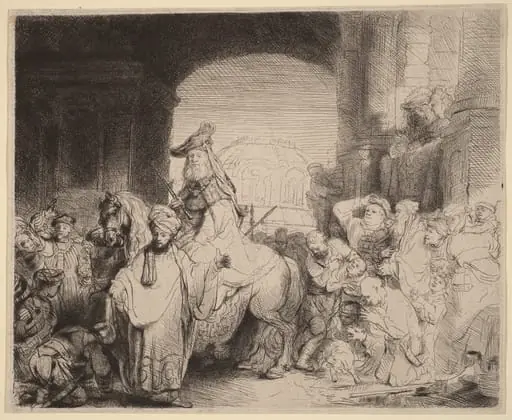 The Triumph of Mordecai
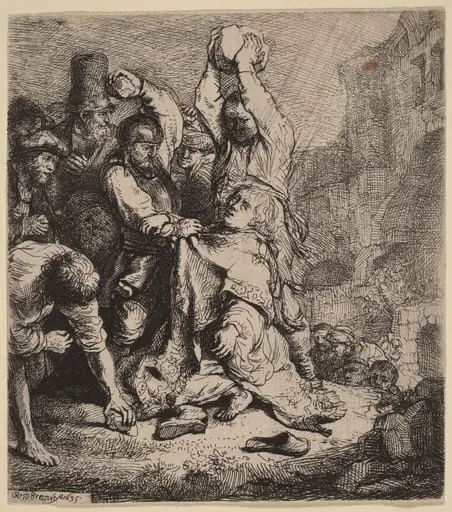 The Stoning of Saint Stephen
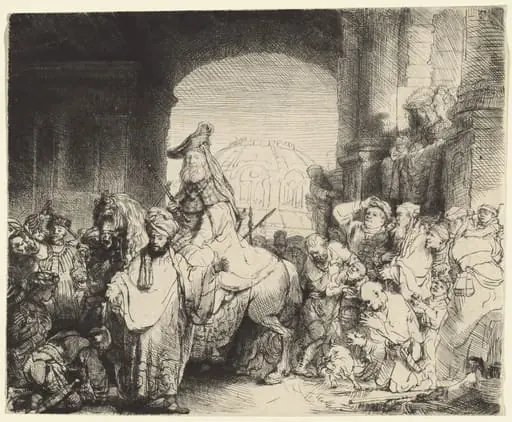 The Triumph of Mordecai
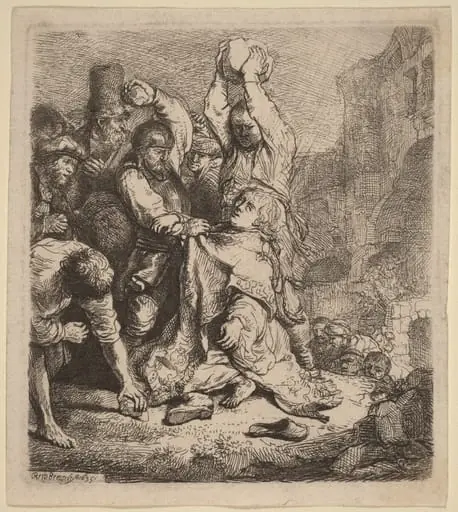 The Stoning of Saint Stephen
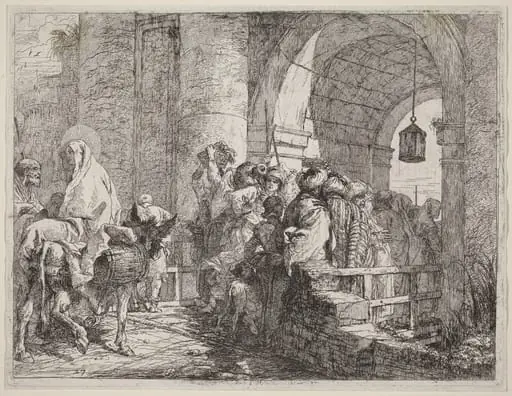 The Holy Family Arriving at a City Gate
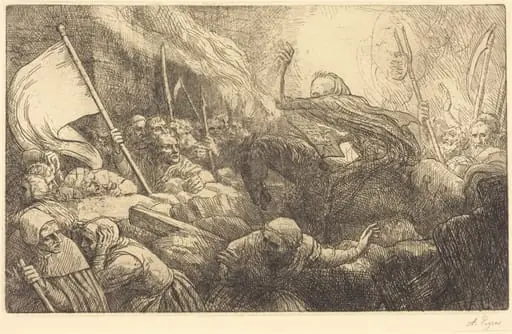 The Triumph of Death: Proclamation (Le triomphe de la mort: La proclamation)
 Beggars of Brussels (Les mendiants de Bruges)
 Flight into Egypt: The Holy Family Passing under an Arch
 Christ Preaching (The Hundred Guilder Print)