Artwork
Christ Driving the Money Changers from the Temple
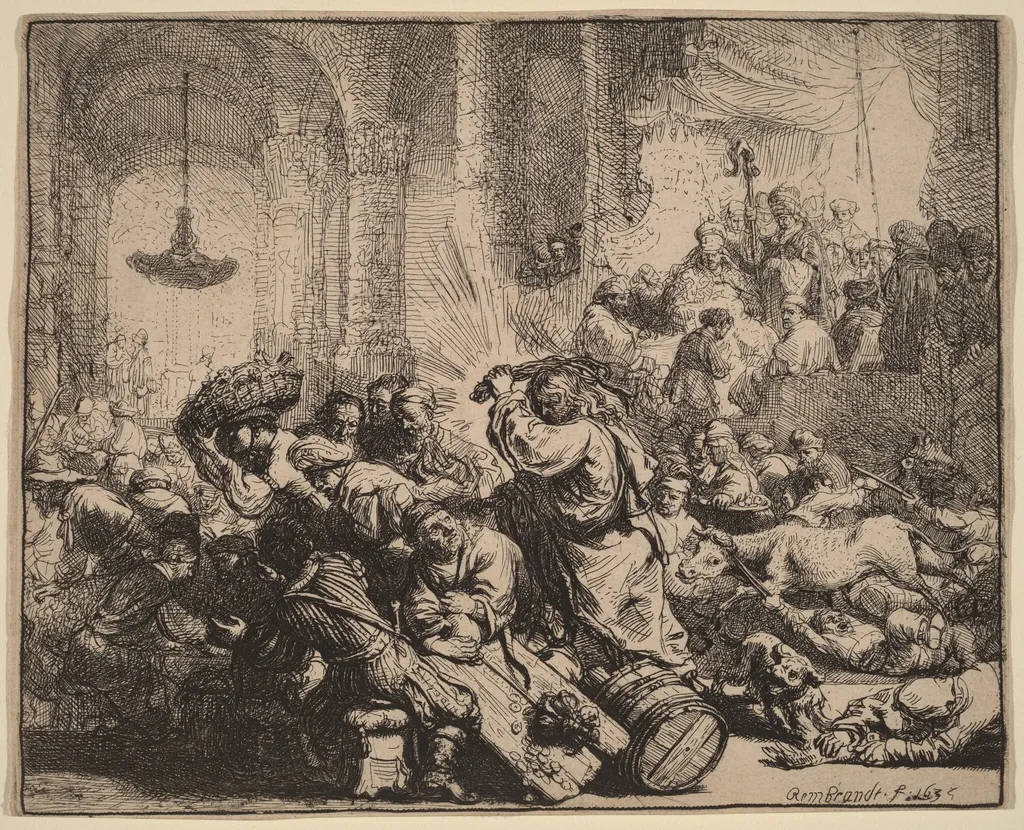
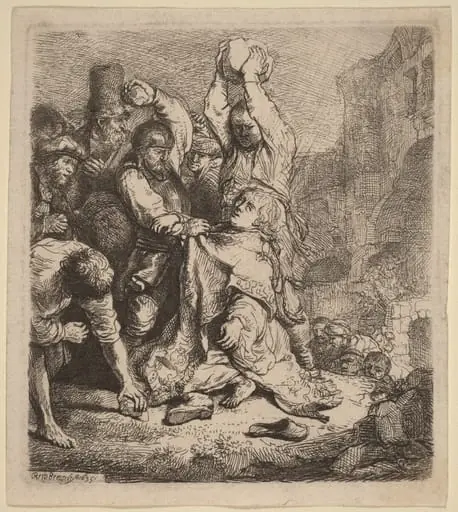
Christ Driving the Money Changers from the Temple is an ink print by the Baroque artist Rembrandt. It dates from 1635 and is held in the collection of the National Gallery of Art.
About this work
Overview
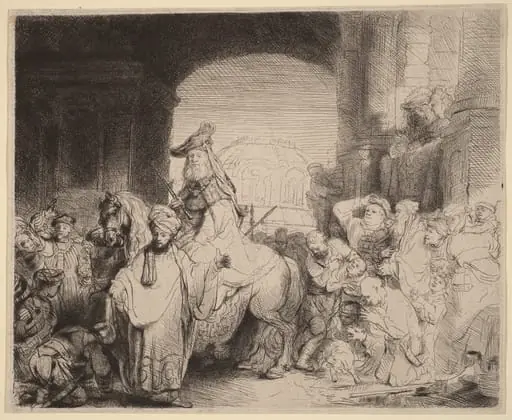
Created in 1635, this religious print by Rembrandt van Rijn depicts the biblical episode of Christ expelling the merchants from the temple. Executed as an etching, the work presents a densely populated scene in which figures intertwine amid overturned tables and barrels, conveying the tumult of the moment.
Subject & Meaning
The central focus is a dynamic figure—identified as Christ—who thrusts forward, scattering the market stalls that once occupied the sacred space. Surrounding participants scramble, some climbing the temple’s steps or seeking refuge behind columns, emphasizing the clash between spiritual authority and commercial intrusion.
Technique & Style
Rembrandt employs a vigorous etching technique, using a range of line weights from bold, heavy strokes to faint, almost invisible marks. The interplay of deep shadows and textured scratches creates a sense of depth and movement, while the jagged, rapid lines heighten the chaotic atmosphere of the scene.
History & Provenance
The print dates to the middle of Rembrandt’s early career, a period when he explored religious narratives through printmaking. As a work on paper, it would have been reproduced in limited numbers, circulating among collectors and patrons interested in the artist’s dramatic interpretations of biblical events.
Own this work as a print
Artist & collection
Artist
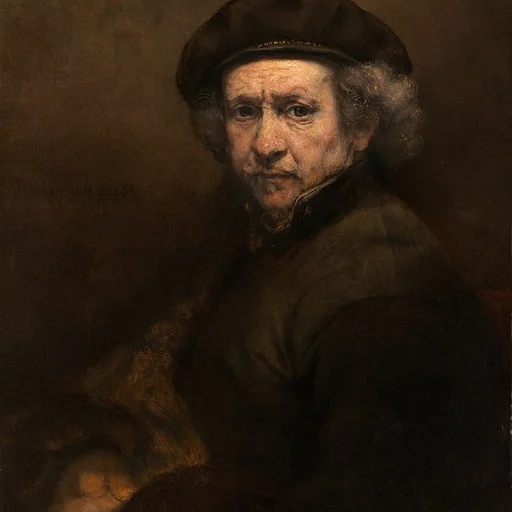
Rembrandt Harmenszoon van Rijn (15 July 1606 – 4 October 1669), known mononymously as Rembrandt, was a Dutch Golden Age painter, printmaker, and draughtsman.