Artwork
The Sack of the Temple at Jerusalem
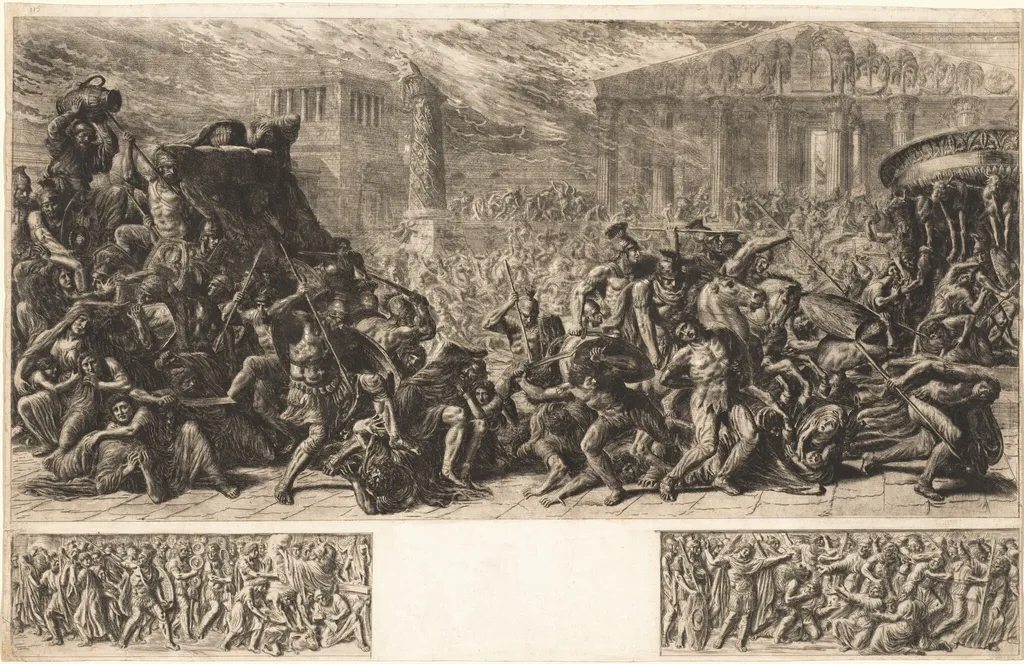
The Sack of the Temple at Jerusalem is an ink print by the Romanticist artist Luigi Ademollo. It dates from 1838 and is held in the collection of the National Gallery of Art.
About this work
Overview
Created around 1838 by Luigi Ademollo, this print combines etching and aquatint to depict the violent destruction of the Temple in Jerusalem. The composition is densely packed with figures and motion, conveying a moment of intense turmoil. Multiple smaller scenes below the main image suggest sequential events, reinforcing the narrative of collapse and conquest.
Subject & Meaning
The scene illustrates the Roman siege and desecration of the Second Temple in 70 CE, a pivotal event in Jewish history. Soldiers engage in combat amid sacred architecture, while civilians fall or flee. The inclusion of horses, broken columns, and distant ruins emphasizes the scale of devastation. The image functions as both historical record and moral commentary on the consequences of war.
Technique & Style
Ademollo employed etching for sharp, linear detail and aquatint to achieve tonal gradations in shadows and smoke. The contrast between dark, smoky skies and illuminated figures heightens the drama. The crowded composition, with figures overlapping and limbs entangled, reflects a Baroque influence, prioritizing emotional intensity over spatial clarity.
History & Provenance
The print was produced in early 19th-century Italy, during a period of renewed interest in classical and biblical themes. Ademollo, trained in Florence and active in Rome, often illustrated historical and religious subjects for academic and private patrons. This work likely circulated as part of a series on ancient conflicts, though its exact early ownership remains undocumented.
Context
In the 1830s, European artists frequently turned to ancient history to explore themes of empire, collapse, and divine retribution. Ademollo’s image aligns with broader Romantic-era fascination with violent historical turning points. The depiction of sacred space under siege resonated with contemporary anxieties about political upheaval and religious identity across Europe.
Legacy
Though not widely exhibited today, the print remains a representative example of 19th-century Italian historical printmaking. Its detailed rendering of chaos influenced later illustrators of biblical narratives. The work survives in institutional collections, valued for its technical execution and its reflection of how 19th-century audiences visualized ancient catastrophes.
Artist & collection


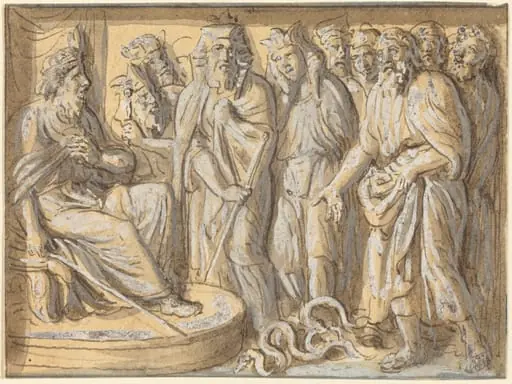 Moses and Aaron before Pharaoh, with the Rods Turned into Serpents
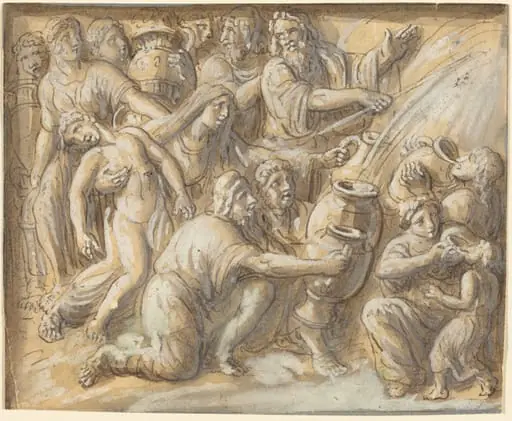 Moses Drawing Water From the Rock
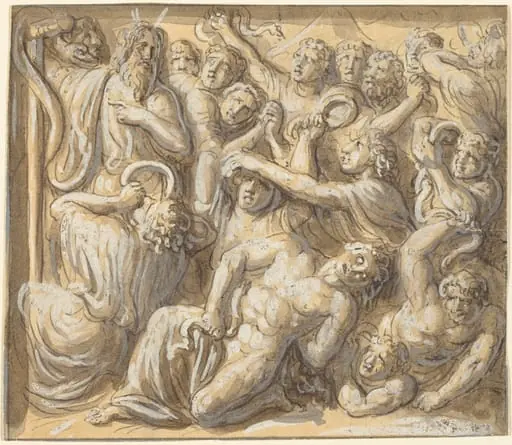 Moses and the Brazen Serpent
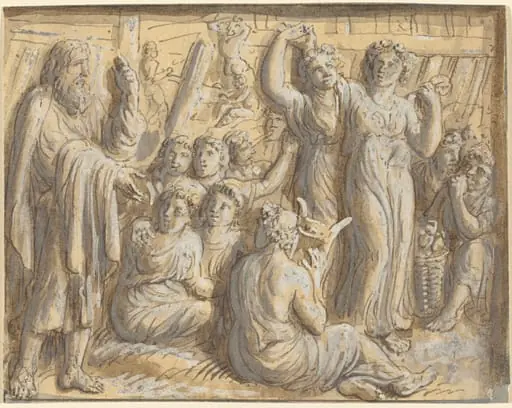 Noah's Warning about the Coming Flood Goes Unheeded
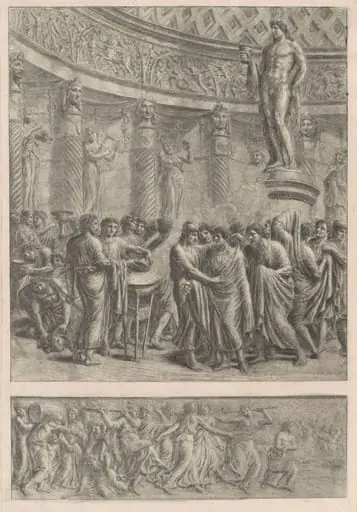 An Antique Sacrifice
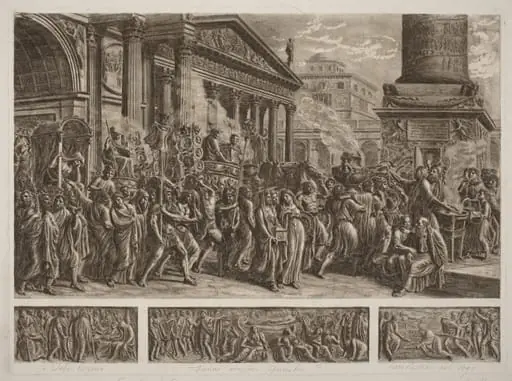 The Ashes of Trajan Carried in a Triumphal Procession
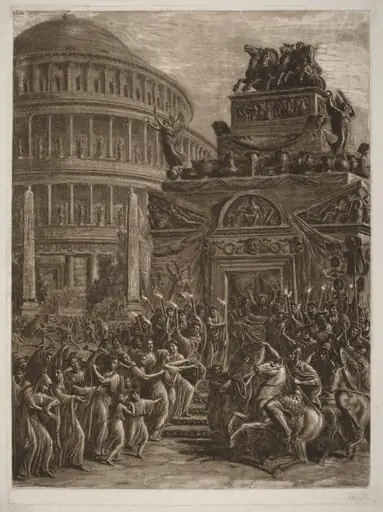 The Body of Hadrian Laying in State next to His Mausoleum
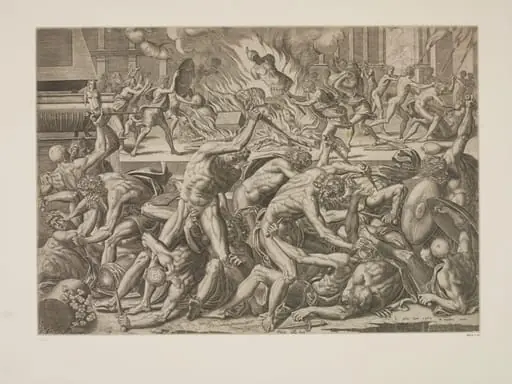 The Gladiators
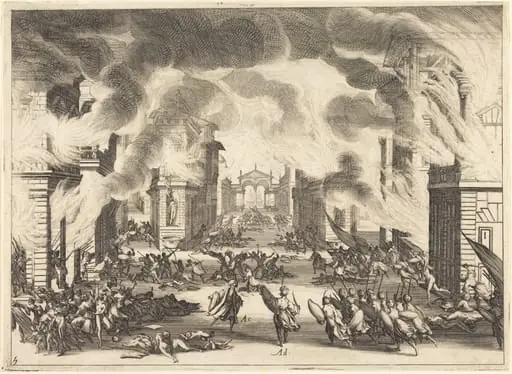 Il Solimano, Act V
 Il Solimano, Act V
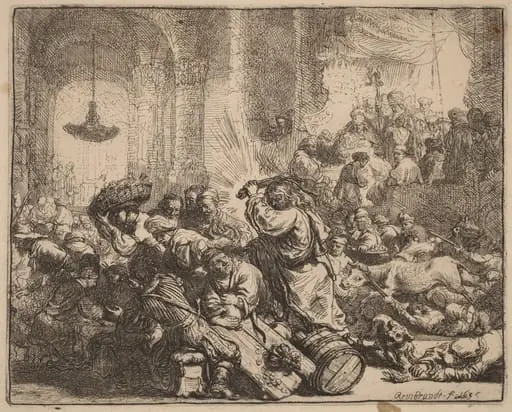 Christ Driving the Money Changers from the Temple
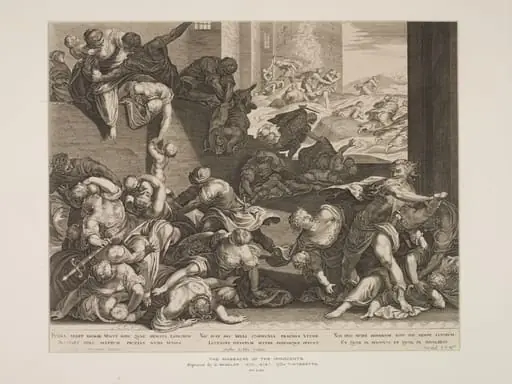 The Massacre of the Innocents
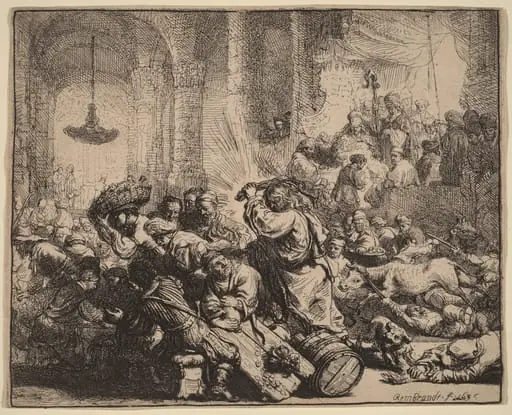 Christ Driving the Money Changers from the Temple
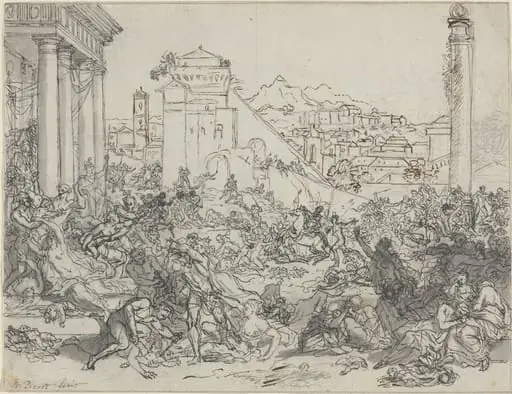 Massacre of the Innocents
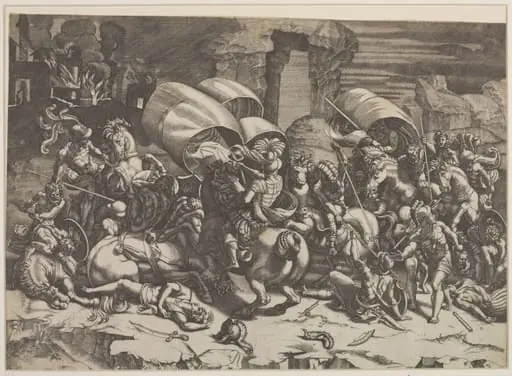 La bataille au coutelas
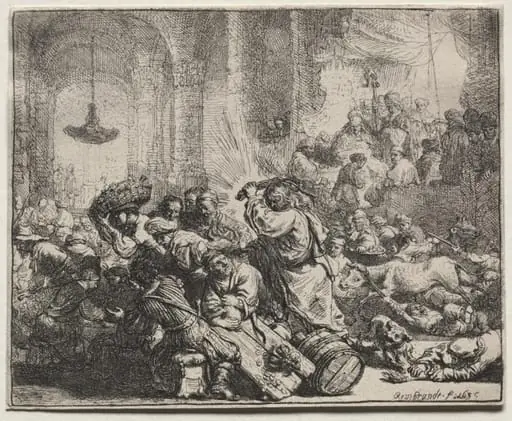 Christ Driving the Money Changers from the Temple
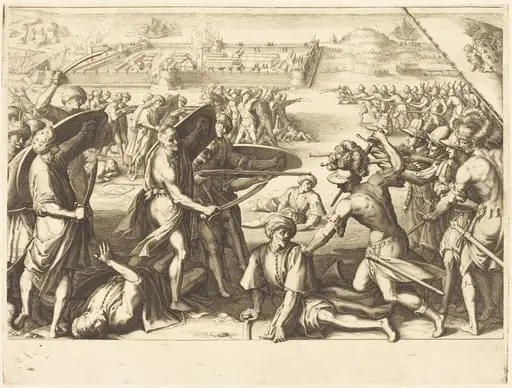 Assault on the Outer Forts of Bone
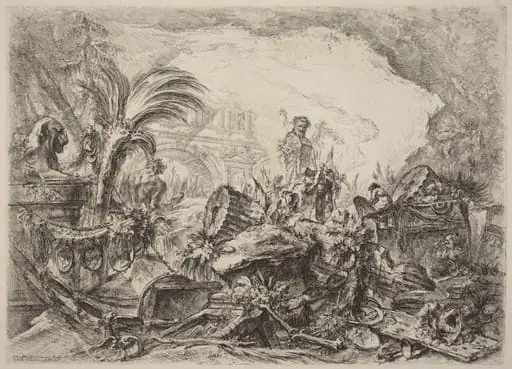 The Triumphal Arch