Artwork
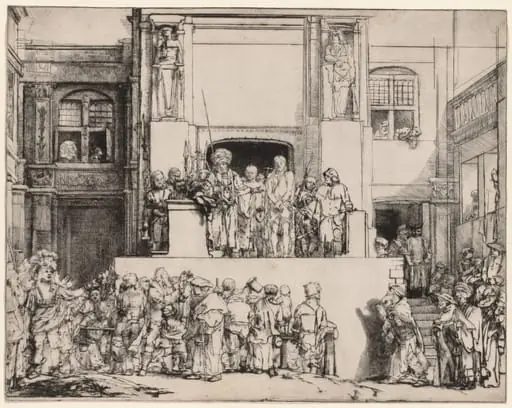
Christ Presented to the People: Oblong Plate
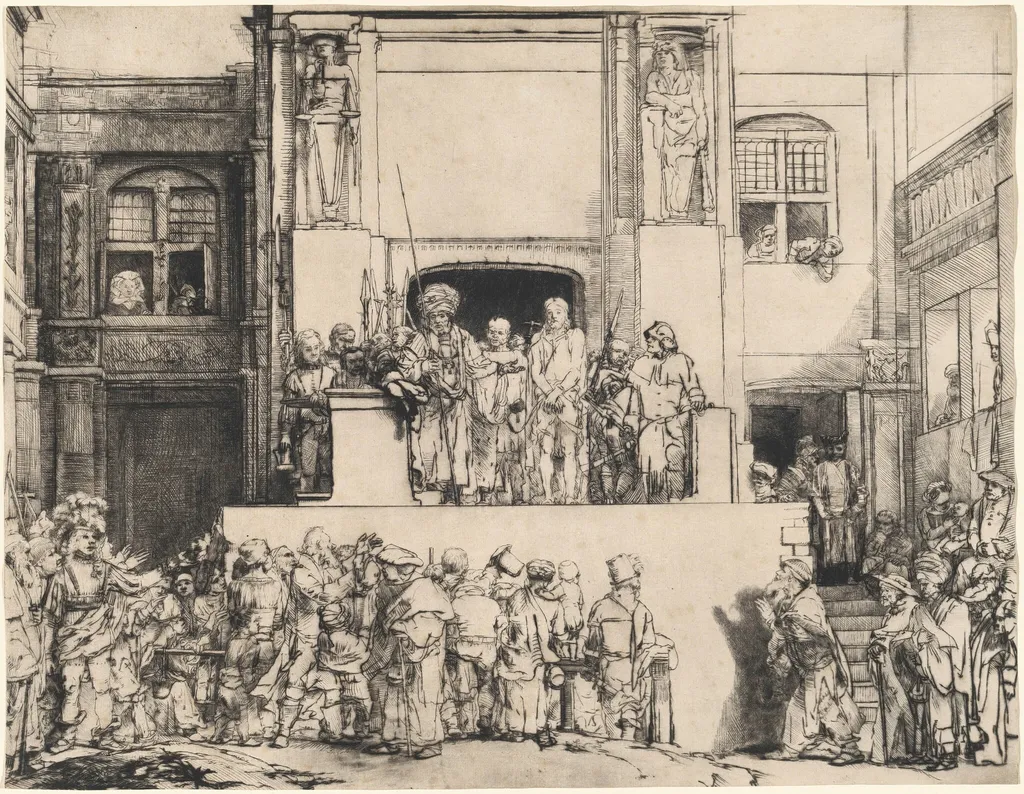
Christ Presented to the People: Oblong Plate is an ink print by the Baroque artist Rembrandt. It dates from 1655 and is held in the collection of the National Gallery of Art.
About this work
Overview
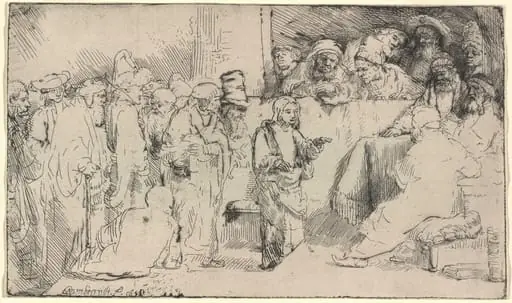
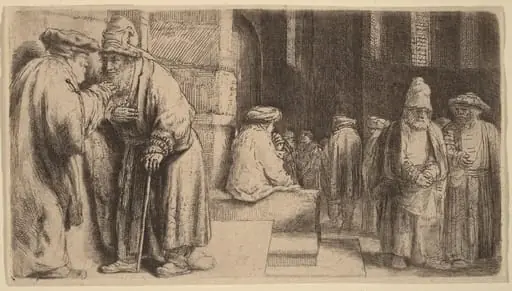
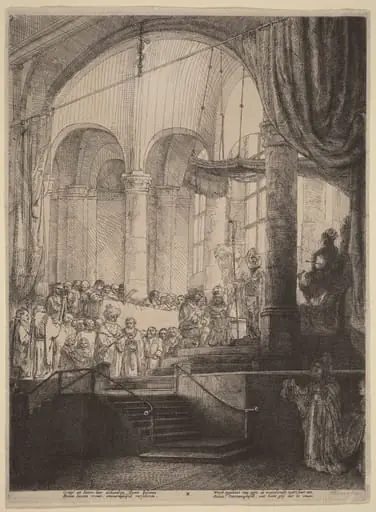
Created in 1655, this oblong drypoint by Rembrandt van Rijn depicts the moment Christ is presented to the crowd by Pontius Pilate. Executed with fine, incised lines, the print captures a crowded urban scene with architectural detail and dramatic contrasts. The absence of color emphasizes tonal variation, directing attention through light and shadow rather than hue.
Subject & Meaning
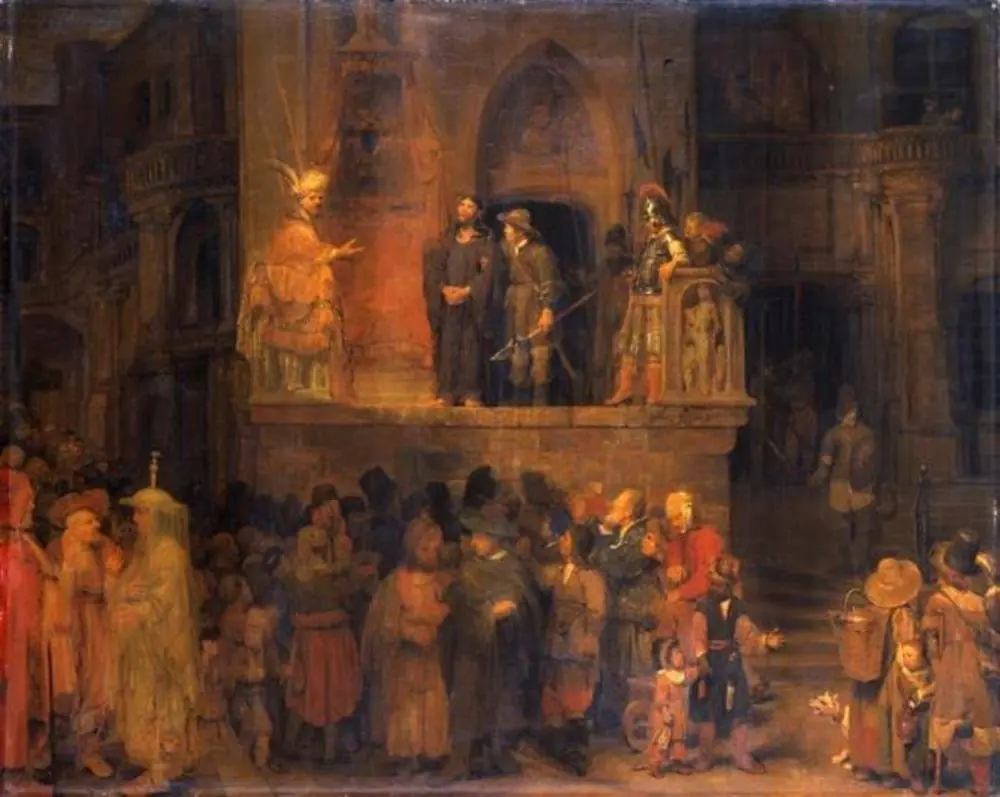
The scene illustrates the biblical moment when Christ, standing before Pilate, is shown to the people of Jerusalem. A small group of officials gathers near a doorway, while a larger, agitated crowd observes from the street. Gestures of pointing and murmuring convey tension and moral ambiguity, reflecting the moment’s weight without overt narrative clarity.
Technique & Style
Rembrandt employed drypoint, scratching directly into a copper plate to create rich, velvety lines. The composition relies on bold, dark strokes and minimal shading, using chiaroscuro to define space and focus. Figures are rendered with swift, expressive marks, their clothing and postures suggesting movement and emotional urgency without detailed rendering.
History & Provenance
This print was made during Rembrandt’s later years, a period marked by personal hardship and artistic experimentation. It was likely produced for a limited audience of collectors and fellow artists. Its survival in multiple impressions suggests it was circulated within artistic circles, though its exact early ownership remains undocumented.
Context
In mid-17th century Amsterdam, religious imagery remained central to print culture, even as secular themes gained ground. Rembrandt’s focus on psychological depth and everyday realism distinguished his biblical scenes from idealized contemporaries. This work reflects his interest in human response to authority and moral choice.
Legacy
The print exemplifies Rembrandt’s mastery of narrative economy in printmaking. Its emphasis on emotional atmosphere over literal detail influenced later generations of etchers and draftsmen. Though not widely reproduced in his lifetime, it is now recognized as a key example of his mature graphic style.
Artist & collection
Artist
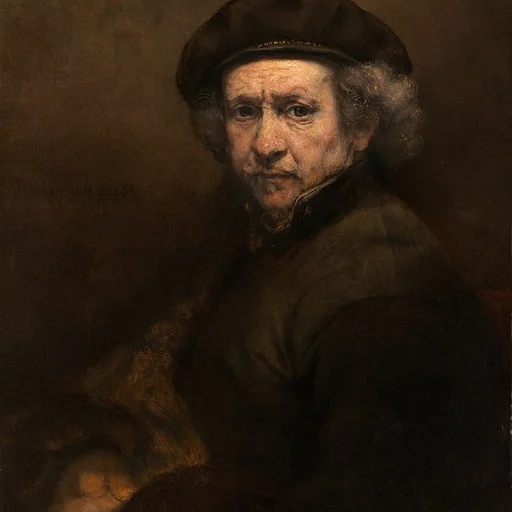
Rembrandt Harmenszoon van Rijn (15 July 1606 – 4 October 1669), known mononymously as Rembrandt, was a Dutch Golden Age painter, printmaker, and draughtsman.