Artwork
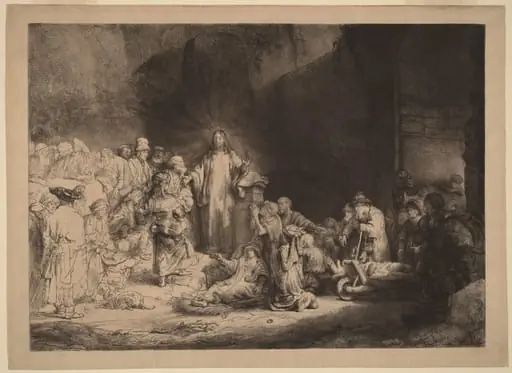
The Hundred Guilder Print, central section
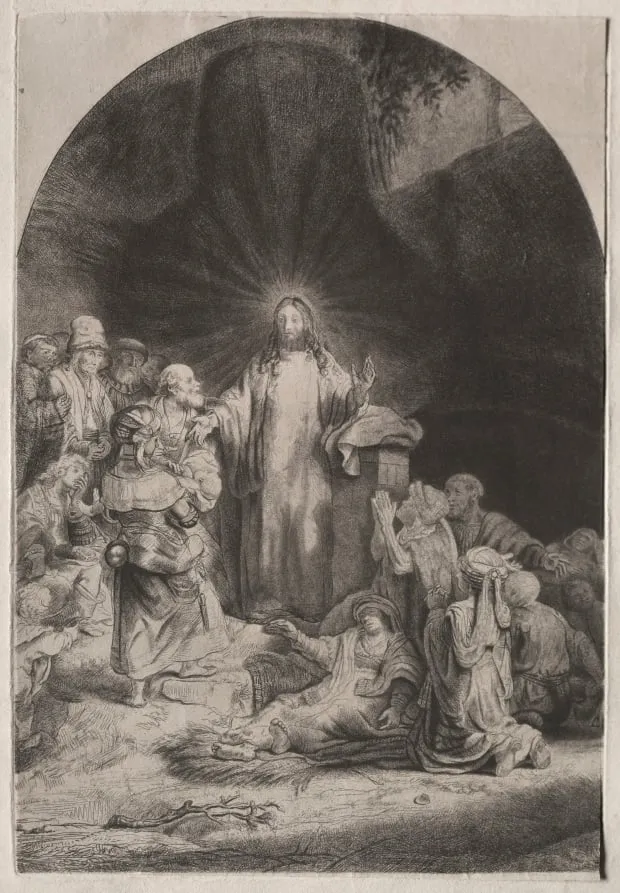
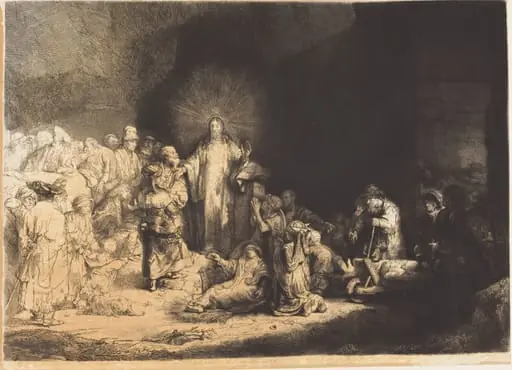
The Hundred Guilder Print, central section is a print by the Baroque artist Rembrandt. It dates from 1649 and is held in the collection of the Cleveland Museum of Art.
About this work
Overview
Originally composed on a single copper plate, the work was later divided into sections after the plate was altered and reworked by subsequent owners.
This print is one segment of Rembrandt van Rijn’s multi-year etching project known as the Hundred Guilder Print. Originally composed on a single copper plate, the work was later divided into sections after the plate was altered and reworked by subsequent owners. This fragment preserves the central narrative zone, where Jesus interacts with a gathering of figures in a rural setting, capturing a moment of quiet spiritual authority amid daily life.
Subject & Meaning
The scene centers on Jesus surrounded by a diverse crowd—some seeking healing, others observing in silence. A man presents his child, a gesture of trust and vulnerability, while nearby figures react with curiosity, doubt, or reverence. The composition avoids theatricality, instead emphasizing human presence and emotional nuance, suggesting that divine grace unfolds in ordinary moments rather than through spectacle.
Technique & Style
Rembrandt employed deep, fluid etching lines and varied ink application to create rich tonal contrasts. The interplay of light and shadow models forms with a tactile sensitivity, giving weight to garments, faces, and gestures. His reworking of the plate over years allowed for incremental refinement, resulting in a surface where texture and atmosphere feel intimately observed rather than idealized.
History & Provenance
The original copper plate was acquired by William Baillie in 1775, who altered its surface and later divided it into sections for separate printings. This fragment derives from that reconfigured plate, reflecting both Rembrandt’s evolving vision and later interventions that fragmented the work’s unity. The practice of cutting and re-printing plates was not uncommon among collectors seeking to isolate compelling compositions.
Context
Created in the 1640s, the print reflects Rembrandt’s deep engagement with biblical narratives through a lens of human empathy rather than doctrinal certainty. Unlike contemporaneous religious imagery, it avoids grandeur, focusing instead on intimate exchanges and the quiet dignity of the marginalized. The setting—a modest village—grounds the sacred in the everyday, aligning with Dutch Protestant sensibilities of the era.
Legacy
Though the full plate is no longer intact, this section endures as a testament to Rembrandt’s ability to convey complex emotion through subtle line and tone. Its survival in fragments underscores how his prints were valued not merely as reproductions but as evolving artistic objects, reinterpreted across generations through physical alteration and selective printing.
Artist & collection
Artist
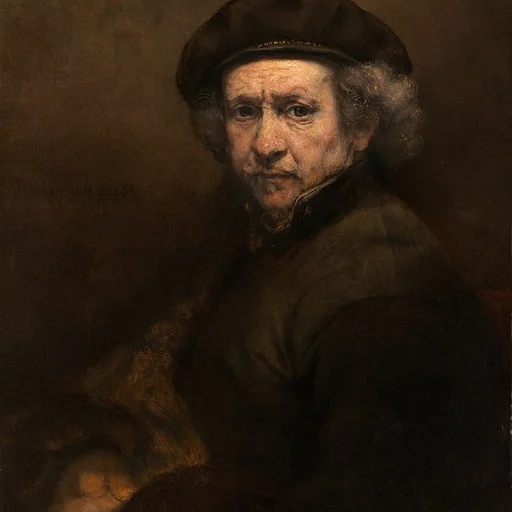
Rembrandt Harmenszoon van Rijn (15 July 1606 – 4 October 1669), known mononymously as Rembrandt, was a Dutch Golden Age painter, printmaker, and draughtsman.

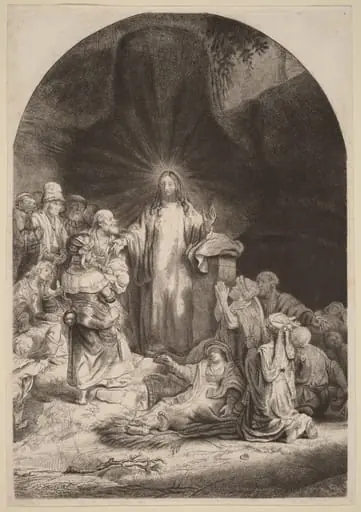 Christ Preaching and Healing (Fragment from the Hundred Guilder Print)
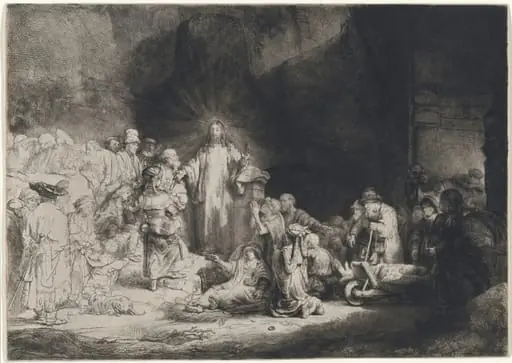 Christ Preaching (The Hundred Guilder Print)
 Christ Preaching (The Hundred Guilder Print)
 Christ Preaching (The Hundred Guilder Print)
 The Tribute Money
 Christ Appearing to the Apostles
 The Presentation in the Temple: Oblong Print
 Christ at Emmaus: The Larger Plate
 Christ at Emmaus: the Larger Plate