Artwork
The Pancake Woman
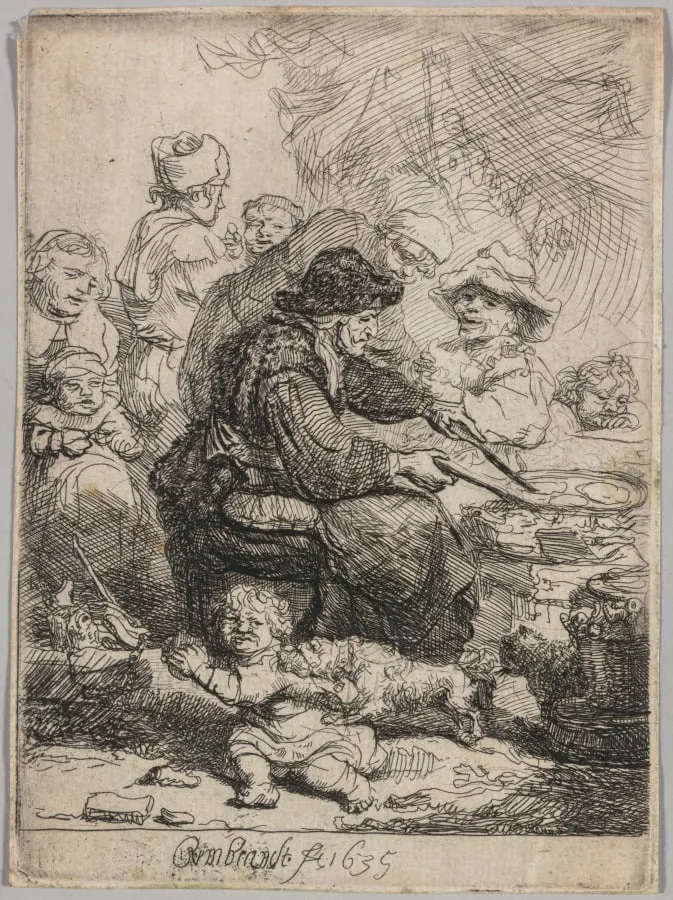
The Pancake Woman is a print by the Baroque artist Rembrandt. It dates from 1635 and is held in the collection of the Cleveland Museum of Art.
About this work
Overview
This print by Rembrandt depicts a quiet domestic moment centered on a woman preparing pancakes. The composition captures ordinary household activity with intimate attention, avoiding theatricality in favor of unembellished realism. Figures are arranged naturally around the hearth, suggesting a fleeting, unposed moment in daily life.
Subject & Meaning
The scene portrays maternal labor amid childhood distraction. One child watches the cooking pan with quiet curiosity, while another, just beyond reach, holds a pancake away from a dog intent on stealing it. These interactions reveal the tension between care and chaos in domestic space, without moralizing or idealizing the moment.
Technique & Style
Rembrandt employed drypoint and etching to render texture with fine, expressive lines. The woman’s apron, the dog’s fur, and the wooden floor are suggested through varied incisions, not detailed rendering. Light falls subtly, modeling forms without harsh contrast, enhancing the sense of quiet realism and tactile presence.
History & Provenance
Created in the 1650s, the print belongs to Rembrandt’s later period, when he increasingly turned to intimate, unidealized subjects. It was likely made for private collectors rather than public display. The Cleveland Museum of Art holds one of the known impressions, acquired in the early 20th century as part of a broader collection of Dutch prints.
Context
During the Dutch Golden Age, domestic interiors became popular subjects among artists, reflecting a cultural shift toward valuing private life. Rembrandt’s focus on humble, unglamorous moments aligned with broader trends in genre painting, where ordinary people and routines were rendered with psychological depth and observational precision.
Legacy
The print contributed to a lasting tradition of depicting domestic labor with dignity. Its unromanticized portrayal of motherhood and childhood influenced later genre artists who sought authenticity over idealization. Though not widely exhibited, it remains a quiet reference point in studies of 17th-century printmaking and everyday life.
Artist & collection
Artist
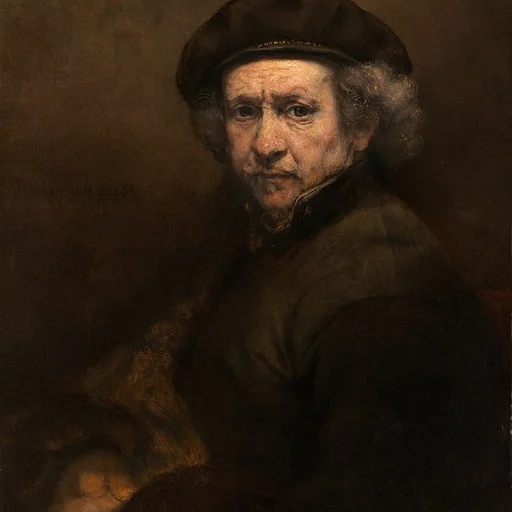
Rembrandt Harmenszoon van Rijn (15 July 1606 – 4 October 1669), known mononymously as Rembrandt, was a Dutch Golden Age painter, printmaker, and draughtsman.

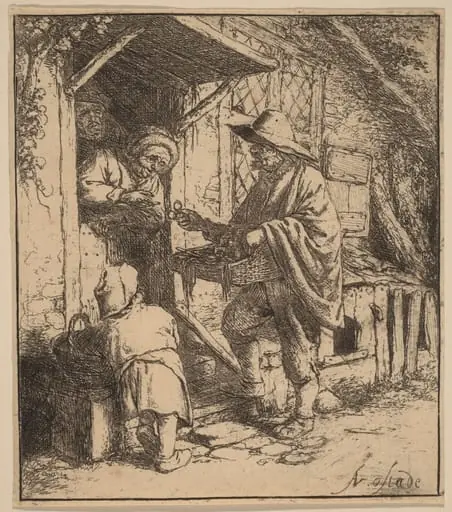 Street Vendor Selling Spectacles at the Door
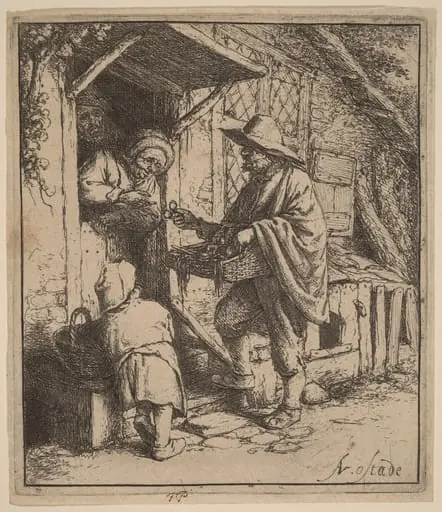 Street Vendor Selling Spectacles at the Door
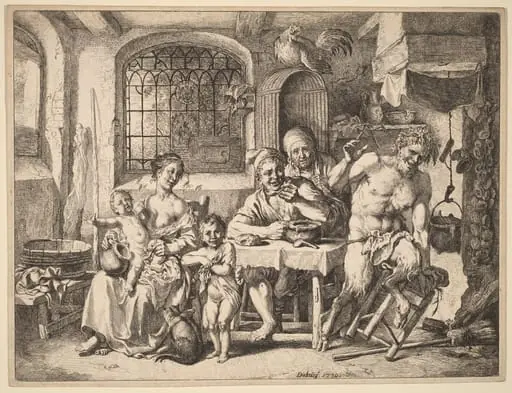 A Satyr Visiting a Peasant Family
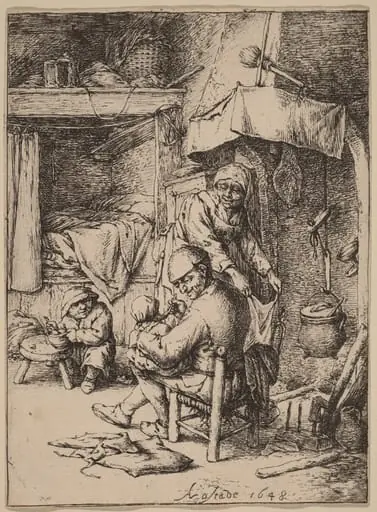 Peasant Family in an Interior wtih the Father Feeding a Child
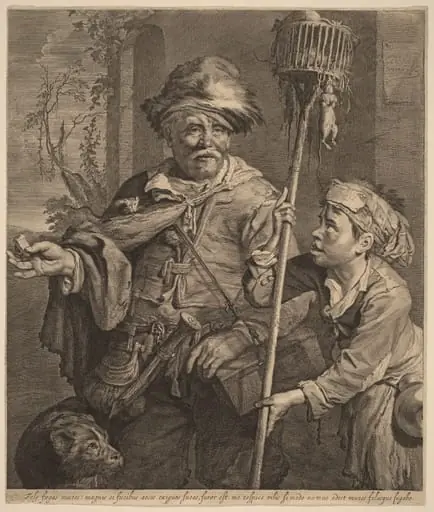 The Seller of Rat Poison
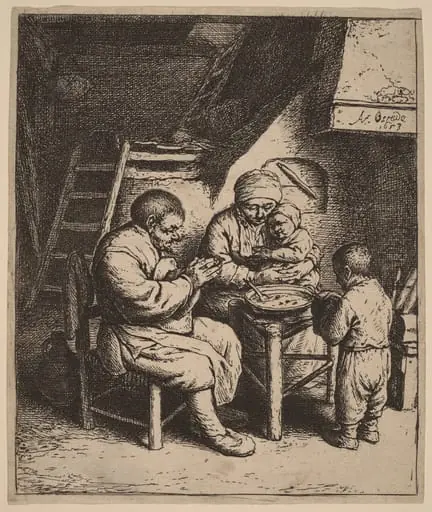 Peasant Family Praying Before a Meal
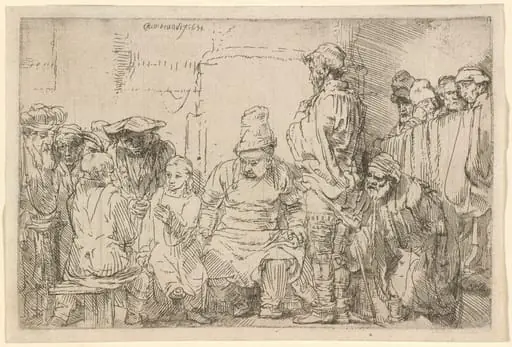 Christ Seated Disputing with the Doctors
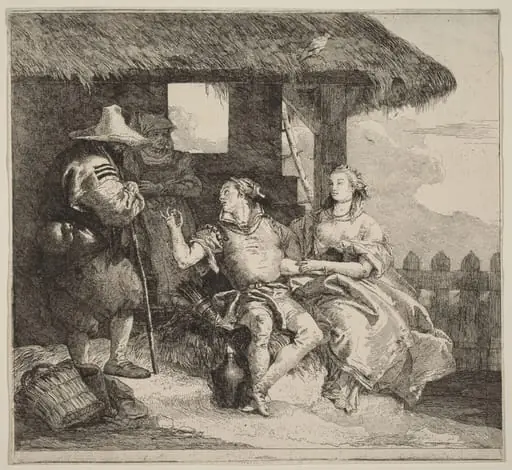 The Marriage of Angelica and Medoro