Artwork
A Satyr Visiting a Peasant Family
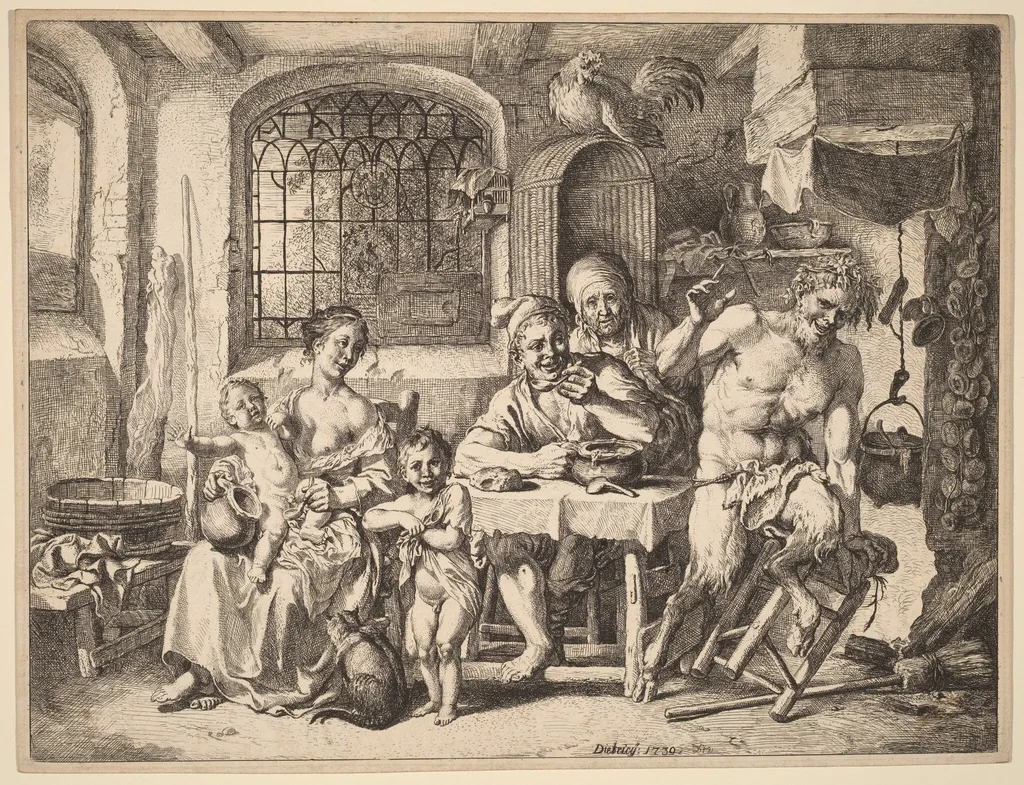
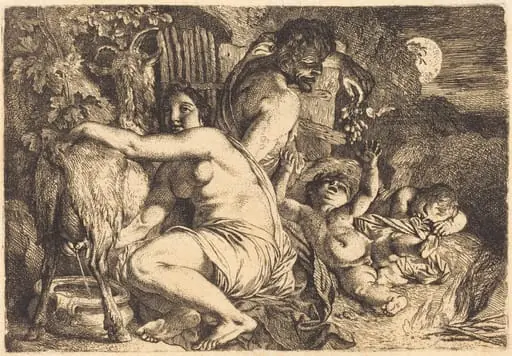
A Satyr Visiting a Peasant Family is an ink print by the Baroque artist Christian Wilhelm Ernst Dietrich. It dates from 1739 and is held in the collection of the National Gallery of Art.
About this work
Overview
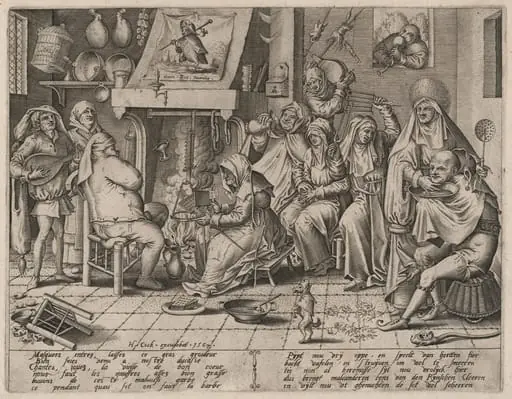
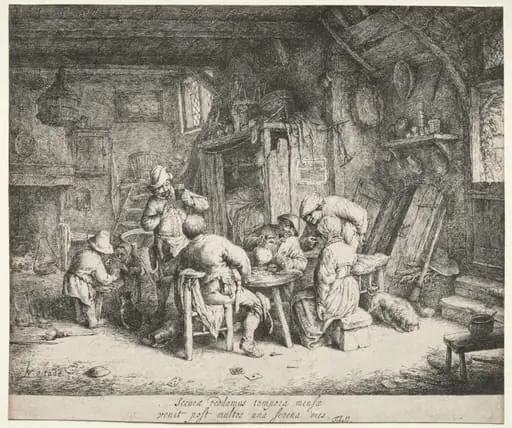
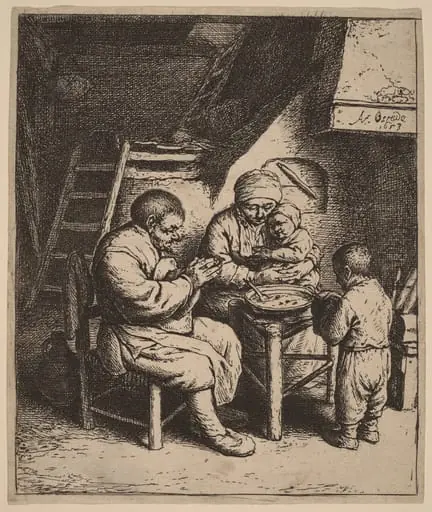
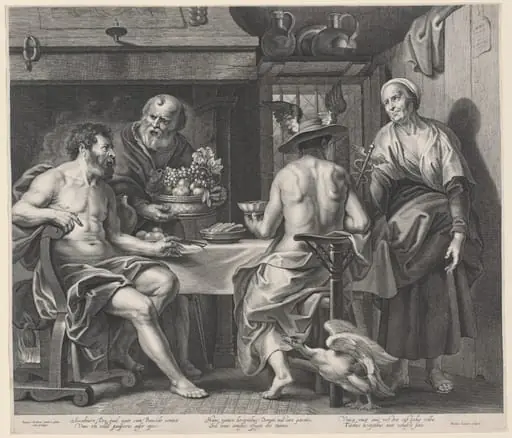
A Satyr Visiting a Peasant Family is an etching created in 1739 by Christian Wilhelm Ernst Dietrich. The print depicts a dynamic scene within a cluttered rustic room.
Subject & Meaning
The etching shows a satyr, a mythical creature with goat-like features, interacting with a peasant family. The satyr's expressive, surprised-delighted pose contrasts with the family's varied reactions, ranging from wonder to cautious curiosity, highlighting an intriguing encounter between the mundane and the mythological.
Technique & Style
Executed in etching on laid paper, the work exemplifies characteristics of the Baroque style, notably through its dramatic composition and expressive figural poses, particularly evident in the satyr's dynamic stance.
History & Provenance
Created in 1739 by Christian Wilhelm Ernst Dietrich, specific provenance details are not provided in the available information.
Context
The etching reflects the Baroque period's fascination with juxtaposing everyday life with mythological elements, creating a narrative of surprise and interaction between two disparate worlds.
Legacy
As a representative Baroque etching, it contributes to the understanding of 18th-century artistic themes and techniques, though its broader impact or notable exhibitions are not specified in the given details.
Artist & collection