Artwork
Faust
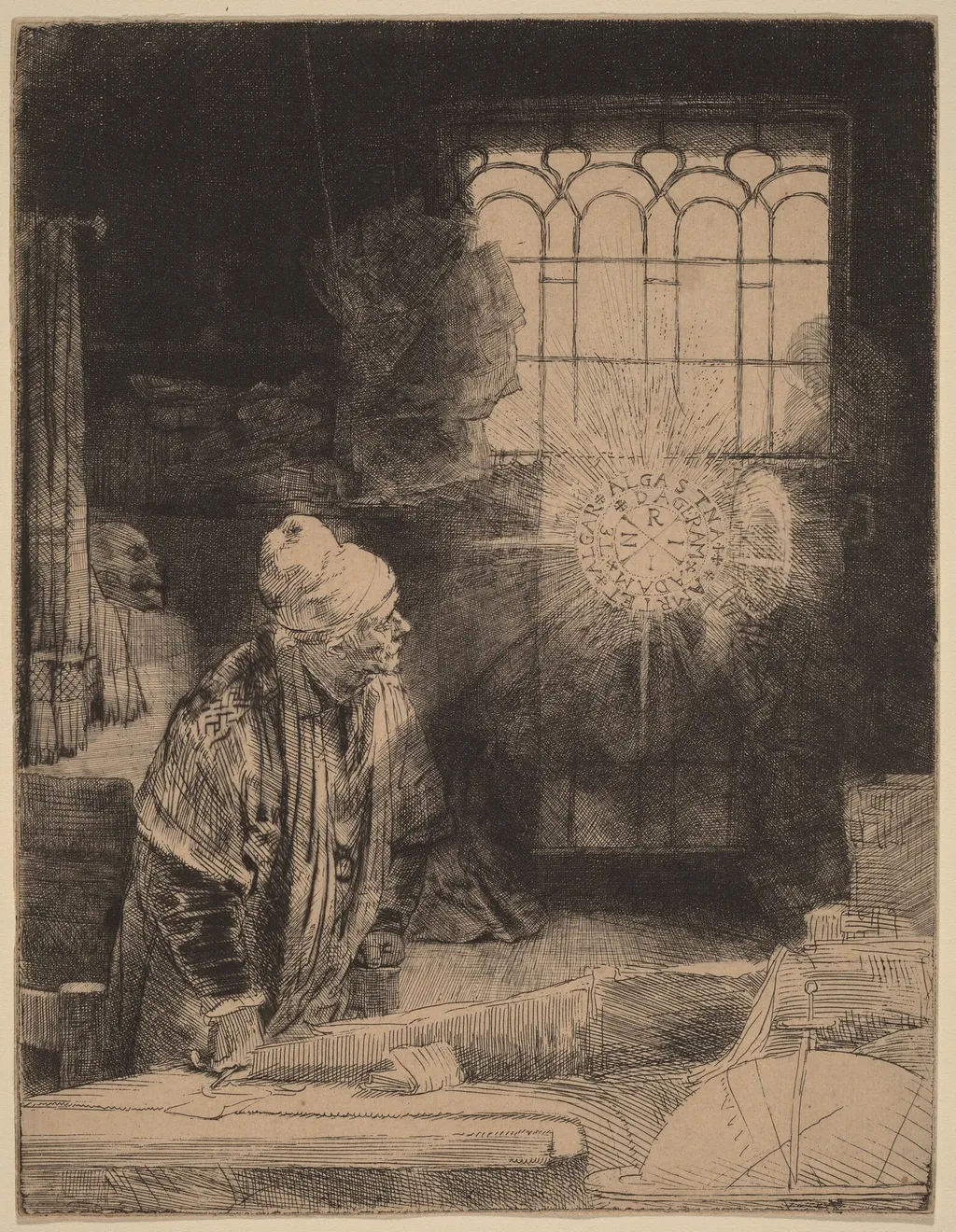
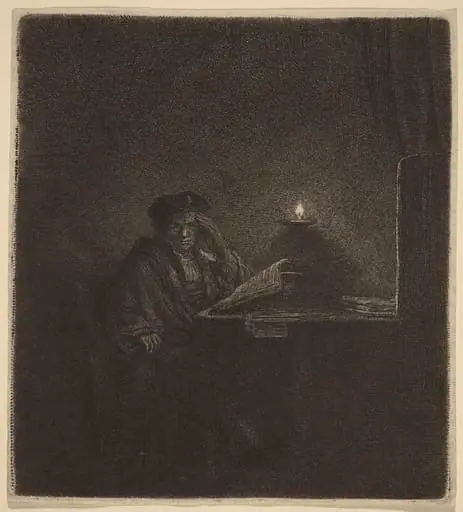
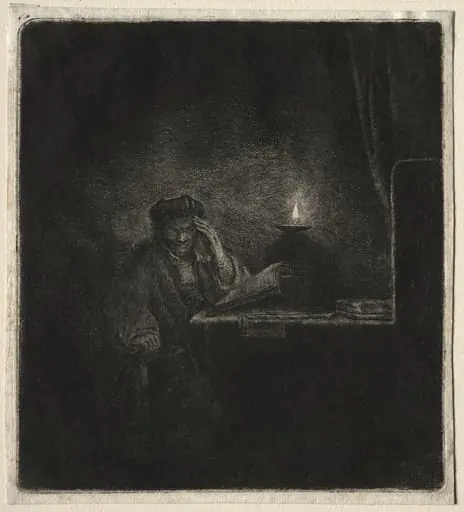
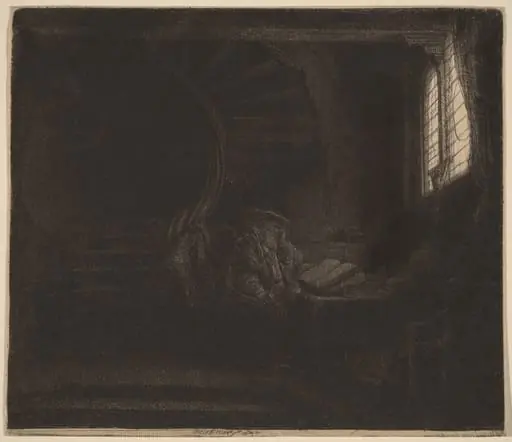
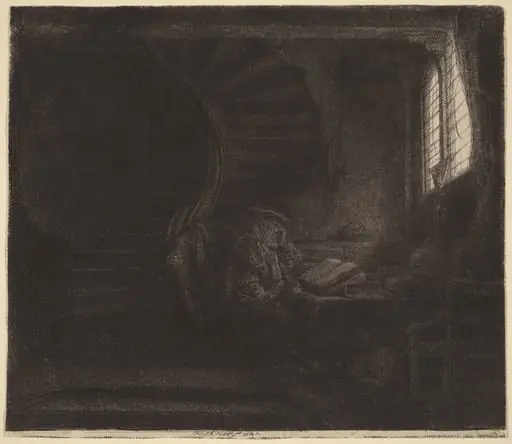
Faust is an ink print by the Baroque artist Rembrandt. It dates from 1652 and is held in the collection of the National Gallery of Art.
About this work
Overview
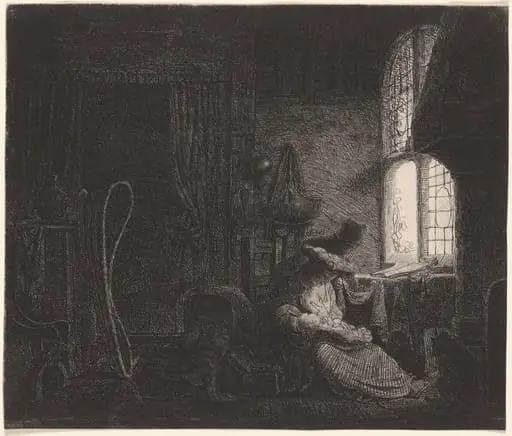
Created around 1652, this etching by Rembrandt van Rijn captures a solitary figure in a modest interior. Rendered with fine, controlled lines, the work exemplifies Rembrandt’s mastery of the etching technique. The composition focuses on the interplay of light and shadow, drawing attention to the figure’s stillness and the quiet intensity of his gaze toward the window.
Subject & Meaning
The figure, dressed in a turban and flowing robe, is often interpreted as a scholarly or mystical persona, possibly evoking the legendary Faust. His posture and the dim, enclosed space suggest introspection, as if caught between the tangible world of books and the unseen beyond the window. The scene invites contemplation rather than narrative, emphasizing inner thought over external action.
Technique & Style
Rembrandt employed fine, layered etching lines to model form and texture with remarkable subtlety. The window’s small panes, the folds of fabric, and the scattered papers are rendered with precise, deliberate strokes. Light enters sharply from the window, creating strong contrasts that define the figure’s face and the table’s surface, showcasing his command of chiaroscuro in printmaking.
History & Provenance
The etching was produced during Rembrandt’s later years in Amsterdam, a period marked by personal hardship and artistic experimentation. Though its early ownership is undocumented, it entered major collections by the 18th century and is now held in institutions such as the Rijksmuseum and the British Museum, where it is studied for its technical innovation.
Context
This work emerged amid the Baroque era’s fascination with psychological depth and dramatic lighting. While contemporaries often emphasized grandeur, Rembrandt turned inward, using intimate scenes to explore human solitude. The figure’s attire reflects period interest in orientalizing costumes, common in Dutch art as symbols of wisdom or mystery.
Legacy
The etching remains a key example of Rembrandt’s ability to convey complex emotion through minimal means. Its influence extends to later printmakers who admired his nuanced use of line and light. Though not widely reproduced in his lifetime, it has become a touchstone for understanding the expressive potential of etching as a fine art medium.
Artist & collection
Artist
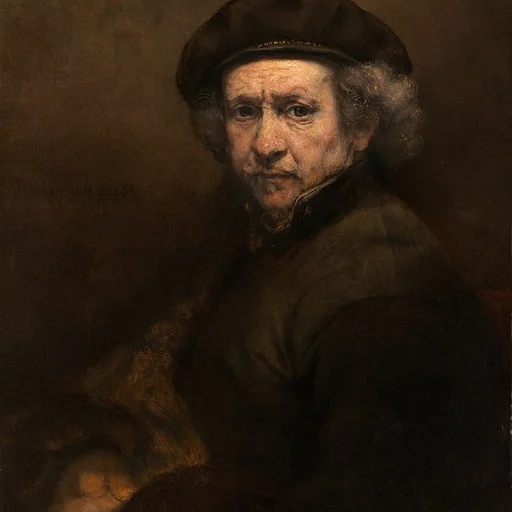
Rembrandt Harmenszoon van Rijn (15 July 1606 – 4 October 1669), known mononymously as Rembrandt, was a Dutch Golden Age painter, printmaker, and draughtsman.