Artwork
Faust
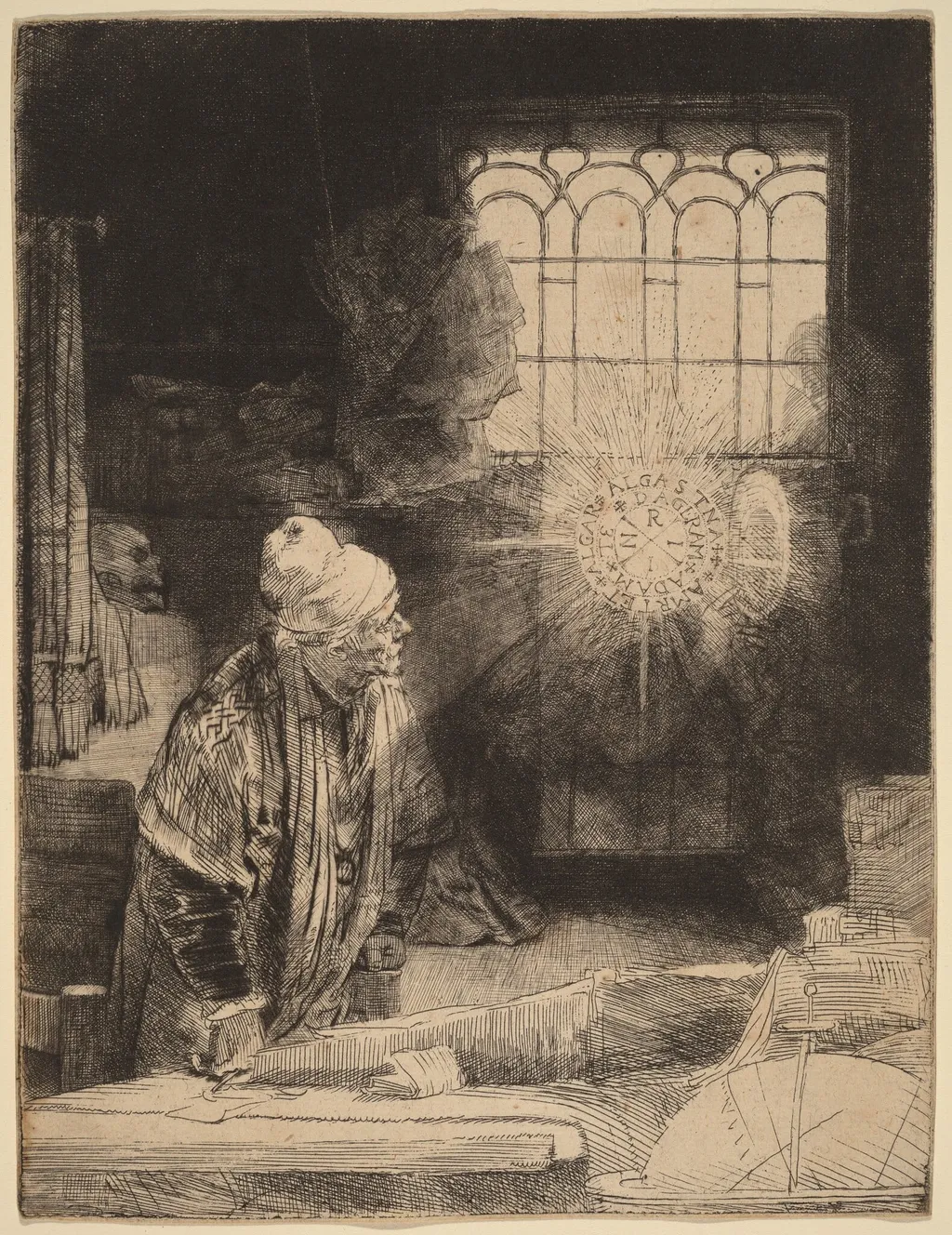
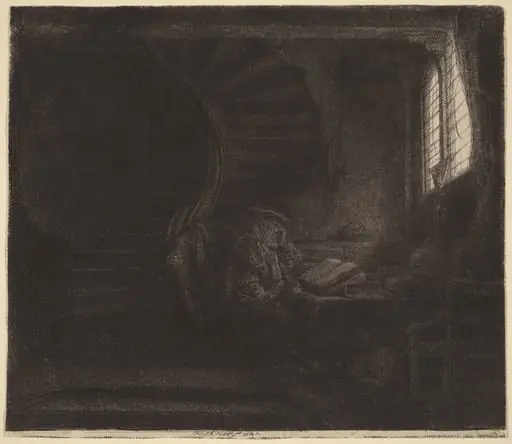
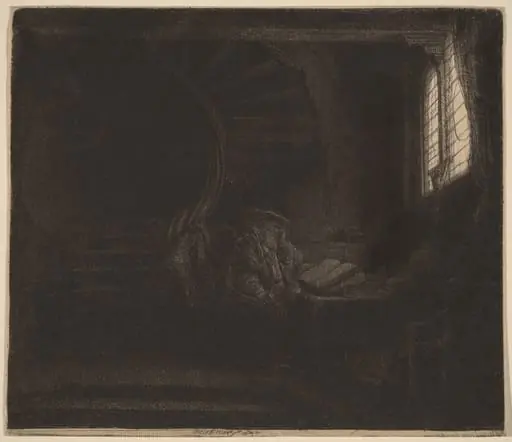
Faust is an ink print by the Baroque artist Rembrandt. It dates from 1652 and is held in the collection of the National Gallery of Art.
About this work
Overview
The work captures a solitary figure in a modest interior, rendered with intricate line work that emphasizes texture and atmosphere.
Created around 1652, Faust is a print by Rembrandt van Rijn, executed in etching, drypoint, and engraving on rough beige paper. The work captures a solitary figure in a modest interior, rendered with intricate line work that emphasizes texture and atmosphere. Unlike painted compositions, this piece relies on the physical manipulation of a metal plate to produce a single impression, showcasing Rembrandt’s mastery of printmaking techniques.
Subject & Meaning
The figure, cloaked in a loose robe and turban, kneels with head bowed, facing away from the viewer, suggesting introspection or prayer. The faint illumination from a window reveals a starry sky and the Latin inscription 'Algasparis turba' etched onto the glass, possibly referencing celestial or esoteric themes. The ambiguity of the scene invites interpretation, though no definitive narrative ties it to a known literary or religious source.
Technique & Style
Rembrandt employed multiple printmaking methods—etching for fluid lines, drypoint for rich, velvety shadows, and engraving for precise detail—layering them to achieve depth and tonal variation. The rough texture of the paper enhances the tactile quality of the inked lines, while the sparse composition focuses attention on the figure’s solitude. The technique reveals his experimental approach, prioritizing emotional resonance over formal clarity.
History & Provenance
Faust was produced during Rembrandt’s later years, a period marked by personal hardship and artistic refinement. Though its early ownership is undocumented, the print entered major collections in the 18th and 19th centuries, reflecting its recognition among connoisseurs. Its survival in good condition underscores its careful handling and enduring appeal to collectors of Old Master prints.
Context
In the 1650s, Rembrandt increasingly turned to intimate, psychologically charged subjects in his prints, often exploring themes of solitude and spiritual contemplation. Faust aligns with this shift, echoing contemporary interests in mysticism and the occult, while also reflecting the artist’s personal engagement with textual and symbolic imagery during a time of financial and social strain.
Legacy
Faust remains a key example of Rembrandt’s late printmaking, admired for its emotional restraint and technical innovation. It influenced later artists interested in the expressive potential of etching and drypoint, particularly those seeking to convey inner states through minimal means. The work continues to be studied for its synthesis of craft and psychological depth.
Artist & collection
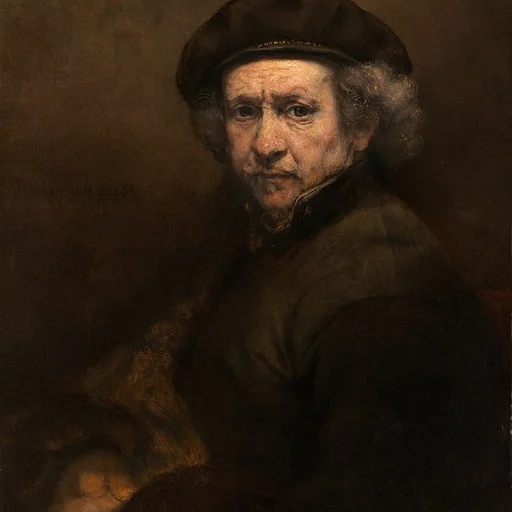
Artist
Rembrandt Harmenszoon van Rijn (15 July 1606 – 4 October 1669), known mononymously as Rembrandt, was a Dutch Golden Age painter, printmaker, and draughtsman.