Artwork
Man at a Desk Wearing a Cross and Chain
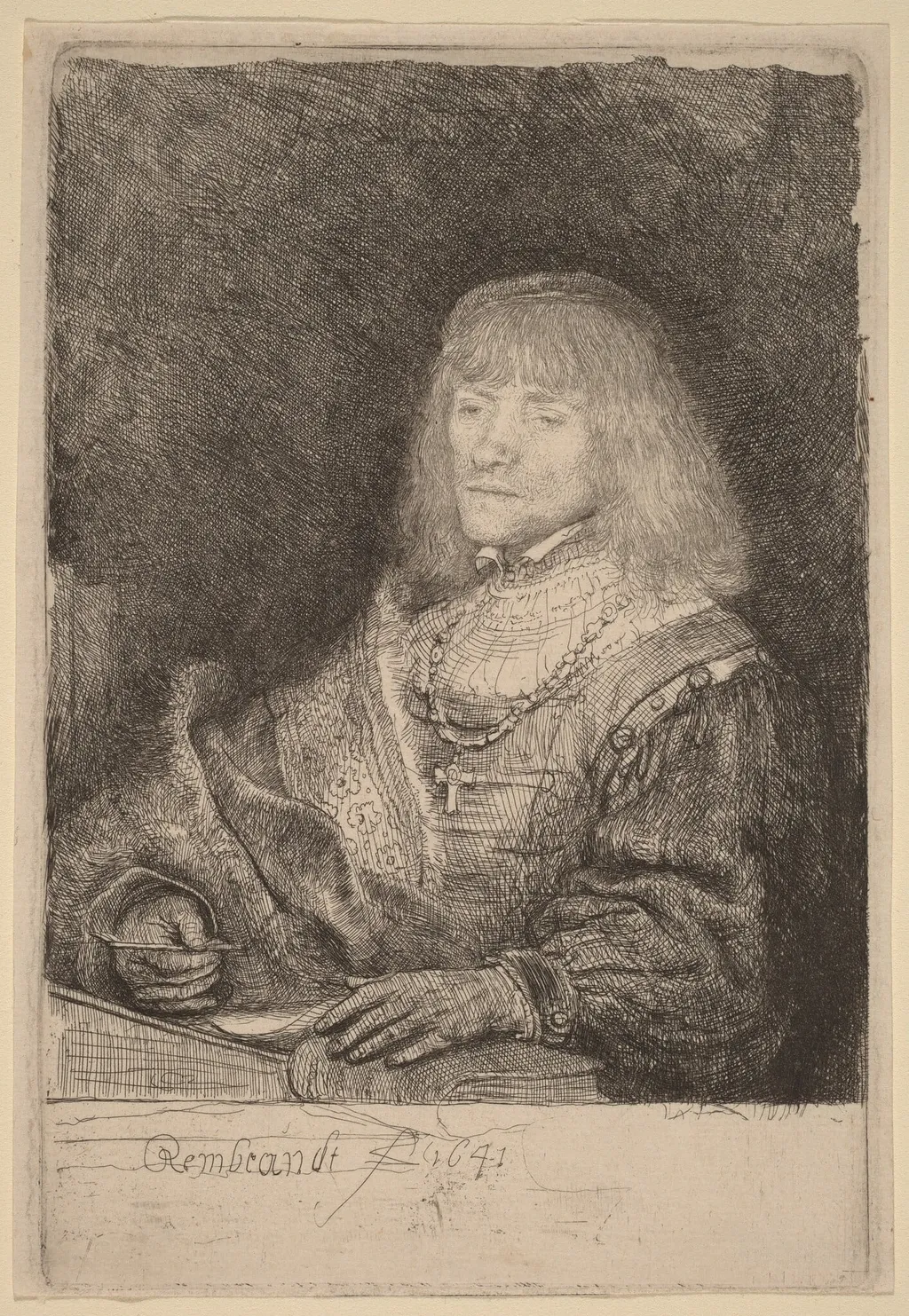
Man at a Desk Wearing a Cross and Chain is an ink print by the Baroque artist Rembrandt. It dates from 1641 and is held in the collection of the National Gallery of Art.
About this work
Overview
Created in 1641, this print by Rembrandt van Rijn combines etching and drypoint techniques to render a solitary figure at a desk.
Created in 1641, this print by Rembrandt van Rijn combines etching and drypoint techniques to render a solitary figure at a desk. The image is monochrome, emphasizing tonal contrast and texture over color. Unlike painted works, the medium relies on incised lines on a metal plate, allowing for fine, expressive detail. The result is a quiet, introspective portrait that captures both physical presence and psychological depth through ink on paper.
Subject & Meaning
The figure is a man seated at a desk, dressed in a high collar and a chain bearing a cross, suggesting religious devotion or personal symbolism. His hands rest on a surface, possibly a book or document, implying contemplation or study. The deep lines around his face convey introspection, not narrative action. The absence of context or background focuses attention on the individual’s inner state, inviting interpretation without explicit storytelling.
Technique & Style
Rembrandt employed etching to define broad forms and drypoint to add rich, velvety lines with heightened texture. The fabric of the collar and sleeves appears woven through dense, cross-hatched strokes; the hair and beard are rendered with scratchy, irregular marks. The use of drypoint’s burr creates subtle tonal gradations, enhancing the sense of volume and shadow. The technique prioritizes tactile immediacy over polished finish, aligning with Rembrandt’s interest in emotional resonance.
History & Provenance
The print was made during Rembrandt’s Amsterdam years, a period marked by intense experimentation in printmaking. Though its early ownership is undocumented, it entered major collections in the 18th or 19th century, likely through European print dealers. Its survival in multiple impressions suggests it was valued among collectors for its technical innovation and psychological intensity, though it was never widely reproduced.
Context
In early 1640s Amsterdam, Rembrandt was refining his approach to portraiture beyond commissioned likenesses, turning toward private, introspective subjects. This print reflects a broader trend among artists to explore inner life through intimate, non-narrative imagery. Religious symbols like the cross were common in Dutch art, but here they appear personal rather than doctrinal, aligning with the era’s growing interest in individual spirituality.
Legacy
The work exemplifies Rembrandt’s mastery of printmaking as a medium for psychological expression. Later artists studied his use of drypoint to achieve emotional texture, influencing generations of printmakers. While not as famous as his portraits or biblical scenes, this piece remains a quiet benchmark for how line and tone can convey solitude and thought without reliance on color or setting.
Artist & collection
Artist
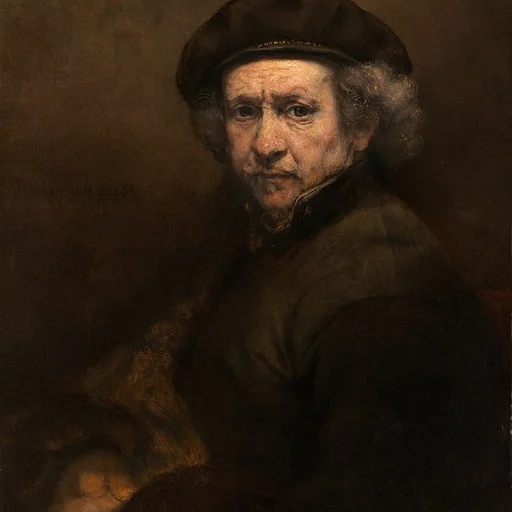
Rembrandt Harmenszoon van Rijn (15 July 1606 – 4 October 1669), known mononymously as Rembrandt, was a Dutch Golden Age painter, printmaker, and draughtsman.

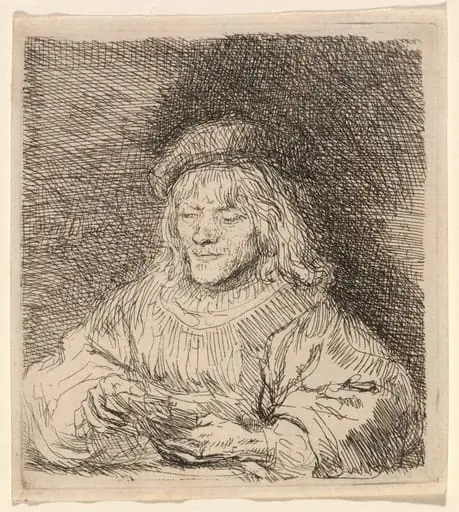 The Card Player
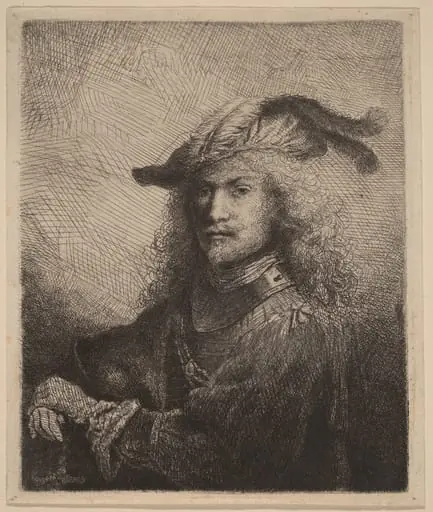 Portrait of an Officer
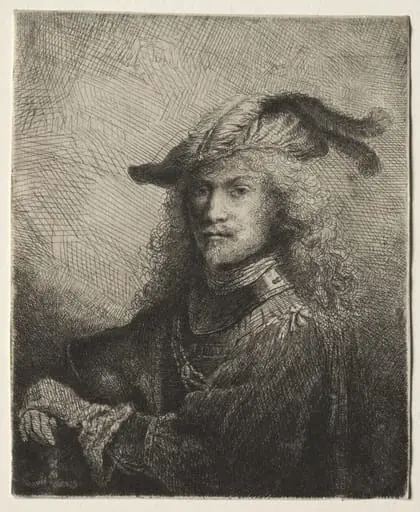 Portrait of an Officer
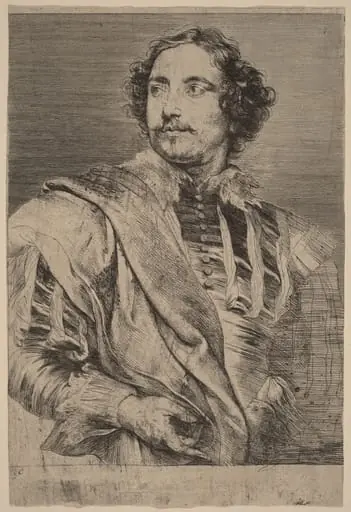 Paulus Pontius
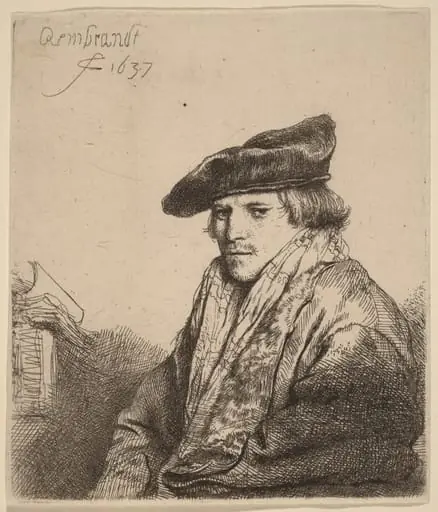 Young Man in a Velvet Cap (Petrus Sylvius?)
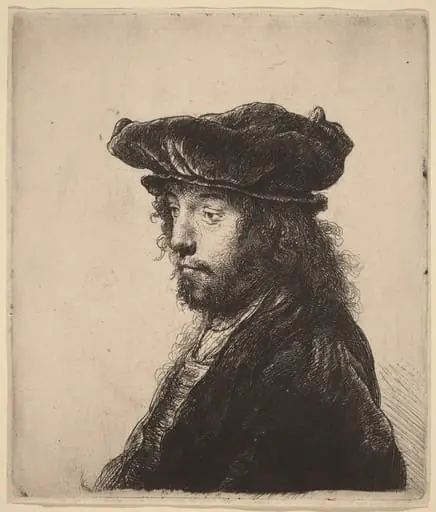 The Fourth Oriental Head
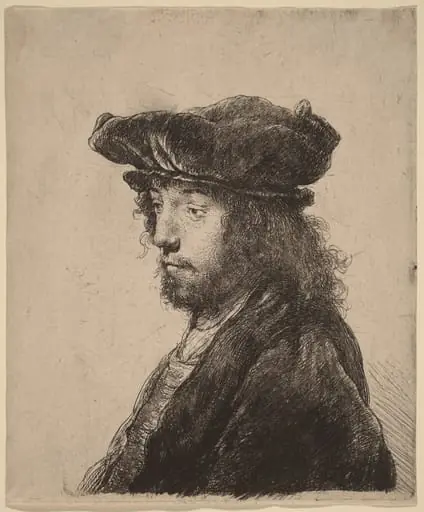 The Fourth Oriental Head
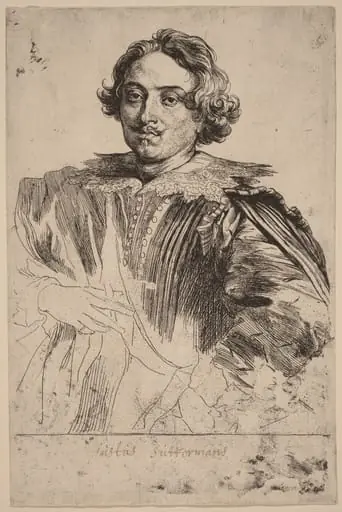 Justus Suttermans
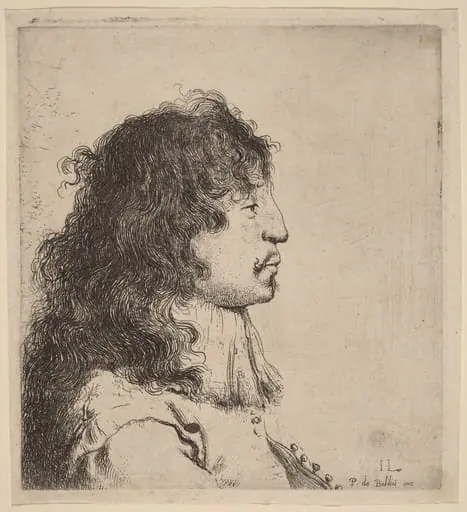 Bust of a Young Man in Profile, Facing Right
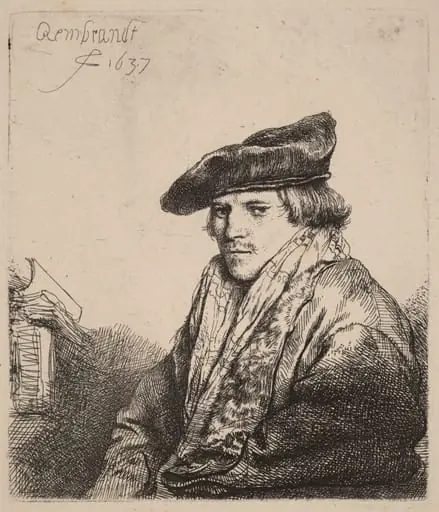 Young Man in a Velvet Cap (Petrus Sylvius?)
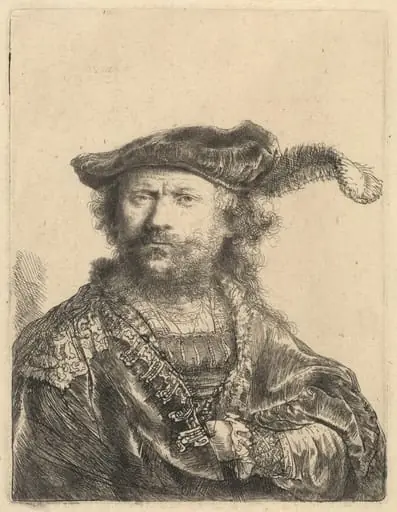 Self-Portrait in a Velvet Cap with Plume
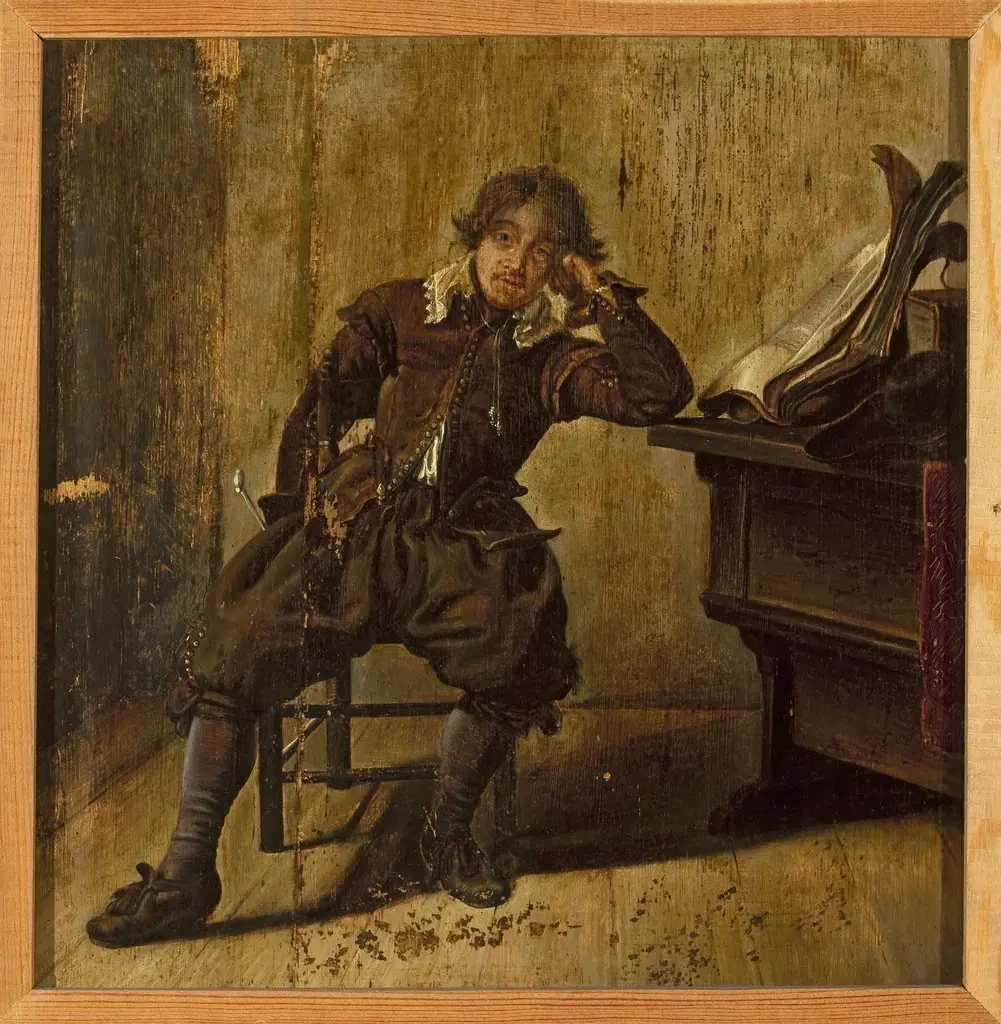 Man at the table