Artwork
Self-Portrait (?) with Plumed Cap and Lowered Sabre
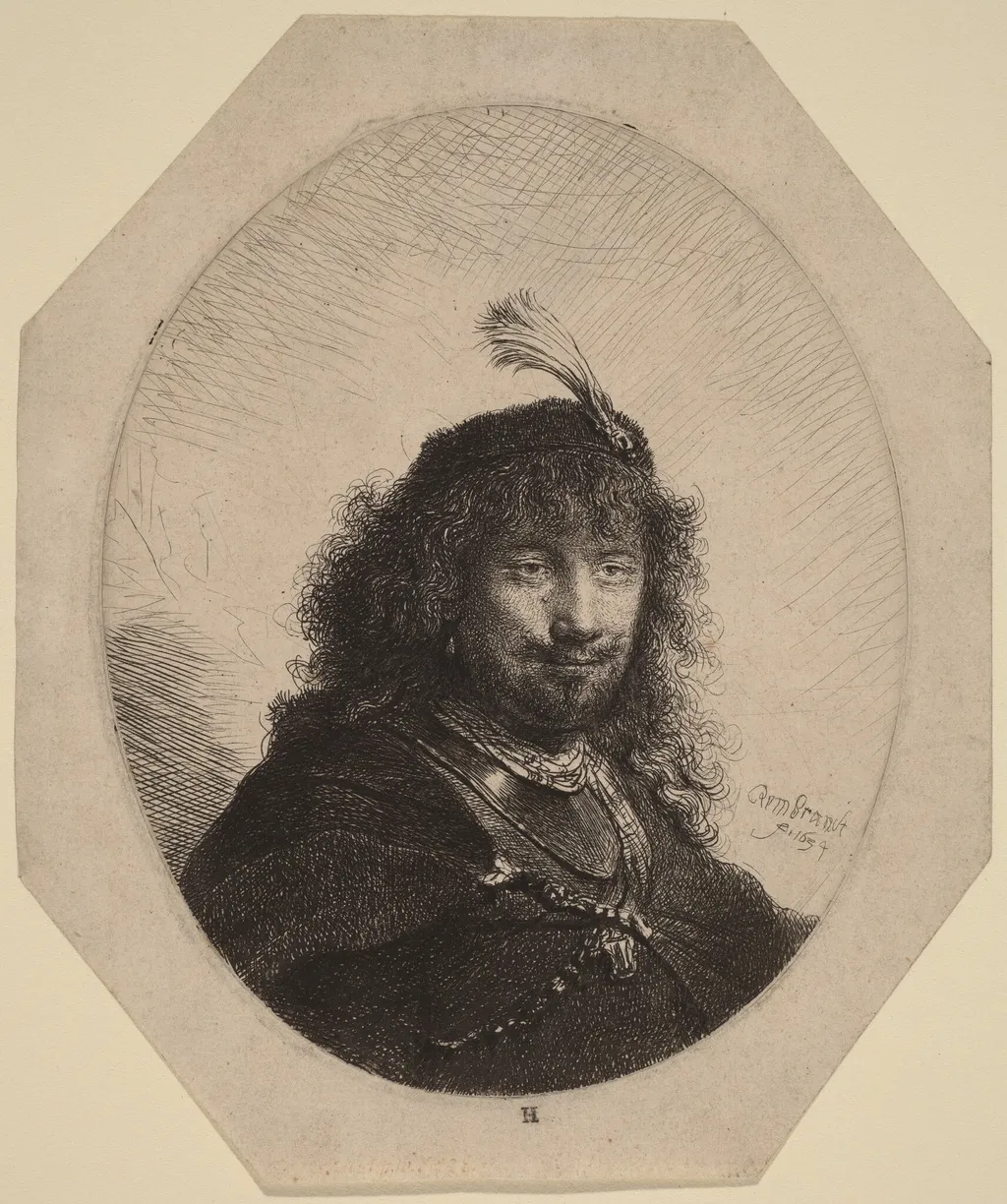
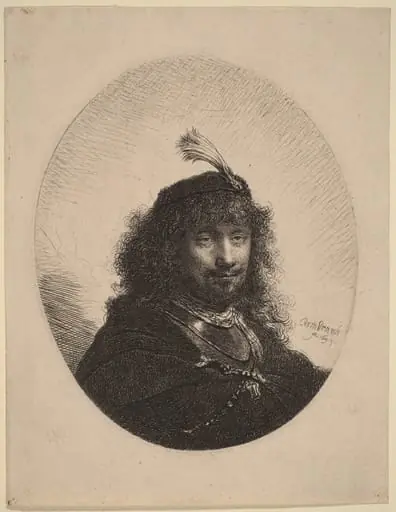
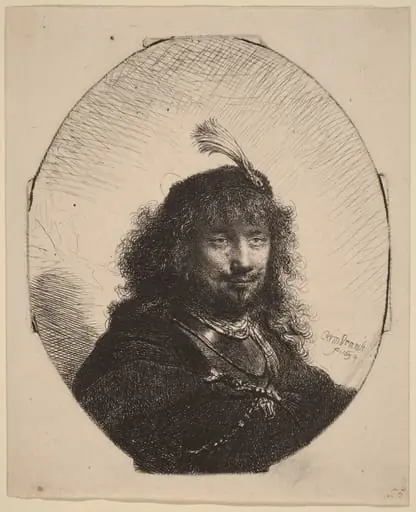
Self-Portrait (?) with Plumed Cap and Lowered Sabre is an ink print by the Baroque artist Rembrandt. It dates from 1634 and is held in the collection of the National Gallery of Art.
About this work
Overview
Executed in black ink on paper, it depicts a man in a broad-brimmed hat adorned with a plume, holding a sabre at his side.
This etching, dated 1634, is attributed to Rembrandt van Rijn, though its status as a self-portrait remains uncertain. Executed in black ink on paper, it depicts a man in a broad-brimmed hat adorned with a plume, holding a sabre at his side. The background is minimally suggested with faint, sparse lines, focusing attention on the figure. Rembrandt’s signature appears in the lower corner, consistent with his practice in printmaking.
Subject & Meaning
The figure’s direct gaze and relaxed posture suggest introspection rather than aggression, despite the presence of a weapon. The plumed cap and loose curls evoke a sense of personal identity or theatrical persona, possibly referencing contemporary notions of the artist as a thoughtful, independent figure. The lowered sabre may imply restraint or contemplation, contrasting with the typical martial symbolism of the time.
Technique & Style
Rendered in etching, the image was created by incising lines into a metal plate coated with wax, then acid-bitten to hold ink. Rembrandt employed varied line weights and hatching to model form and texture, particularly in the hat’s folds and the subject’s facial features. The background’s sparse detailing enhances the figure’s presence, demonstrating his mastery of tonal economy and atmospheric focus.
History & Provenance
The print emerged during Rembrandt’s most prolific period in Amsterdam, when he produced numerous etchings for private collectors and art dealers. Its early circulation is documented in several 17th-century print catalogues. While ownership records are incomplete, the work has remained within European collections since the 18th century, with no evidence of significant alteration or reworking.
Context
In the early 1630s, Rembrandt was refining his printmaking technique while gaining recognition as a portraitist. Etchings like this served both as artistic experiments and as portable, reproducible images that circulated among collectors. The depiction of a man with a sword and feathered hat reflects contemporary Dutch fashion and the cultural fascination with individual identity and self-representation.
Legacy
This etching exemplifies Rembrandt’s influence on the development of printmaking as a medium for personal expression. Its understated intensity and psychological nuance set a precedent for later artists exploring self-image in print. Though not widely reproduced in his lifetime, it remains a key reference in studies of his graphic work and the evolution of the artist’s self-portraiture.
Artist & collection
Artist
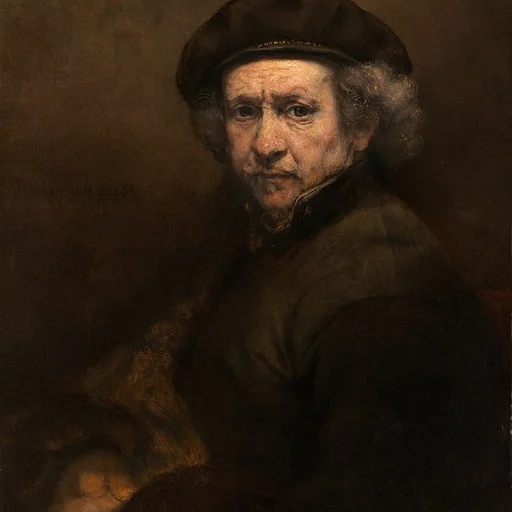
Rembrandt Harmenszoon van Rijn (15 July 1606 – 4 October 1669), known mononymously as Rembrandt, was a Dutch Golden Age painter, printmaker, and draughtsman.

 Self-Portrait (?) with Plumed Cap and Lowered Sabre
 Self-Portrait (?) with Plumed Cap and Lowered Sabre
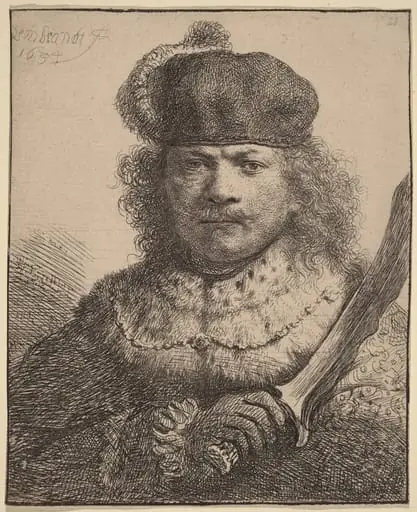 Self-Portrait with Raised Sabre
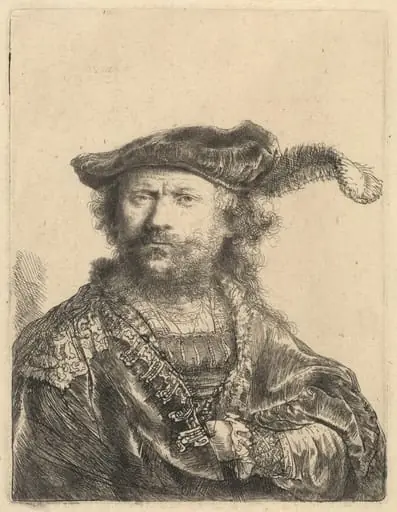 Self-Portrait in a Velvet Cap with Plume
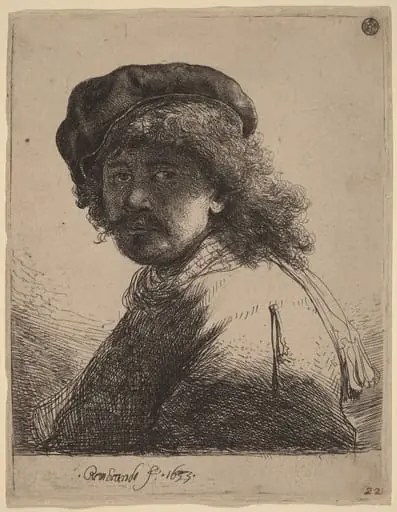 Self-Portrait in a Cap and Scarf with the Face Dark
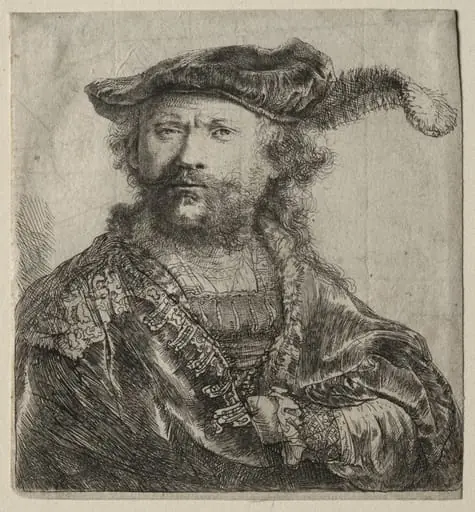 Self-Portrait in Velvet Cap with Plume
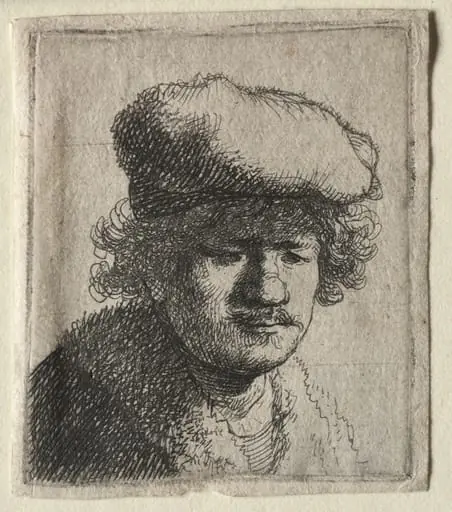 Self-Portrait with Cap Pulled Forward
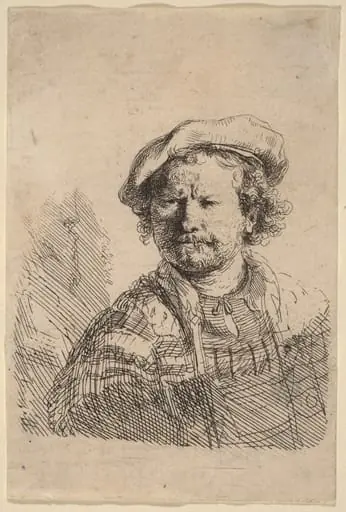 Self-Portrait in a Flat Cap and Embroidered Dress