Artwork
Self-Portrait with Raised Sabre
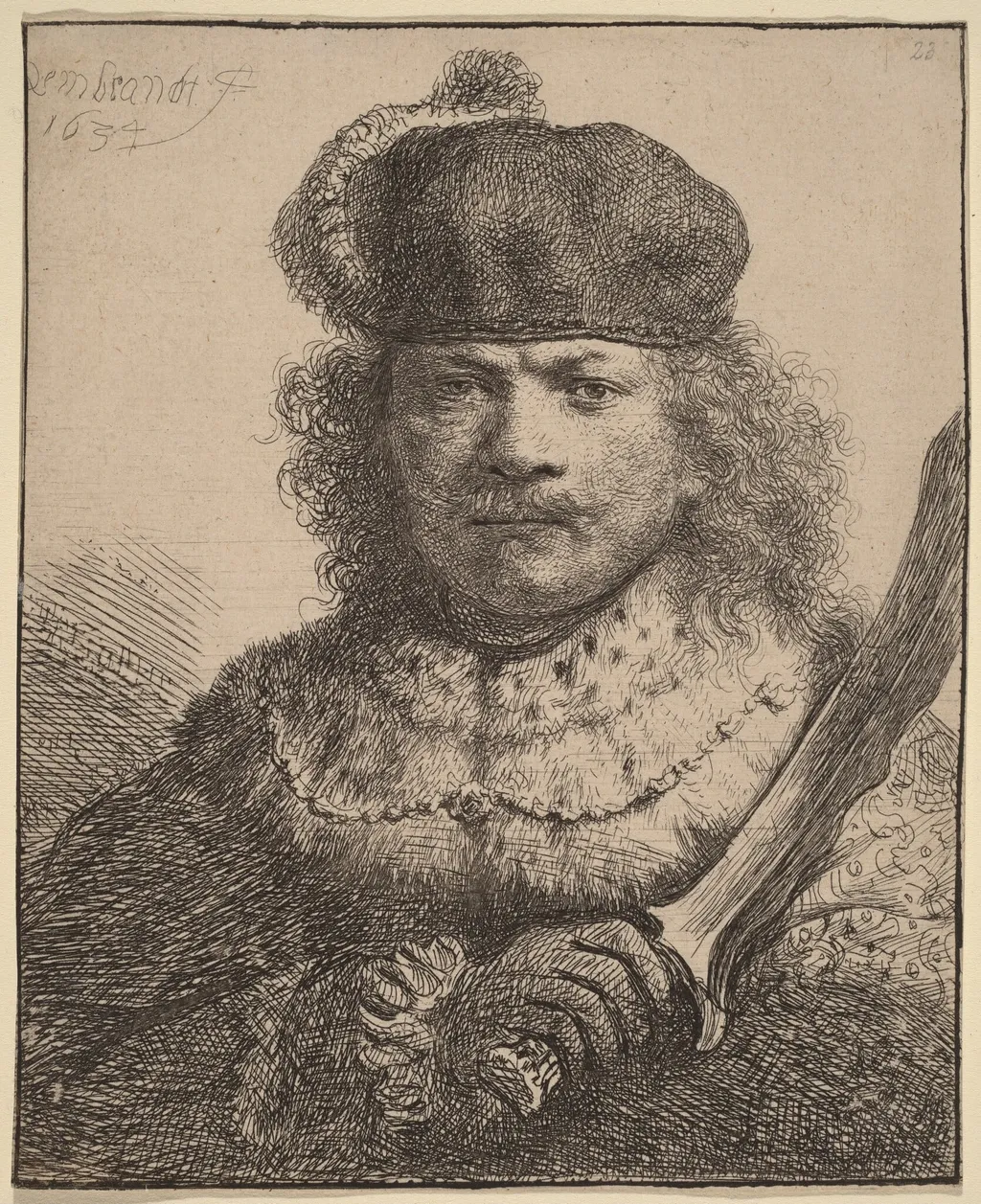
Self-Portrait with Raised Sabre is an ink print by the Baroque artist Rembrandt. It dates from 1634 and is held in the collection of the National Gallery of Art.
About this work
The lines are all scratchy and dark, making his face and clothes look textured.
This drawing shows a man with curly hair and a big fur hat. He’s holding a sword at an angle, like he’s ready to use it. The lines are all scratchy and dark, making his face and clothes look textured.
The artist signed it in the corner with the year 1634. The way the lines are made—some deep, some lighter—helps show light and shadow.
Next, check out etching to see how artists like this create detailed prints.
Overview
Self-Portrait with Raised Sabre is an etching by Rembrandt van Rijn, created in 1634. The work is executed on laid paper using etching and drypoint techniques.
Subject & Meaning
The print depicts a man, likely the artist himself, with curly hair and a large fur hat, holding a sword at an angle. The pose suggests readiness for action.
Technique & Style
The etching features varied line depths and textures, achieved through the combination of etching and drypoint techniques, creating a sense of light and shadow on the subject's face and clothing.
History & Provenance
The work is signed by the artist in the corner, along with the date 1634, confirming its origin and authenticity.
Own this work as a print
Artist & collection
Artist
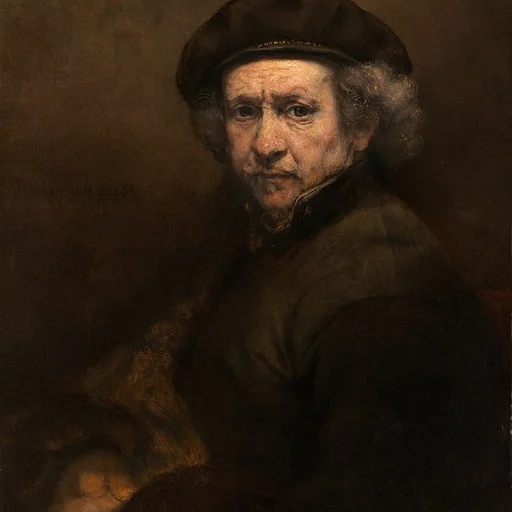
Rembrandt Harmenszoon van Rijn (15 July 1606 – 4 October 1669), known mononymously as Rembrandt, was a Dutch Golden Age painter, printmaker, and draughtsman.

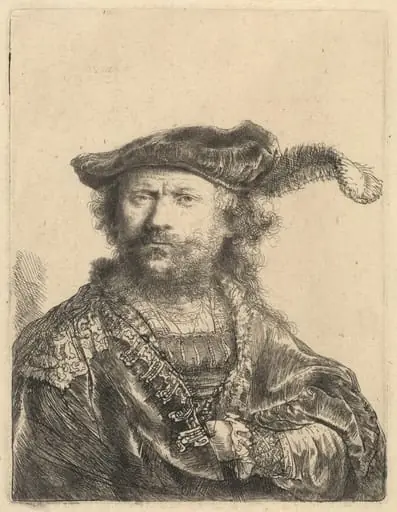 Self-Portrait in a Velvet Cap with Plume
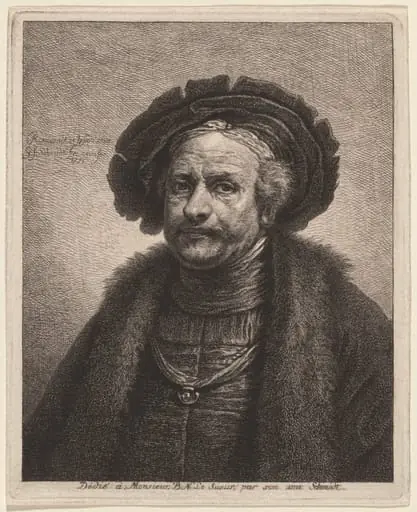 Self-Portrait of Rembrandt
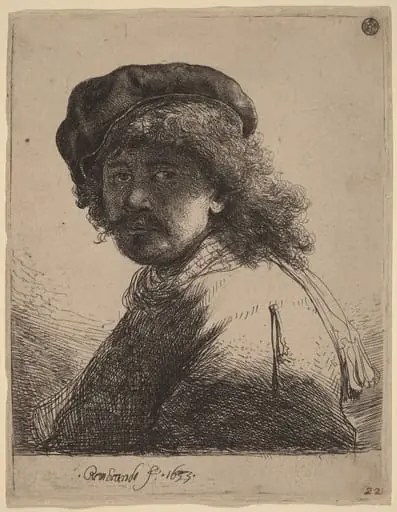 Self-Portrait in a Cap and Scarf with the Face Dark
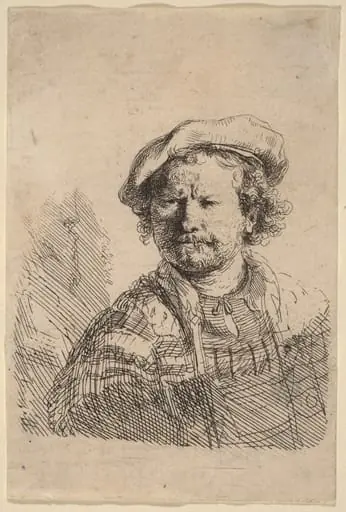 Self-Portrait in a Flat Cap and Embroidered Dress
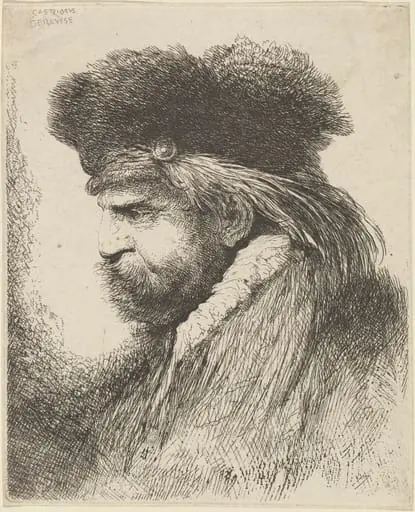 Bearded Man in a Fur Cap, Facing Left
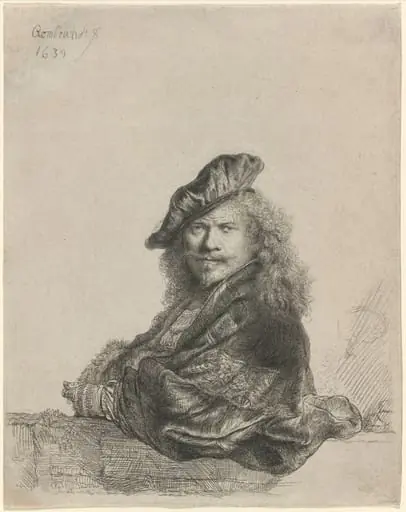 Self-Portrait Leaning on a Stone Sill
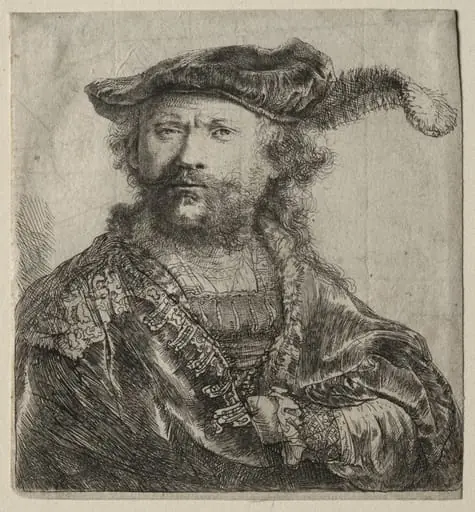 Self-Portrait in Velvet Cap with Plume
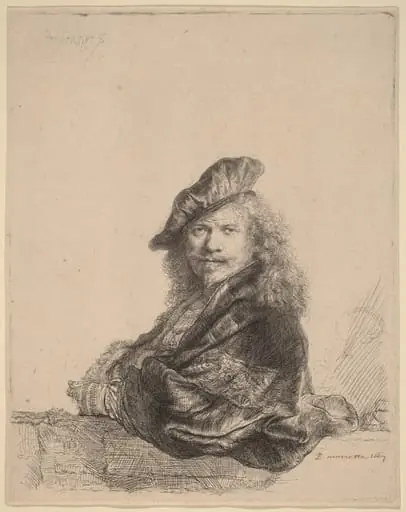 Self-Portrait Leaning on a Stone Sill
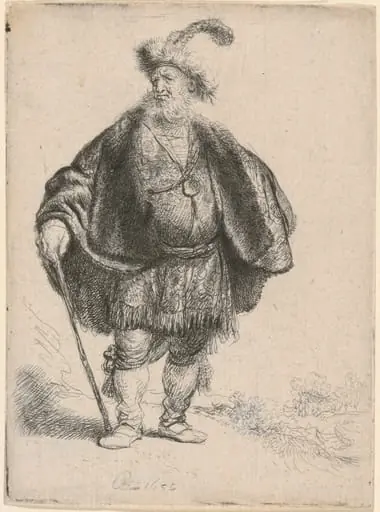 The Persian