Artwork
The Blind Fiddler
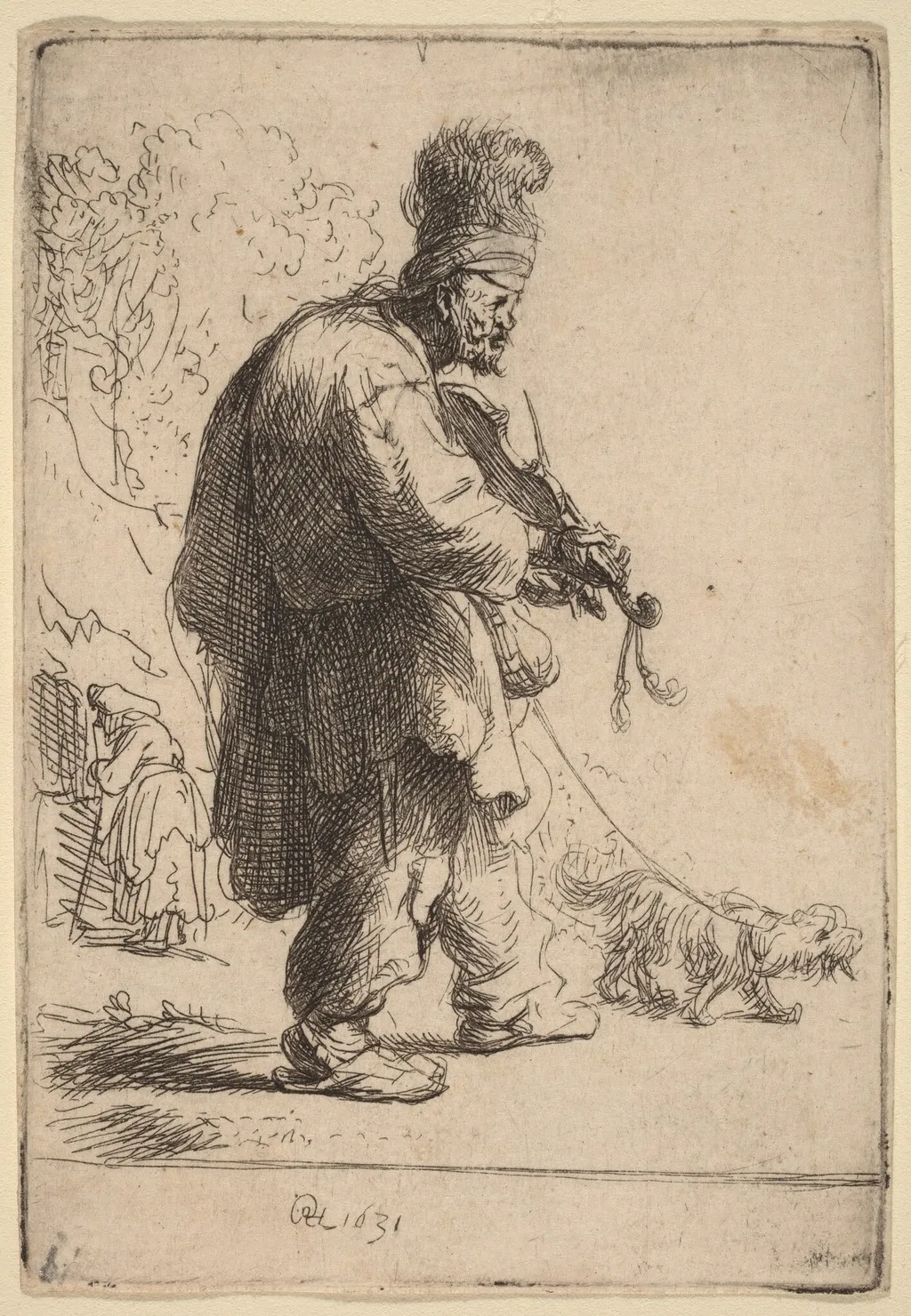
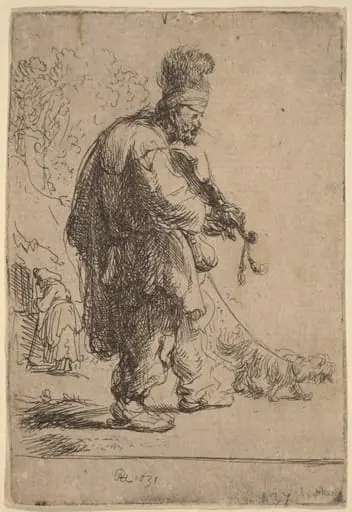
The Blind Fiddler is an ink print by the Baroque artist Rembrandt. It dates from 1631 and is held in the collection of the National Gallery of Art.
About this work
The date "1631" is written in the corner, but the focus is on the man’s struggle.
This sketch shows a man walking with a small dog on a leash. He’s hunched over, holding a fiddle, and looks like he’s struggling to play. His clothes are loose, and his hat sits low on his head. The background is simple—just a few quick lines for trees and a bench.
The artist used shading to make the man’s face and hands look rough and worn. The dog is small and simple compared to the man. The date "1631" is written in the corner, but the focus is on the man’s struggle.
Next, look up etching to see how artists like Rembrandt created detailed prints.
Overview
Rembrandt’s 1631 etching entitled *The Blind Fiddler* presents a solitary figure trudging along a path, accompanied by a tiny dog on a leash. The man is hunched, clutching a fiddle with evident difficulty, his loose garments and low‑set hat emphasizing his weary condition. A sparse backdrop of trees and a bench is rendered with a few swift lines, keeping attention on the central figure’s struggle.
Subject & Meaning
The work depicts a blind street musician, a motif that underscores themes of vulnerability and perseverance in everyday life. The fiddler’s strained posture and the small, almost subordinate dog suggest a dependence on both music and companionship for survival, while the simplicity of the setting invites viewers to contemplate the human condition beyond the bustling city of 17th‑century Amsterdam.
Technique & Style
Executed as an etching, Rembrandt employed fine cross‑hatching and tonal shading to model the fiddler’s weathered face and hands, giving them a tactile, rough texture. The contrast between the densely rendered figure and the loosely suggested background exemplifies his early interest in chiaroscuro and the capacity of printmaking to convey depth and atmosphere with limited lines.
History & Provenance
The plate bears the date 1631 in the lower corner, placing it among Rembrandt’s early Dutch period works. While specific ownership records are scarce, the print has appeared in several 18th‑century collections of Dutch etchings and is now held by major European museums, reflecting its continued relevance to scholars of Rembrandt’s formative years.
Artist & collection
Artist
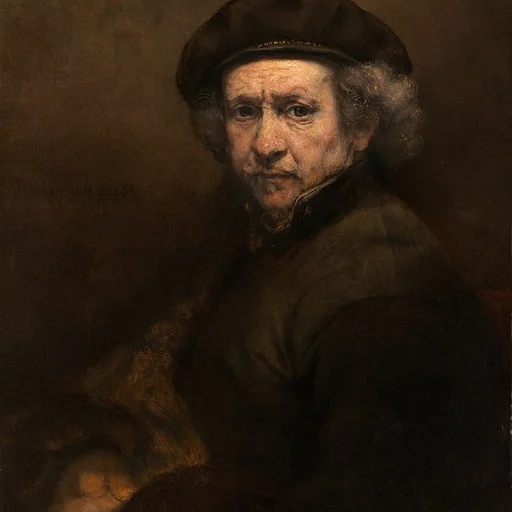
Rembrandt Harmenszoon van Rijn (15 July 1606 – 4 October 1669), known mononymously as Rembrandt, was a Dutch Golden Age painter, printmaker, and draughtsman.

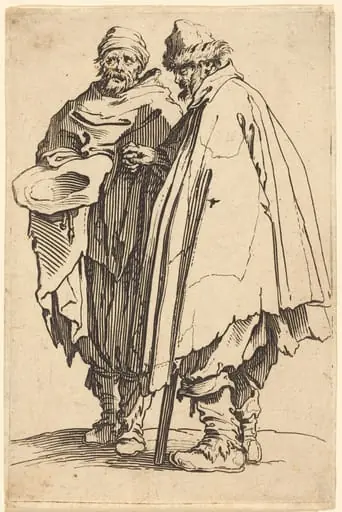 Blind Beggar and Companion
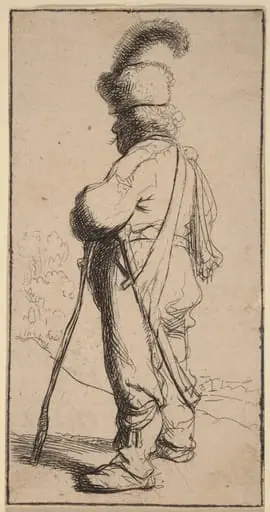 Polander Leaning on a Stick
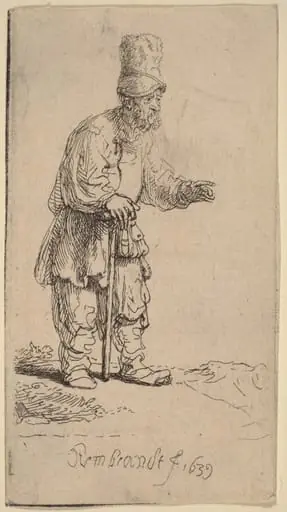 A Peasant in a High Cap, Standing Leaning on a Stick
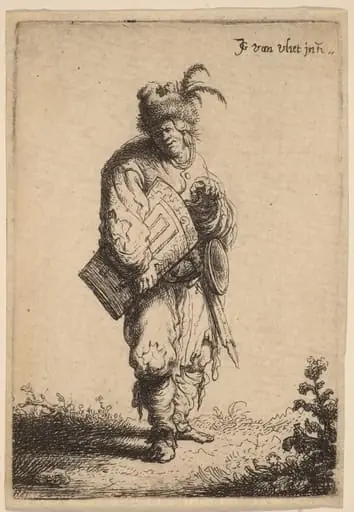 The Hurdy-Gurdy Player
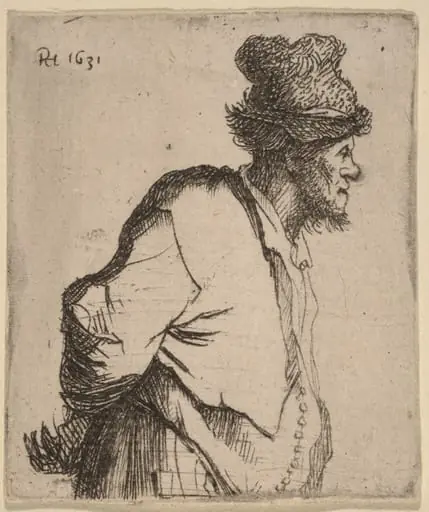 Peasant with His Hands behind His Back
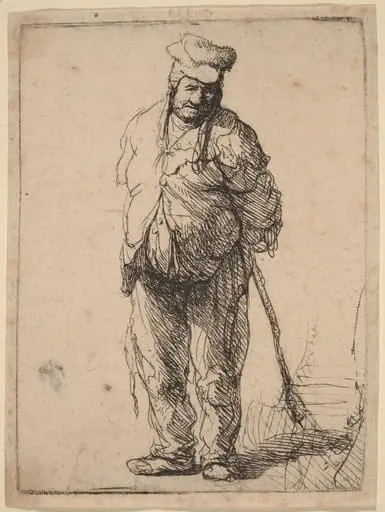 Ragged Peasant with His Hands behind Him, Holding a Stick
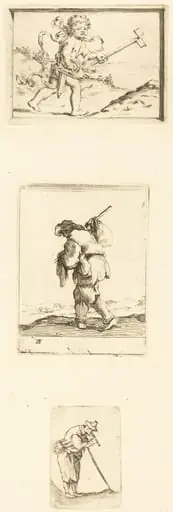 Sheet of Etchings
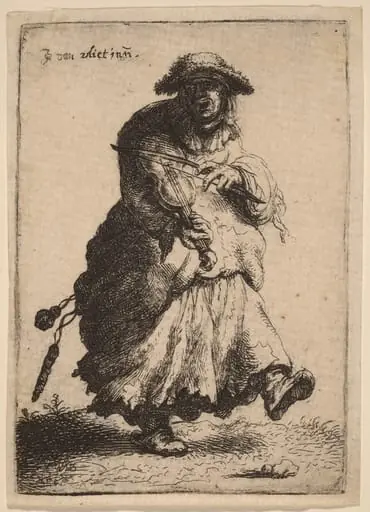 Beggar Woman Playing the Violin
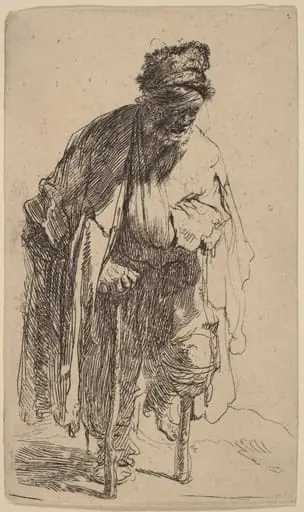 Beggar with a Wooden Leg
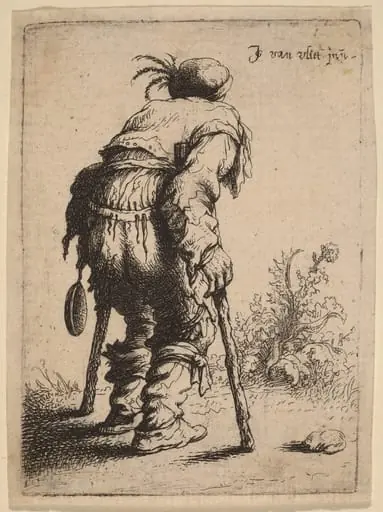 Beggar with Two Crutches
 The Quacksalver
 The Blind Fiddler