Artwork
The Pancake Woman
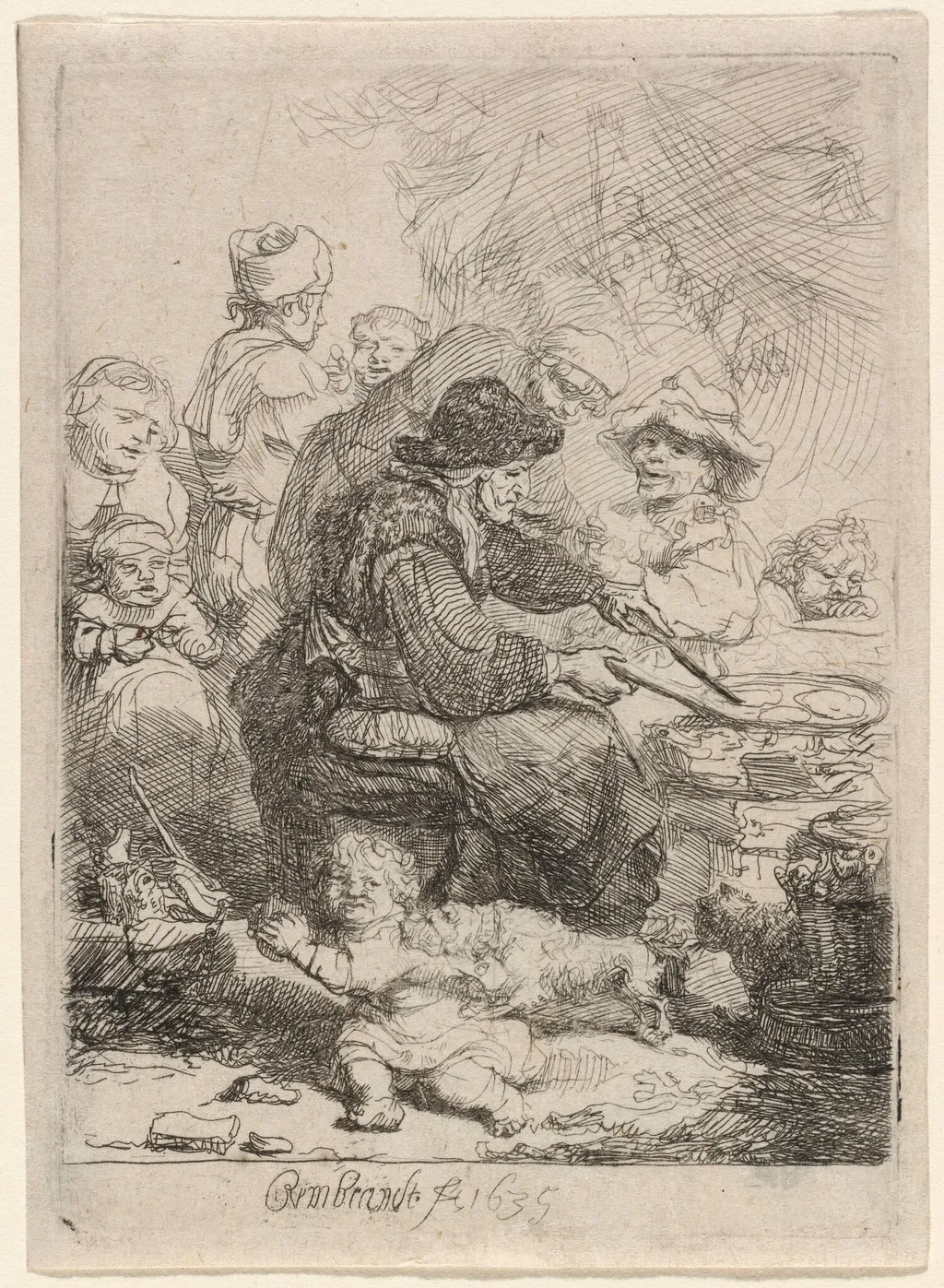
The Pancake Woman is an ink print by the Baroque artist Rembrandt. It dates from 1635 and is held in the collection of the National Gallery of Art.
About this work
Overview
The Pancake Woman is a 1635 etching by Rembrandt van Rijn, depicting a domestic kitchen scene with a woman as the central figure, cooking pancakes with a child nearby.
Subject & Meaning
The etching portrays a moment of everyday life, emphasizing warmth and comfort through the interaction between the woman, engaged in cooking, and a child looking up at her, conveying a sense of familial intimacy.
Technique & Style
Characteristic of Baroque etching, the work employs strong contrasts and dramatic lighting, hallmarks of Rembrandt's mastery of the medium, creating depth and energy in the scene.
History & Provenance
Created in 1635, specific provenance details are not provided in the available information, highlighting only the work's creation during Rembrandt's active period in Amsterdam.
Context
Part of Rembrandt's broader output of domestic scenes, The Pancake Woman reflects 17th-century Dutch daily life interests and the artist's ability to find profoundness in mundane activities.
Legacy
As part of Rembrandt's oeuvre, the etching contributes to his enduring reputation as a versatile and expressive etcher, influencing later artists in capturing intimate, illuminated moments from life.
Artist & collection
Artist
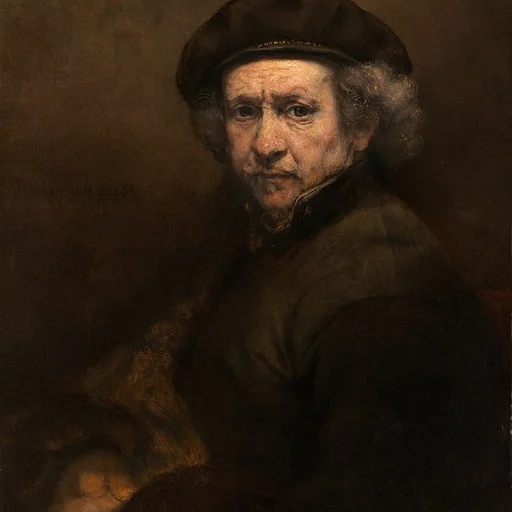
Rembrandt Harmenszoon van Rijn (15 July 1606 – 4 October 1669), known mononymously as Rembrandt, was a Dutch Golden Age painter, printmaker, and draughtsman.

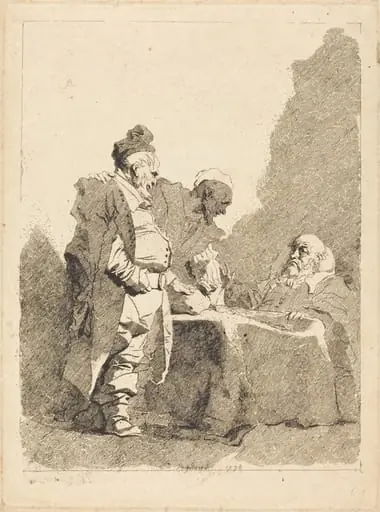 The Tax Collectors (Les traitants)
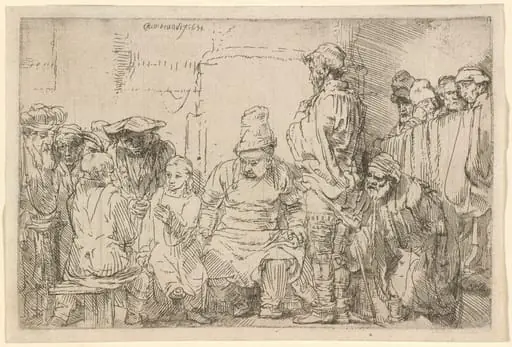 Christ Seated Disputing with the Doctors
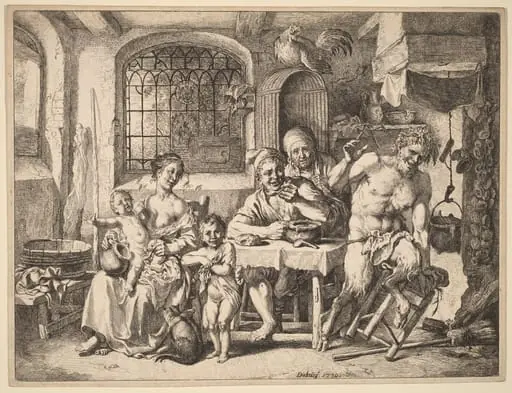 A Satyr Visiting a Peasant Family
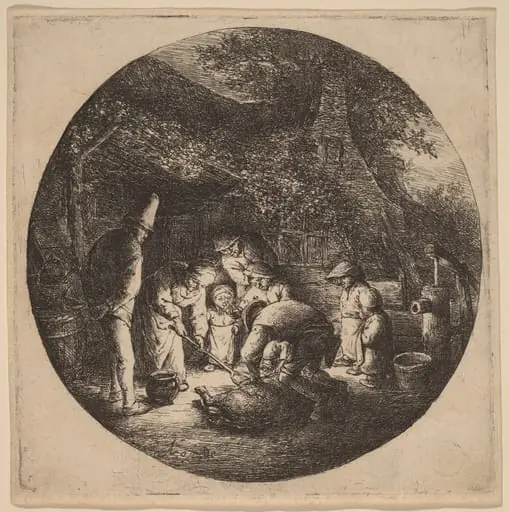 Peasants Outside a Farm Slaughtering a Pig
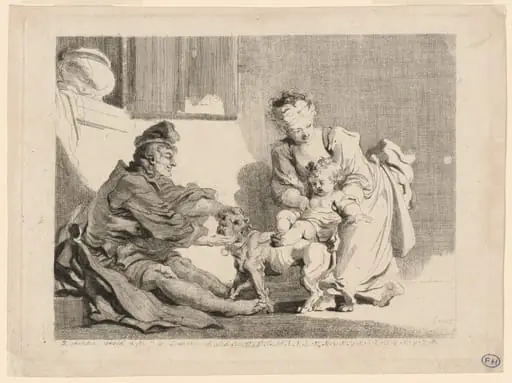 The Child and the Bulldog
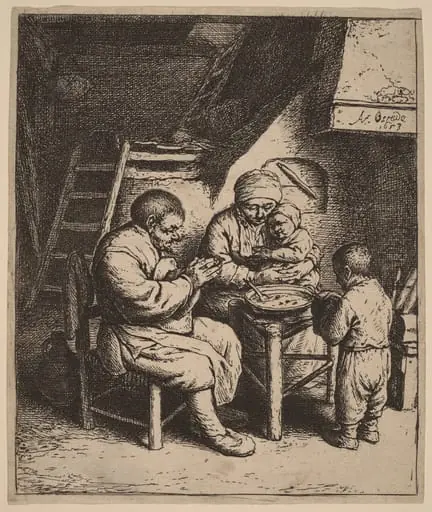 Peasant Family Praying Before a Meal
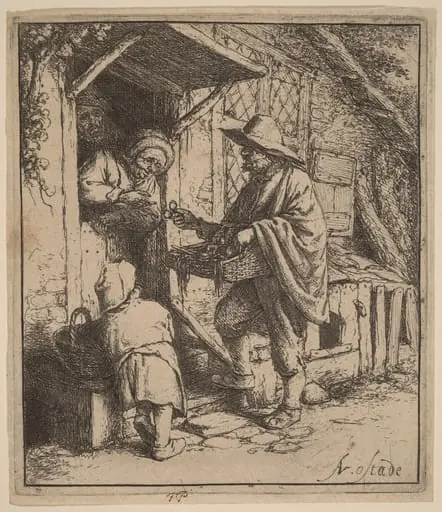 Street Vendor Selling Spectacles at the Door
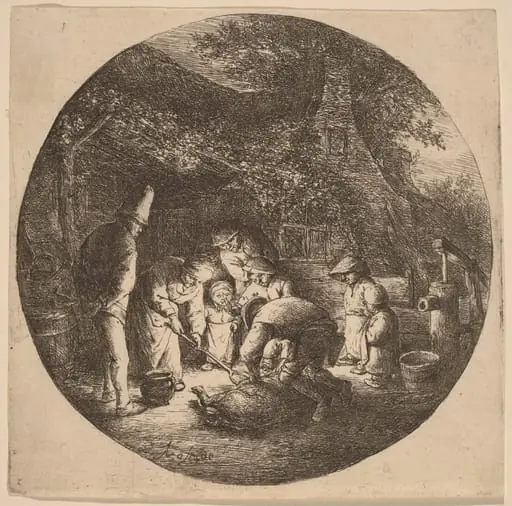 Peasants Outside a Farm Slaughtering a Pig
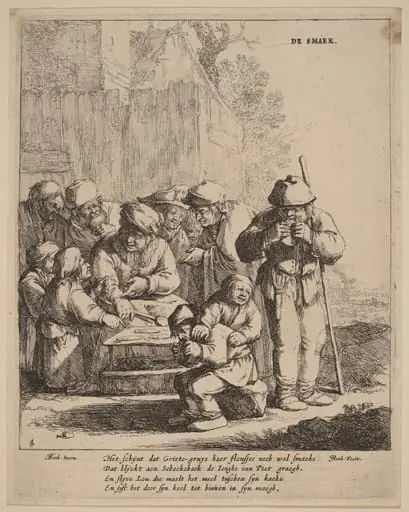 De Smaek (Taste)
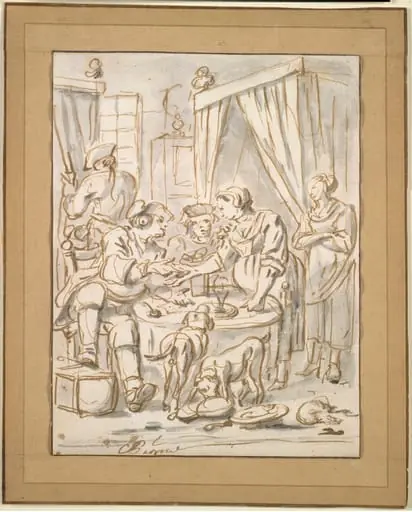 Interior Scene with Soldiers at a Table