Artwork
Young Girl in a Gold-Trimmed Cloak
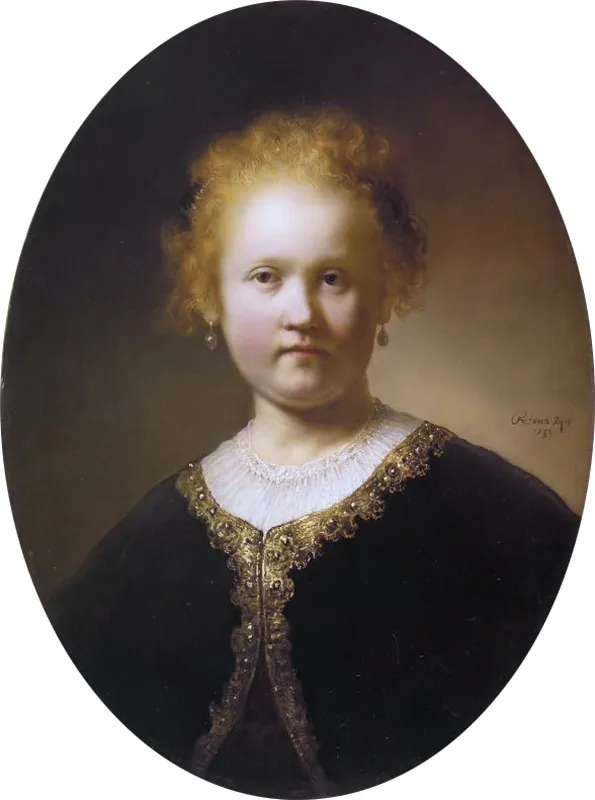
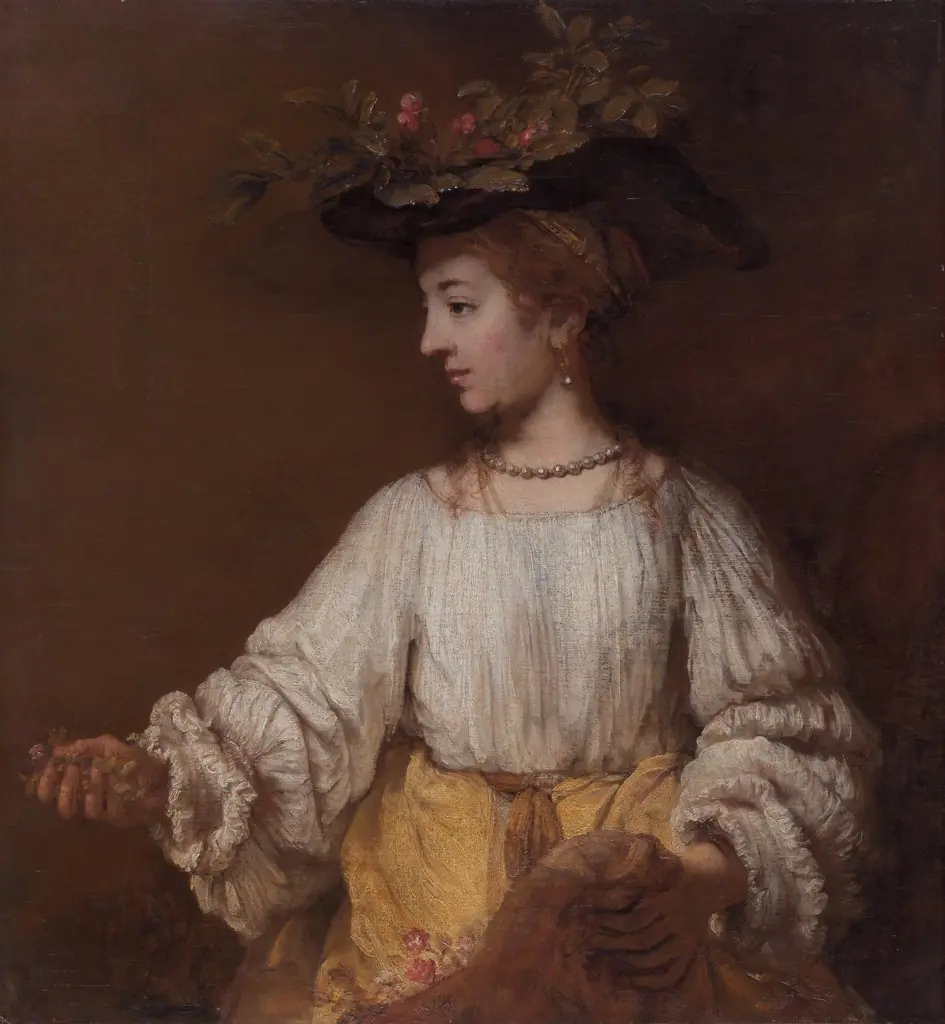
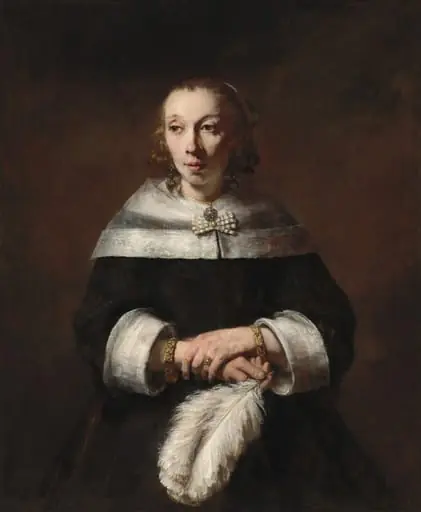
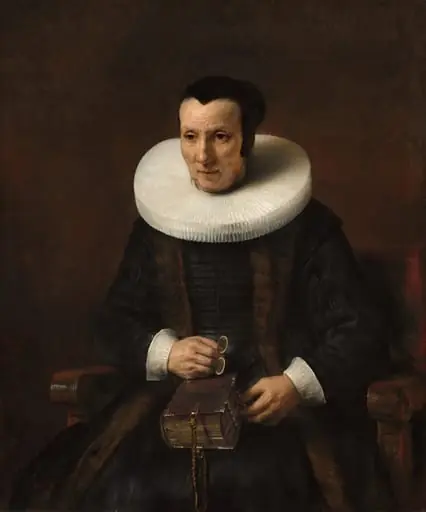
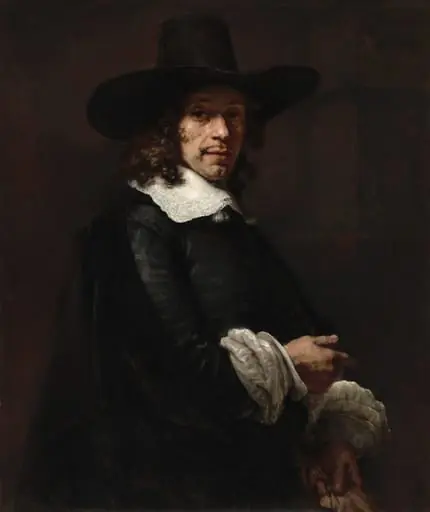
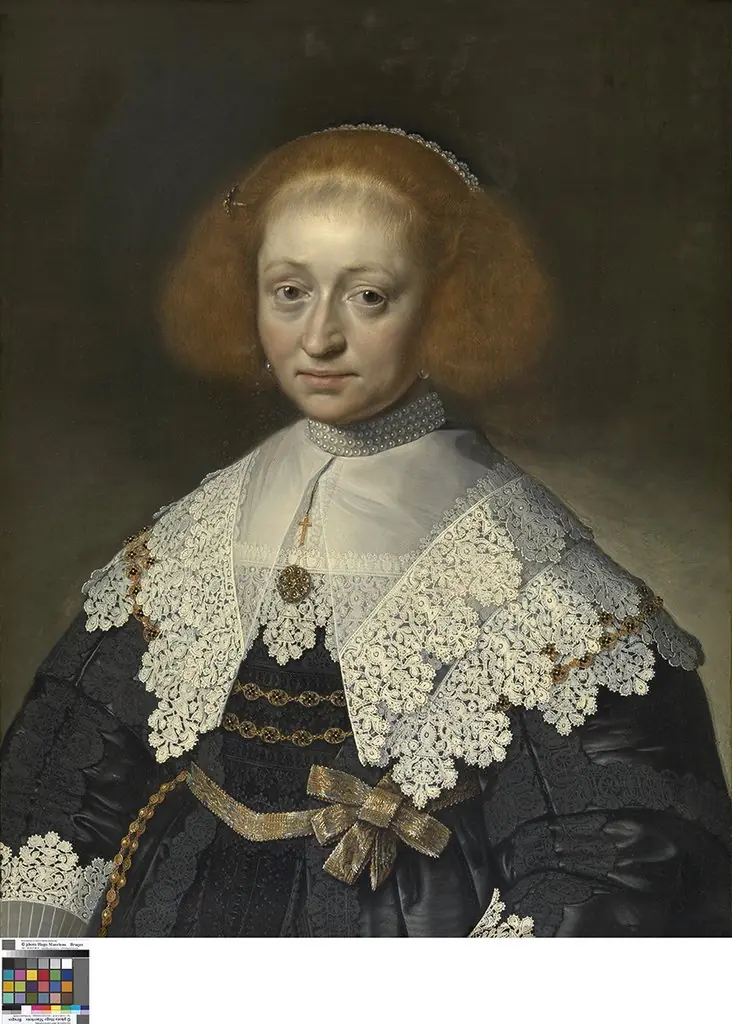
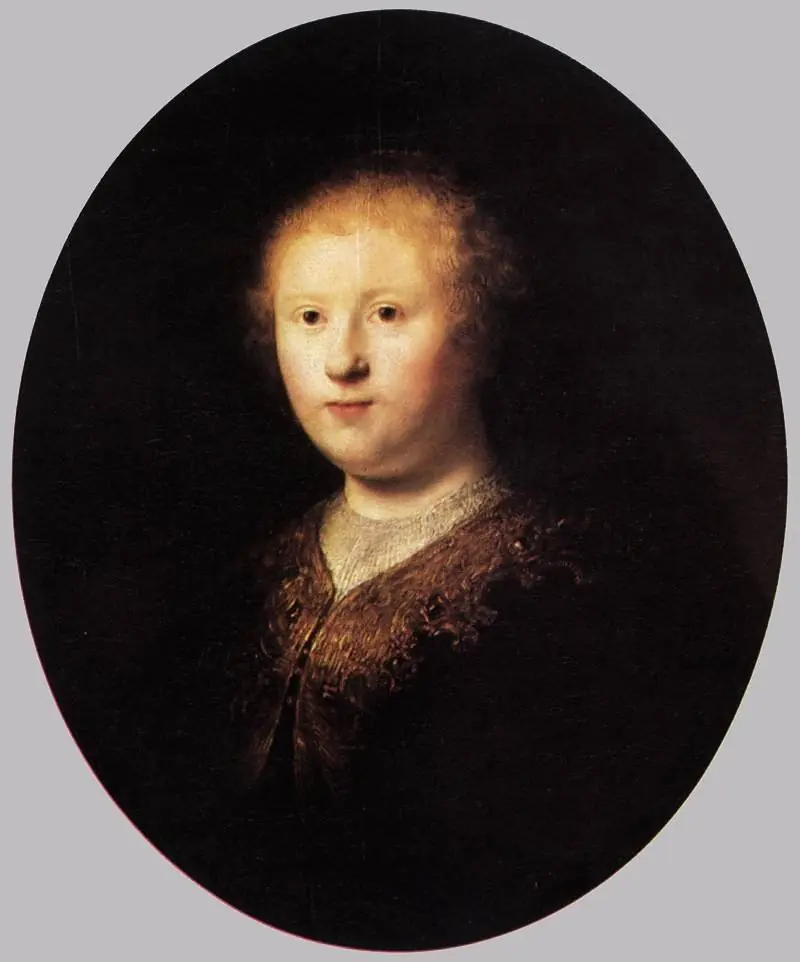
Young Girl in a Gold-Trimmed Cloak is an oil painting by the Dutch Golden Age artist Rembrandt. It dates from 1632 and is held in the collection of the Leiden Collection. Painted in 1632, this oil-on-canvas portrait depicts a young woman wearing a dark garment edged with gold trim.
About this work
This painting is called Young Girl in a Gold-Trimmed Cloak. It's an oil paint work by Rembrandt.
The painting is from 1632 and is also known as Portrait of a Young Woman or Bust of a Young Woman. It's signed and dated by the artist, which is an interesting fact about this piece.
You can learn more about the artist who created this work, Rembrandt.
Overview
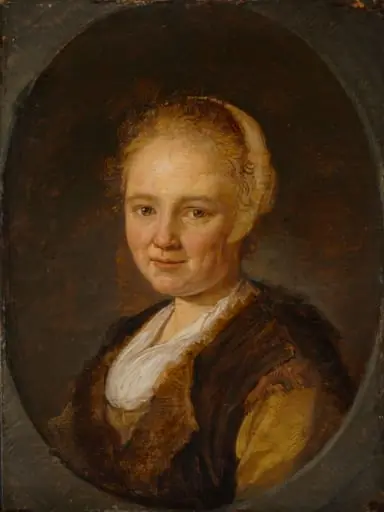
The composition focuses tightly on the subject’s upper body and face, emphasizing texture and subtle expression over elaborate setting.
Painted in 1632, this oil-on-canvas portrait depicts a young woman wearing a dark garment edged with gold trim. Signed and dated by Rembrandt van Rijn, the work reflects his early mastery of intimate portraiture. The composition focuses tightly on the subject’s upper body and face, emphasizing texture and subtle expression over elaborate setting. Its modest scale and direct gaze invite quiet contemplation rather than grand display.
Subject & Meaning
The identity of the sitter remains unknown, though her refined attire suggests she belonged to a modestly affluent class. The gold trimming on her cloak may indicate status or a ceremonial occasion, but no symbolic narrative is overtly present. Rembrandt captures a moment of stillness, avoiding idealization in favor of psychological presence. The painting conveys dignity through restraint, not ornamentation.
Technique & Style
Rembrandt employs thick, tactile brushwork to render the fabric’s folds and the sheen of gold trim, contrasting with the soft modeling of the girl’s skin. Light falls from the upper left, defining her cheek and collarbone with subtle gradations. The background is muted and indistinct, drawing focus to the face and costume. His use of chiaroscuro here is restrained, prioritizing naturalism over dramatic effect.
History & Provenance
Acquired by Johann II, Prince of Liechtenstein, in the late 19th century, the painting passed to Bishop Georg Schmid von Grüneck before being sold to Boston’s R. C. Vose Galleries in 1929. It was quickly purchased by Robert Treat Paine II, who loaned it to the Museum of Fine Arts, Boston, for over a decade. After his death, it remained in the Paine family until its 1986 auction at Sotheby’s, eventually entering the Allentown Art Museum’s collection.
Context
Created during Rembrandt’s Leiden period, this portrait aligns with his exploration of individual character in small-scale works. While Amsterdam’s elite commissioned grander portraits, Rembrandt continued to study ordinary subjects with psychological depth. This piece reflects a broader Dutch trend toward intimate, unadorned likenesses, distinct from the flamboyance of courtly portraiture elsewhere in Europe.
Legacy
Though not among Rembrandt’s most widely reproduced works, this portrait exemplifies his ability to convey presence through minimal means. Its journey through private collections and public institutions underscores its enduring appeal to curators and collectors. Today, it contributes to broader understandings of 17th-century Dutch portraiture beyond the monumental and the mythological.
Artist & collection
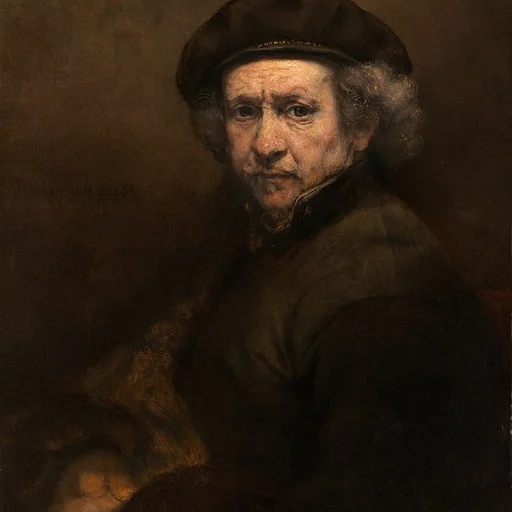
Artist
Rembrandt Harmenszoon van Rijn (15 July 1606 – 4 October 1669), known mononymously as Rembrandt, was a Dutch Golden Age painter, printmaker, and draughtsman.