Artwork
Înmormântare la țară
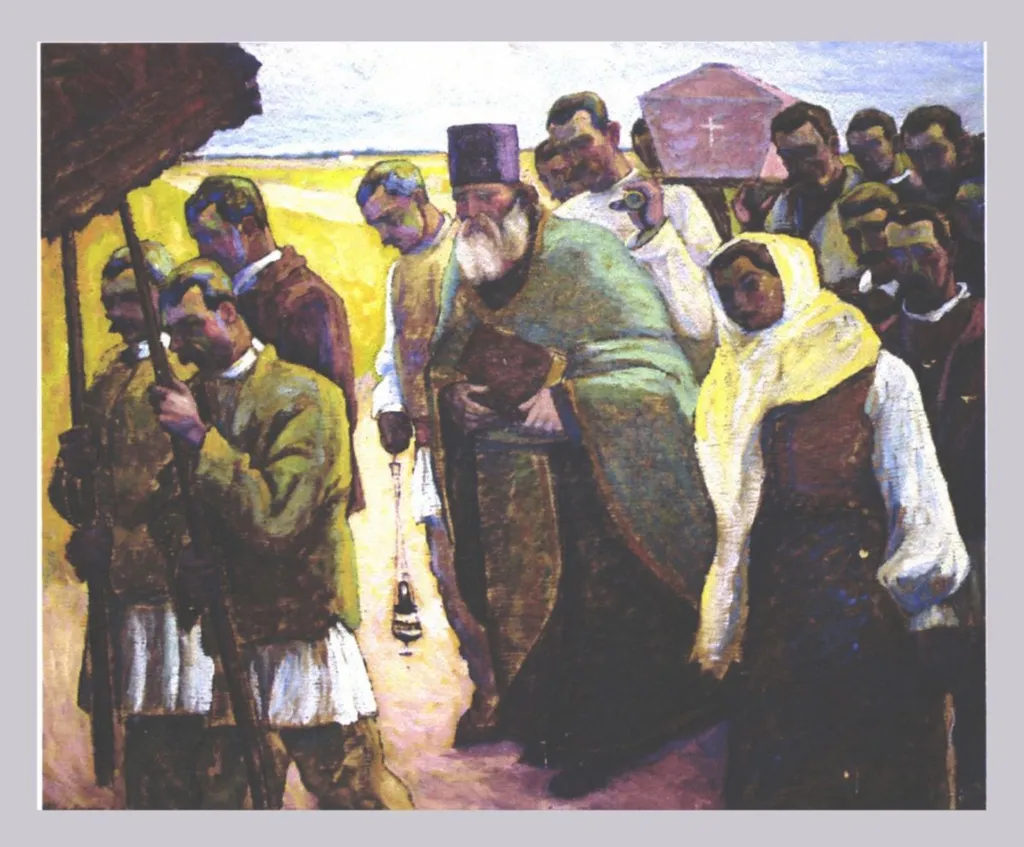
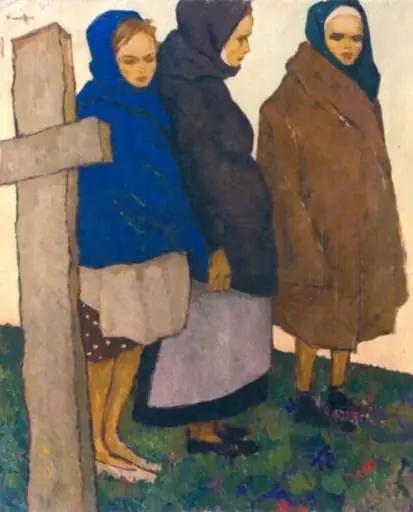
Înmormântare la țară is a print by Camil Ressu. It dates from 1911 and is held in the collection of the Visual Art Museum Galați.
About this work
Overview
Rendered with thick, expressive brushwork, the scene captures a moment of communal mourning against a simple village backdrop.
Painted in 1911 by Camil Ressu, Înmormântare la țară depicts a rural funeral procession in Romania. The work is held in the collection of the Museum of Ethnography. Rendered with thick, expressive brushwork, the scene captures a moment of communal mourning against a simple village backdrop. The palette is subdued, dominated by earth tones, with a single bright wall providing contrast. The technique emphasizes texture over detail, grounding the scene in physical presence rather than idealized form.
Subject & Meaning
The painting portrays a traditional Romanian funeral, with mourners carrying a wooden coffin adorned with a cross. Men in dark coats and hats lead the procession, while women, wrapped in light shawls, follow behind. The composition reflects communal solidarity in grief, rooted in rural customs. No individual faces are dramatized; instead, the group’s collective posture conveys quiet solemnity. The scene avoids sentimentality, focusing on ritual as an embedded social act.
Technique & Style
Ressu employs impasto to build form through layered, visible brushstrokes. The thick paint gives texture to clothing and skin, making figures emerge from a softer, more blended background. The yellow wall behind the procession is rendered with broad, flat strokes, creating a stark contrast that frames the mourners without distracting from them. This approach prioritizes emotional weight over precision, aligning with early 20th-century tendencies toward expressive realism.
History & Provenance
Created in 1911, the painting entered the collection of the Museum of Ethnography in Romania, where it remains today. Its acquisition reflects institutional interest in documenting folk traditions during a period of national cultural consolidation. Unlike urban-focused works of the time, this piece was valued for its fidelity to rural life. No significant changes in ownership or restoration are documented, suggesting stable preservation since its creation.
Context
Ressu painted this during a time when Romanian artists were turning to indigenous themes to define a national identity. Rural life, once overlooked in favor of European models, became a subject of serious study. Înmormântare la țară aligns with this movement, capturing a ritual that persisted despite modernization. The work does not romanticize poverty but presents it as part of a lived, unvarnished reality.
Legacy
The painting is recognized as a key example of early Romanian modernism grounded in ethnographic observation. It influenced later artists seeking to represent folk traditions with psychological depth rather than folklore clichés. While not widely exhibited abroad, it remains a touchstone in Romanian art history for its unembellished portrayal of communal mourning and its technical commitment to material presence over illusion.
Artist & collection

Artist
Camil Ressu was a Romanian painter and academic, one of the most significant art figures of Romania.