Artwork
Femei sărace
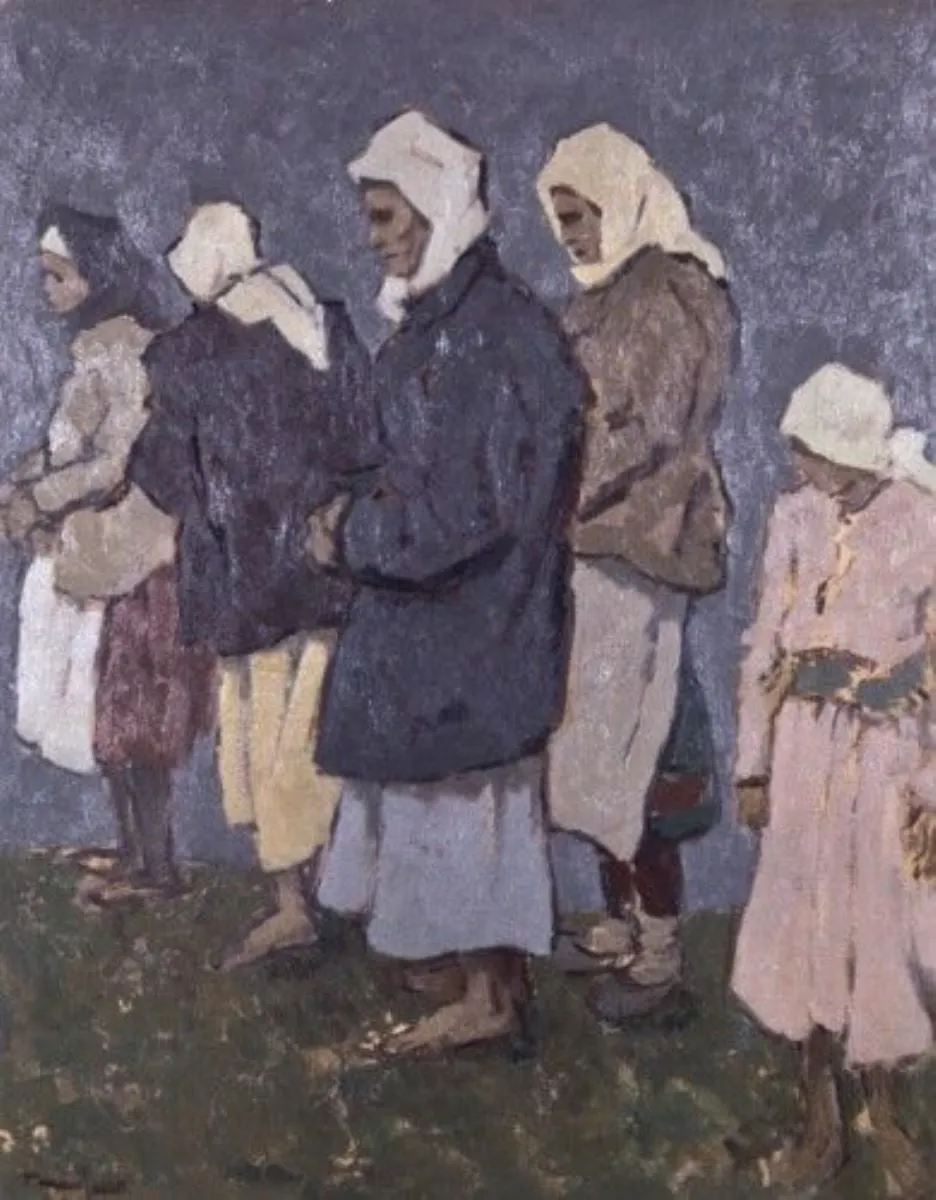
Femei sărace is an unspecified painting by Nicolae Tonitza. It dates from 1923 and is held in the collection of the National Museum of Art of Romania.
About this work
Overview
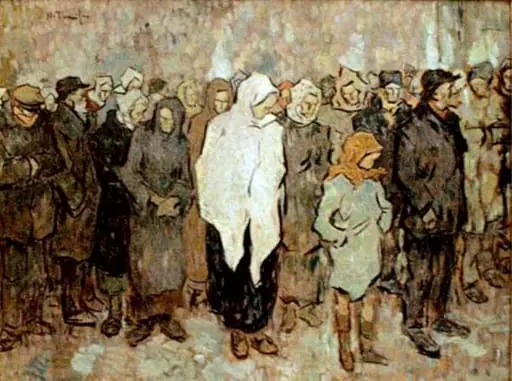
Executed around 1923, Nicolae Tonitza’s *Femei sărace* presents a quiet assembly of rural women. The composition centers on a cluster of figures, their shared attire and downward gazes creating an understated unity. A muted, unadorned backdrop focuses attention on the group, emphasizing their collective presence over individual detail.
Subject & Meaning
The painting depicts several women in modest, uniform dress—long skirts, dark jackets, and headscarves—suggesting a shared social or economic condition.
The painting depicts several women in modest, uniform dress—long skirts, dark jackets, and headscarves—suggesting a shared social or economic condition. Their proximity and similar postures imply familiarity, possibly kinship or communal bonds. The subdued expressions and downward glances evoke a sense of resignation or quiet endurance, reflecting the hardships of rural life in early 20th-century Romania.
Technique & Style
Tonitza employs a restrained palette dominated by earthy tones and muted grays, reinforcing the somber mood. Brushwork is deliberate yet economical, with minimal detail in facial features or background. The figures are modeled with soft contours, avoiding dramatic chiaroscuro, while the flattened space and simplified forms align with the artist’s modernist leanings, prioritizing emotional resonance over realism.
History & Provenance
Created circa 1923, *Femei sărace* emerged during Tonitza’s mature period, when his work increasingly addressed social themes. Little is documented about its early ownership, though it likely circulated within Romanian private collections before entering institutional holdings. Its precise exhibition history remains fragmentary, though similar works from this era were shown in Bucharest and other regional centers.
Context
The painting reflects the socio-economic realities of interwar Romania, particularly the struggles of rural populations. Tonitza, associated with the *Societatea Arta Română* and later *Grupul celor Patru*, often depicted marginalized figures, aligning with broader European trends that sought to humanize the working class. His approach balanced modernist aesthetics with a quiet social critique, distinguishing him from contemporaries focused on nationalist or decorative motifs.
Legacy
*Femei sărace* exemplifies Tonitza’s ability to convey dignity within hardship, a theme that resonated in Romanian art of the period. While not among his most widely reproduced works, it contributes to discussions of early modernist figuration in Eastern Europe. The painting’s understated composition and thematic focus continue to inform studies of Tonitza’s oeuvre and the broader cultural landscape of 1920s Romania.
Artist & collection

Artist
Nicolae Tonitza was a Romanian painter, engraver, lithographer, journalist and art critic. Drawing inspiration from Post-Impressionism and Expressionism, he had a major role in introducing modernist guidelines to local art.

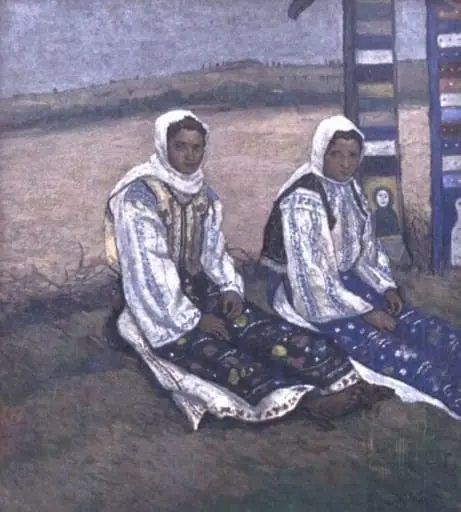 Țărănci din Vlaici-Olt
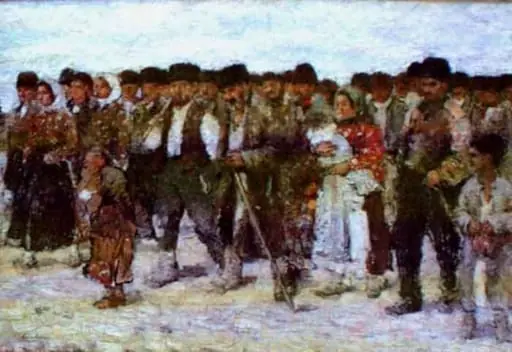 La împărțitul porumbului
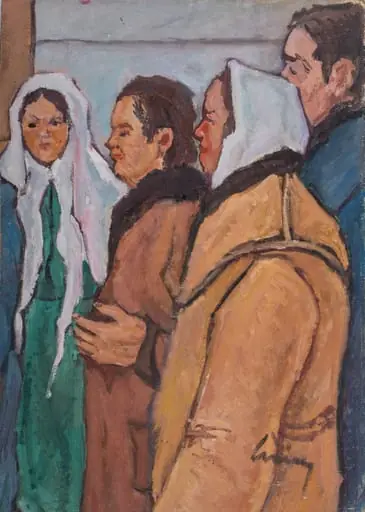 Compoziție cu patru personaje; în prim-plan, dreapta, o femeie și, în spatele ei, doi bărbați priviți din profil până la jumătate. Sunt îmbrăcați cu haine groase de iarnă ocru-brun și albastru; femeia poartă pe cap un batic alb. În plan secund stânga, o femeie văzută din față, 3/4, cu batic și șal alb, rochie verde și haină albastră. Semnat dreapta jos, cu negru: Craiu.
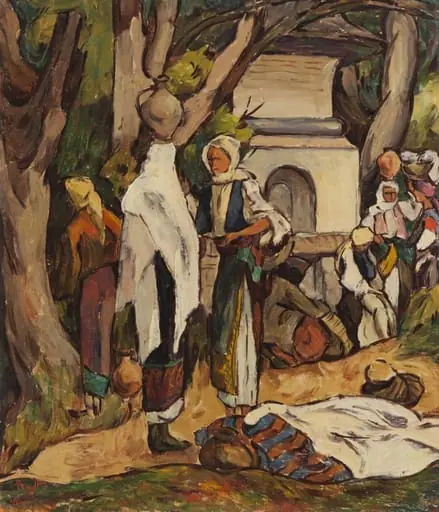 La fântâna meșterului Manole
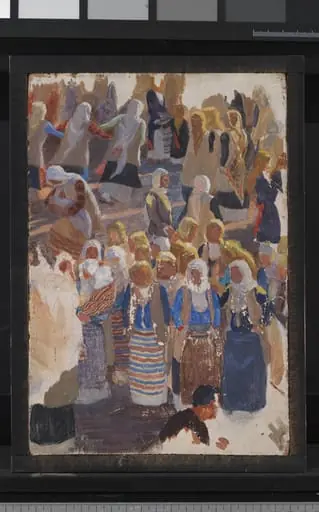 Grupper af dansende kvinder. Megara
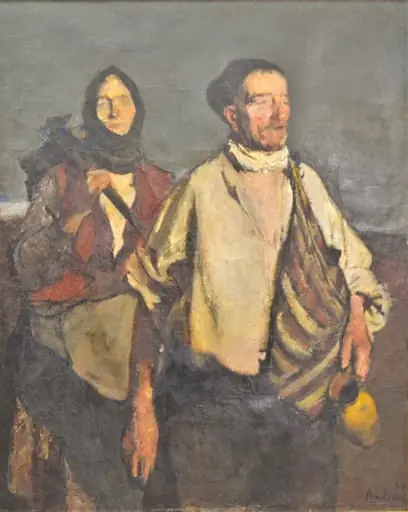 Țărani
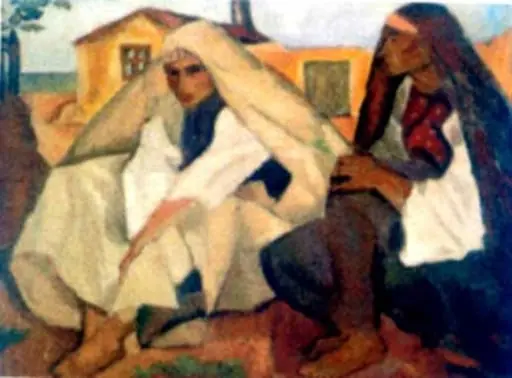 Tătăroaice
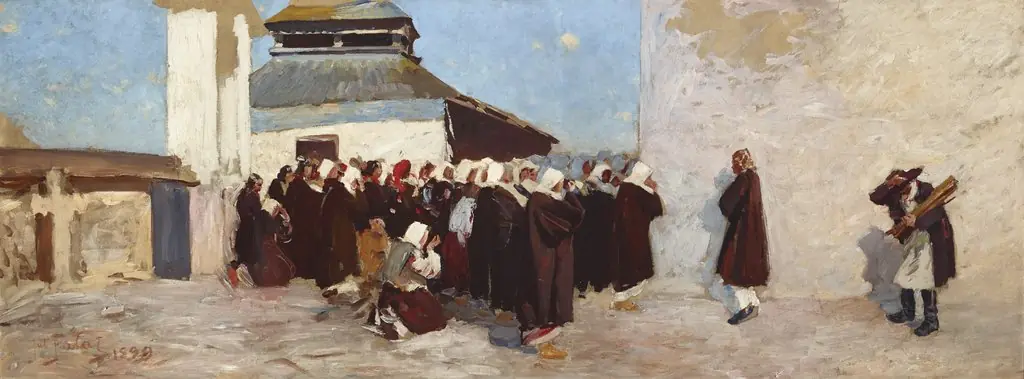 In Front of an Orthodox Church
 Coadă la pâine
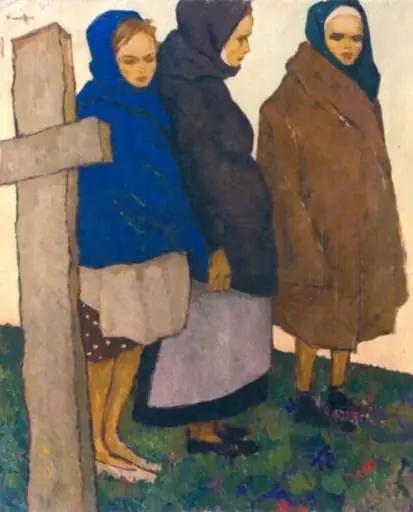 Femei în cimitir (Postmortem)
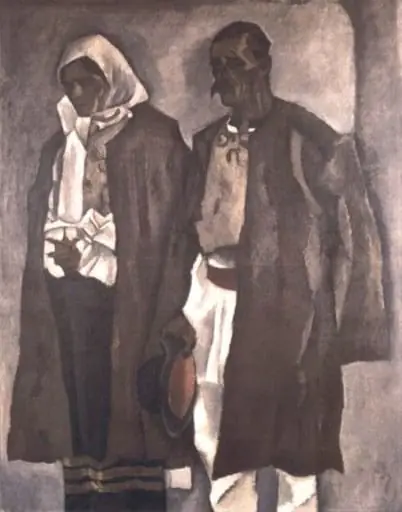 Oameni buni
 Study of Two Figures