Artwork
Auch ein Todtentanz I
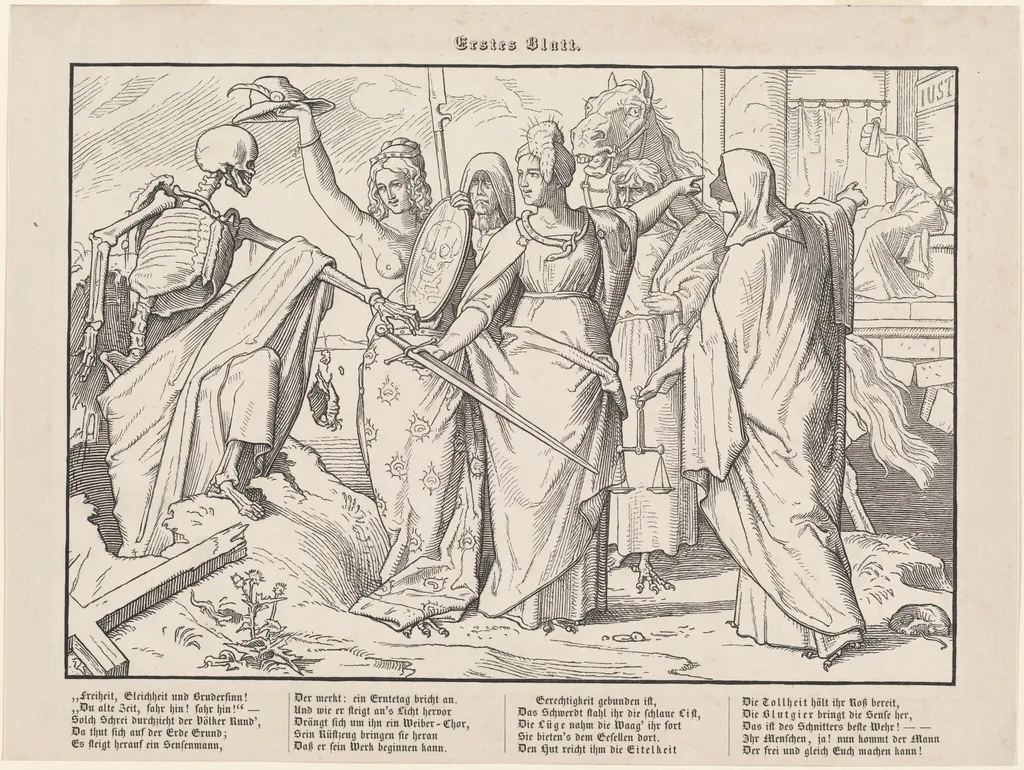
Auch ein Todtentanz I is an ink print by the Romanticist artist Alfred Rethel. It dates from 1849 and is held in the collection of the National Gallery of Art.
About this work
Overview
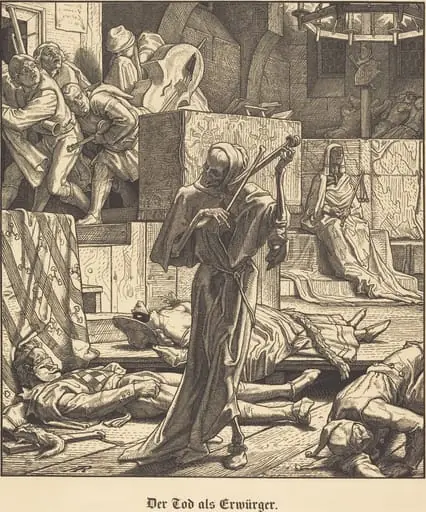
Rendered in monochrome, it depicts a procession of living figures accompanied by skeletal forms, moving in a single file across a fractured ground.
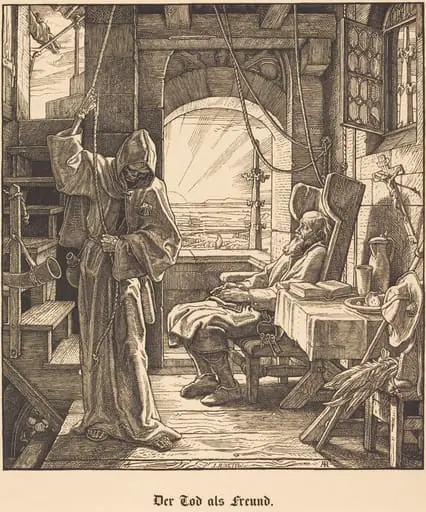
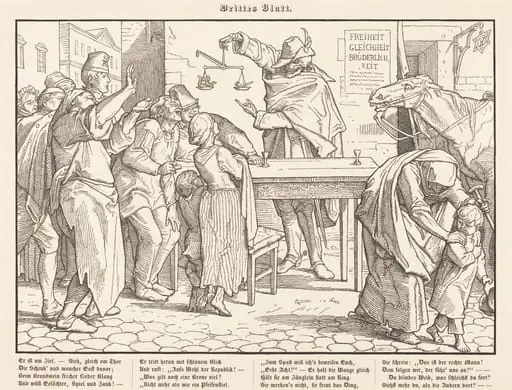
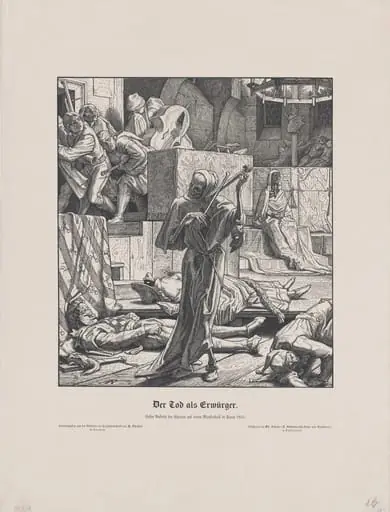
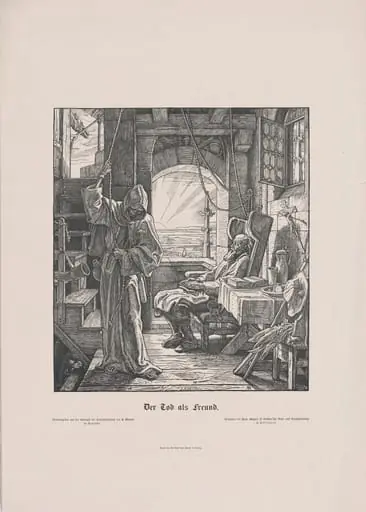
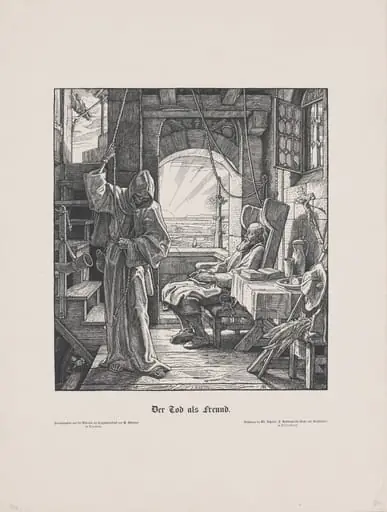
Auch ein Todtentanz I is a wood engraving by Alfred Rethel, completed in 1849. Rendered in monochrome, it depicts a procession of living figures accompanied by skeletal forms, moving in a single file across a fractured ground. The composition conveys a somber, ritualistic march, with each figure bound by the presence of death, rendered through precise, incised lines that define form and mood without color.
Subject & Meaning
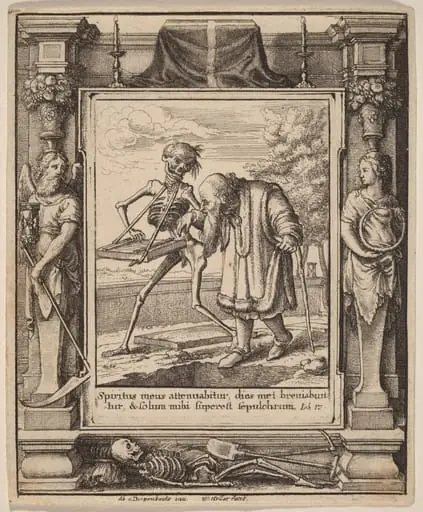
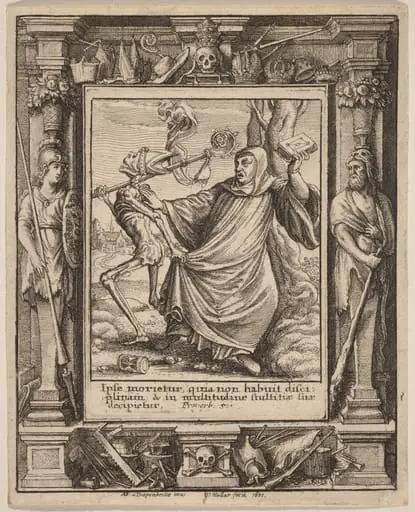
The image illustrates the medieval motif of the Dance of Death, in which skeletons lead individuals of all social ranks—nobles, clergy, laborers—toward inevitable mortality. Crowns, robes, and weapons signify status, yet all are united in the same procession. The skull-bearer and sword-wielder reinforce death’s authority, stripping away earthly distinctions and emphasizing universal fate.
Technique & Style
Rethel employed fine, controlled incisions in wood to achieve high contrast and intricate detail. Shading is built through dense cross-hatching and varied line weight, giving volume to the figures and texture to the uneven terrain. The stark black-and-white palette heightens the grim atmosphere, while the rigid, linear quality of the engraving enhances the mechanical inevitability of the march.
History & Provenance
Created in the aftermath of the 1848 revolutions, the print reflects Rethel’s engagement with contemporary political unrest and existential anxiety. It was part of a series responding to the collapse of idealism and the persistence of suffering. The work was widely circulated in Germany, contributing to a revival of Gothic and moralizing imagery during a period of social upheaval.
Context
The Dance of Death theme had roots in late medieval art, often used to counter vanity and remind viewers of mortality. In mid-19th-century Europe, renewed interest in the motif coincided with industrialization, disease, and political instability. Rethel’s version adapts the tradition to critique social hierarchies, suggesting that death erases all distinctions, regardless of power or wealth.
Legacy
Rethel’s engraving influenced later German artists exploring themes of death and social critique, particularly in the Expressionist movement. Its formal clarity and emotional restraint set it apart from more theatrical interpretations of the Dance of Death. The work remains a significant example of 19th-century printmaking’s capacity to merge moral allegory with technical precision.
Artist & collection