Artwork
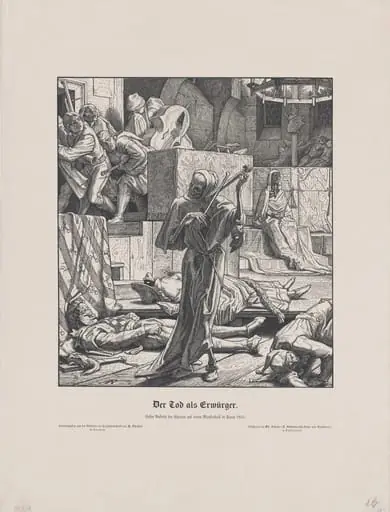
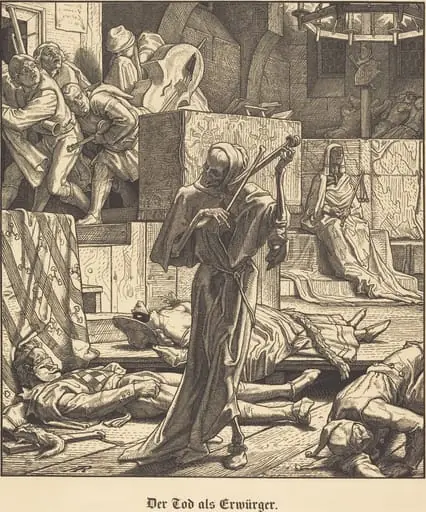
Der Tod als Erwürger (Death as a Strangler)
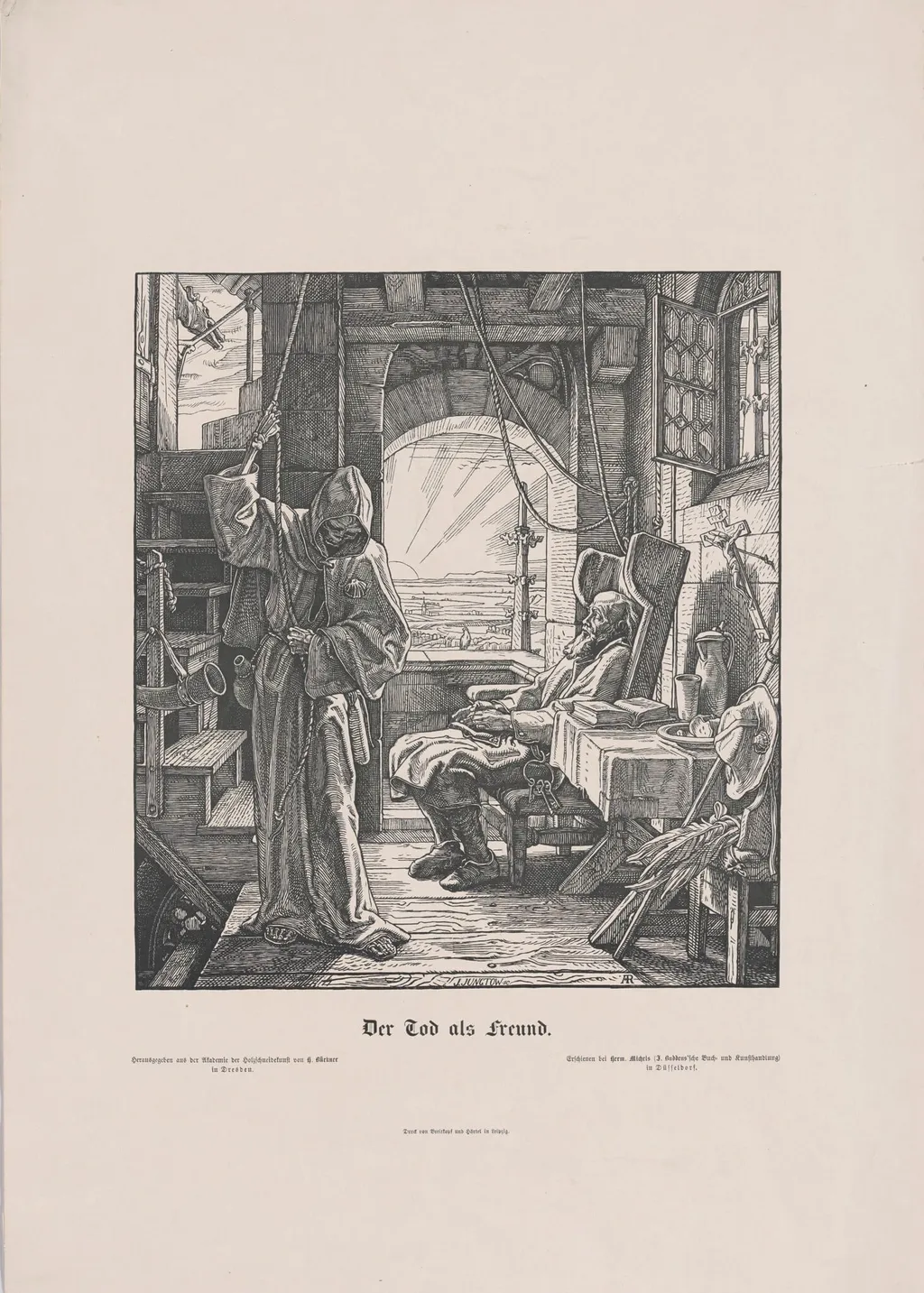
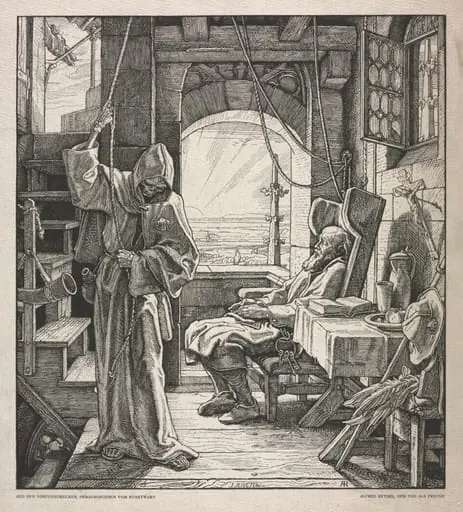
Der Tod als Erwürger (Death as a Strangler) is an ink print by the Impressionist artist Alfred Rethel. It dates from 1851 and is held in the collection of the National Gallery of Art.
About this work
Overview
Created in 1851 by Alfred Rethel, Der Tod als Erwürger is a wood engraving on wove paper, part of a series responding to the political upheavals of 1848.
Created in 1851 by Alfred Rethel, Der Tod als Erwürger is a wood engraving on wove paper, part of a series responding to the political upheavals of 1848. The image presents a solitary, menacing figure of Death strangling a seated man in a sparse interior. Rendered with sharp, incised lines, the print conveys tension through stark contrasts and minimal detail, avoiding ornamentation to focus on the brutality of the moment.
Subject & Meaning
The figure of Death, cloaked and faceless, represents an impersonal, inescapable force. The victim, bound to a chair, embodies vulnerability amid chaos. The scene lacks narrative context, suggesting a universal confrontation with mortality rather than a specific historical event. The work reflects mid-19th-century anxieties about violence, loss, and the fragility of life during a period of social unrest.
Technique & Style
Rethel employed wood engraving to achieve fine, controlled lines and deep blacks. The composition relies on chiaroscuro, with light narrowly illuminating the figures against a near-total shadow. The background is reduced to a sliver of window and indistinct furnishings, directing attention to the struggle. The technique mimics the texture of a woodcut but with greater precision, enhancing the engraving’s stark, almost brutal clarity.
History & Provenance
Produced in 1851, this print was among Rethel’s most widely circulated works following the failed revolutions of 1848. It was issued as a standalone plate and later included in his illustrated series on death and fate. Early impressions were distributed in Germany and neighboring regions, often collected by intellectuals and artists drawn to its somber symbolism. No known original frame or mounting survives.
Context
Rethel created this work amid widespread disillusionment after the collapse of liberal uprisings across Europe. The image resonated with contemporaries who saw Death as a metaphor for political repression and societal decay. Unlike romanticized depictions of mortality, this scene offers no redemption or transcendence—only quiet, inevitable violence, aligning with a growing realist sensibility in post-revolutionary art.
Legacy
Der Tod als Erwürger influenced later German graphic artists who explored themes of existential dread and social trauma. Its stripped-down aesthetic prefigured Expressionist prints of the early 20th century. Though not widely exhibited today, it remains a key example of 19th-century printmaking’s capacity to convey psychological weight through minimal means, studied for its emotional economy and formal discipline.
Artist & collection