Artwork
Der Tod als Freund (Death as a Friend)
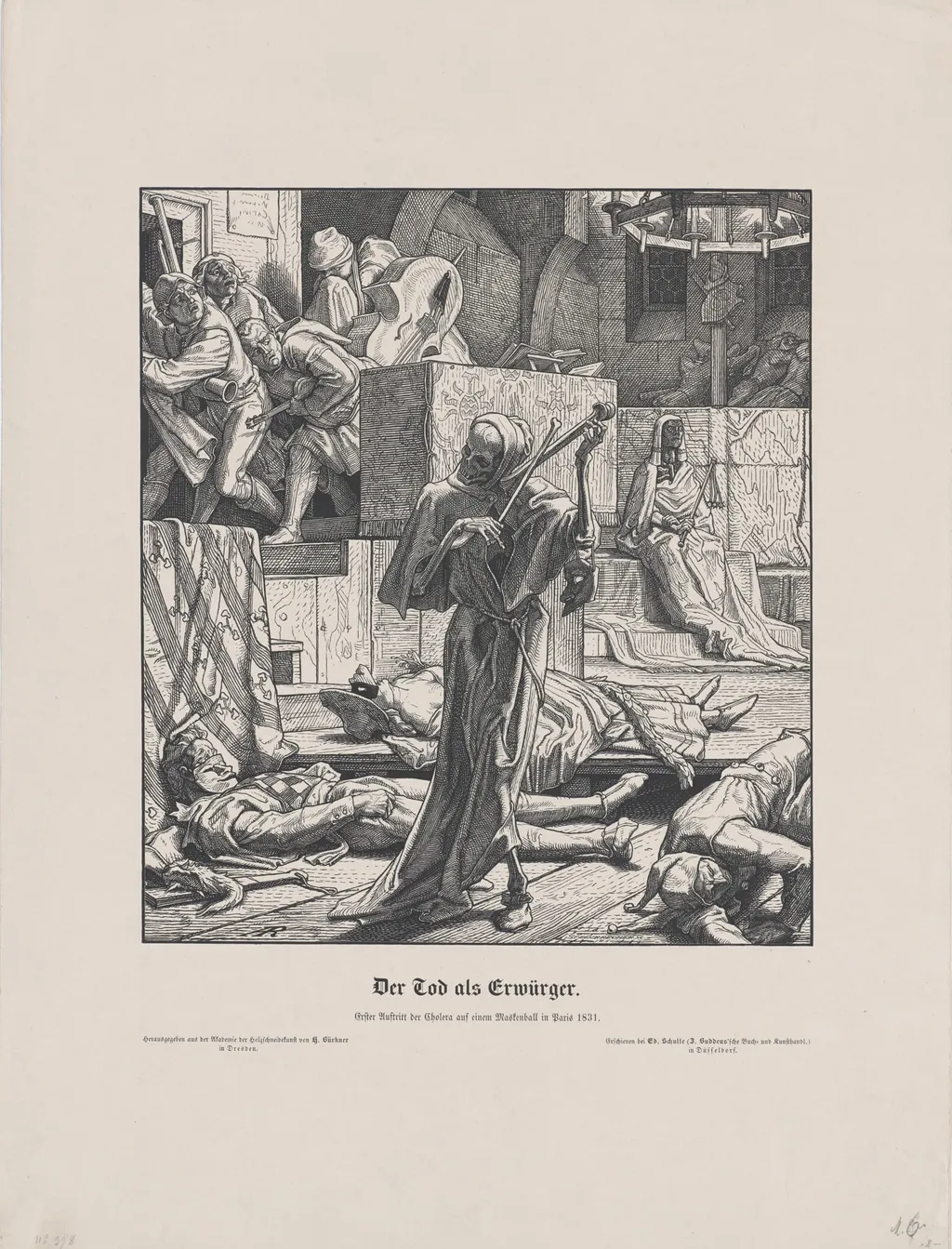
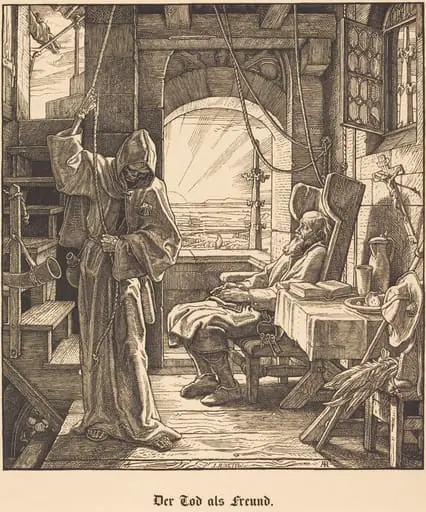
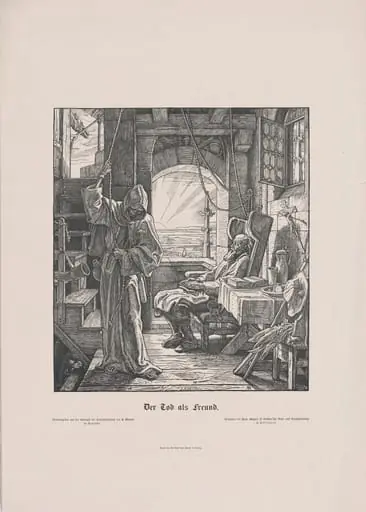
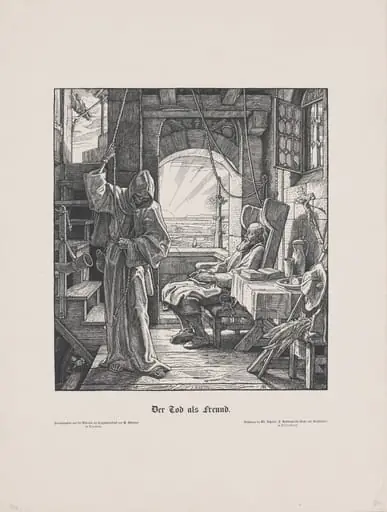
Der Tod als Freund (Death as a Friend) is an ink print by the Romanticist artist Alfred Rethel. It dates from 1831 and is held in the collection of the National Gallery of Art.
About this work
Overview
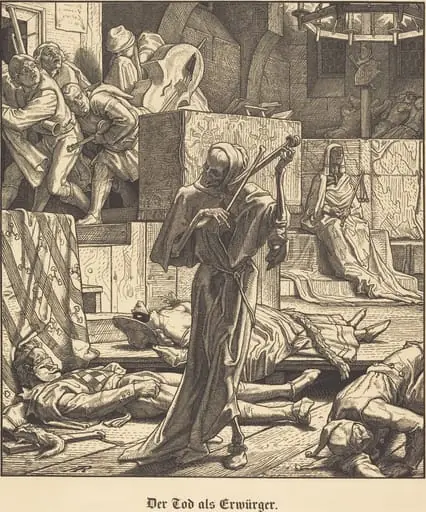
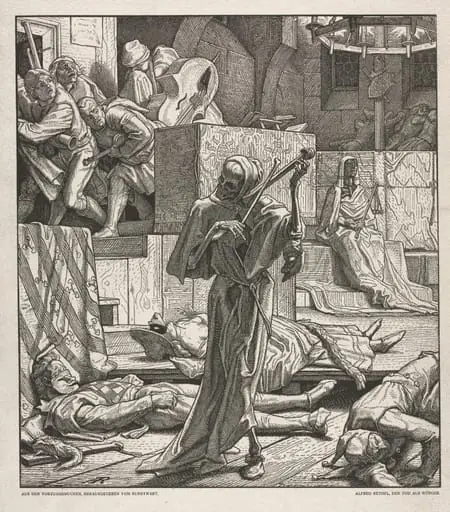
The work presents a densely composed interior scene where death, depicted as a robed figure with a scythe, stands silently amid chaos.
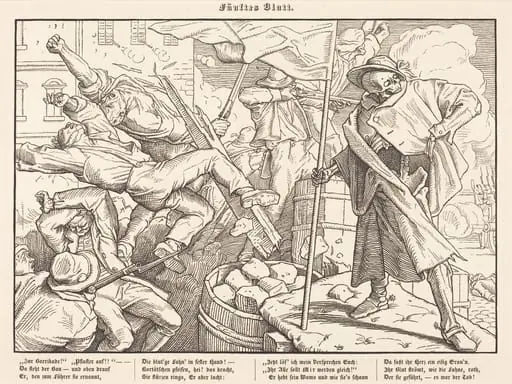
Created in 1831, Der Tod als Freund is a wood engraving by Alfred Rethel, produced in a second edition on wove paper. The work presents a densely composed interior scene where death, depicted as a robed figure with a scythe, stands silently amid chaos. The composition captures a moment of collective distress, with figures scattered across the floor and others frozen in shock, all under the watchful presence of the central figure.
Subject & Meaning
The title, Death as a Friend, contrasts sharply with the scene’s turmoil. Rather than offering comfort, the figure of death appears as an inevitable, passive observer. People lie dead or in despair, some clutching personal items, while one man plays violin—an act of defiance or resignation. The dissonance between title and imagery invites reflection on death’s ambiguous role: not a savior, but an inescapable presence amid human fragility.
Technique & Style
Rethel employed fine, precise wood engraving lines to render intricate detail and dramatic contrast. The dense network of strokes creates texture in clothing, furniture, and walls, amplifying the claustrophobic atmosphere. Sharp contrasts between light and shadow heighten emotional tension, while the meticulous craftsmanship lends an almost clinical clarity to the scene’s chaos, reinforcing its unsettling realism.
History & Provenance
The print was originally produced in 1831 and later reissued in a second edition, indicating continued interest in the work during Rethel’s early career. It emerged during a period of heightened public engagement with themes of mortality, influenced by Romanticism and the lingering impact of plague and war. Though its early ownership is undocumented, its survival in multiple editions suggests it resonated within artistic and intellectual circles of the time.
Context
Rethel created this work amid Europe’s Romantic era, when artists frequently explored death, emotion, and the sublime. The image reflects broader cultural anxieties about mortality, particularly following epidemics and political upheaval. Unlike idealized depictions of death, Rethel’s version rejects transcendence, focusing instead on human vulnerability and the disorder that accompanies sudden loss.
Legacy
Der Tod als Freund influenced later German artists interested in psychological depth and social commentary through printmaking. Its unflinching portrayal of death as an impersonal force, rather than a spiritual guide, marked a departure from traditional iconography. Though not widely reproduced, it remains a significant example of early 19th-century narrative engraving and its capacity to convey existential unease.
Artist & collection