Artwork
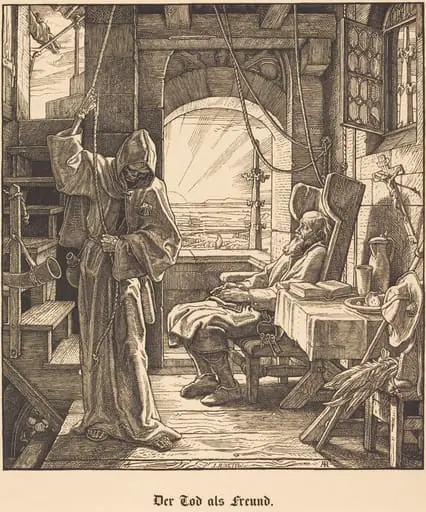
Der Tod als Freund (Death as a Friend)
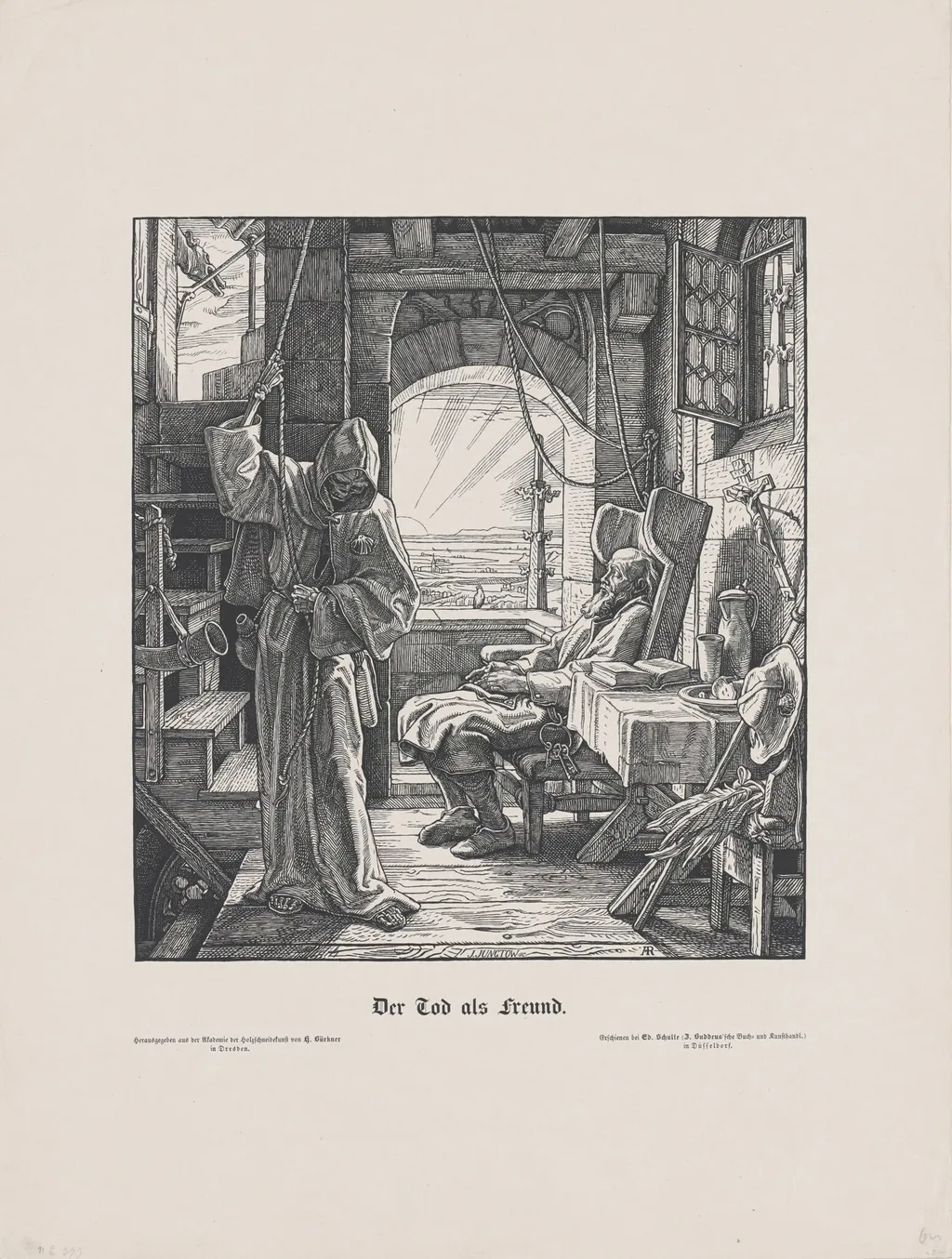
Der Tod als Freund (Death as a Friend) is an ink print by the Impressionist artist Alfred Rethel. It dates from 1851 and is held in the collection of the National Gallery of Art.
About this work
Overview
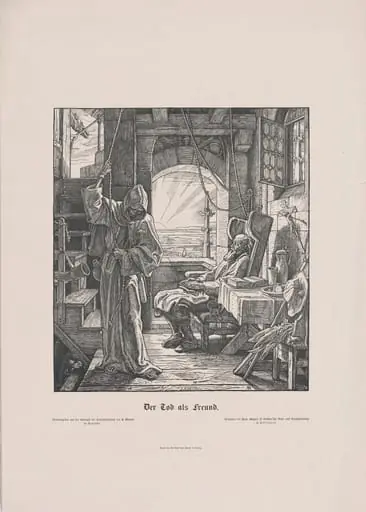
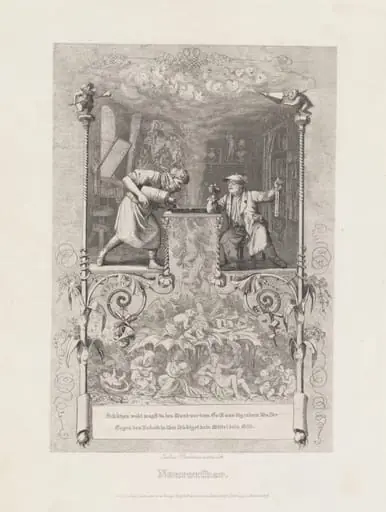
Created in 1851, Der Tod als Freund is a wood engraving by Alfred Rethel, printed on wove paper in its first edition. The work presents a quiet, intimate confrontation between a hooded figure and a seated man, rendered with precise linear detail. Its monochrome palette and intricate hatching reflect the traditions of Northern European printmaking, emphasizing texture and mood over color.
Subject & Meaning
The image depicts Death as a calm, robed presence, standing over a scholar at his desk. The man, surrounded by books and a drinking vessel, looks upward not in fear but with quiet recognition. The scene suggests an acceptance of mortality, framing death not as a threat but as a companion. The setting implies a life of study and contemplation, ending not in chaos but in stillness.
Technique & Style
The composition is tightly controlled, with light falling from the window to guide the viewer’s eye from the figure to the man, enhancing the narrative tension.
Rethel employed fine cross-hatching to model form and suggest depth, a technique closely associated with Albrecht Dürer. The textures of the wooden desk, the smoothness of the robe, and the grain of the paper are rendered with deliberate contrast. The composition is tightly controlled, with light falling from the window to guide the viewer’s eye from the figure to the man, enhancing the narrative tension.
History & Provenance
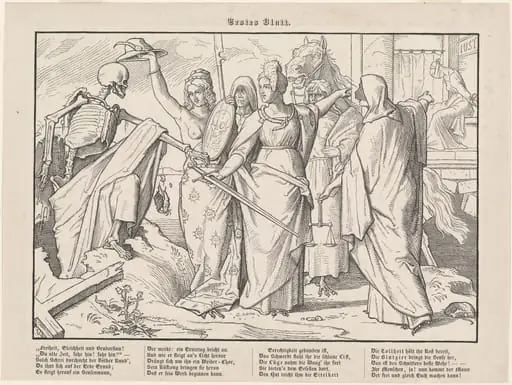
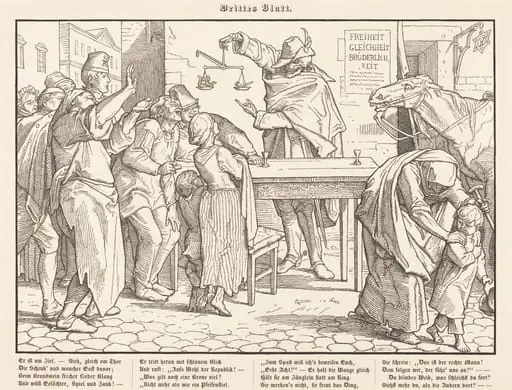
The print was produced during Rethel’s early career, shortly after his return from Rome, when he was deeply engaged with German literary and philosophical themes. It was part of a series reflecting on mortality and the human condition. The first edition was printed in limited numbers, and surviving impressions are held in major European print collections, including the Kupferstichkabinett in Berlin.
Context
Created amid the aftermath of the 1848 revolutions and amid rising interest in German Romanticism, the work resonates with contemporary preoccupations with death, fate, and intellectual solitude. Rethel’s imagery aligns with literary figures like E.T.A. Hoffmann and the broader cultural turn toward introspective, symbolic narratives in post-revolutionary Germany.
Legacy
Though not widely exhibited today, Der Tod als Freund remains a significant example of mid-19th-century German printmaking. It influenced later artists exploring allegorical themes in graphic media and stands as a quiet testament to Rethel’s skill in merging narrative depth with technical precision, bridging the legacy of Dürer with emerging modern sensibilities.
Artist & collection