Artwork
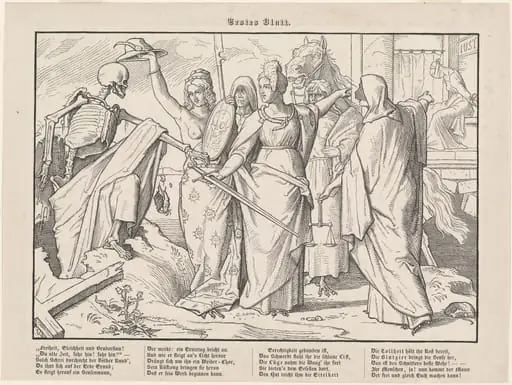
Auch ein Todtentanz III
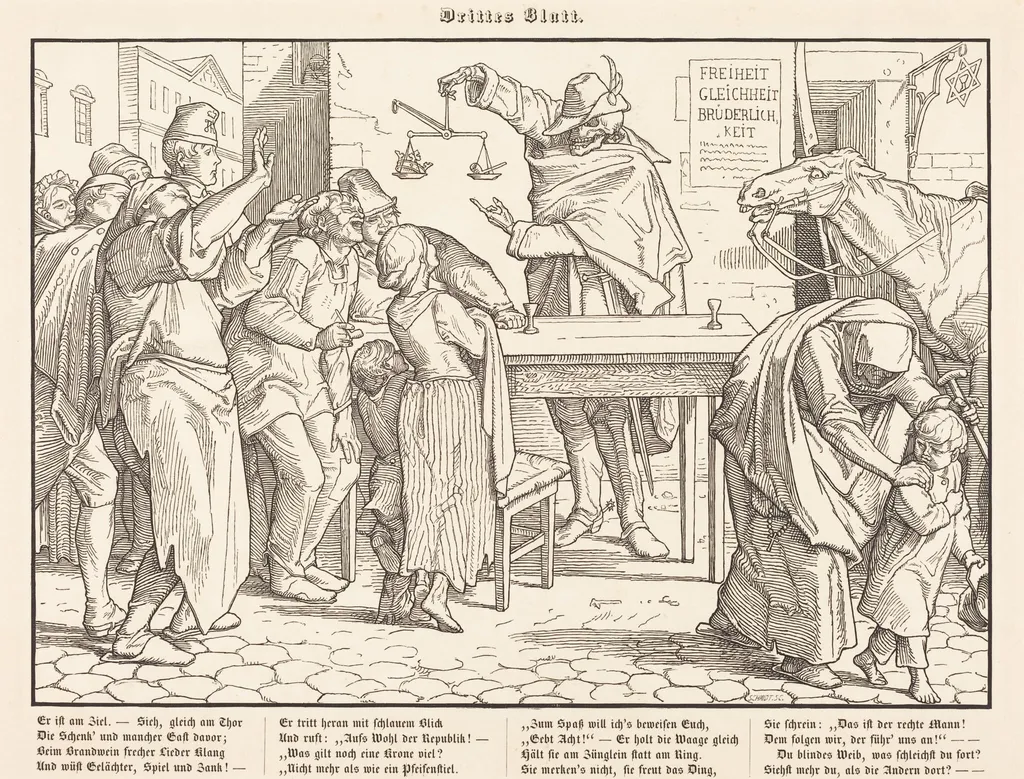
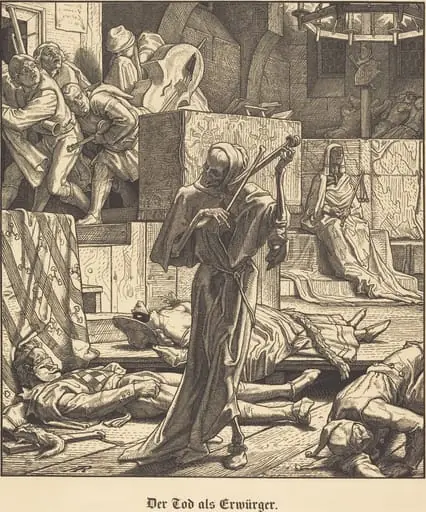
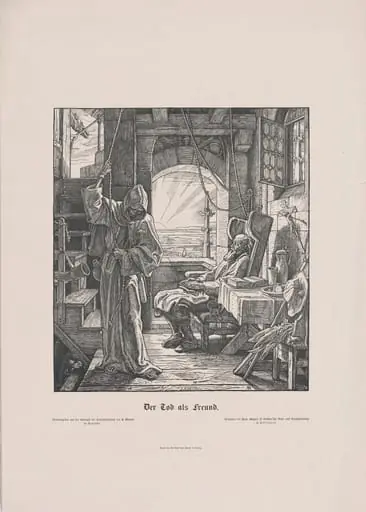
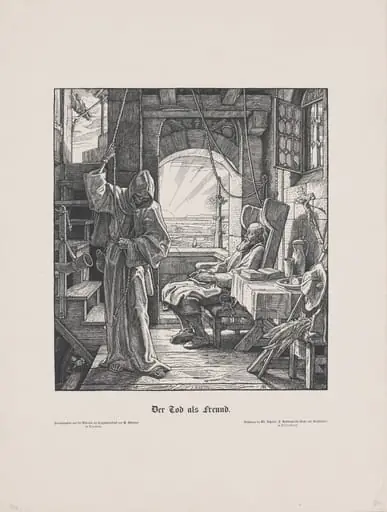
Auch ein Todtentanz III is an ink print by the Romanticist artist Alfred Rethel. It dates from 1849 and is held in the collection of the National Gallery of Art.
About this work
Overview
The work is part of a series reflecting on mortality and societal upheaval, rendered through intricate line work characteristic of 19th-century printmaking.
Auch ein Todtentanz III is a black-and-white wood engraving by Alfred Rethel, completed in 1849. It depicts a turbulent public scene before an elevated platform, where political slogans are displayed. The composition is dense with figures in motion, conveying unrest and emotional intensity. The work is part of a series reflecting on mortality and societal upheaval, rendered through intricate line work characteristic of 19th-century printmaking.
Subject & Meaning
The image portrays a crowd reacting to banners bearing the words 'FREIHEIT' and 'GLEICHHEIT'—symbols of revolutionary ideals. Figures below display agitation: some gesture wildly, others shout, and one brandishes a sword. The scene suggests the volatile intersection of political aspiration and public chaos. Rethel links these social tensions to the broader theme of death as an equalizing force, a recurring motif in his Todtentanz series.
Technique & Style
Rethel employed fine, densely packed lines in wood engraving to build texture and shadow, creating a sense of claustrophobic movement. The high contrast between ink and paper enhances dramatic tension. Each figure is rendered with meticulous detail, contributing to the overall feeling of disorder. The technique allows for sharp definition even in crowded compositions, reinforcing the emotional weight of the moment without color or embellishment.
History & Provenance
Created in 1849, the print emerged during a period of revolutionary ferment across Europe. Rethel, a German artist influenced by Romanticism and historical trauma, produced this work shortly after the failed uprisings of that year. The print was likely circulated among intellectual circles, serving as a visual commentary on the fragility of political ideals. Its survival in institutional collections attests to its resonance within 19th-century German art.
Context
The engraving responds to the wave of liberal revolutions that swept Europe in 1848–1849, particularly in German states seeking constitutional reform. Rethel’s series Todtentanz drew on medieval motifs of death’s universality, reimagining them through contemporary political lenses. By juxtaposing revolutionary slogans with chaotic crowds, he questioned whether liberty and equality could coexist with violence and disorder.
Legacy
Though less widely known than his mural work, Auch ein Todtentanz III remains a significant example of political printmaking in mid-19th-century Germany. Its fusion of social critique and allegorical tradition influenced later artists engaged with themes of power and mortality. The work is preserved in major collections as a document of artistic response to revolutionary disillusionment.
Artist & collection