Artwork
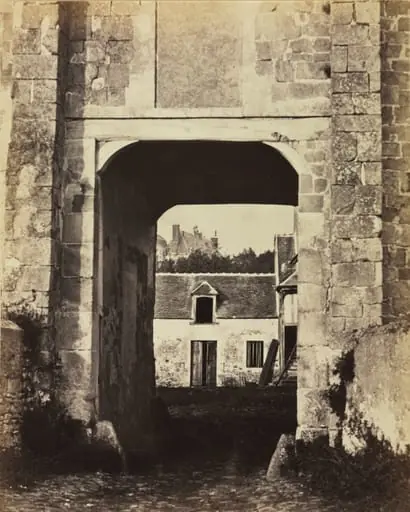
Gateway to Borwick Hall, Lancashire
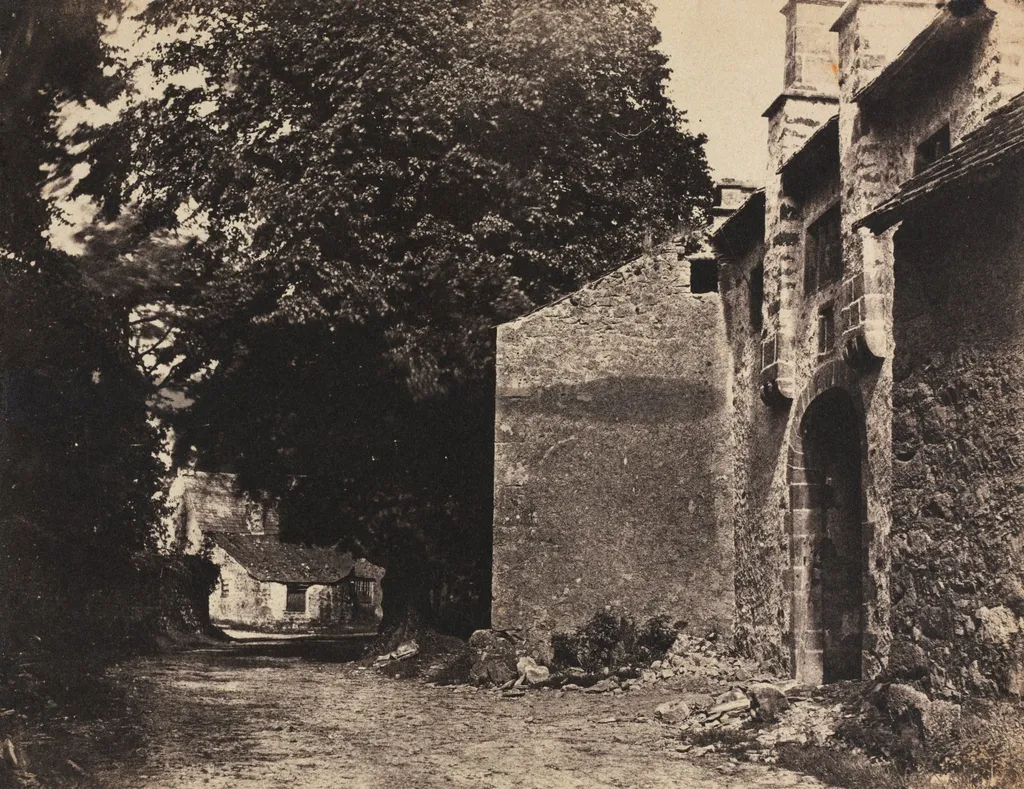
Gateway to Borwick Hall, Lancashire is a photography by the Impressionist artist Rev. John Richardson Major. It dates from 1855 and is held in the collection of the Cleveland Museum of Art. Taken in 1855 by Rev.
About this work
Overview
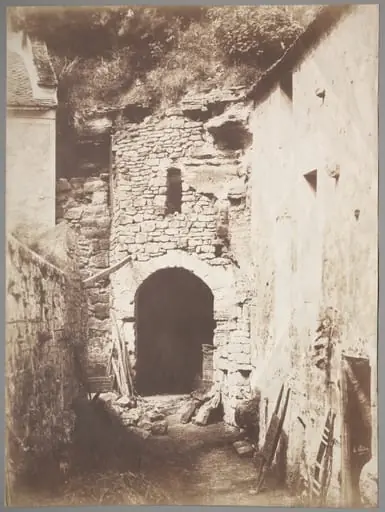
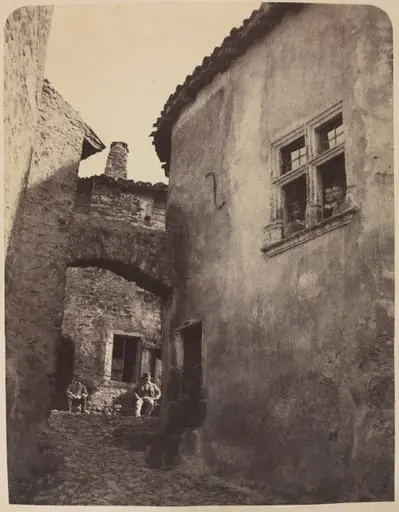
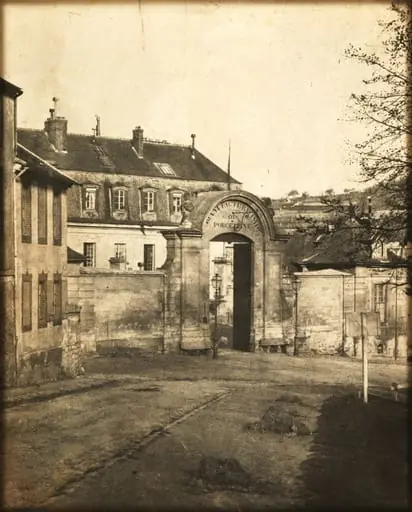
The image presents a confined passageway between weathered stone structures, rendered with the tonal sensitivity characteristic of early photographic processes.
Taken in 1855 by Rev. John Richardson Major, this photograph captures the entrance to Borwick Hall in Lancashire. It is part of the collection at The Cleveland Museum of Art. The image presents a confined passageway between weathered stone structures, rendered with the tonal sensitivity characteristic of early photographic processes. The composition emphasizes stillness and decay, offering a quiet record of a rural architectural detail from mid-19th century England.
Subject & Meaning
The subject is a modest, nearly forgotten access point to a historic estate. The narrow alley, overgrown vegetation, and deteriorating masonry suggest abandonment or neglect. The small wooden door, partially obscured by shadow and foliage, implies a threshold between the cultivated and the wild. The image conveys a sense of time passed, not as a monument but as an unremarkable corner of the landscape, quietly enduring.
Technique & Style
The photograph employs natural light to shape form and mood, with deep shadows contrasting against faintly lit stone surfaces. The texture of moss, dirt, and crumbling mortar is rendered with clarity, typical of the calotype process. Compositionally, the alley draws the eye toward the distant door, while the overhanging tree disrupts the line of sight, enhancing the sense of enclosure and quiet isolation.
History & Provenance
Created by Rev. John Richardson Major, an amateur photographer and clergyman, the image reflects his interest in documenting vernacular architecture. It entered the collection of The Cleveland Museum of Art through its broader acquisition of 19th-century British photographs. Its survival and preservation underscore its value as a documentary record rather than a commissioned work.
Context
In mid-19th century England, photography began to serve as a tool for recording architectural heritage amid rapid industrialization. Major’s work aligns with a growing interest in preserving the visual traces of rural life. This image, unlike grand estate portraits, focuses on the overlooked—ordinary structures that spoke to a vanishing past, valued by early photographic enthusiasts for their authenticity.
Legacy
The photograph endures as a quiet example of early photographic documentation, valued for its unembellished observation. It contributes to the historical record of English country architecture and the role of amateur photographers in capturing everyday scenes. Its preservation in a major museum affirms its significance within the evolution of photographic practice as a medium of historical witness.
Artist & collection