Artwork
Coat of Arms with Three Putti
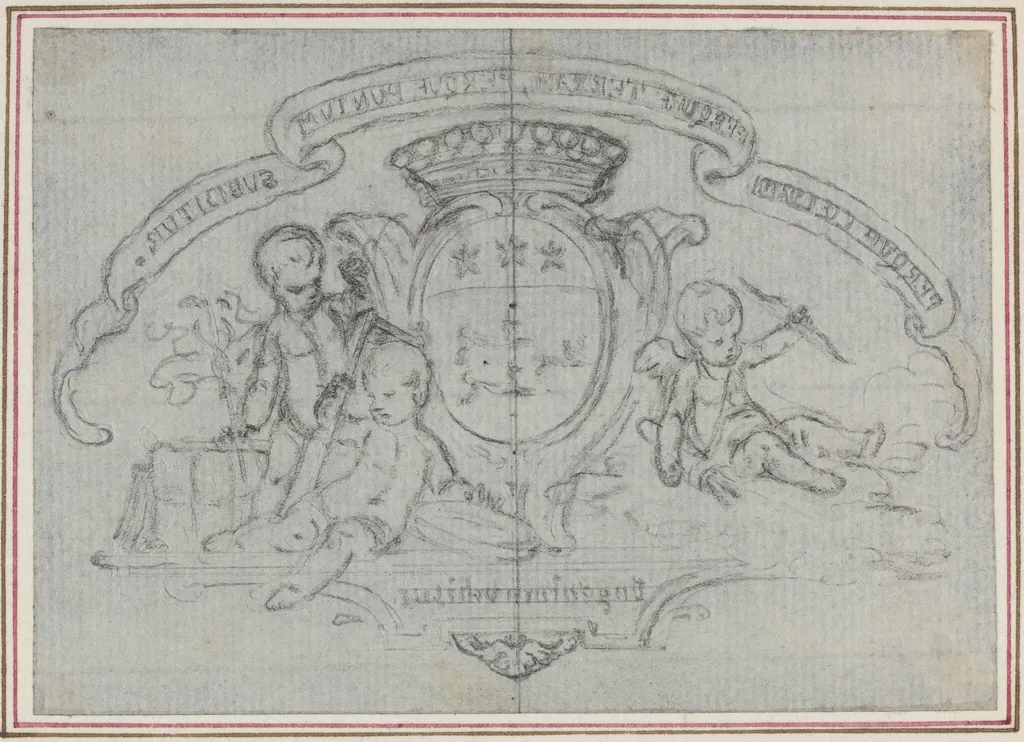
Coat of Arms with Three Putti is a graphite drawing by the Baroque artist Hubert François Gravelot. It dates from 1736 and is held in the collection of the National Gallery of Art.
About this work
Overview
Created in 1736, this drawing by Hubert François Gravelot presents a heraldic shield surrounded by three cherubic figures. Executed on laid paper, the work combines graphite shading with incised lines that were transferred to the surface, showcasing the artist’s precise handling of line and tone.
Subject & Meaning
The central element is an elaborate coat of arms, framed by three playful putti whose light gestures soften the formal heraldic motif. The inclusion of these figures reflects the Rococo taste for whimsical, decorative embellishment within otherwise serious symbols of lineage.
Technique & Style
Gravelot employed a dual method: graphite for tonal modeling and a fine incised tool to create lines that could be transferred onto the paper. This approach yields delicate shading and crisp outlines, characteristic of the Rococo’s ornamental elegance and its interest in nuanced surface treatment.
History & Provenance
Born in Paris, Gravelot relocated to London in 1732, where he became influential in disseminating Rococo aesthetics through book illustrations and designs. The drawing, dated shortly after his move, exemplifies the cross‑channel exchange of decorative styles during the early eighteenth century.
Context
During the 1730s, heraldic imagery was often adapted for decorative purposes in printed and applied arts. Gravelot’s integration of putti aligns with contemporary trends that merged aristocratic symbols with the light, airy motifs favored by the Rococo movement.
Artist & collection

Artist
Hubert-François Bourguignon, commonly known as Gravelot (26 March 1699 – 20 April 1773), was a French engraver, a famous book illustrator, designer and drawing-master.

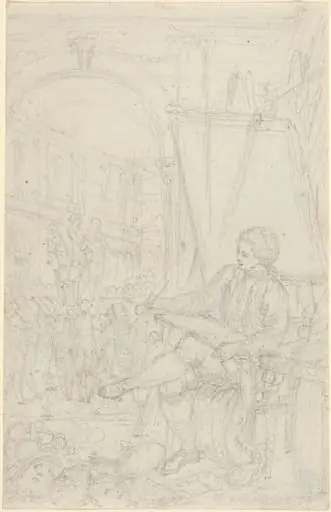 Self-Portrait
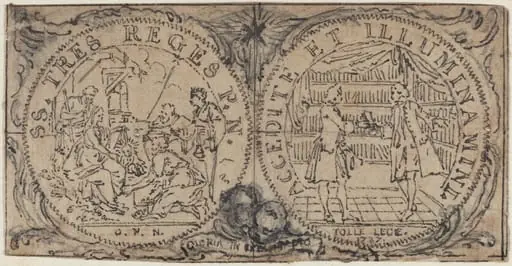 Ornamental Medallions with the Adoration of the Magi and Two Bibliophiles
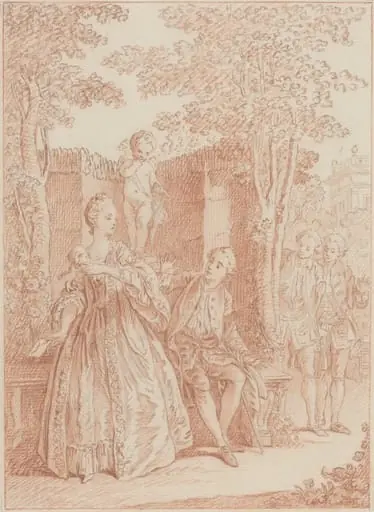 Oui, je la connais Traitre, et je connais ton Coeur
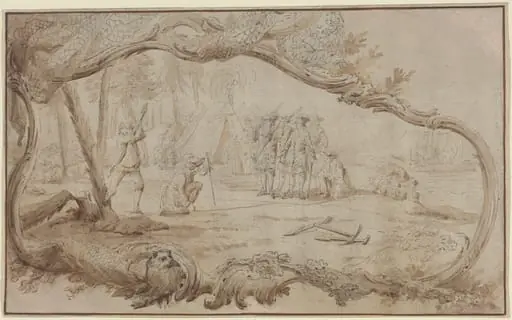 The Landing of the Dutch Expedition Party in New York
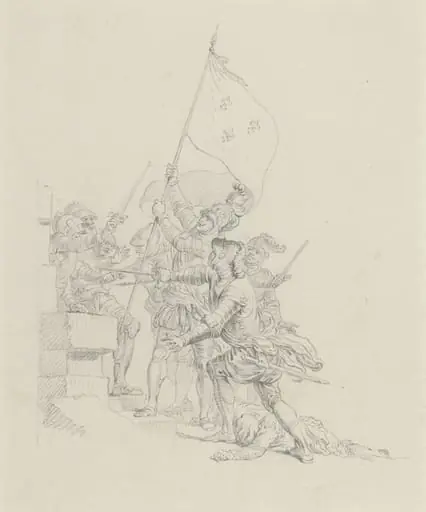 Il monte: il a déjà de ses mains triomphantes...
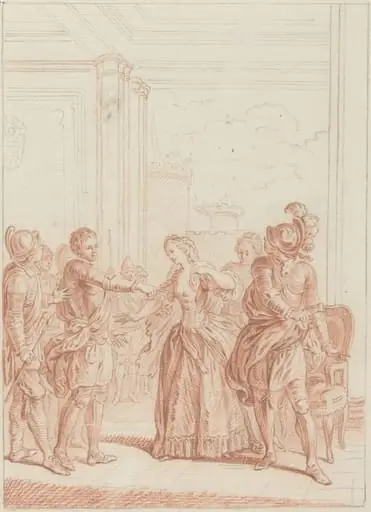 Je suis vengé de toi: l'on te hait, et l'on m'aime
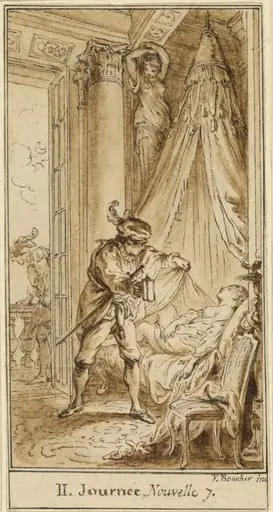 Second Day, Seventh Story: The Duke of Athens Contemplating the Sleeping Princess Alatiel
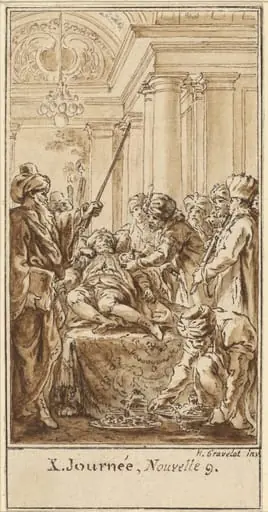 Tenth Day, Ninth Story: Saladin Bestows Rich Gifts on the Sleeping Torello
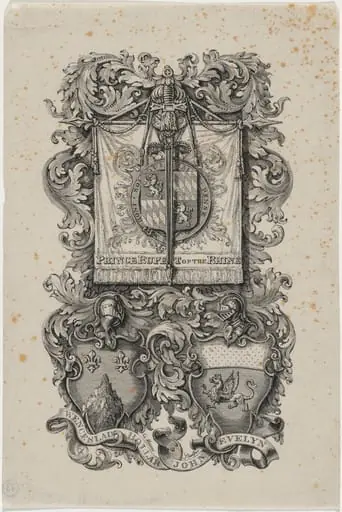 Coat of Arms of Prince Rupert, Hollar and Evelyn
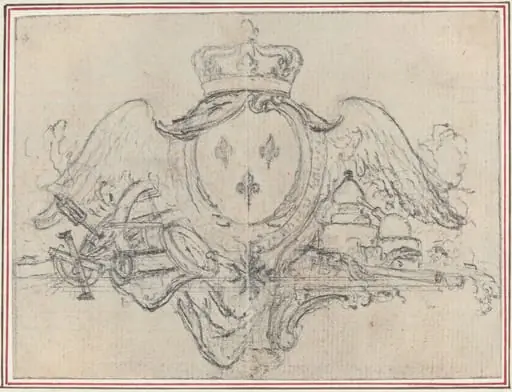 Arms of the King of France with Wings and Scientific Instruments
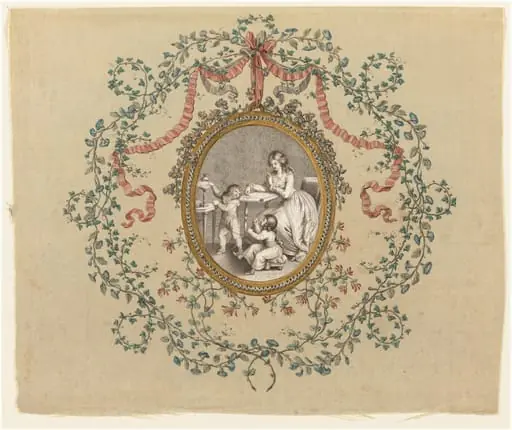 Seated Woman Sketching a Design for Embroidery and Children Winding Yarn
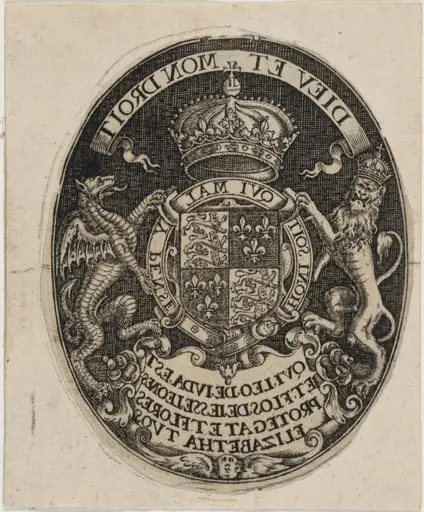 Shield of Queen Elizabeth
 Printer's Device for the Plantin Press
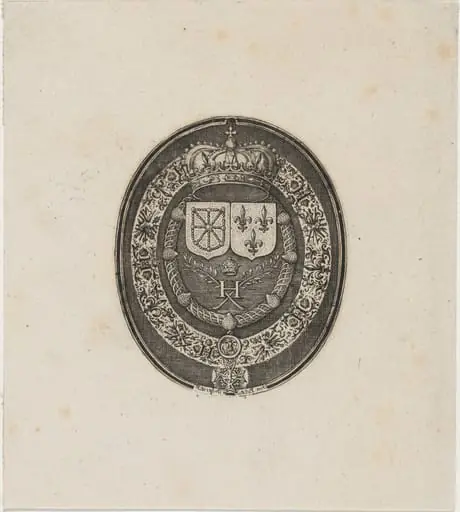 Shields of Henry IV and Maria de Medici
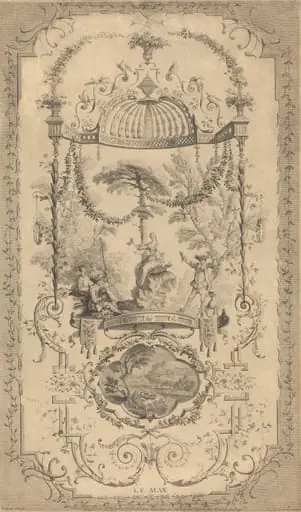 LeMay
LeMay Ornament for Knife Handle
 Pendant