Artwork
The Woman of Samaria
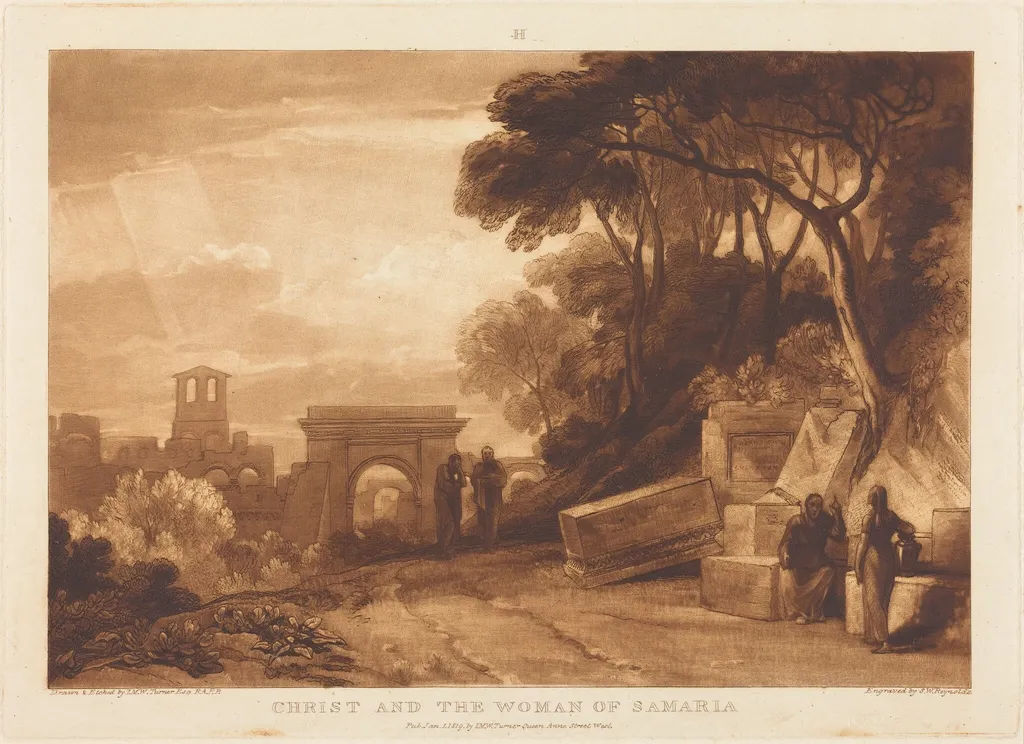
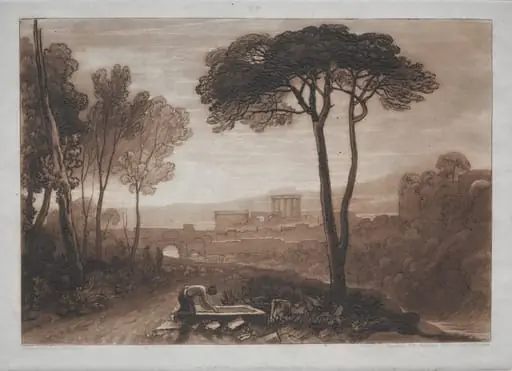
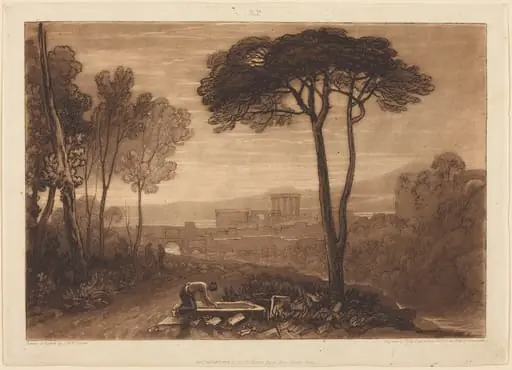
The Woman of Samaria is an ink print by the Romanticist artist Samuel William Reynolds I. It dates from 1819 and is held in the collection of the National Gallery of Art.
About this work
Overview
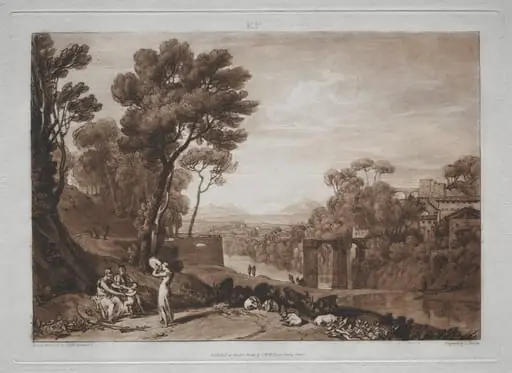
Samuel William Reynolds I produced the print titled *Christ and the Woman of Samaria* in 1819. Executed as a combined etching and mezzotint, the work measures a modest size typical of early‑19th‑century prints. It depicts a tranquil well‑scene set against a gently rolling landscape, rendered in monochrome tones that emphasize depth and atmosphere.
Subject & Meaning
In the distance, two men converse near an archway, and a modest structure with a bell tower rises on a hill, adding narrative layers to the sacred episode.
The composition illustrates the biblical encounter between Jesus and the Samaritan woman, a narrative from the Gospel of John. A solitary woman stands beside a stone basin while a cloaked figure kneels to draw water, suggesting the moment of dialogue. In the distance, two men converse near an archway, and a modest structure with a bell tower rises on a hill, adding narrative layers to the sacred episode.
Technique & Style
Reynolds employed a dual printmaking process: delicate etching lines define the figures and architectural elements, while mezzotint shading creates a rich tonal range that models volume and space. The interplay of crisp outlines and soft gradations gives the scene a realistic yet contemplative quality, characteristic of Reynolds’s interest in atmospheric effects within the print medium.
History & Provenance
Created in 1819, the work reflects Reynolds’s mature period, when he was recognized for his mastery of both etching and mezzotint. The print was likely issued in limited numbers for the British art market, though specific ownership records are scarce. It remains documented in several museum collections and catalogues of early 19th‑century British prints, attesting to its continued scholarly relevance.
Artist & collection