Artwork
Ceața
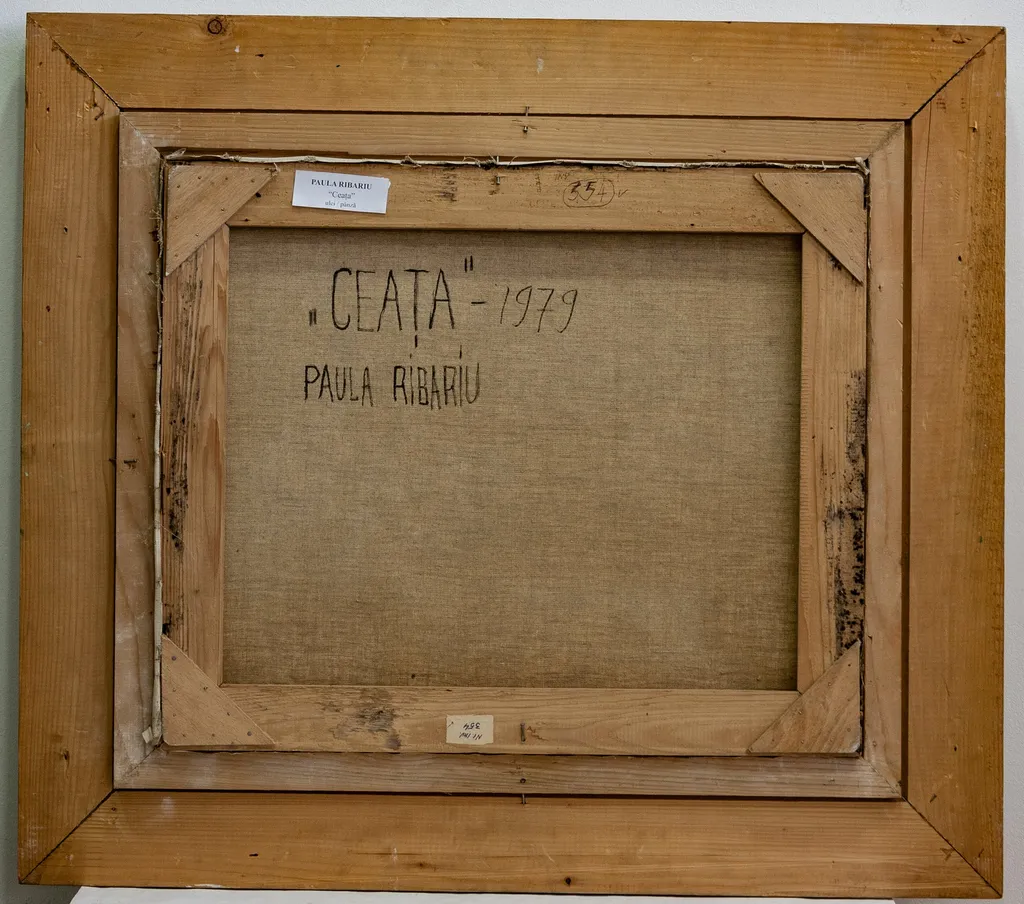
Ceața is an unspecified painting by Ribariu Paulina. It is held in the collection of the Gavrila Simion Eco-Museum Research Institute Tulcea.
About this work
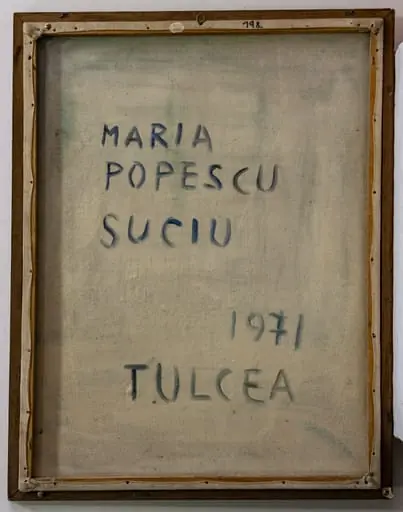
A label on top reads "Paula Ribariu" and the title "Ceața" with the year 1979 handwritten beneath it.
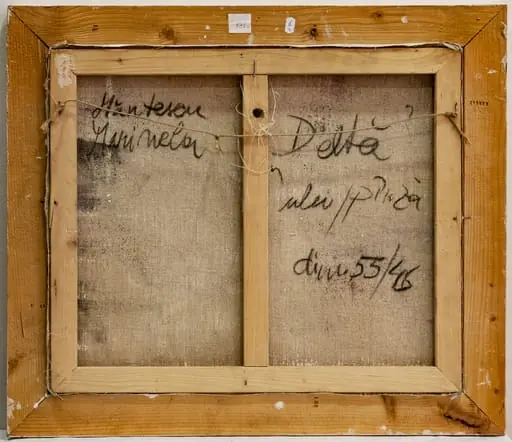
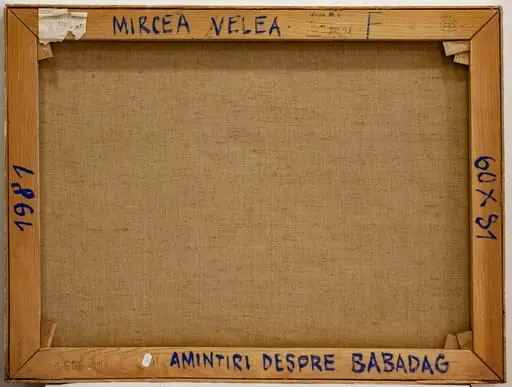
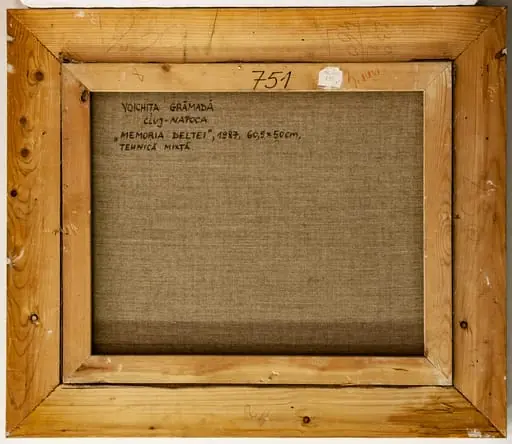
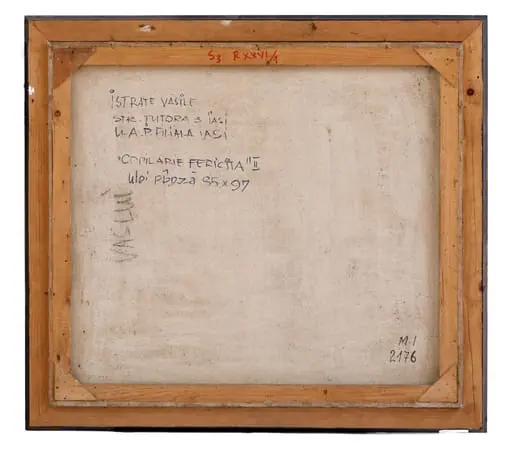
This is an empty wooden-framed painting with a light canvas background. The frame is simple, with visible wear and a few small nails. A label on top reads "Paula Ribariu" and the title "Ceața" with the year 1979 handwritten beneath it.
The canvas itself is blank, offering no clues about the final artwork. The frame shows signs of age, with some dark spots along the edges.
Next, check out the Museum of Ethnography to see other works in their collection.
Overview
This work consists of an empty wooden frame with a light canvas interior, labeled 'Ceața' by Paula Ribariu, dated 1979. No painted surface or visible imagery is present. The frame exhibits signs of age—wear along the edges, faint dark spots, and small nails securing the canvas. The absence of imagery is intentional, making the frame and its label the sole carriers of the work’s identity.
Subject & Meaning
The title 'Ceața,' meaning 'fog' in Romanian, suggests an absence or obscurity as thematic content. The blank canvas may reflect an artistic choice to evoke the ephemeral, the unseen, or the unrepresentable. Rather than depicting fog visually, the work invites contemplation of absence as a form of expression, aligning with conceptual tendencies in late 20th-century Romanian art.
Technique & Style
The work employs minimalism through negation: no pigment, no brushwork, no composition beyond the frame’s boundaries. The frame’s worn condition and handmade label suggest a deliberate embrace of impermanence and material history. The canvas is stretched but untouched, positioning the physical support as the primary medium rather than a surface for representation.
History & Provenance
The piece is attributed to Paula Ribariu, a Romanian artist active in the late 1970s. The handwritten date and label imply a personal, possibly non-institutional origin. Its preservation in a museum context suggests recognition of its conceptual value, though little public documentation exists about its creation or early reception. The frame’s condition indicates prolonged display or storage under uncontrolled conditions.
Context
Created during Romania’s communist era, when artistic expression was tightly regulated, this work’s silence may reflect a quiet resistance to state-mandated realism. Other artists of the period used abstraction or conceptual strategies to navigate censorship. Ribariu’s blank canvas aligns with broader regional experiments in dematerialized art, though her practice remains under-documented.
Legacy
As a silent artifact, 'Ceața' contributes to discussions on non-object art in Eastern European modernism. Its survival and inclusion in institutional collections signal a growing interest in understudied female artists and conceptual practices from the communist period. The work’s power lies in its refusal to communicate visually, prompting reflection on what art can be when representation is withheld.
Artist & collection
Artist
Museum
Gavrila Simion Eco-Museum Research Institute Tulcea
Continue through works from the same source collection.