Artwork
La delación secreta en la República de Venecia
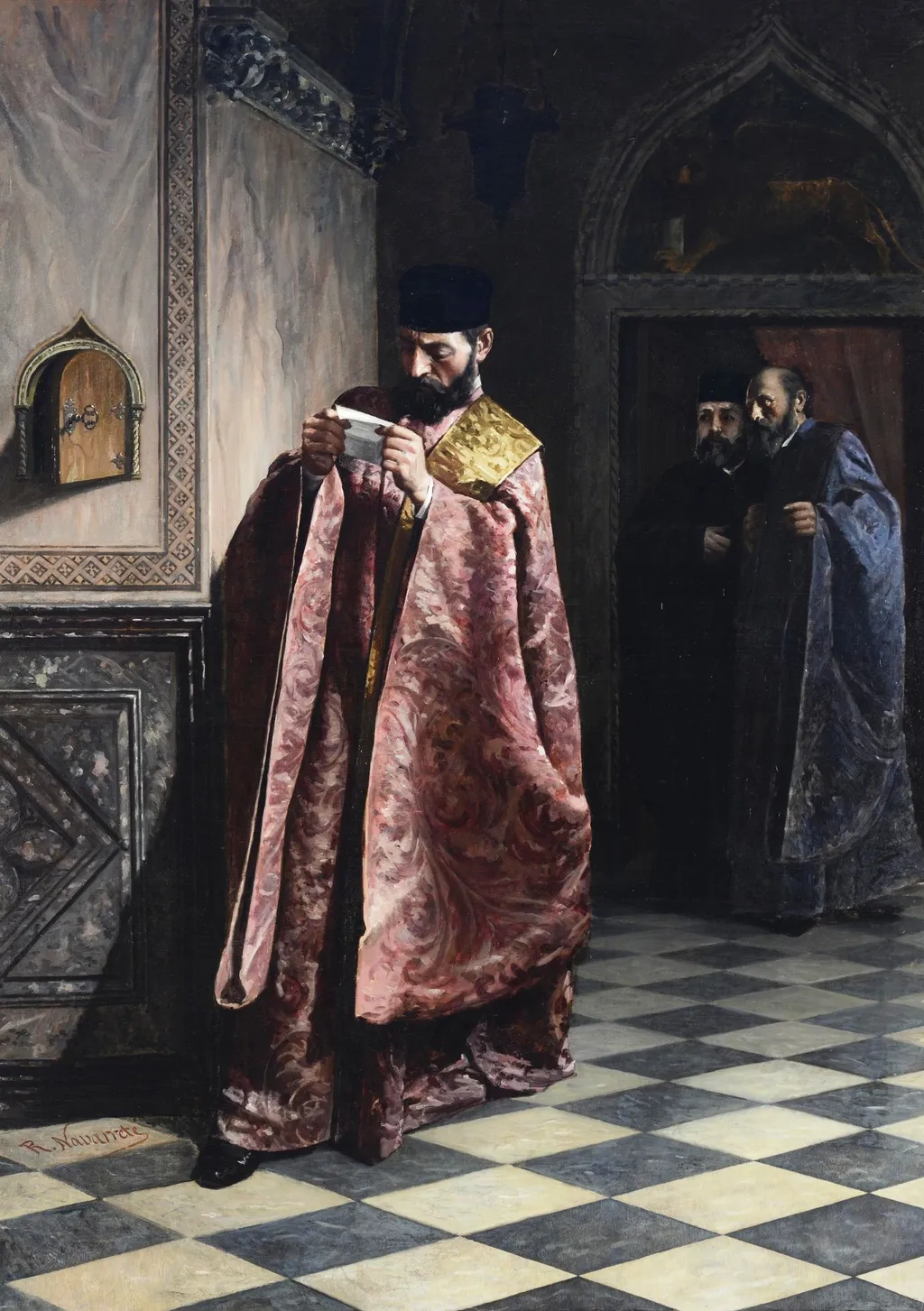
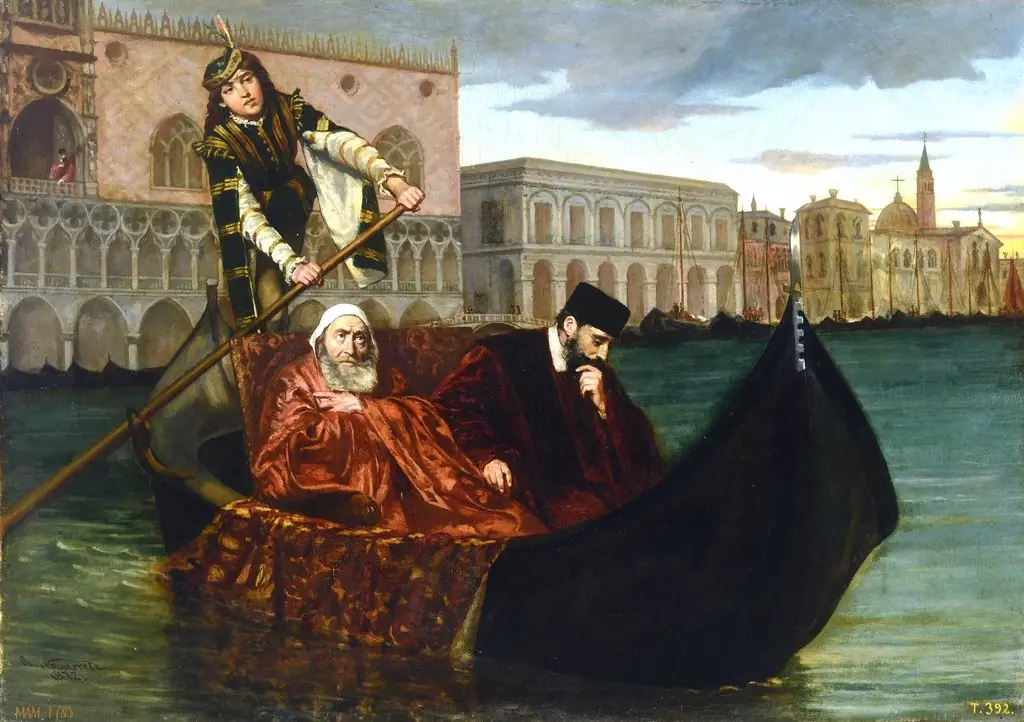
La delación secreta en la República de Venecia is an oil painting by the Post-Impressionist artist Ricardo María Navarrete Fos. It dates from 1894 and is held in the collection of the Museo del Prado.
About this work
Overview
The composition centers on a solitary figure holding a document, surrounded by shadowed observers, conveying tension through stillness rather than action.
Painted in 1894 by Ricardo María Navarrete Fos, this oil work portrays a moment of covert accusation within the Venetian Republic. The scene is set in a dimly lit interior with a checkered floor and arched doorway, suggesting a formal or administrative space. The composition centers on a solitary figure holding a document, surrounded by shadowed observers, conveying tension through stillness rather than action.
Subject & Meaning
The painting illustrates the practice of secret denunciation in Renaissance Venice, where citizens could anonymously report suspected crimes. The central figure, dressed in pink and adorned with a gold shoulder piece, appears to be delivering an accusation. Behind him, two figures in dark robes observe silently, one holding a blue cloak—possibly a symbol of authority or concealment. The wooden box on the wall may reference the Bocca di Leone, the lion’s mouth used for anonymous tip submissions.
Technique & Style
Navarrete Fos employs oil paint to build subtle contrasts of light and shadow, enhancing the three-dimensionality of the figures and architecture. The pink robe of the accuser stands out against the darker tones of the room, drawing focus to his gesture. The checkered floor and arched doorway are rendered with precise perspective, grounding the scene in a tangible space. Textures of fabric and wood are suggested through careful brushwork, not overt detail.
History & Provenance
The painting was completed in 1894 and entered the collection of the Museo del Prado shortly thereafter. It reflects 19th-century European interest in historical narratives of governance and secrecy, particularly in Italian city-states. While not widely exhibited, its presence in the Prado underscores its recognition as a representative work of Spanish academic painting engaged with Venetian history.
Context
In Renaissance Venice, the practice of secret denunciation was institutionalized to maintain political stability. Citizens could submit accusations anonymously through the Bocca di Leone, a slot in the Doge’s Palace. Navarrete Fos, working in the late 19th century, drew on historical records and literary accounts to reconstruct this ritual, aligning with a broader trend among academic painters to dramatize civic rituals of the past.
Legacy
The painting remains a quiet but precise depiction of Venetian administrative secrecy, valued for its historical specificity rather than dramatic flair. It contributes to the Prado’s collection of 19th-century Spanish historical paintings, offering insight into how Spanish artists interpreted foreign political systems. Though not widely known outside academic circles, it serves as a visual document of a complex civic mechanism.
Own this work as a print
Artist & collection
Artist
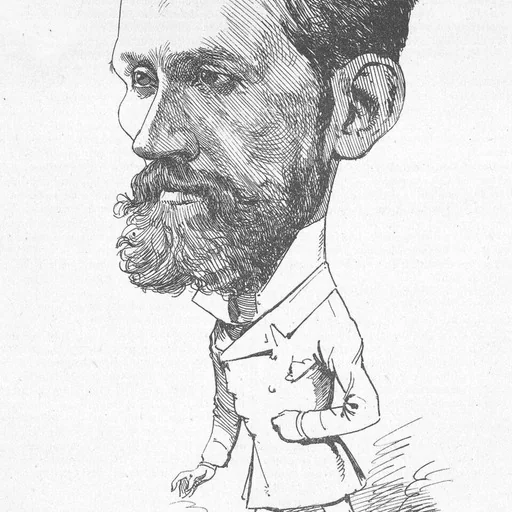
Ricardo María Navarrete Fos (1834–1909) was an artist, born in Alcoy.

 Ivan the Terrible
 Exorcism of Joanna of Castile
 Las postrimerías de Fernando III el Santo
 Zakhary Lyapunov's quarrel with the Tsar Vasili Shuysky
 La oración del huerto (El Greco y su taller)
 Antesala y sala capitular de la catedral de Toledo
 In his final moments, King Jaime el Conquistador gives his sword to his son, Pedro
 San Francisco ante el sultán de Egipto Malec-el-Kamal
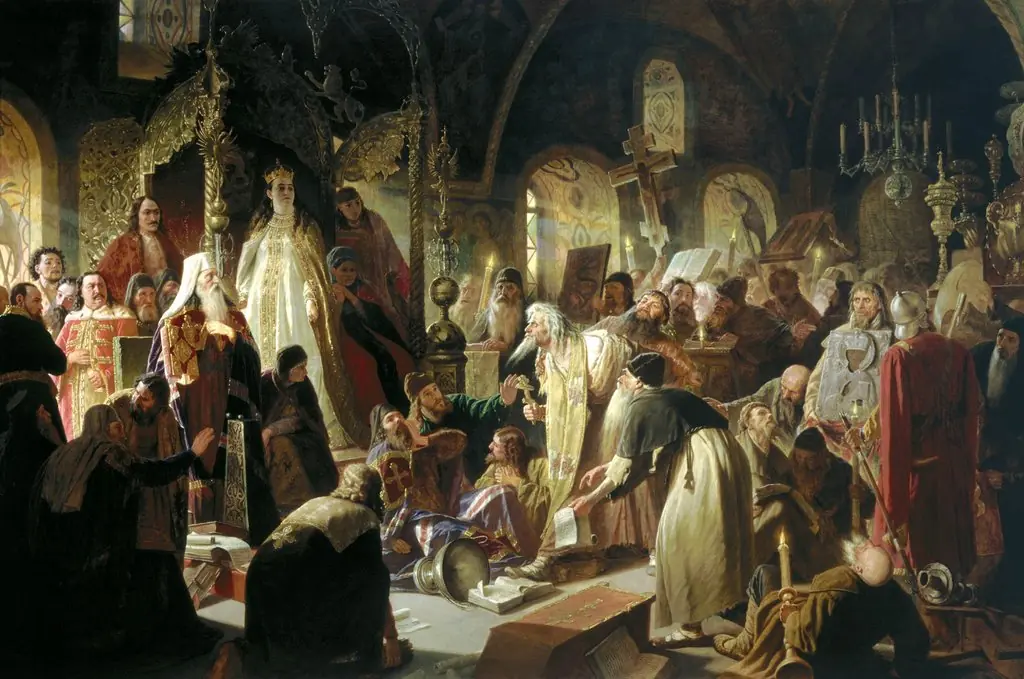 Nikita Pustosvyat. Debate about faith
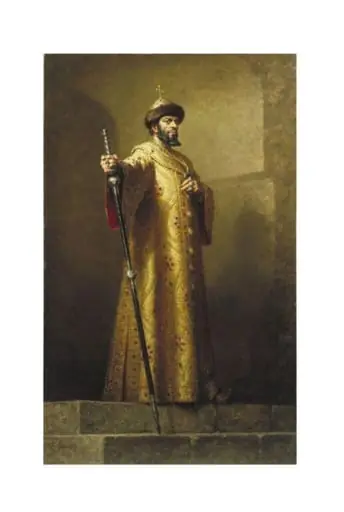 Boris Christoff as Boris Godunov in <i>Boris Godunov</i> by Modest Mussorgsky. Painting by Leonard Boden (1911-1999)
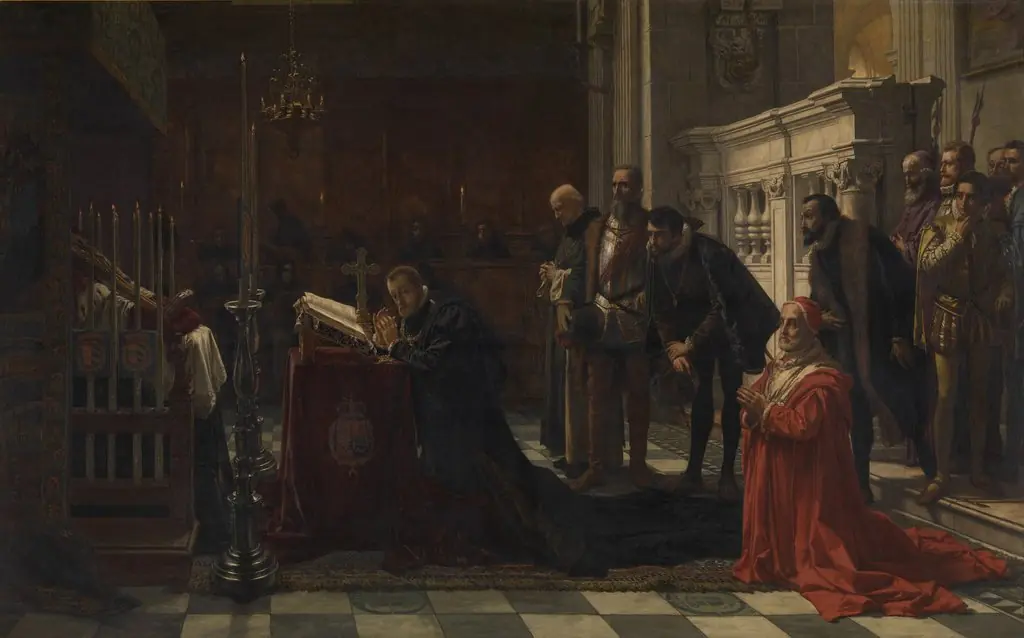 Philip II of Spain Honours Don John of Austria
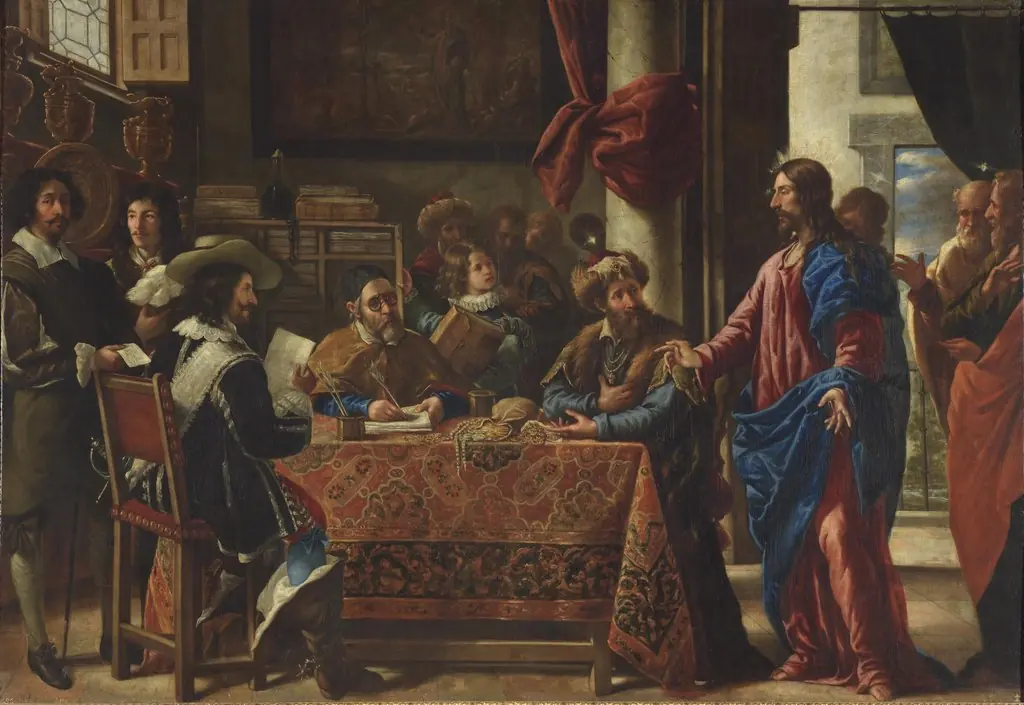 The Calling of Saint Matthew