Artwork
Antesala y sala capitular de la catedral de Toledo
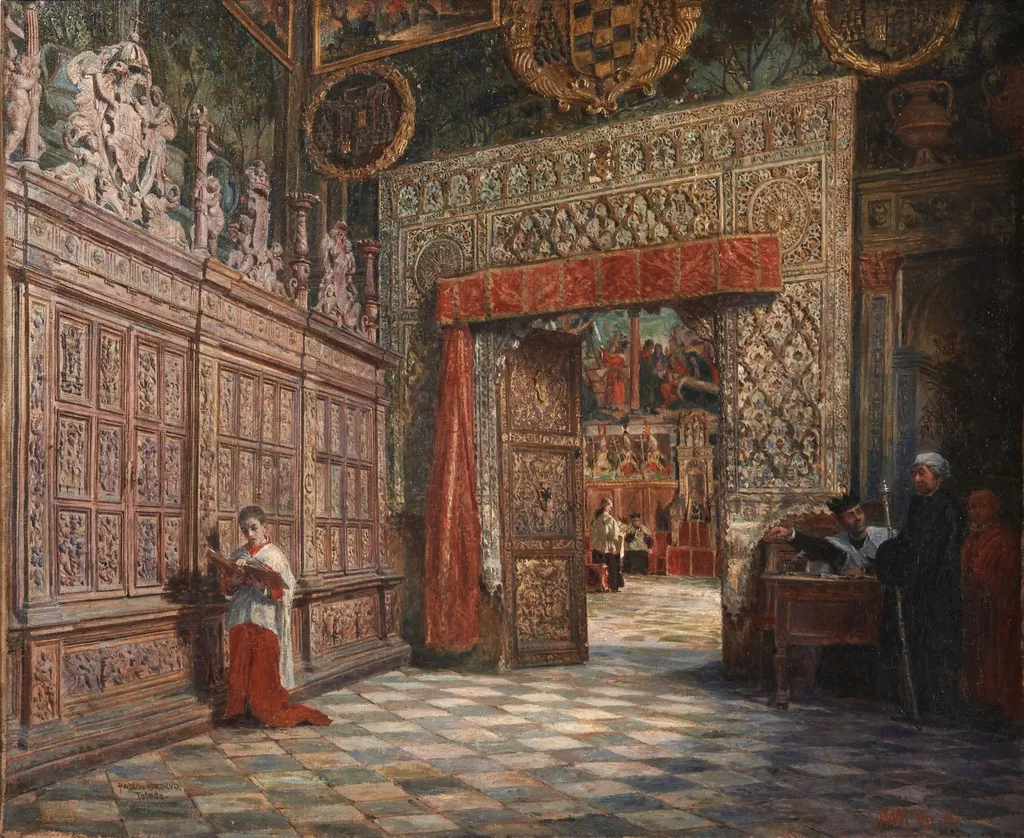
Antesala y sala capitular de la catedral de Toledo is an oil painting by the Post-Impressionist artist Pablo Gonzalvo. It dates from 1890 and is held in the collection of the Museo del Prado.
About this work
Overview
Gonzalvo, known for his precise rendering of architectural interiors, captures the quiet dignity of a sacred setting.
Painted in 1890 by Spanish artist Pablo Gonzalvo, this oil on canvas depicts two connected interior spaces within Toledo Cathedral: the antechamber and the chapter house. Gonzalvo, known for his precise rendering of architectural interiors, captures the quiet dignity of a sacred setting. The work belongs to the Museo del Prado’s collection and reflects his sustained interest in the interplay of light and structure within historic Spanish buildings.
Subject & Meaning
A single figure, dressed in a white and red ecclesiastical robe, stands absorbed in reading a book near a wall lined with carved wood paneling. The presence of an ornate mirror and scattered objects suggests a functional, lived-in space used for clerical duties. The scene conveys stillness and contemplation, emphasizing the quiet ritual of religious life rather than ceremonial grandeur. The figure’s isolation invites reflection on the solitude inherent in spiritual practice.
Technique & Style
Gonzalvo employs a restrained palette and careful modulation of light to define the room’s volume and surface textures. While not strictly impressionist, the painting shows sensitivity to natural illumination filtering through unseen windows, casting soft shadows across carved stonework and polished wood. The chiaroscuro effect enhances spatial depth without dramatic contrast, favoring subtlety over theatricality in rendering the cathedral’s interior.
History & Provenance
Created in 1890, the painting entered the Museo del Prado’s collection shortly after its completion. Gonzalvo, born in Zaragoza in 1827 and active in Madrid, produced numerous interior views of Spanish religious architecture during the late 19th century. This work aligns with a broader trend among Spanish artists of the period to document ecclesiastical spaces with documentary precision and emotional restraint, often under state or institutional patronage.
Context
In late 19th-century Spain, there was renewed interest in preserving and representing national heritage, particularly religious architecture. Artists like Gonzalvo contributed to this movement by recording interiors of cathedrals that had survived centuries of use and modification. His focus on Toledo Cathedral—a symbol of Spain’s medieval Christian identity—reflects both cultural pride and a scholarly impulse to document architectural detail.
Legacy
Gonzalvo’s work remains a quiet reference point in Spanish interior painting, valued for its fidelity to architectural form and atmospheric nuance. While not widely exhibited outside Spain, the painting contributes to an understudied genre of 19th-century Spanish art that prioritizes observation over sentiment. It continues to inform scholarly understanding of how religious spaces were visually recorded during a period of national identity formation.
Own this work as a print
Artist & collection
Artist
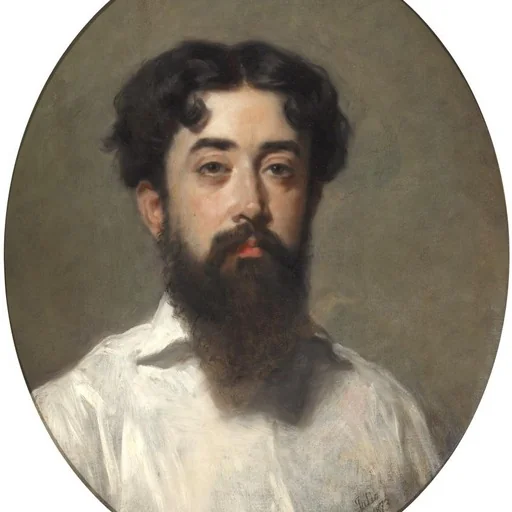
Pablo Gonzalvo y Pérez (19 January 1827 in Zaragoza – 18 November 1896 in Madrid) was a Spanish painter who specialized in urban landscapes and what are sometimes referred to as interior portraits.

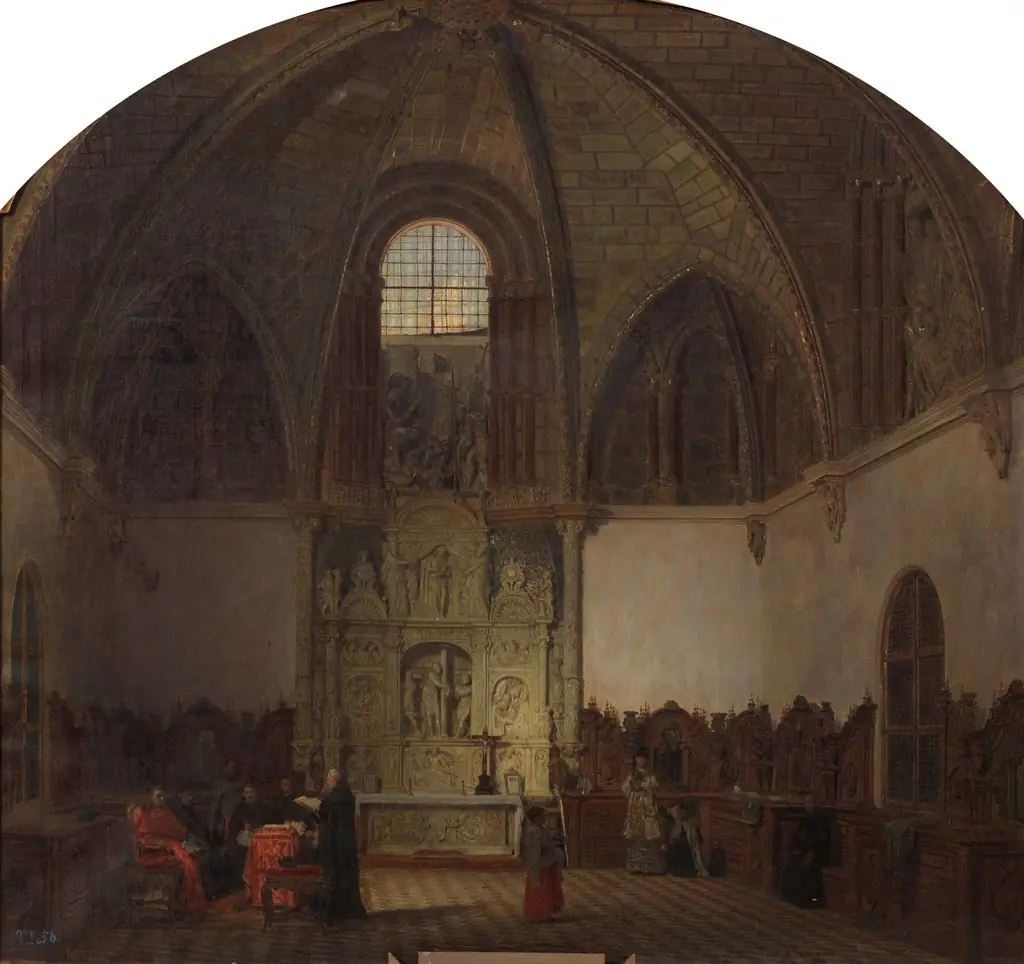 Interior de la capilla de San Bernardo donde se juramentaron los comuneros de Castilla (hoy sacristía mayor de la catedral de Ávila) en ocasión de celebrarse una conferencia por su obispo y cabildo
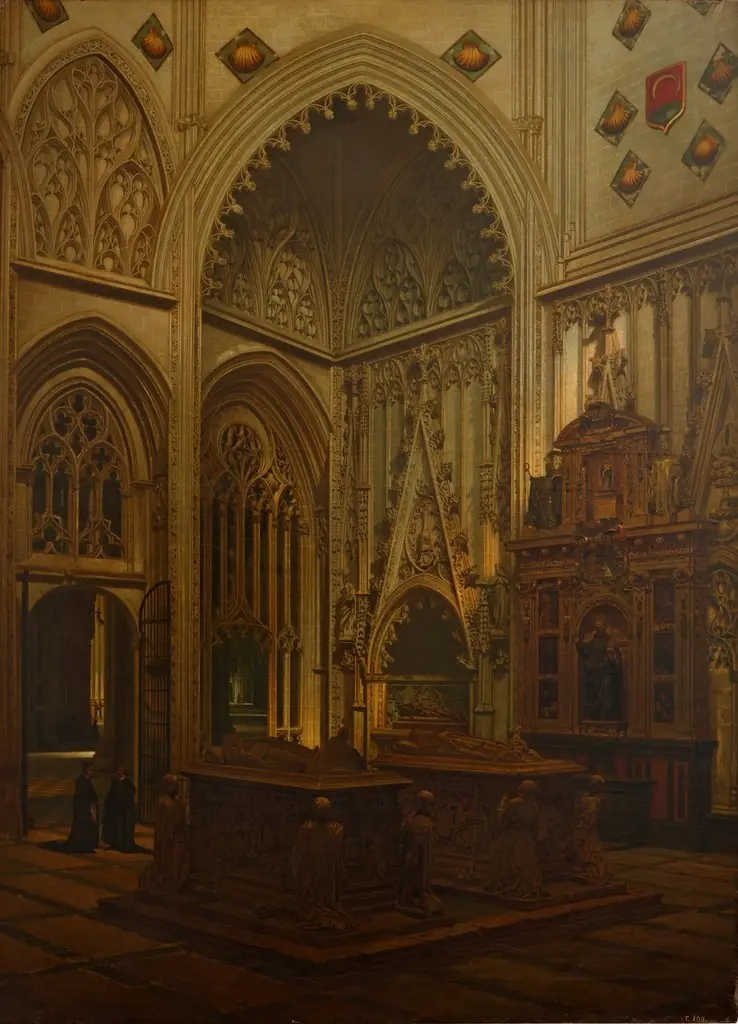 Capilla y sepulcros del condestable de Castilla don Álvaro de Luna y de su mujer doña Juana de Pimentel en la Catedral de Toledo
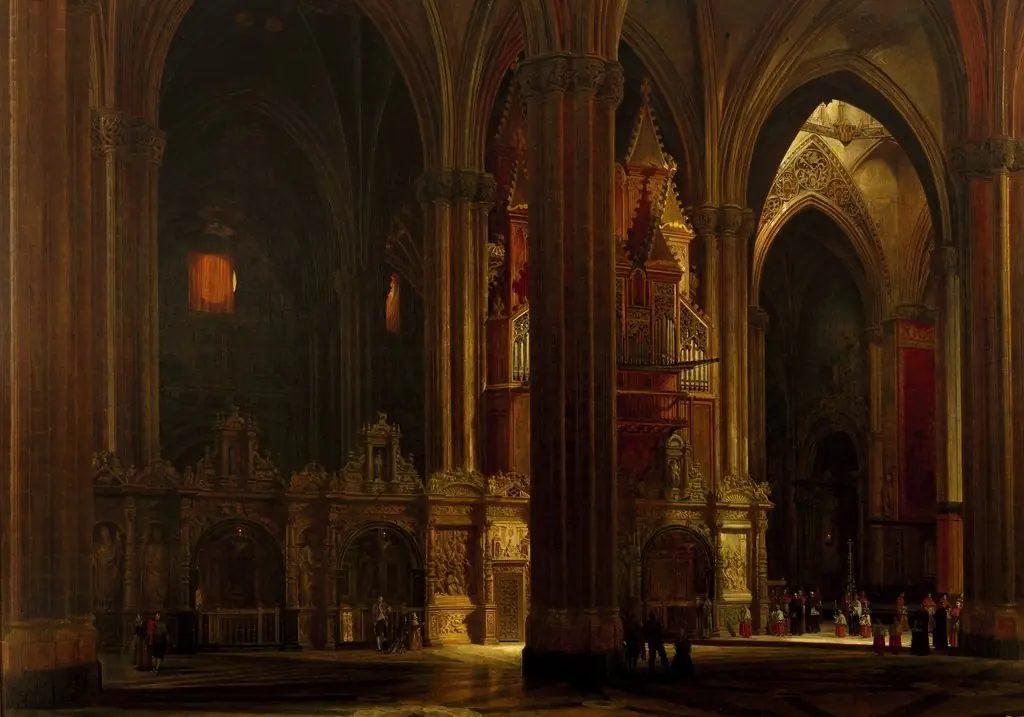 Vista del interior de la seo de Zaragoza
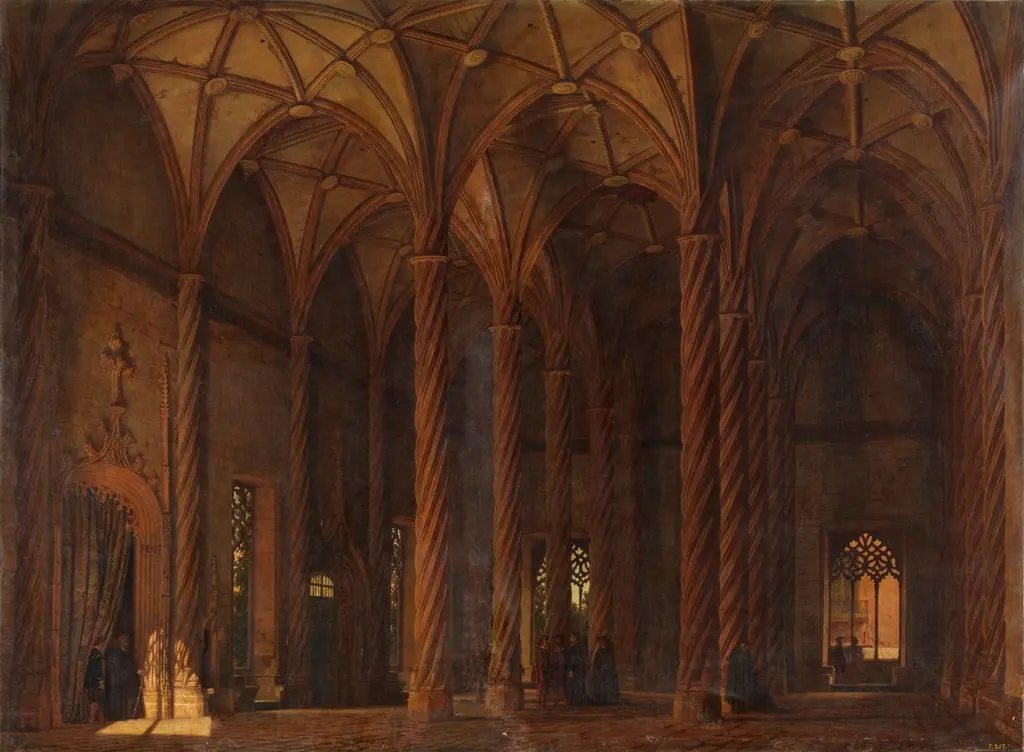 Vista de la Lonja de la Seda en Valencia
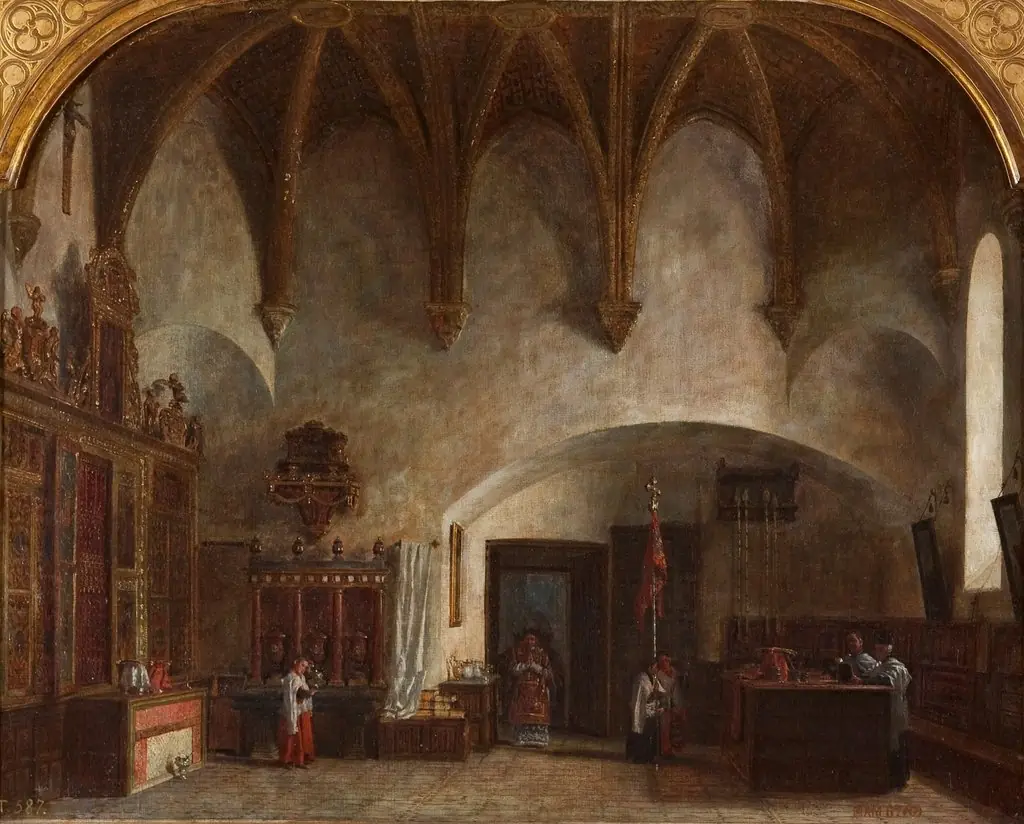 Interior de la sacristía menor en la catedral de Ávila. Salida de la misa mayor
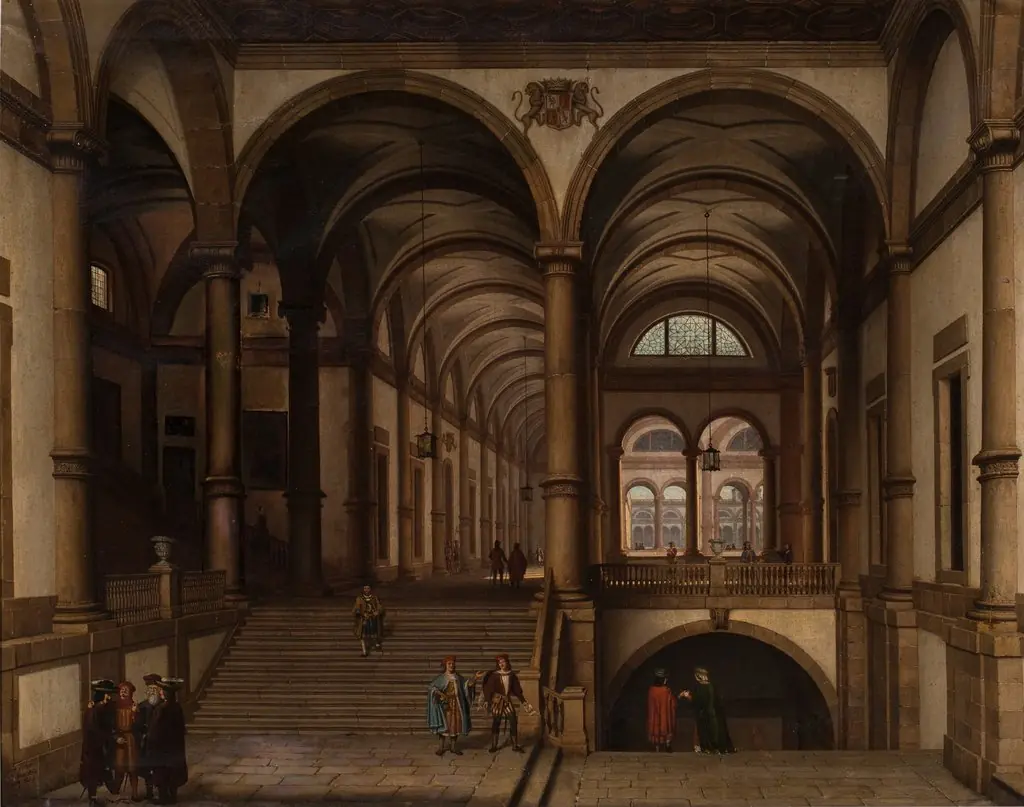 Palacio con galería y espaciosa escalinata de carácter grecorromano
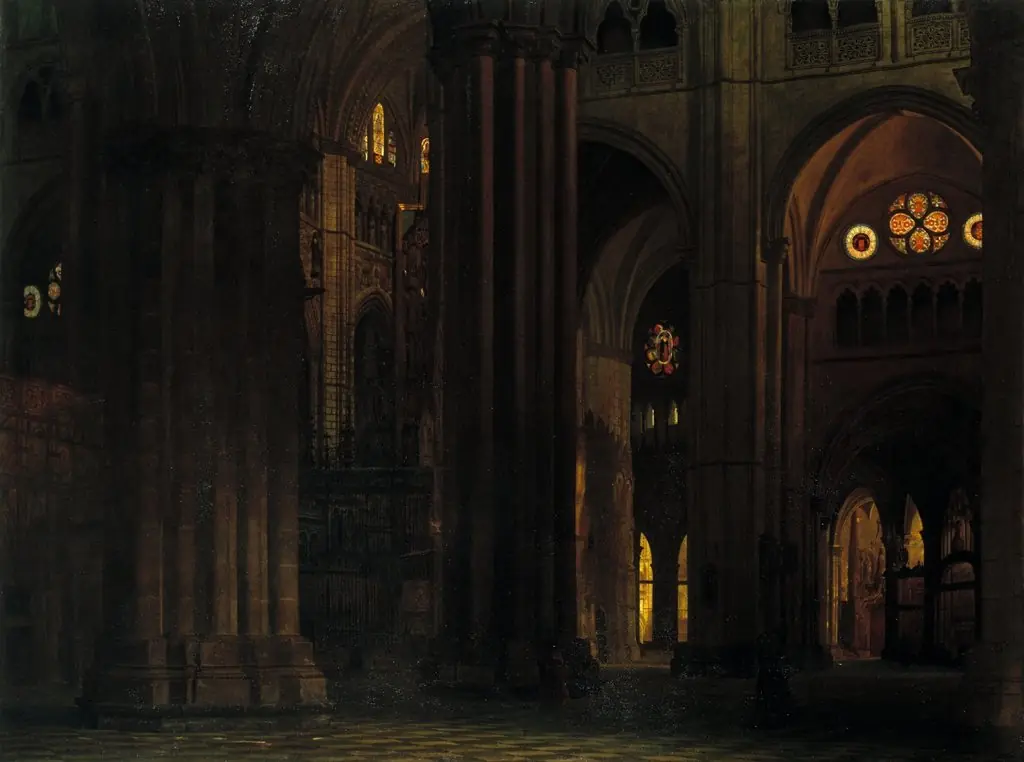 Interior de la Catedral de Toledo
 Las postrimerías de Fernando III el Santo
 Interior of the House of the Mufti Sheikh El Mahadi, Cairo
 Interior of a Chapel at the Parish Church in Krosno
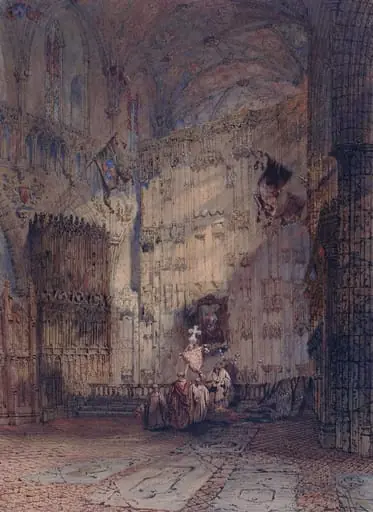 The High Altar Screen, St Albans Abbey
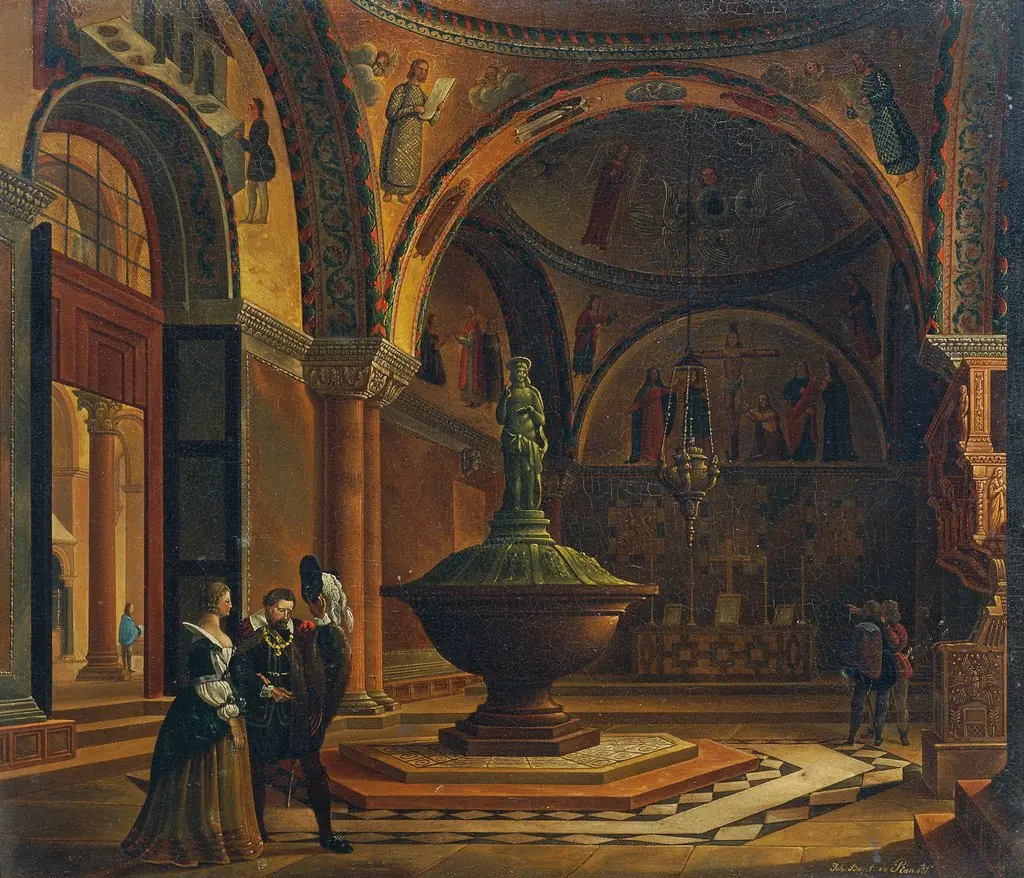 Das Innere des Baptisteriums von San Marco in Venedig
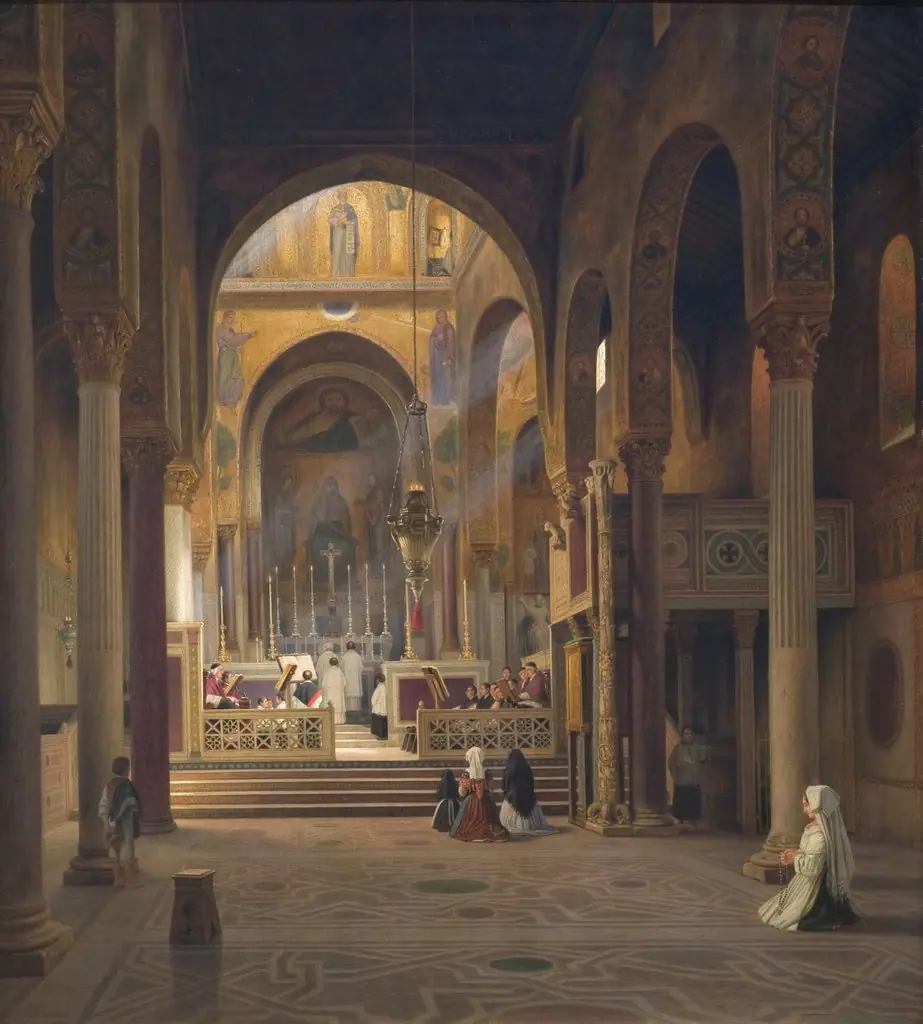 Interior of the Capella Palatina in Palermo, Italy
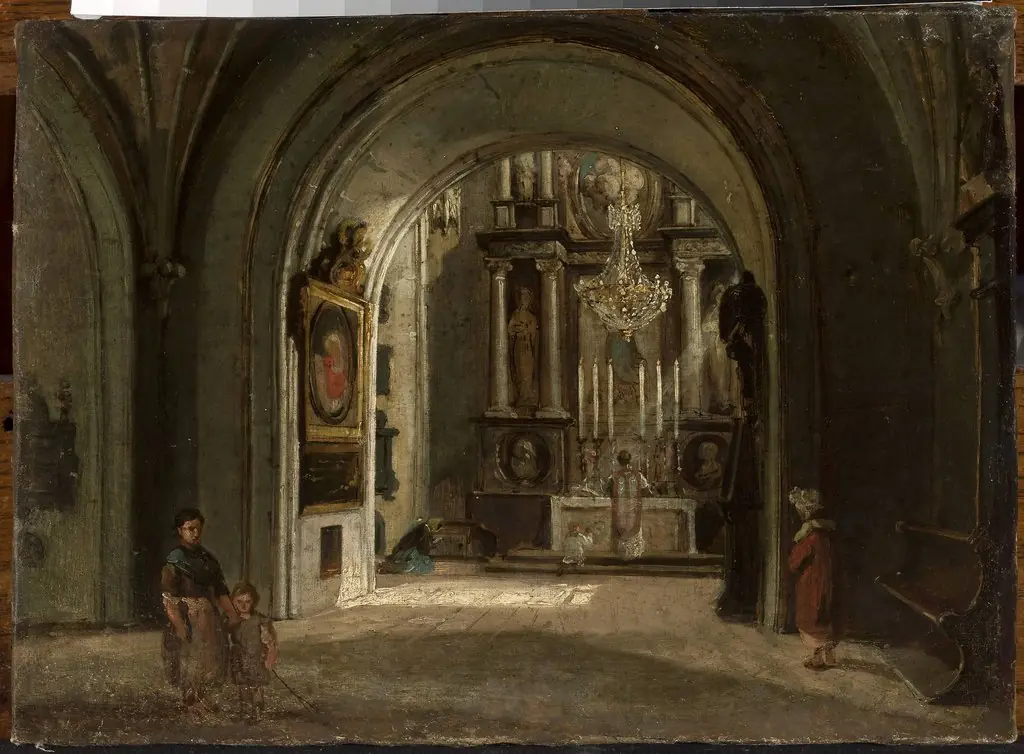 Interior of St. John’s church in Warsaw
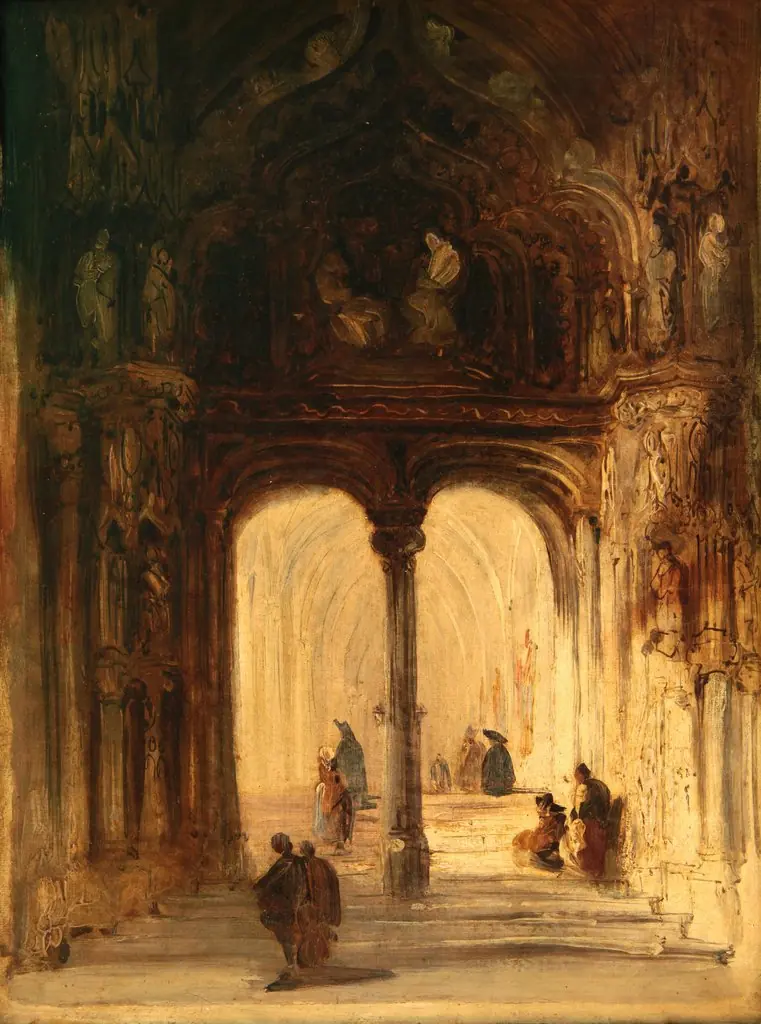 Interior de Iglesia
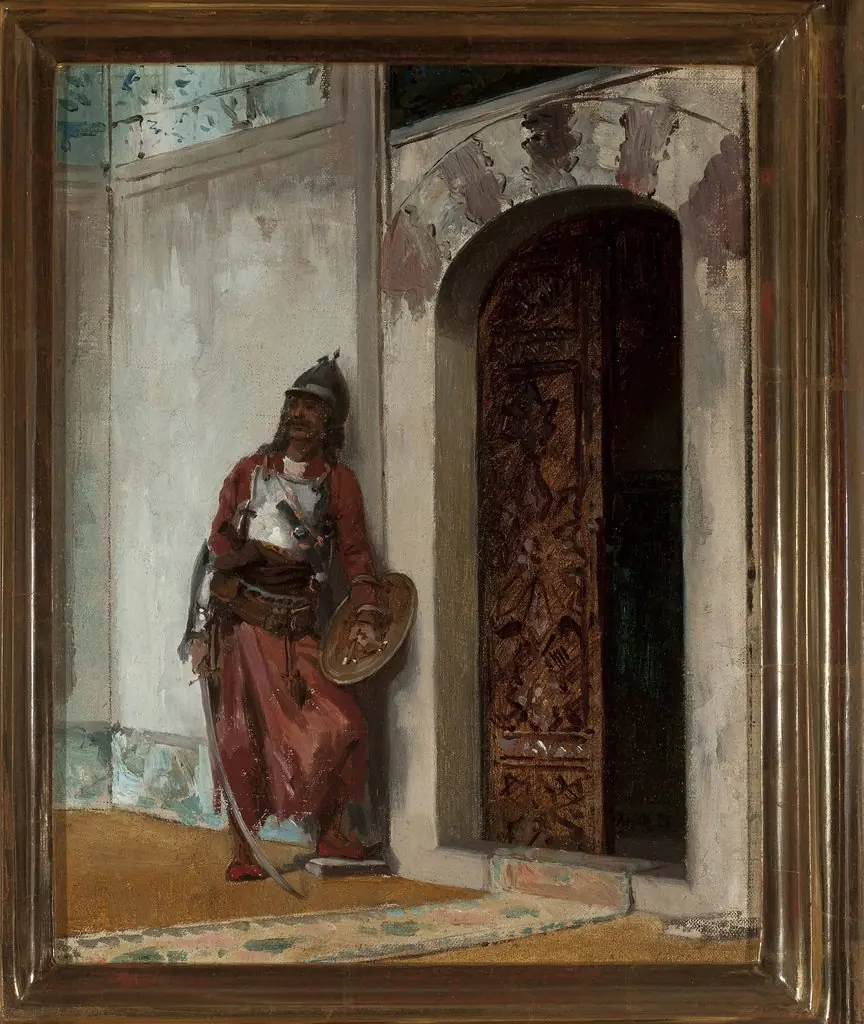 Guard at the entrance to the seraglio
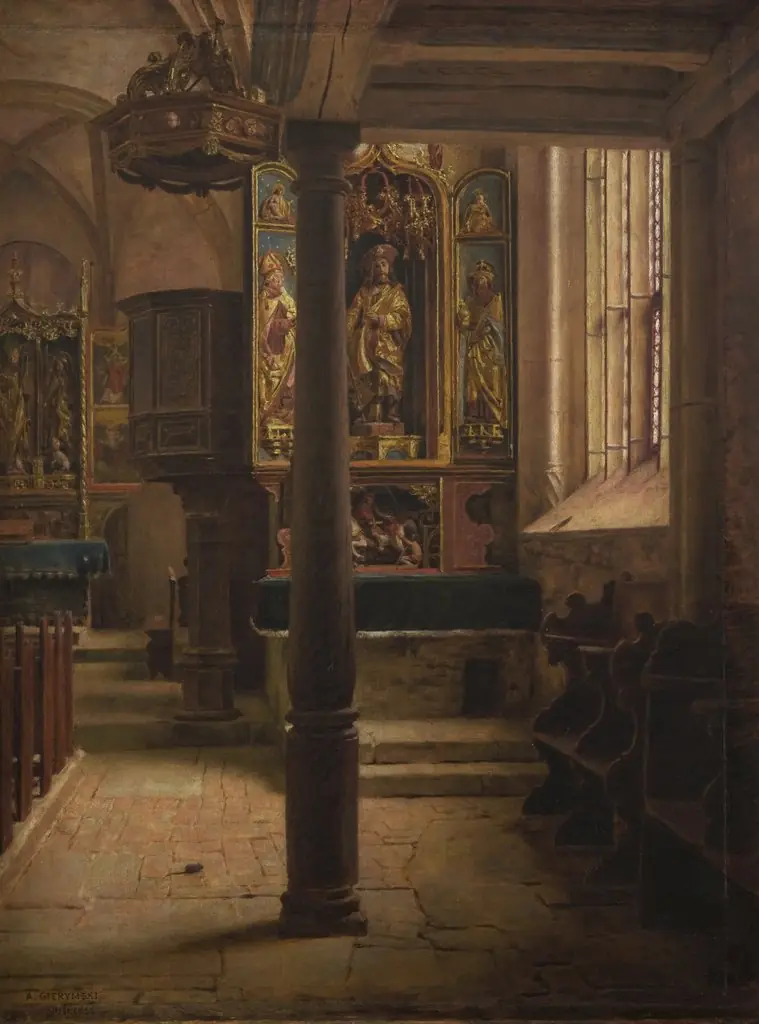 Interior of St Wolfgang's Church in Rothenburg