Artwork
Liber Veritatis: No. 55, A Landscape with a Temple and a Nymph and Satyr Dancing
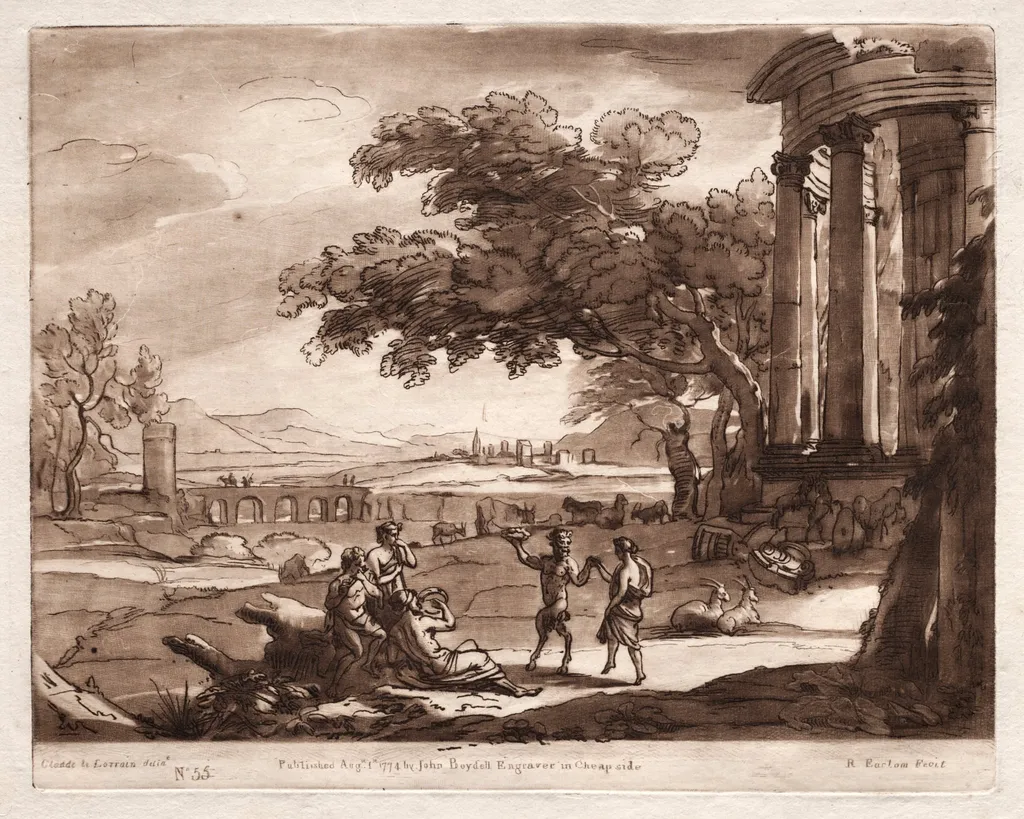
Liber Veritatis: No. 55, A Landscape with a Temple and a Nymph and Satyr Dancing is a print by the Romanticist artist Richard Earlom. It dates from 1774 and is held in the collection of the Cleveland Museum of Art.
About this work
Overview
Created in 1774 by Richard Earlom, this print is the fifty-fifth entry in his Liber Veritatis series, a collection reproducing drawings by Claude Lorrain.
Created in 1774 by Richard Earlom, this print is the fifty-fifth entry in his Liber Veritatis series, a collection reproducing drawings by Claude Lorrain. The work is a mezzotint, a technique prized for its tonal range, and it captures a pastoral scene with mythological figures. It resides in the collection of The Cleveland Museum of Art, where it exemplifies 18th-century British printmaking’s engagement with classical landscape traditions.
Subject & Meaning
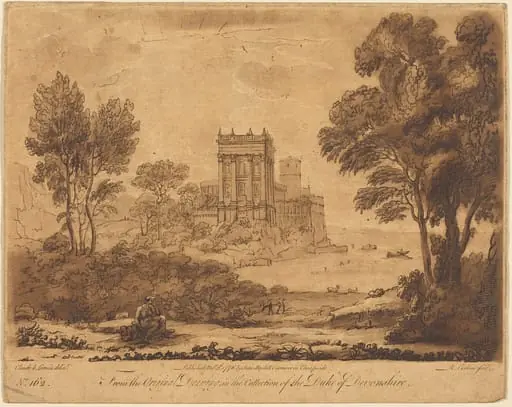
The scene depicts a wooded grove adjacent to a classical temple, where a nymph and satyr dance among other figures, some resting or engaged in quiet activity. The presence of mythological beings evokes an idealized ancient world, blending nature with myth. The distant city skyline and ruined architecture suggest the passage of time, reinforcing themes of harmony between the human, divine, and natural realms as envisioned in classical pastoral poetry.
Technique & Style
Earlom employed mezzotint to achieve subtle gradations of light and shadow, a method well-suited to translating Claude’s atmospheric compositions into print. The contrast between darkened foregrounds and softly lit skies creates spatial depth, guiding the viewer’s eye toward the temple and distant horizon. Figures are rendered with delicate precision, their forms emerging from the tonal transitions rather than sharp outlines, enhancing the dreamlike quality of the scene.
History & Provenance
The print derives from a drawing by Claude Lorrain, which Earlom reproduced as part of his commissioned project to document Claude’s works for the Duke of Devonshire. Completed between 1774 and 1777, the Liber Veritatis series served both as a catalog and a tribute to Claude’s influence. This particular plate entered the Cleveland Museum of Art’s collection through established acquisition channels in the 20th century.
Context
In the 18th century, British collectors and artists looked to Claude Lorrain as a model for idealized landscape. Earlom’s prints made these compositions accessible beyond private collections, fueling a broader appreciation for classical themes in British art. The Liber Veritatis series coincided with rising interest in antiquity and the picturesque, aligning with contemporary aesthetic theories that valued harmony, balance, and evocative atmosphere in landscape.
Legacy
Earlom’s Liber Veritatis prints preserved and disseminated Claude’s compositions for generations, influencing landscape artists and printmakers well into the 19th century. While not original works, they played a crucial role in shaping perceptions of classical landscape tradition in Britain. Today, they remain important historical records of artistic transmission and the evolving role of print in art education and collection.
Own this work as a print
Artist & collection

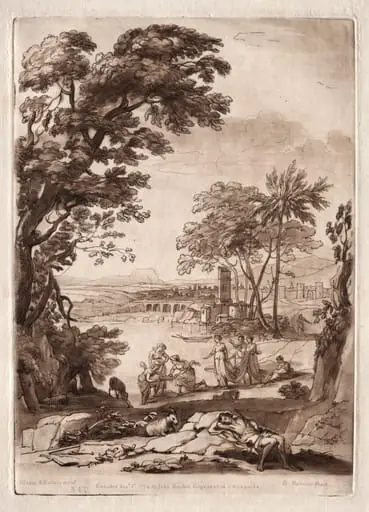 Liber Veritatis: No. 47, A River Scene with the Finding of Moses
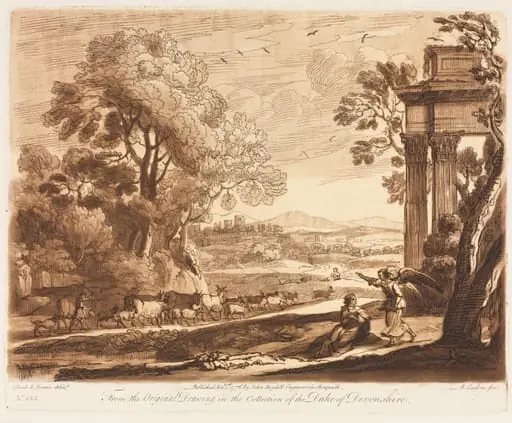 Liber Veritatis: No. 133, A Landscape, with Cattle, and the Angel Comforting Hagar
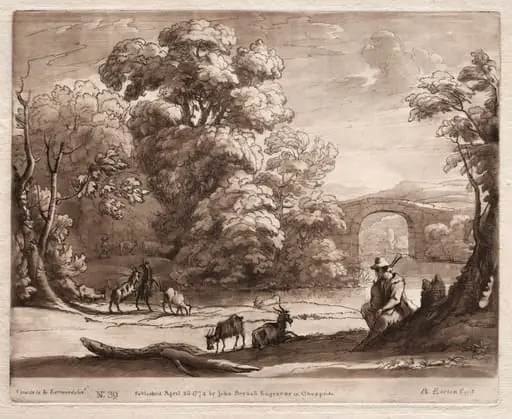 Liber Veritatis: No. 39, A Landscape with Herdsman Playing a Bagpipe and Goats Browsing
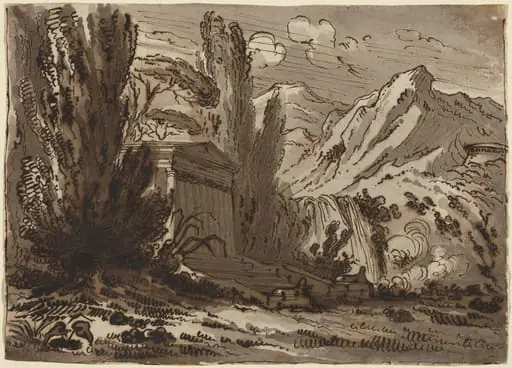 Mountainous Landscape with Classical Temple
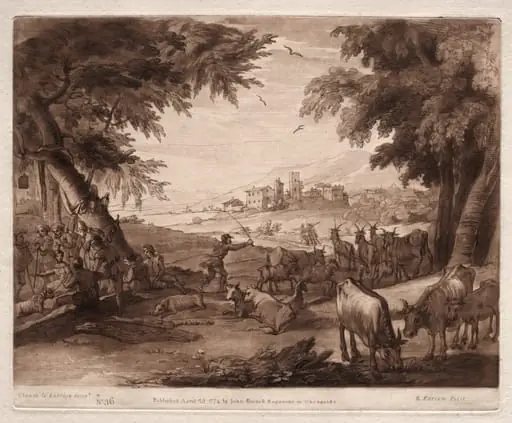 Liber Veritatis: No. 36, Pastoral Scene with Villagers and a Herd of Oxen and Goats
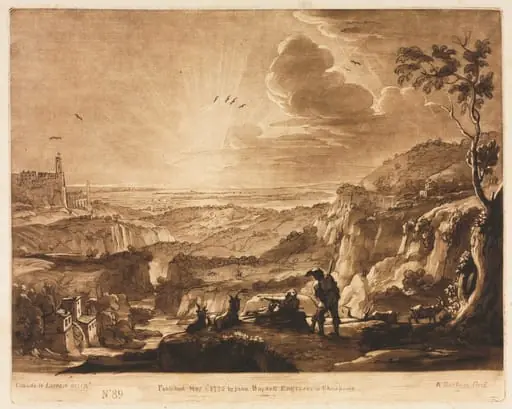 Liber Veritatis: No. 89, View of a Mountainous Extended Country