Artwork
Agrippina Landing at Brindisi with the Ashes of Germanicus
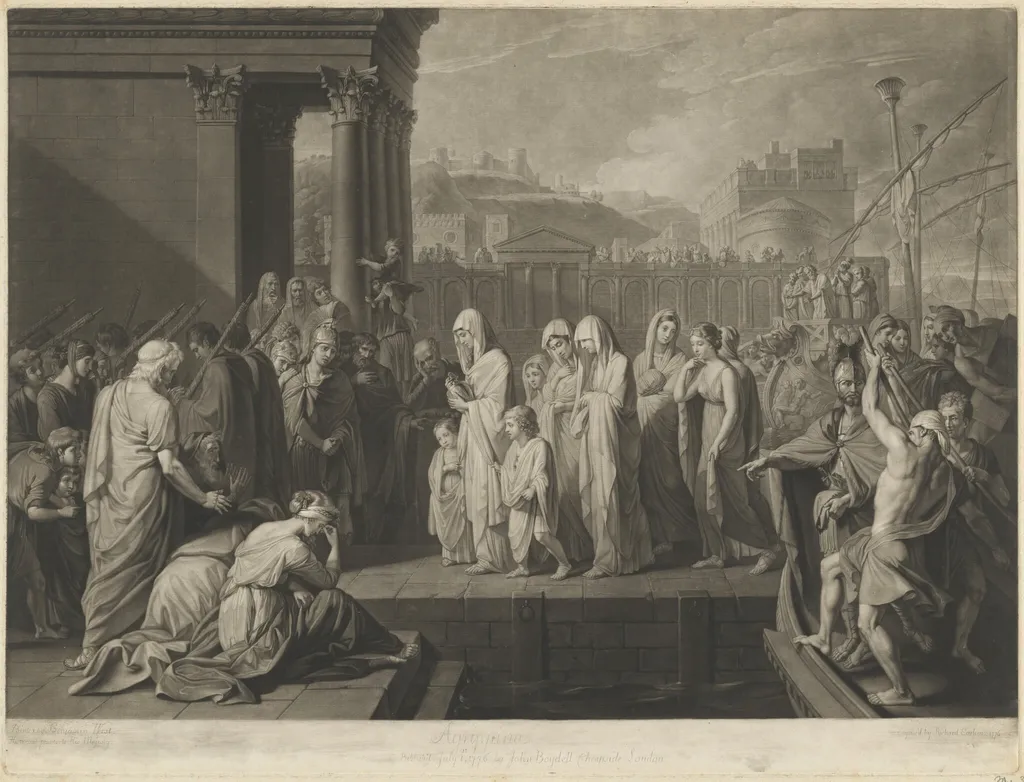
Agrippina Landing at Brindisi with the Ashes of Germanicus is an ink print by the Romanticist artist Richard Earlom. It dates from 1776 and is held in the collection of the National Gallery of Art.
About this work
Overview
Agrippina Landing at Brindisi with the Ashes of Germanicus is a mezzotint print created by Richard Earlom in 1776, depicting a poignant scene from ancient Roman history.
Subject & Meaning
The print illustrates the moment Agrippina arrives at Brindisi with the ashes of her deceased husband, Germanicus. At the center, Agrippina, serene amidst turmoil, guides two children, contrasting with the mournful and reaching figures around her, emphasizing her strength in grief.
Technique & Style
Earlom employed mezzotint to achieve deep, expressive shading, utilizing chiaroscuro to render three-dimensional figures, particularly evident in the textured, voluminous folds of the characters' clothing.
History & Provenance
Created in 1776 by Richard Earlom, specific provenance details are not provided, highlighting the work's existence as a historical print rather than tracing its ownership history.
Context
This work reflects 18th-century interest in classical Roman narratives, combining historical subject matter with the emerging technical capabilities of mezzotint printing.
Legacy
While not widely discussed in broad art historical narratives, it remains a notable example of late 18th-century mezzotint technique applied to a classical theme, offering insight into the period's artistic preoccupations.
Artist & collection

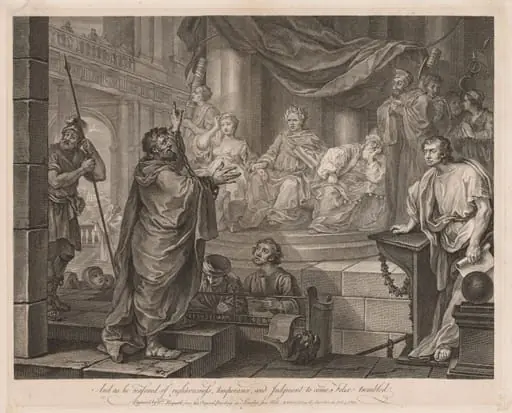 Paul before Félix (Large Plate)
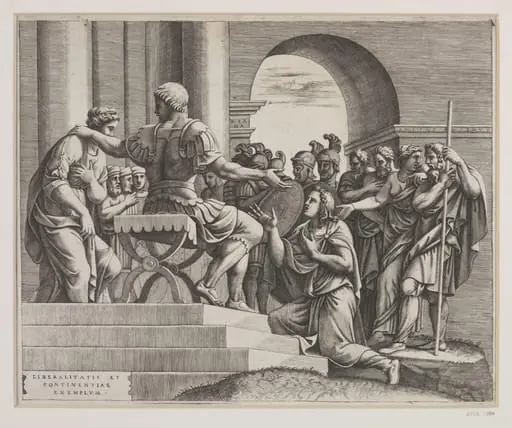 The Continence of Scipio
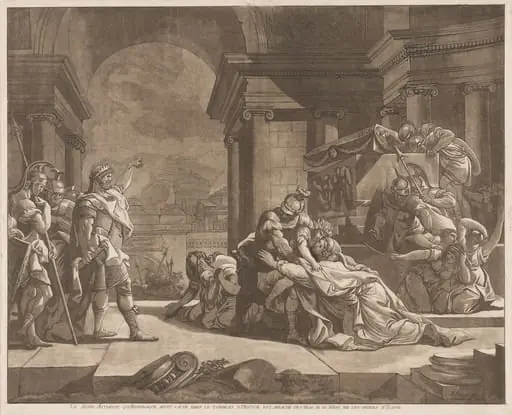 Le Jeune Astianax qu’Andromaque avoit caché dans le tombeau d’Hector est arraché des bras de sa Mere par les ordres d'Ulisse (Young Astianax, who Andromache Hid in Hector's Tomb, is Seized from his Mother's Arms by Ulysses' Orders)
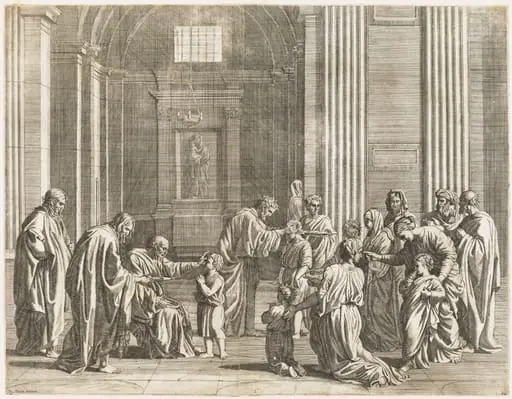 Confirmation
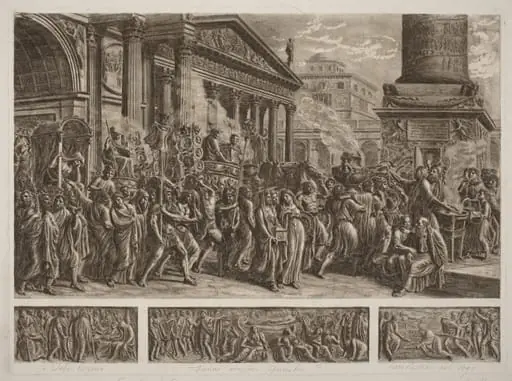 The Ashes of Trajan Carried in a Triumphal Procession
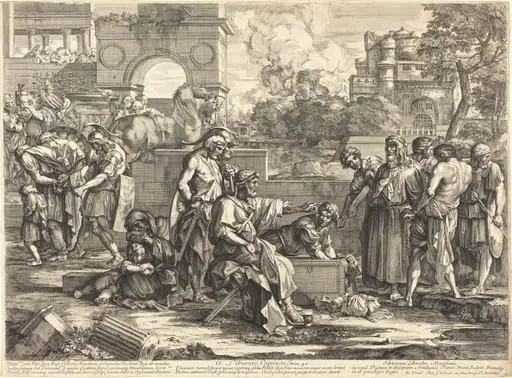 Liberare Captivos
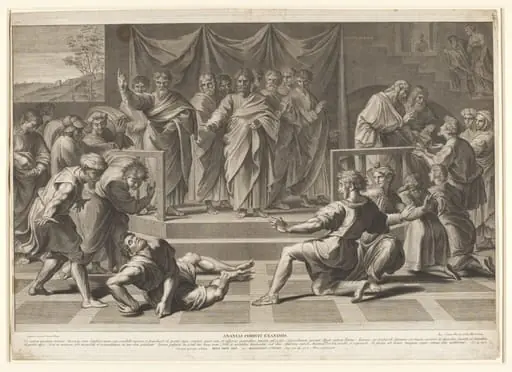 Pinacotheca Hamptoniana
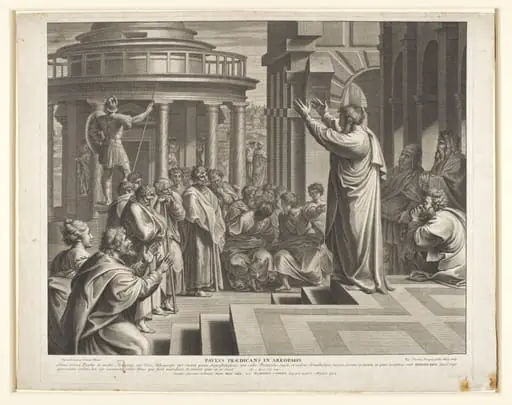 St Paul Preaching at Athens
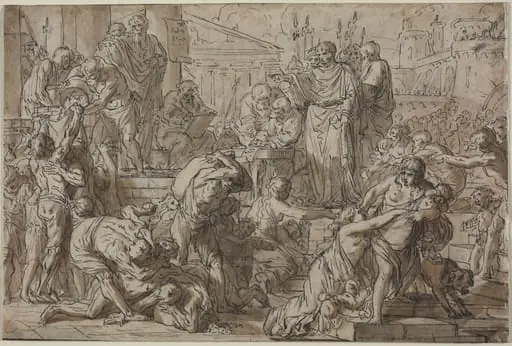 Roman Subject
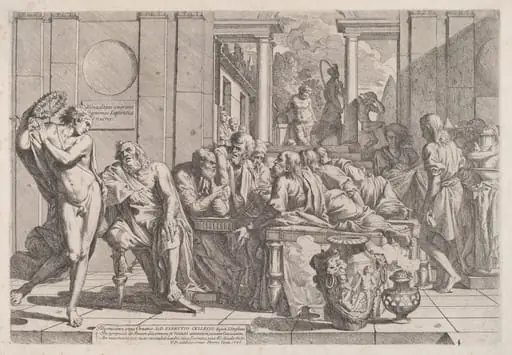 The Symposium
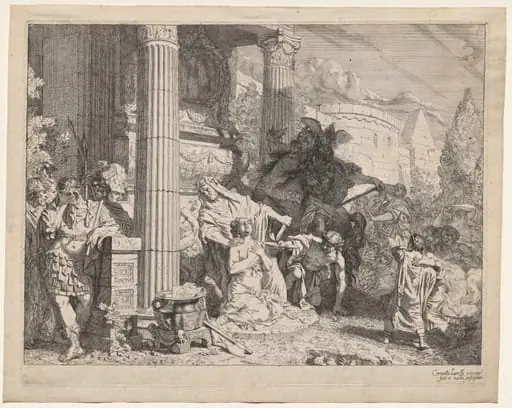 The Sacrifice of Polyxena
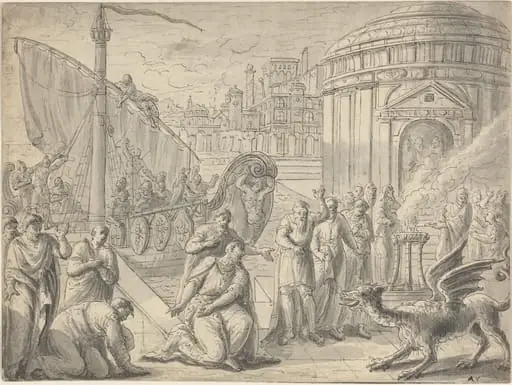 The Arrival of Aesculapius in Rome