Artwork
The Double Cromlech at Plas Newydd, Anglesey
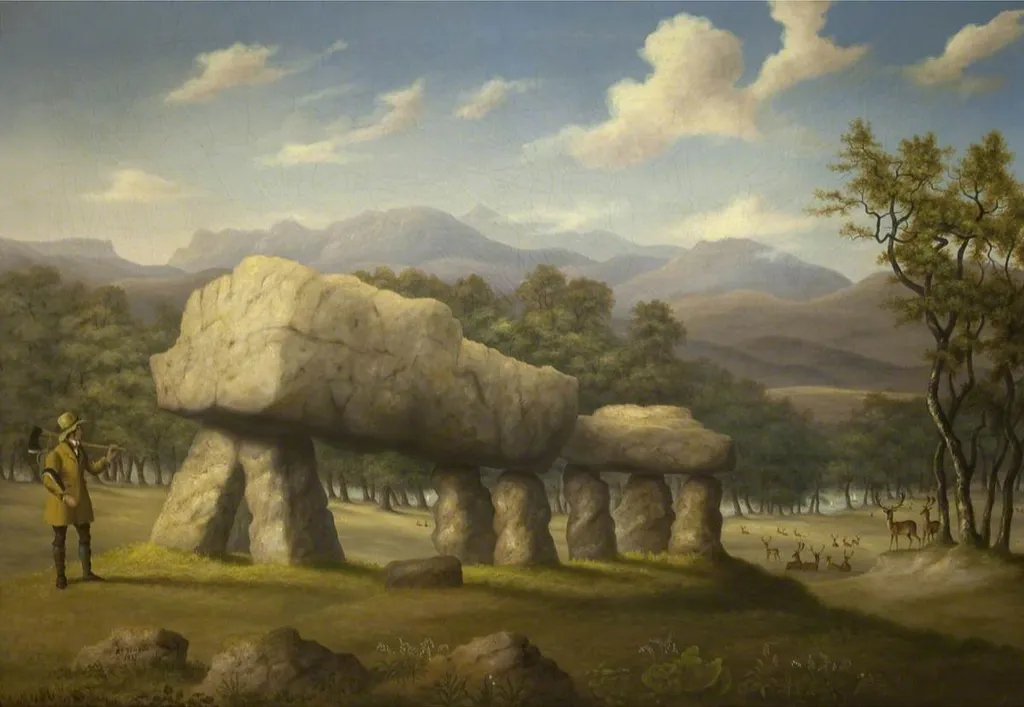
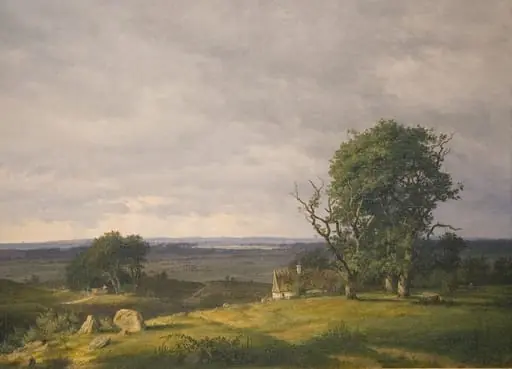
The Double Cromlech at Plas Newydd, Anglesey is an oil painting by Richard Tongue. It dates from 1844 and is held in the collection of the British Museum.
About this work
Overview
Painted around 1844 by Richard Tongue, this oil work depicts the ancient stone arrangement known as the Double Cromlech near Plas Newydd on Anglesey. The painting is part of the British Museum’s collection and captures the monument within its surrounding landscape, emphasizing quiet observation over dramatic narrative.
Subject & Meaning
The scene centers on a prehistoric stone structure, its arrangement of upright and capstones suggesting ritual or ceremonial use. A solitary figure in yellow, staff in hand, stands to the left, not as a central actor but as a quiet witness. The presence of deer and distant mountains reinforces a sense of timelessness, linking human history with enduring natural rhythms.
Technique & Style
Tongue employs subtle contrasts of light and shadow to model the stones and foliage, creating depth without theatrical intensity. The brushwork is restrained, favoring soft transitions between the sky, hills, and ground. The composition balances the monument’s solidity with the fluidity of the landscape, avoiding overt romanticism.
History & Provenance
The painting entered the British Museum’s collection in the 19th century, likely acquired as part of a broader interest in antiquarian subjects. Its origin traces to Tongue’s travels in North Wales, where he documented archaeological sites with topographical precision, reflecting contemporary scholarly curiosity about Britain’s prehistoric past.
Context
Created during a period of growing archaeological interest in megalithic sites, the painting aligns with efforts to record and preserve Britain’s ancient monuments. Unlike later romanticized depictions, Tongue’s approach is observational, grounded in the emerging practice of field documentation rather than myth-making.
Legacy
Though not widely exhibited, the work remains a quiet record of early Victorian engagement with prehistoric landscapes. It contributes to a visual archive of Welsh antiquities, offering insight into how such sites were perceived before modern archaeology formalized their study.
Artist & collection

 Stonehenge from the West-South-West
 The Island of Brandsø with Wedellsborg Forest, Funen, in the Distance
 The Island of Brandsø with Wedellsborg Forest, Funen, in the Distance
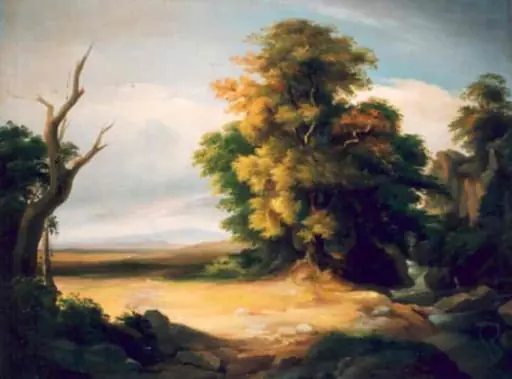 Peisaj francez
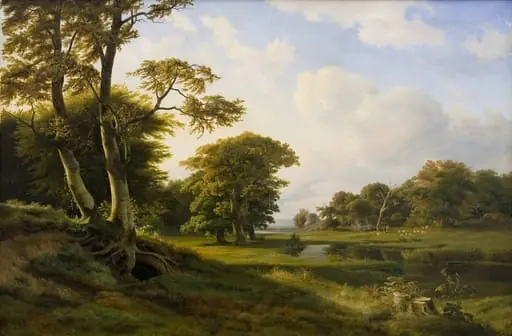 Skovlandskab ved Hellebæk. Efterår
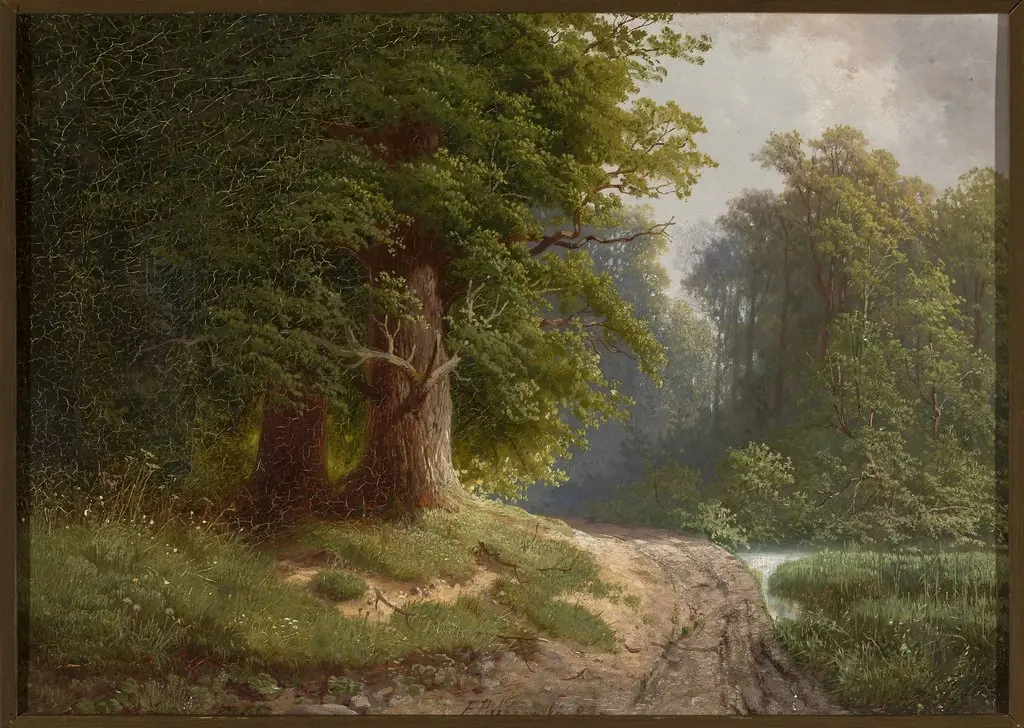 After the rain in autumn
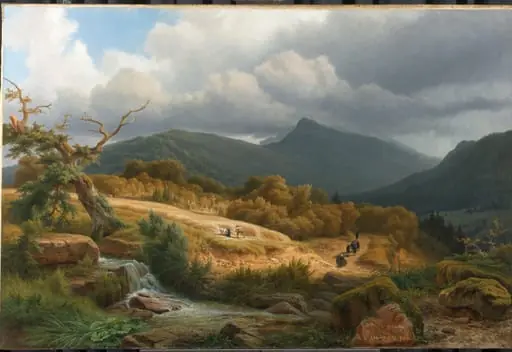 The Cemetery at Baden-Baden
 Landscape with Indian
 Peisaj cu figuri
 L'Éboulement (après l'orage)
 A Pastoral Scene
 Landskab fra Esromegnen