Artwork
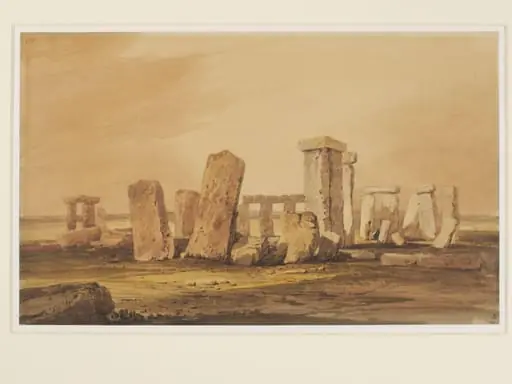
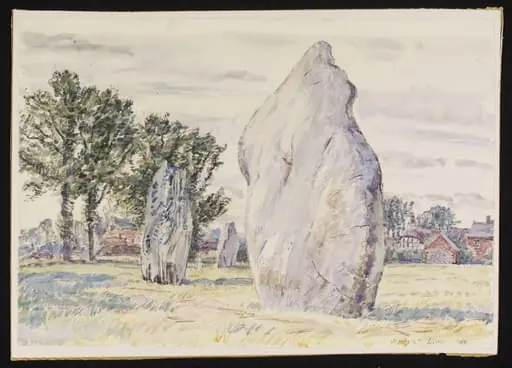
Stonehenge from the West-South-West
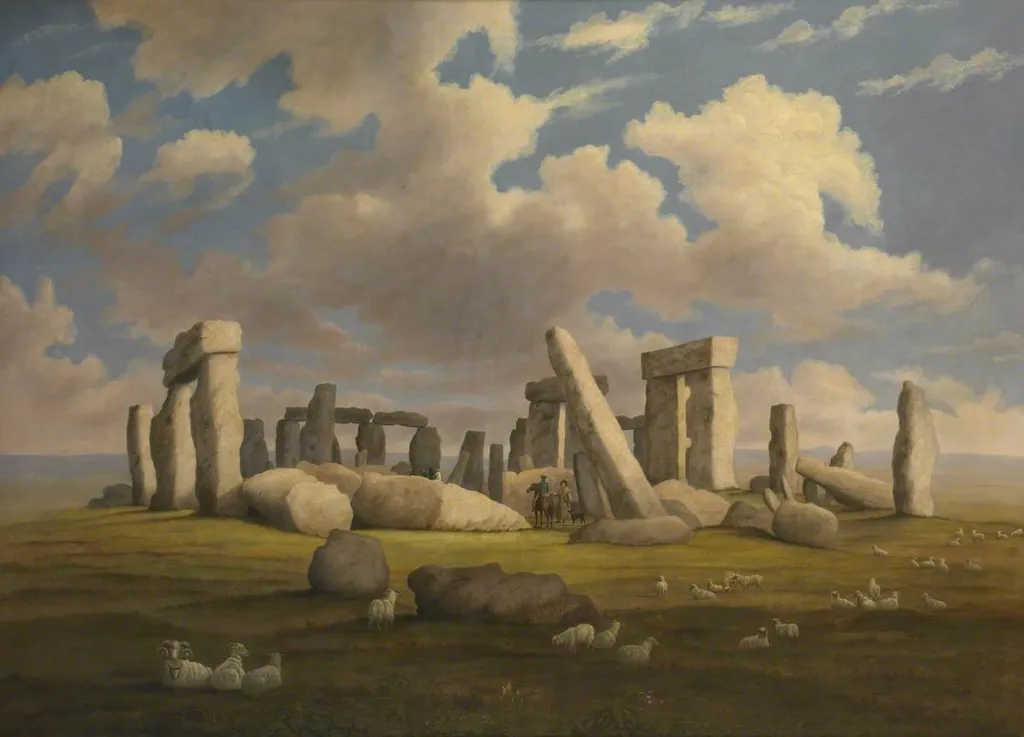
Stonehenge from the West-South-West is an oil painting by Richard Tongue. It dates from 1844 and is held in the collection of the British Museum.
About this work
Overview
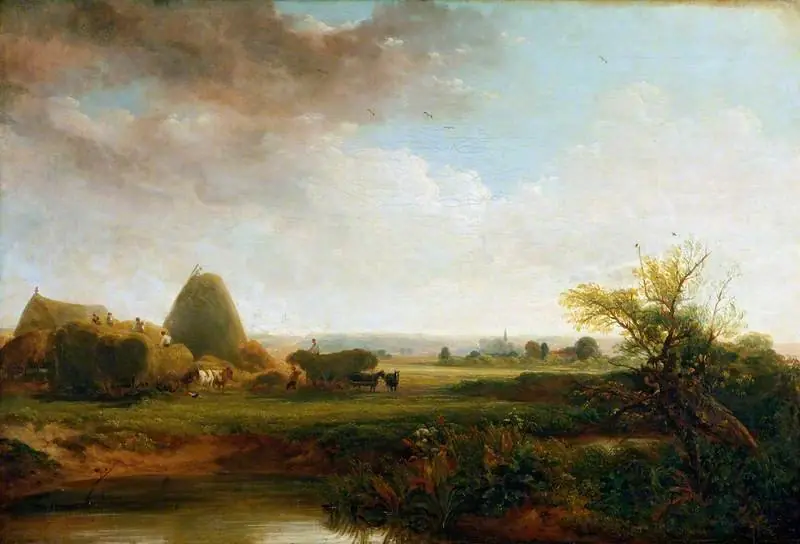
Richard Tongue’s oil painting, dated around 1844, presents a view of the prehistoric monument known as Stonehenge from a west‑south‑west angle. The composition centers on the stone circle, set within a gently rolling meadow where a flock of sheep grazes. A few distant figures are placed near the stones, while a cloud‑laden sky lends atmospheric depth to the tranquil countryside scene.
Subject & Meaning
The work juxtaposes the ancient, rigid geometry of the stone structure with the soft, pastoral life of the surrounding landscape. By including livestock and human presence, the artist underscores the continuity of rural activity around the historic site, suggesting a harmonious coexistence between enduring monuments and everyday agrarian life.
Technique & Style
Executed in oil on canvas, the painting employs a muted palette and careful modulation of light to render the stones’ mass and the meadow’s texture. Subtle contrasts between illuminated stone surfaces and shadowed ground create a sense of volume, while the diffused cloud cover softens the horizon, enhancing the scene’s calm ambience.
History & Provenance
Created in the mid‑nineteenth century, the canvas entered the collection of the British Museum, where it remains part of the institution’s holdings of British landscape art. Its acquisition reflects the museum’s interest in documenting 19th‑century visual interpretations of iconic archaeological sites.
Artist & collection