Artwork
A Splendid Young Stag before a Wattle Fence
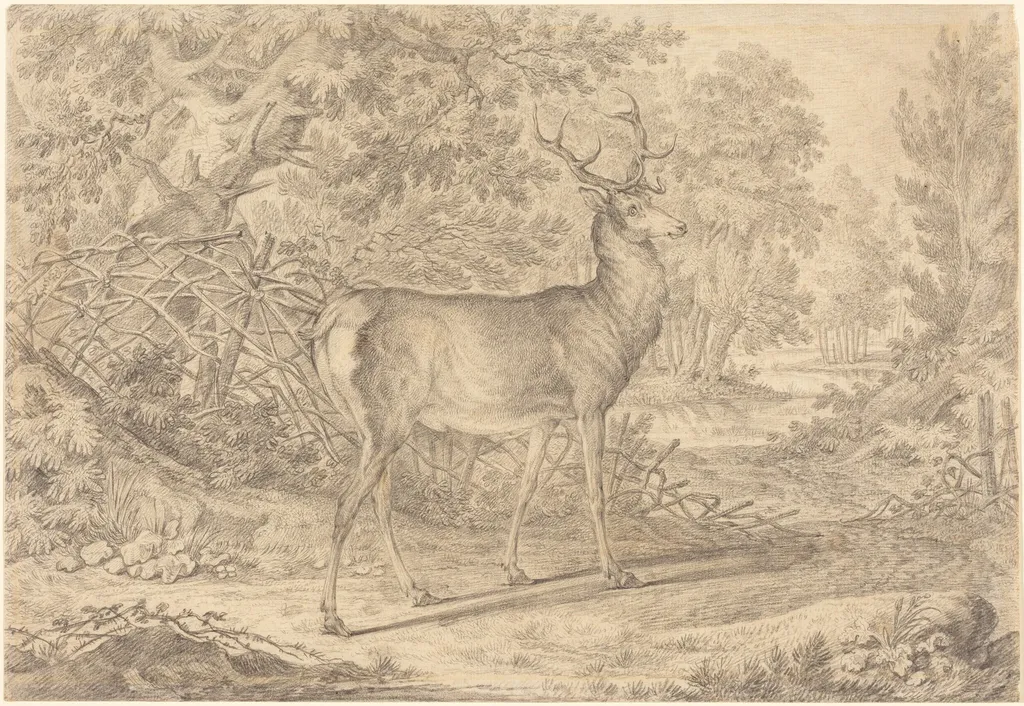
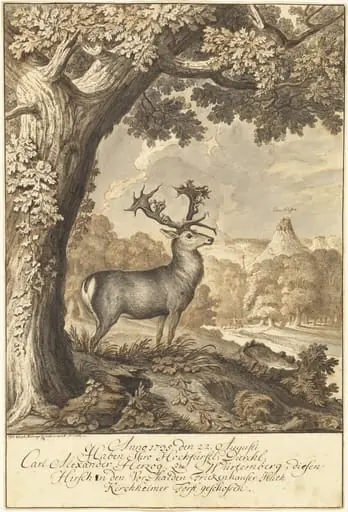
A Splendid Young Stag before a Wattle Fence is a graphite drawing by the Baroque artist Johann Elias Ridinger. It dates from 1736 and is held in the collection of the National Gallery of Art.
About this work
Overview
Created in 1736 by Johann Elias Ridinger, this drawing captures a young stag in a naturalistic setting using graphite and gray wash on laid paper.
Created in 1736 by Johann Elias Ridinger, this drawing captures a young stag in a naturalistic setting using graphite and gray wash on laid paper. Ridinger, a German artist renowned for his precise animal studies, employed subtle tonal gradations to suggest form and texture. The work exemplifies his focus on wildlife as a subject worthy of detailed observation, distinct from idealized or mythological depictions common in other genres of the period.
Subject & Meaning
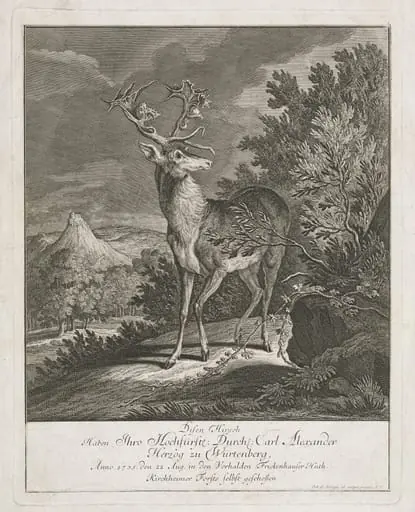
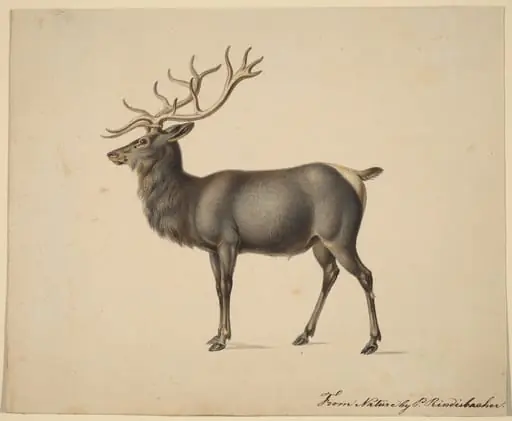
The stag, standing alert and facing left, is rendered with anatomical accuracy, its antlers prominently displayed. The wattle fence, a humble rural structure, grounds the scene in the everyday landscape of 18th-century German woodlands. Rather than portraying the animal as prey or trophy, the drawing emphasizes its presence as a solitary, dignified creature, reflecting Ridinger’s interest in nature’s quiet realism over theatrical symbolism.
Technique & Style
Ridinger used fine graphite lines to define the stag’s form and the fence’s woven texture, while soft gray washes added depth to the fur and foliage. The background trees and bushes are suggested with lighter, looser strokes, creating spatial recession without overt detail. This controlled contrast between precise delineation and atmospheric washes demonstrates his mastery of draftsmanship and his ability to evoke texture through minimal means.
History & Provenance
Ridinger produced this drawing during a period of growing demand for naturalistic animal studies among European collectors. Though the specific early ownership history is undocumented, it aligns with his broader output of animal drawings, many of which were later engraved and disseminated widely. His reputation as a specialist in wildlife imagery helped secure commissions from aristocratic patrons and porcelain manufacturers like Meissen.
Context
In early 18th-century Germany, scientific interest in natural history was rising, and artists like Ridinger bridged art and observation. While Baroque art often favored drama and grandeur, Ridinger’s focus on quiet, individual animals reflected a quieter, more empirical aesthetic. His work resonated with Enlightenment values, valuing direct study over idealization, and contributed to a growing genre of naturalistic wildlife art.
Legacy
Ridinger’s drawings, including this one, influenced later generations of animal illustrators and engravers. His technical precision and attention to biological detail set a standard for wildlife depiction in print culture. Though not widely exhibited in his time as fine art, his plates became reference materials for naturalists and artists, ensuring his impact extended beyond his lifetime into scientific and artistic documentation.
Own this work as a print
Artist & collection
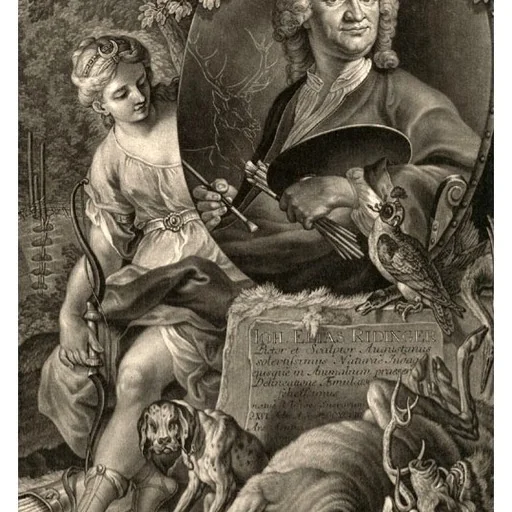
Artist
Johann Elias Ridinger (16 February 1698 in Ulm – 10 April 1767 in Augsburg) was a German painter, engraver, draughtsman and publisher.