Artwork
Deer in the Forest
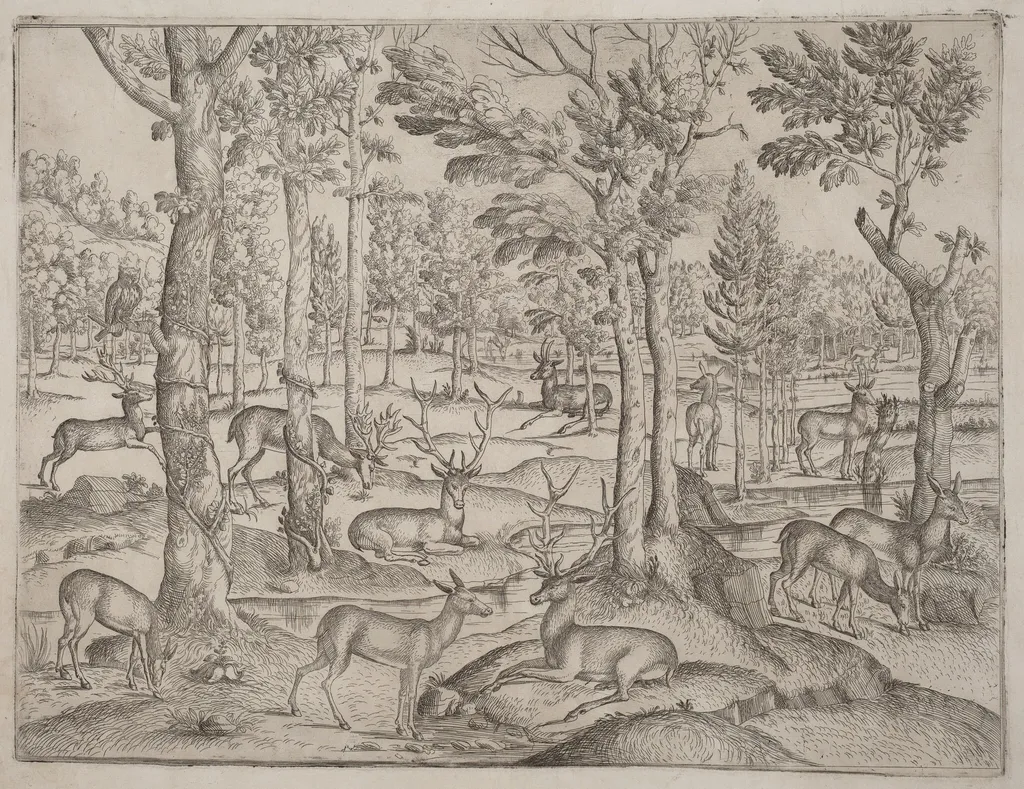
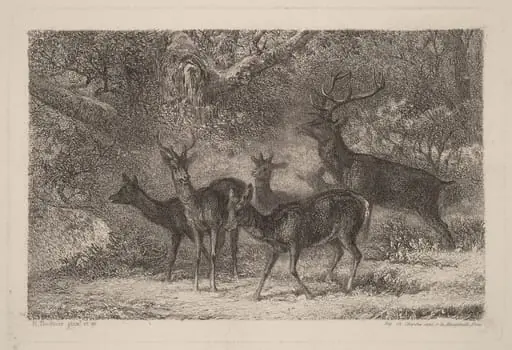
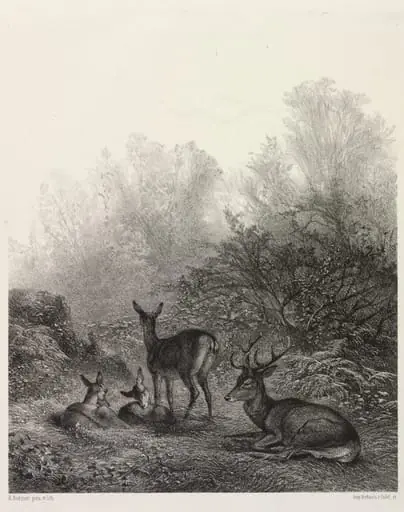
Deer in the Forest is an ink print by the Renaissance artist Italian 16th Century. It dates from 1520 and is held in the collection of the National Gallery of Art. This drypoint etching depicts four deer grouped within a dim forest setting.
About this work
Overview
This drypoint etching depicts four deer grouped within a dim forest setting. The artist used a needle to scratch directly into a metal plate, creating lines that hold ink unevenly and produce soft, blurred edges. Unlike burin-engraved prints, the technique yields a delicate, tactile quality, especially visible in the textured undergrowth and dappled shadows.
Subject & Meaning
The deer, closely clustered and partially absorbed by the surrounding trees, suggest quiet coexistence within a secluded woodland. Their stillness and integration with the environment evoke a sense of natural harmony, without overt symbolism. The composition emphasizes observation over narrative, inviting attention to the animals’ presence rather than their story.
Technique & Style
Drypoint was employed to generate subtle tonal variations through fine, irregular scratches on the plate. These marks retain ink unevenly, resulting in fuzzy, atmospheric lines that mimic the softness of foliage and dappled light. The lack of sharp contours enhances the impression of depth and movement within the dense forest.
History & Provenance
The work is one of several prints made using the drypoint method during a period when artists explored intimate natural subjects. While its exact origin and early ownership are undocumented, its technique aligns with late 19th- to early 20th-century printmakers who favored direct, expressive mark-making over polished engraving.
Context
This print reflects a broader interest among printmakers in capturing the quiet rhythms of nature through hand-drawn techniques. Drypoint’s immediacy appealed to artists seeking to move away from industrialized reproduction, favoring the tactile and personal qualities of the scratched line in depicting wild, unspoiled landscapes.
Legacy
The work contributes to a tradition of nature-focused printmaking that values process over polish. Its use of drypoint influenced later artists interested in the expressive potential of imperfection, particularly in rendering organic forms where softness and ambiguity enhance realism.
Own this work as a print
Artist & collection

Artist
A 16th-century Italian sculptor left us small bronze works in dark brown and gold.

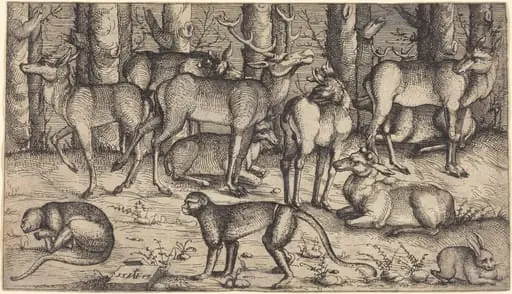 Stags in the Forest
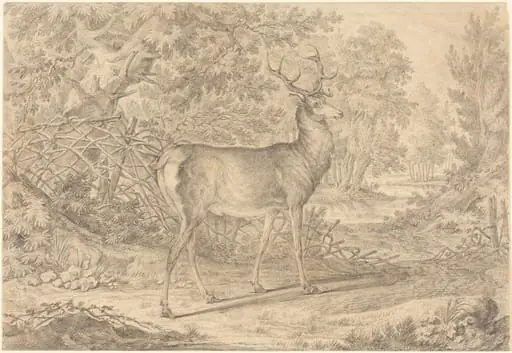 A Splendid Young Stag before a Wattle Fence
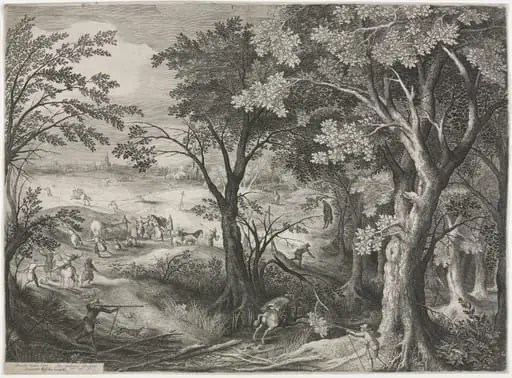 Landscape with Travelers Attacked by a Gang of Robbers
 Le harde
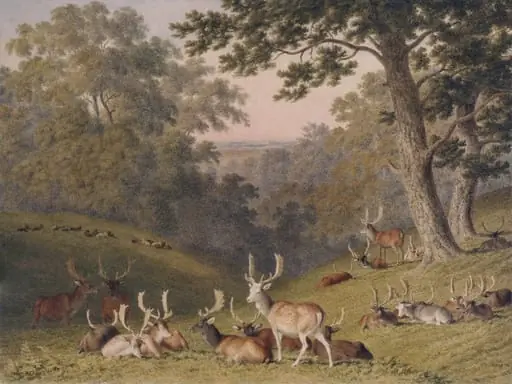 Stags in Knole Park, near Sevenoaks, Kent
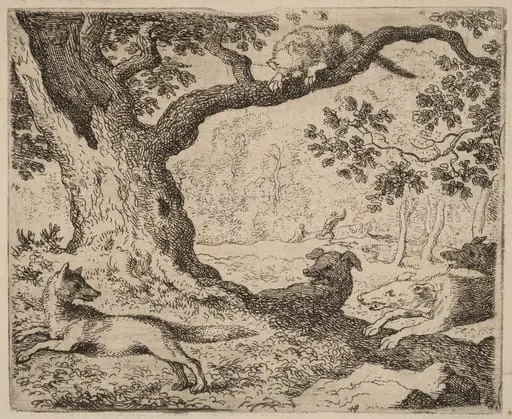 Reynard's Father and the Cat Pursued by Hounds
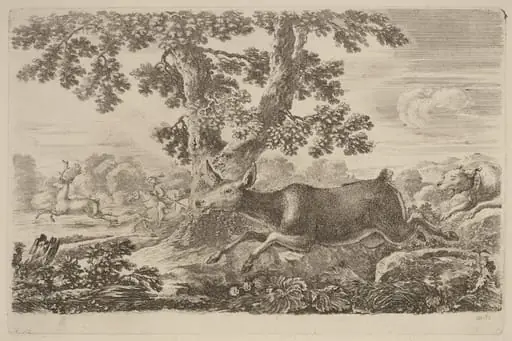 Deer Chased by a Dog to the Right
 Untitled
 Deer at Rest
 Biches au repos
 A Mole, a Badger, a Horned Hare and a Fox
 Reynard the Fox: Reynard Asks Permission to Confess