Artwork
Henry Fuseli
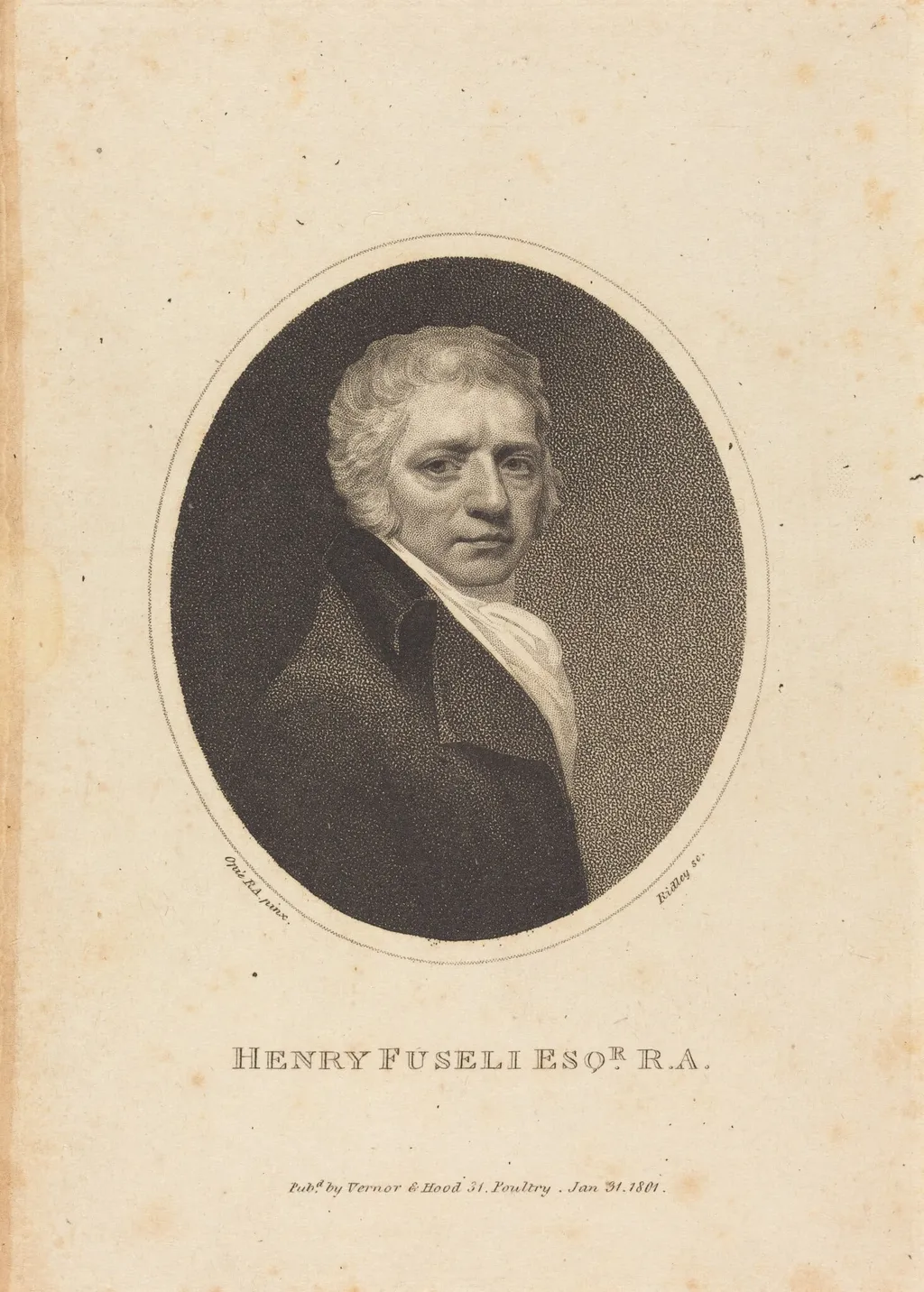
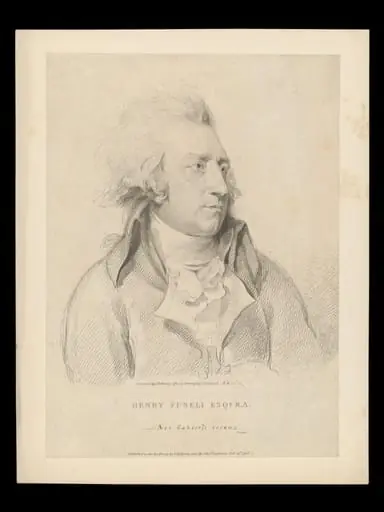
Henry Fuseli is an ink print by the Romanticist artist William Ridley. It dates from 1801 and is held in the collection of the National Gallery of Art.
About this work
Overview
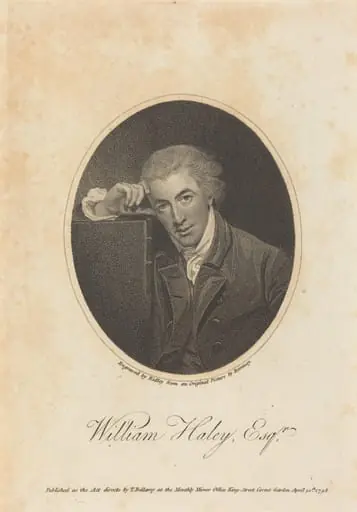
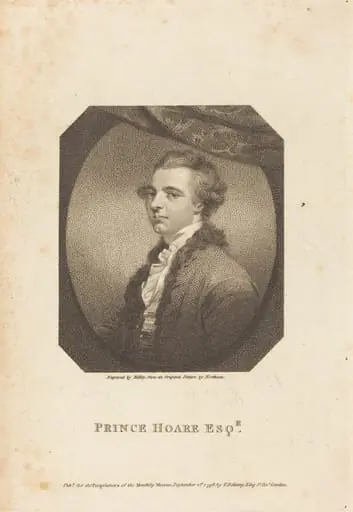
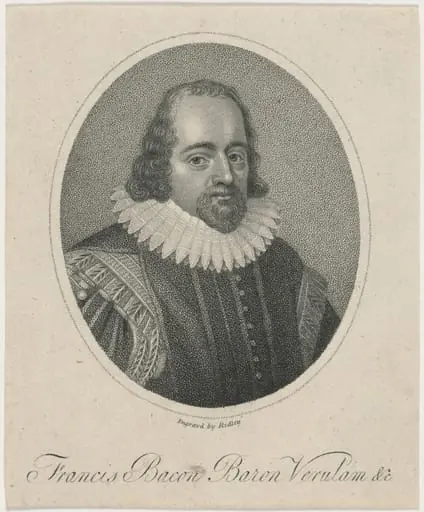
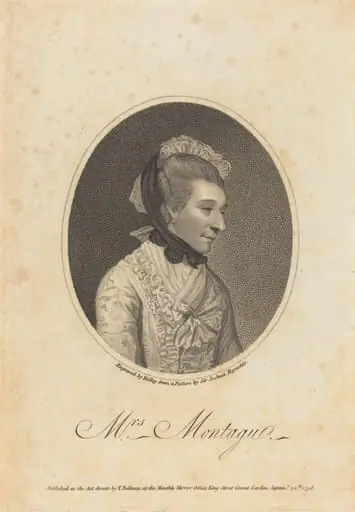
This 1801 stipple engraving, executed by William Ridley, presents a portrait of the artist Henry Fuseli. Rendered entirely in black and white, the image places the sitter against a deep, shadowy backdrop that accentuates his features. The composition is tightly focused on the face, allowing the viewer to engage directly with Fuseli’s distinctive appearance.
Subject & Meaning
The portrait depicts Fuseli with a full head of curly white hair, a dark jacket, and a crisp white cravat. The stark contrast between his light hair and the surrounding darkness draws attention to his expression, suggesting a contemplative or scholarly demeanor appropriate to his reputation as a leading painter of the late eighteenth century.
Technique & Style
Ridley employed stipple engraving, a method that builds tone through a dense field of dots, complemented by cross‑hatching to deepen shadows. This combination creates a subtle gradation of values, giving the figure a sense of volume and three‑dimensionality despite the absence of color. The careful modulation of light and shade highlights the texture of the subject’s clothing and hair.
History & Provenance
Produced in 1801, the print was likely intended for distribution among collectors and admirers of Fuseli’s work. As a work by the English engraver William Ridley, it reflects the period’s interest in commemorating prominent artists through reproducible media, allowing the image to circulate beyond the confines of a single painted portrait.
Artist & collection