Artwork
Nathanel Lee, the Poet
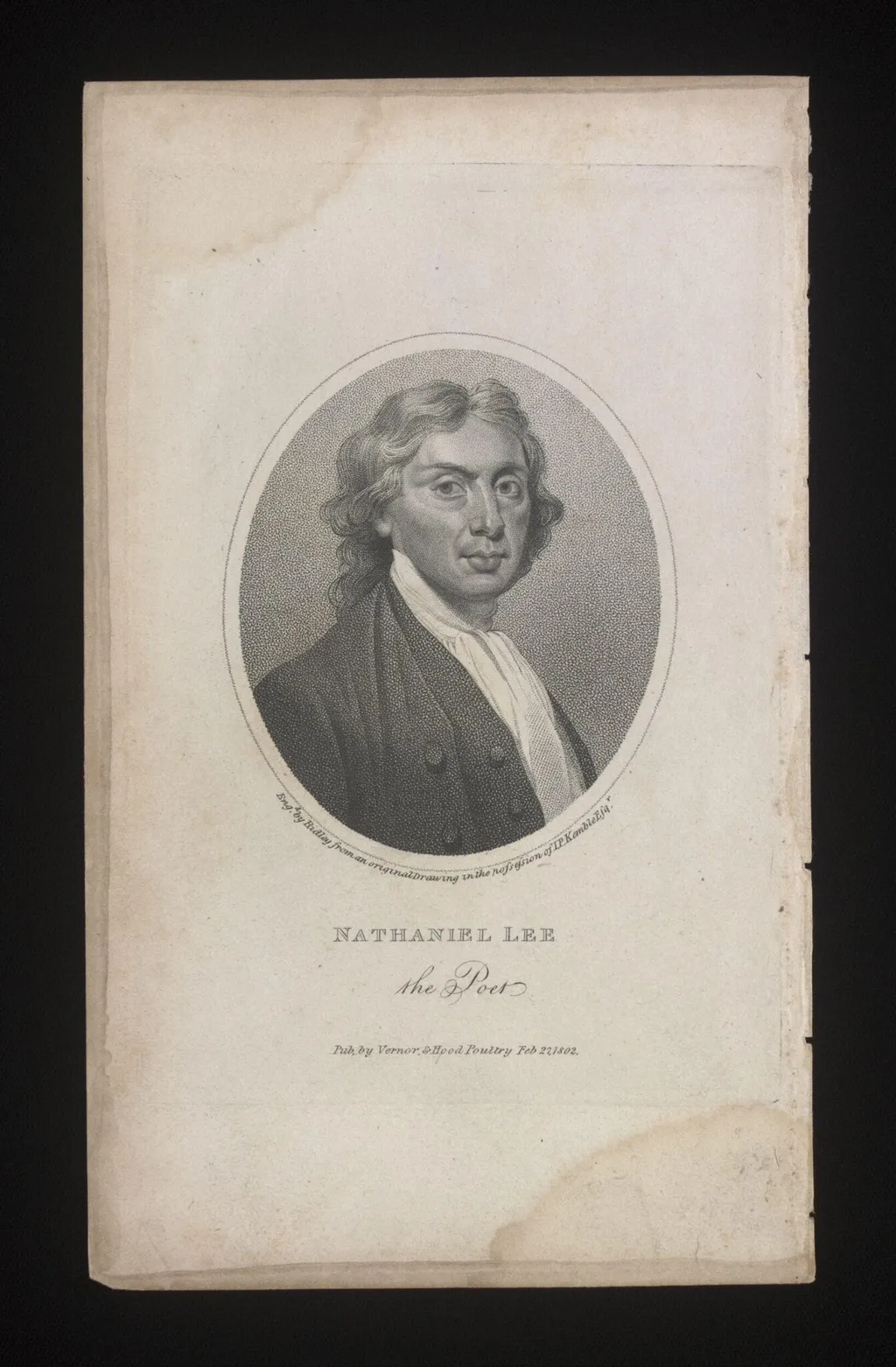
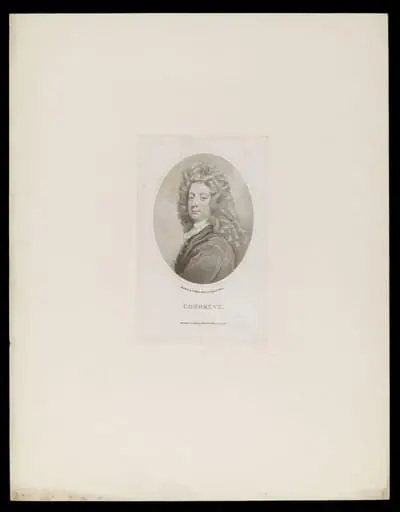
Nathanel Lee, the Poet is a print by the Romanticist artist William Ridley. It dates from 1802 and is held in the collection of the Victoria and Albert Museum. This 1802 print portrays the 17th-century dramatist Nathaniel Lee, produced by the London publishers Vernor & Hood.
About this work
Overview
It belongs to the Harry Beard Collection and reflects the tradition of posthumous portraiture in early 19th-century Britain.
This 1802 print portrays the 17th-century dramatist Nathaniel Lee, produced by the London publishers Vernor & Hood. It belongs to the Harry Beard Collection and reflects the tradition of posthumous portraiture in early 19th-century Britain. The image reproduces an earlier likeness, likely based on a painting or engraving from Lee’s lifetime, reissued to satisfy growing interest in literary figures of the past.
Subject & Meaning
Nathaniel Lee, known for his tragic plays and association with Restoration theatre, is depicted in attire suggestive of an earlier era, emphasizing his historical stature rather than contemporary fashion. His serious expression and formal pose convey intellectual gravity, aligning with the 19th-century tendency to memorialize writers as solemn cultural icons. The image serves less as a likeness and more as a symbolic representation of literary legacy.
Technique & Style
The print employs fine-line engraving, characteristic of early 19th-century reproductive printmaking. Delicate hatching and cross-hatching define texture in the fabric and hair, while precise contours outline the face and collar. The style reflects the work of William Ridley, whose engravings were frequently used by publishers like Vernor & Hood to reproduce portraits for broad distribution among middle-class readers.
History & Provenance
Created over a century after Lee’s death, the print was part of a wave of literary portraiture published in the early 1800s. Vernor & Hood specialized in such reissues, often sourcing images from older collections. The print entered the Harry Beard Collection, a significant assemblage of theatrical and literary ephemera, where it remains as evidence of Victorian-era reverence for earlier dramatists.
Context
During the early 1800s, Britain experienced a revival of interest in Restoration literature, spurred by antiquarianism and the rise of public libraries. Prints like this one helped popularize figures such as Lee, whose works were rarely staged but still cited in literary circles. The image reflects a broader cultural project of preserving and visually codifying the nation’s literary heritage for a growing reading public.
Legacy
Though Nathaniel Lee’s plays are no longer in regular performance, this print endures as a material artifact of how literary memory was constructed in the 19th century. It exemplifies the role of reproductive printmaking in shaping public perceptions of historical figures. Today, it serves scholars as a visual record of how past generations chose to represent and remember their literary ancestors.
Artist & collection