Artwork
Untitled
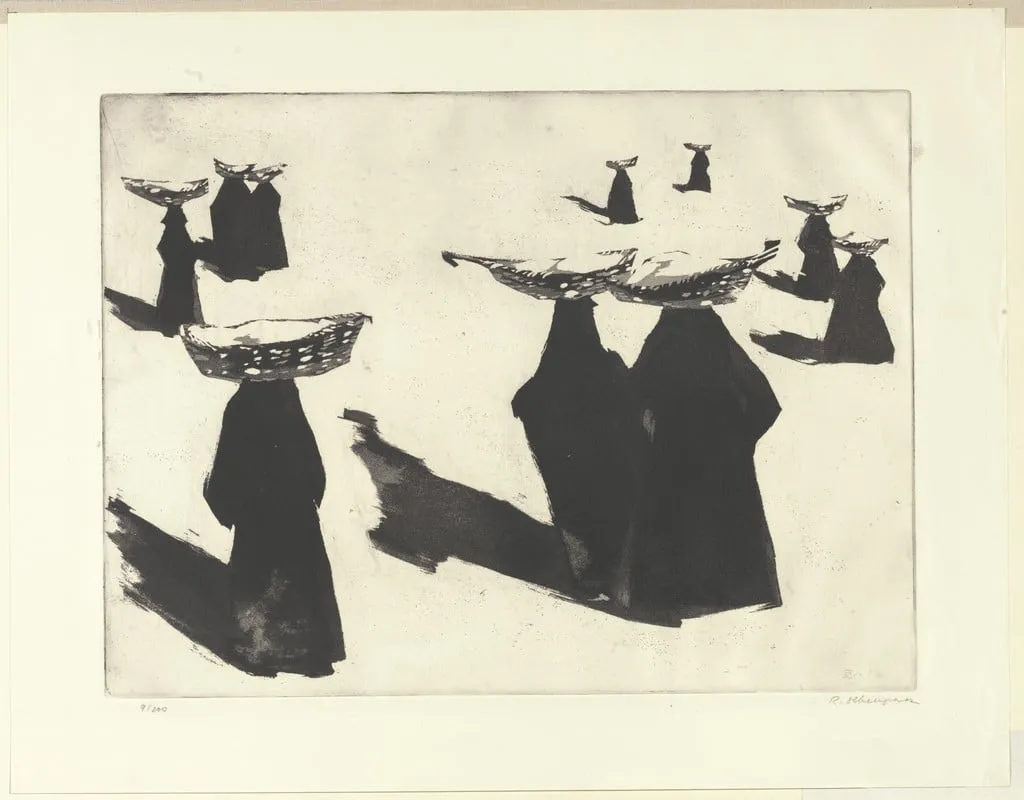
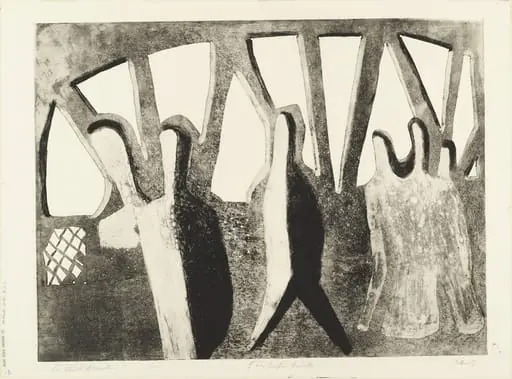
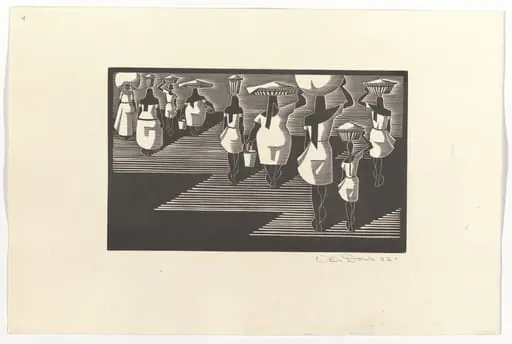
Untitled is an ink print by Riko Debenjak. It dates from 1953 and is held in the collection of the Museum of Modern Art.
About this work
Overview
The work belongs to a series of prints from the early 1950s in which Debenjak explored human figures through tonal contrast and simplified forms.
Created in 1953, Untitled is an aquatint print by Slovenian artist Riko Debenjak. It is part of the collection at The Museum of Modern Art in New York. The work belongs to a series of prints from the early 1950s in which Debenjak explored human figures through tonal contrast and simplified forms. The medium of aquatint allowed for subtle gradations of gray, which Debenjak used to evoke atmosphere and movement.
Subject & Meaning
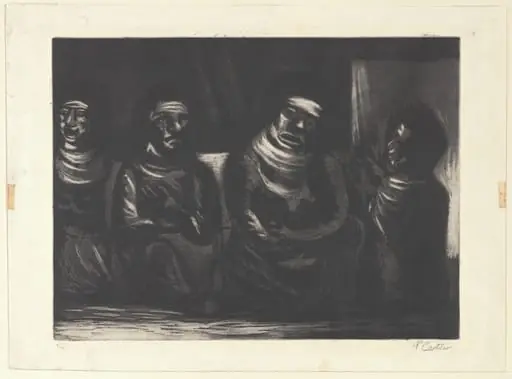
The print depicts a procession of figures draped in dark, hooded robes, each carrying baskets on their heads. Their faces are hidden in shadow, anonymizing individual identity and emphasizing collective action. The absence of facial detail invites interpretation as a ritual, labor, or migration scene. The anonymity suggests themes of endurance, duty, or communal experience rather than personal narrative.
Technique & Style
Debenjak employed aquatint to achieve a range of tonal values, from deep blacks to soft grays. The figures are rendered in dense shadow, while the background and basket surfaces remain lighter, creating strong visual contrast. The technique’s ability to mimic washes of ink allowed for a painterly effect, enhancing the sculptural presence of the silhouetted forms. Chiaroscuro is used not for drama, but to define spatial depth and weight.
History & Provenance
The print was produced during Debenjak’s active period in postwar Slovenia, when he was engaged with European printmaking traditions and local folk imagery. It entered The Museum of Modern Art’s collection in the mid-20th century as part of its broader effort to document international graphic art. Its acquisition reflects MoMA’s interest in non-American artists working in print media during the 1950s.
Context
In the early 1950s, many European artists turned to printmaking as a means of personal expression amid political and social reconstruction. Debenjak’s work aligns with a broader trend of using simplified, shadowed figures to convey universal human experiences. His imagery resonates with contemporaneous prints by artists in Italy and Eastern Europe who similarly favored monochromatic, emotionally restrained compositions.
Legacy
Untitled remains one of Debenjak’s most recognized works in institutional collections. While not widely exhibited, it continues to be referenced in studies of postwar Central European printmaking. Its restrained aesthetic and focus on collective form have influenced later artists interested in the expressive potential of silhouette and tonal contrast over detailed representation.
Artist & collection

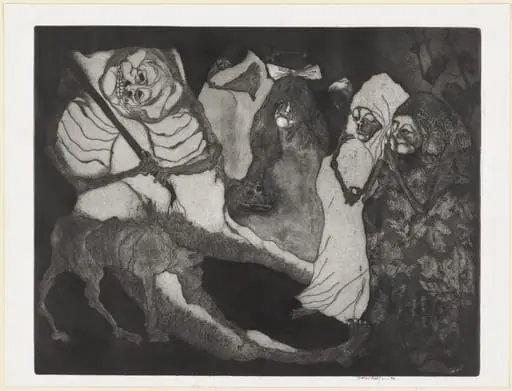 Untitled
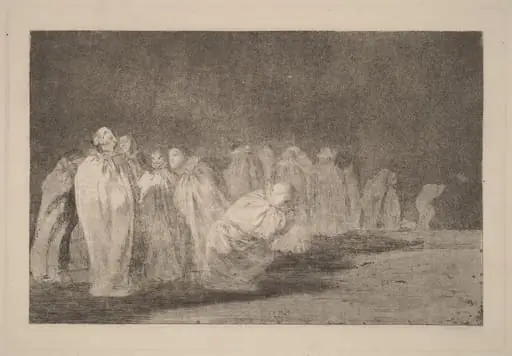 Los ensacados (The Men in Sacks)
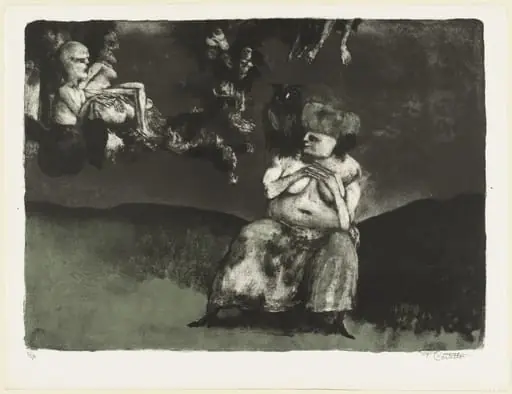 Untitled
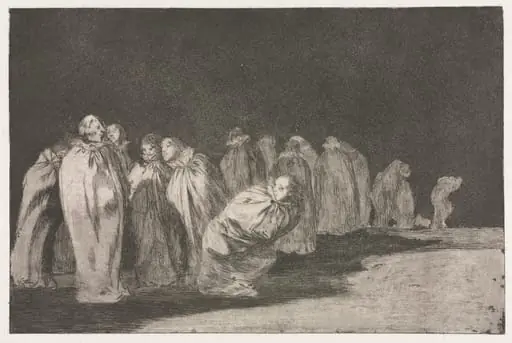 The Proverbs: The Men in Sacks
 Untitled
 Untitled
 Untitled
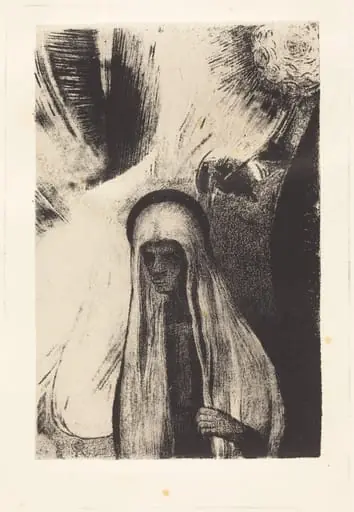 La Vieille: Que Crains-tu? Un large trou Noir! Il est vide peut-etre? (What are you afraid of? A wide black hole! It is empty, perhaps!)
 Untitled
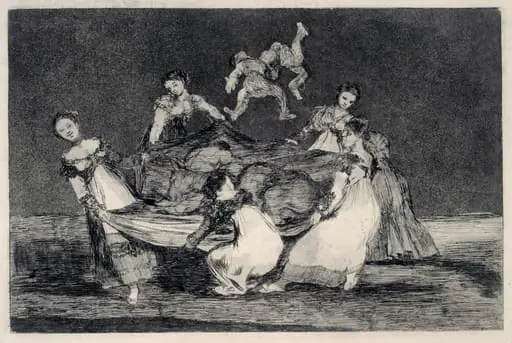 Disparate femenino (Feminine Folly)
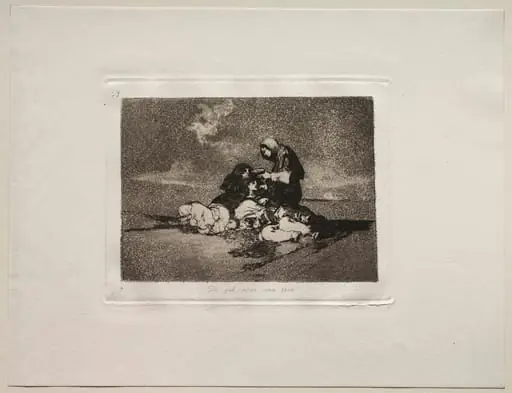 The Horrors of War: What is the Use of a Cup?
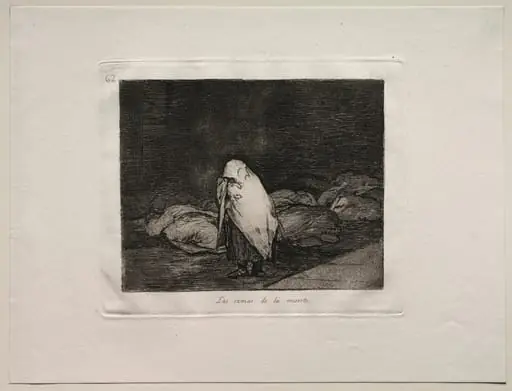 The Horrors of War: The Beds of Death