Artwork
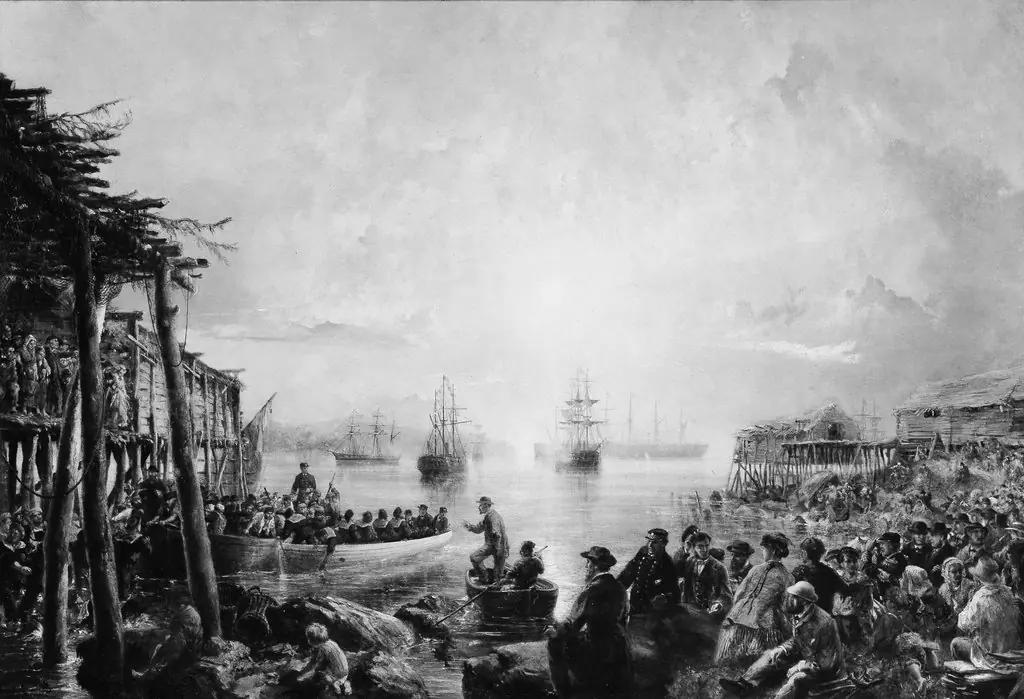
The Settlement and Church of Heart's Content, Newfoundland
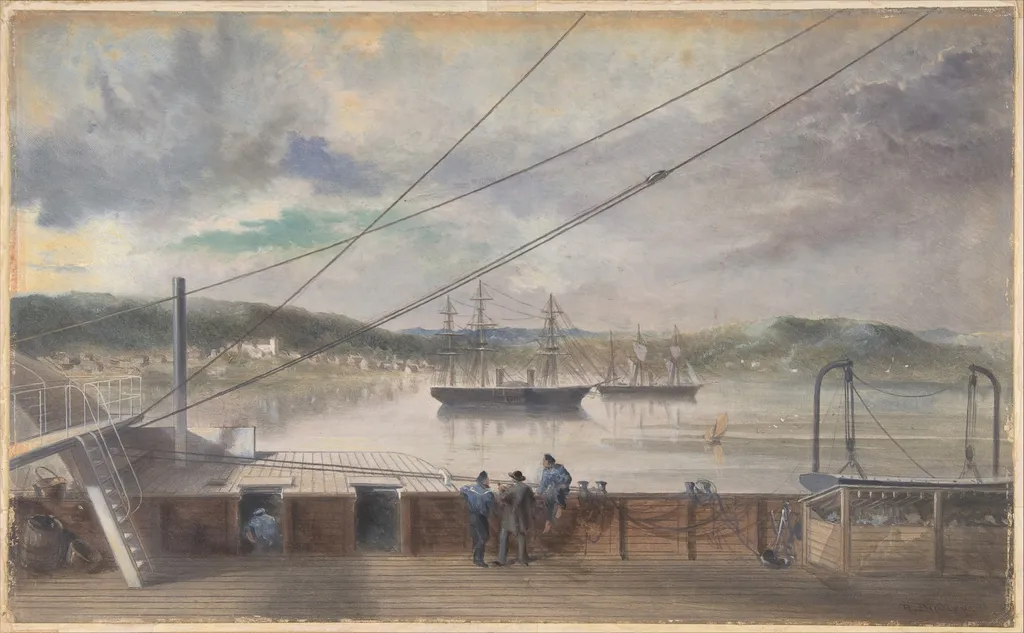
The Settlement and Church of Heart's Content, Newfoundland is an unspecified painting by the Realist artist Robert Charles Dudley. It dates from 1866 and is held in the collection of the Metropolitan Museum of Art.
About this work
Overview
Painted in 1866 by Robert Charles Dudley, this work depicts the coastal settlement of Heart’s Content in Newfoundland. It captures a quiet harbor with vessels at rest, modest buildings lining the shore, and rolling hills beyond. Executed in subdued tones of gray, brown, and green, the composition conveys a restrained, observational tone characteristic of mid-19th-century topographical painting.
Subject & Meaning
The scene presents a working maritime community, with a large ship anchored offshore and a smaller boat near the dock. Figures on the wharf suggest daily life, while the church steeple anchors the settlement visually and symbolically. The absence of dramatic action emphasizes endurance and routine, reflecting the quiet resilience of remote coastal life in Newfoundland during the period.
Technique & Style
The technique prioritizes observational accuracy over romantic embellishment, aligning with documentary tendencies in travel art of the era.
Dudley employed visible, deliberate brushwork to render textures of water, wood, and foliage. The palette is deliberately muted, avoiding vivid contrasts in favor of atmospheric harmony. Light filters through overcast skies, softening edges and unifying the landscape. The technique prioritizes observational accuracy over romantic embellishment, aligning with documentary tendencies in travel art of the era.
History & Provenance
Created during Dudley’s time in Newfoundland, the painting likely served as a record of the settlement for audiences abroad. It entered the collection of The Metropolitan Museum of Art in the 20th century, where it remains as part of a broader group of 19th-century American and British landscape works documenting colonial and maritime sites.
Context
Heart’s Content was a key terminus for the first transatlantic telegraph cable in 1866, linking Europe and North America. Though the painting does not depict the cable itself, its timing coincides with the settlement’s brief moment of global significance. Dudley’s depiction reflects the quiet aftermath of technological change, focusing on enduring human presence rather than innovation.
Legacy
The painting contributes to a lesser-known body of work by Dudley that records British colonial outposts with understated precision. While not widely exhibited, it offers insight into how artists of the period approached remote communities—not as exotic subjects, but as places of ordinary, sustained life. Its preservation in a major museum underscores its value as a historical document.
Artist & collection

 Ryde, Isle of Wight
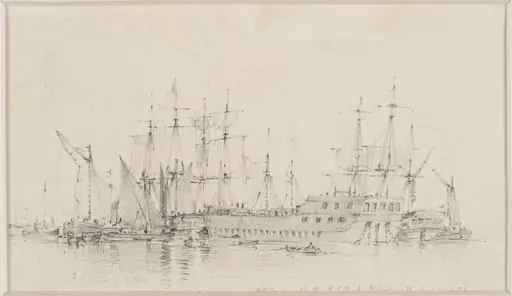 Old Mag off the East India Dock, Blackwall
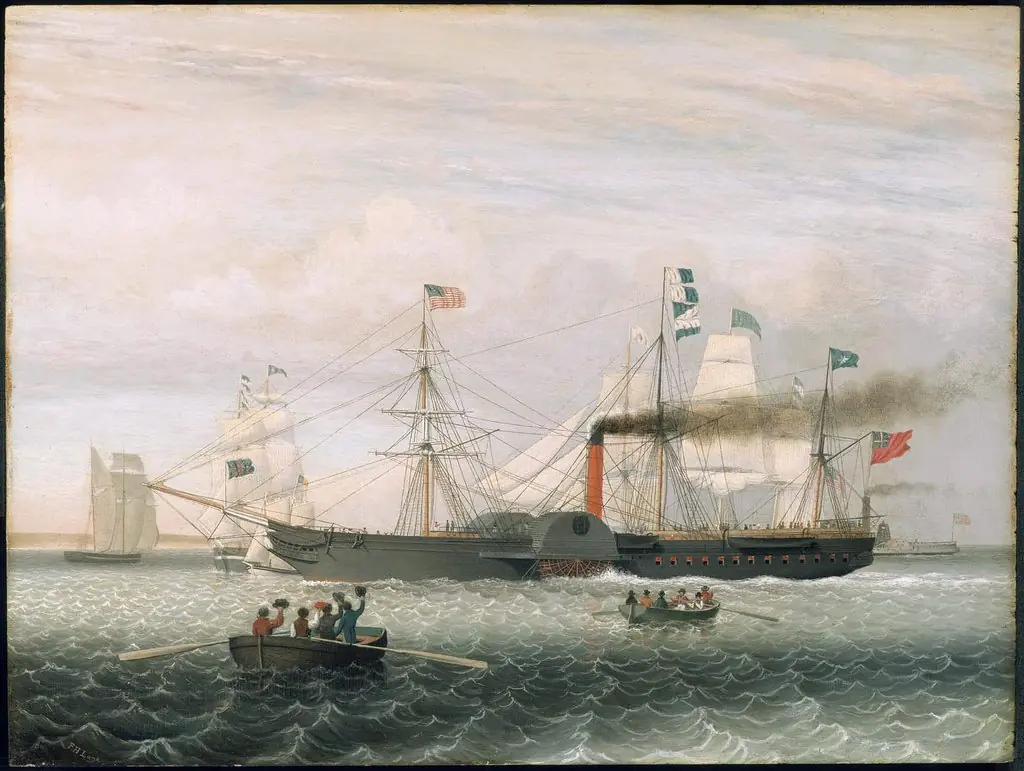 The Britannia Entering Boston Harbor
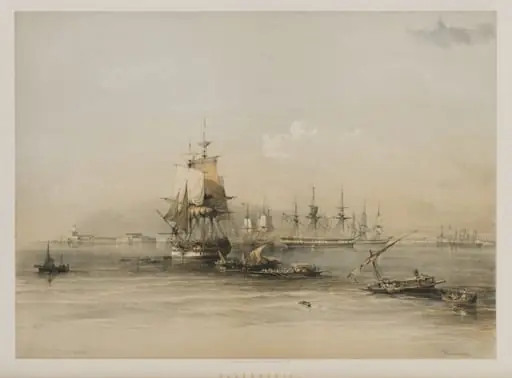 Egypt and Nubia, Volume III: Alexandria
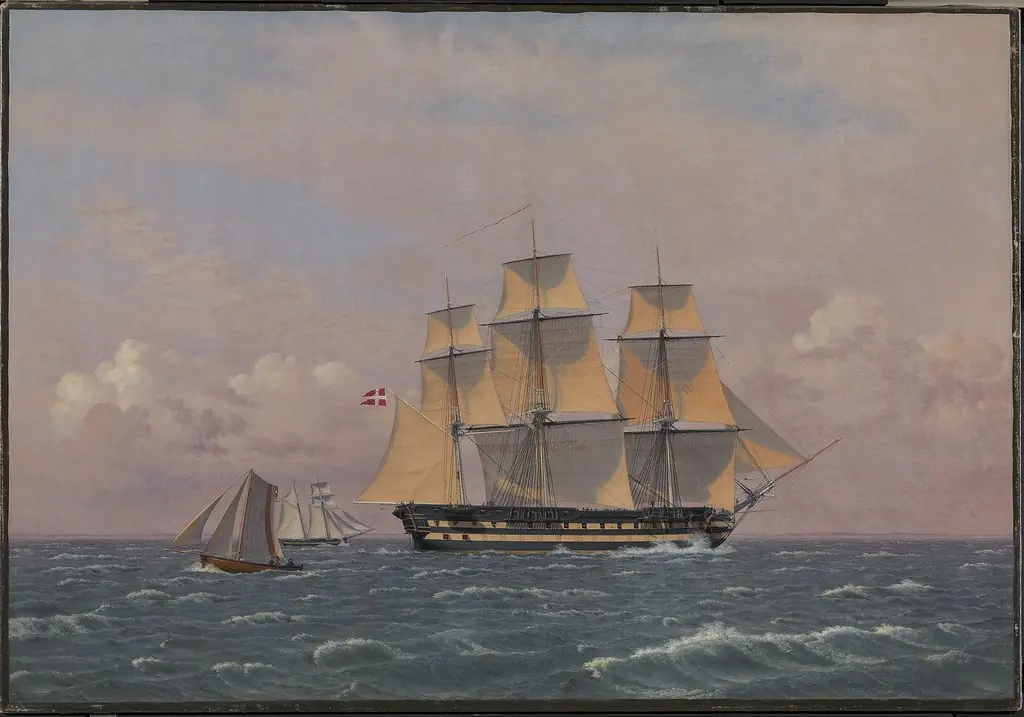 The 84-Gun Danish Warship "Dronning Marie" in the Sound
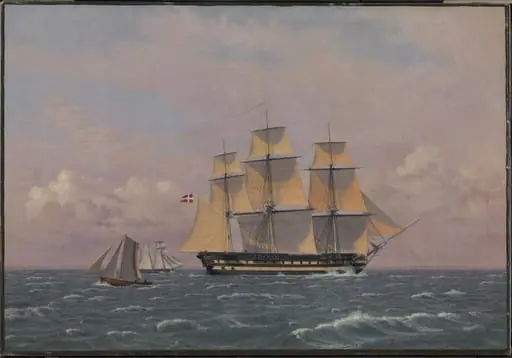 The 84-Gun Danish Warship "Dronning Marie" in the Sound
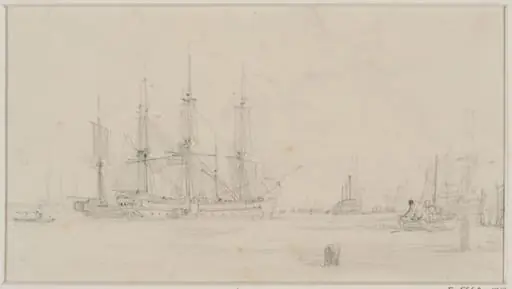 River Scene with hay-barge
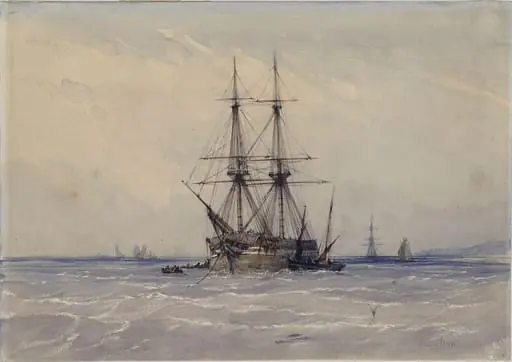 Brig at Anchor, and Boats Alongside
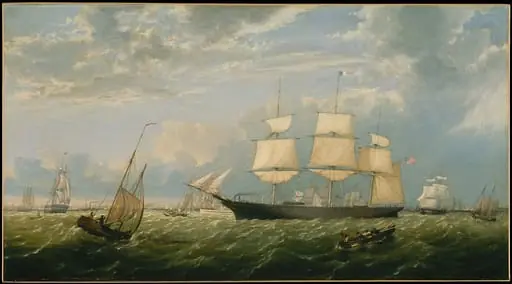 The Golden State Entering New York Harbor
 New York Harbor
 New Orleans: Taken from the Opposite Side, a Short Distance above the Middle or Picayyune Ferry