Artwork
Lindisfarne
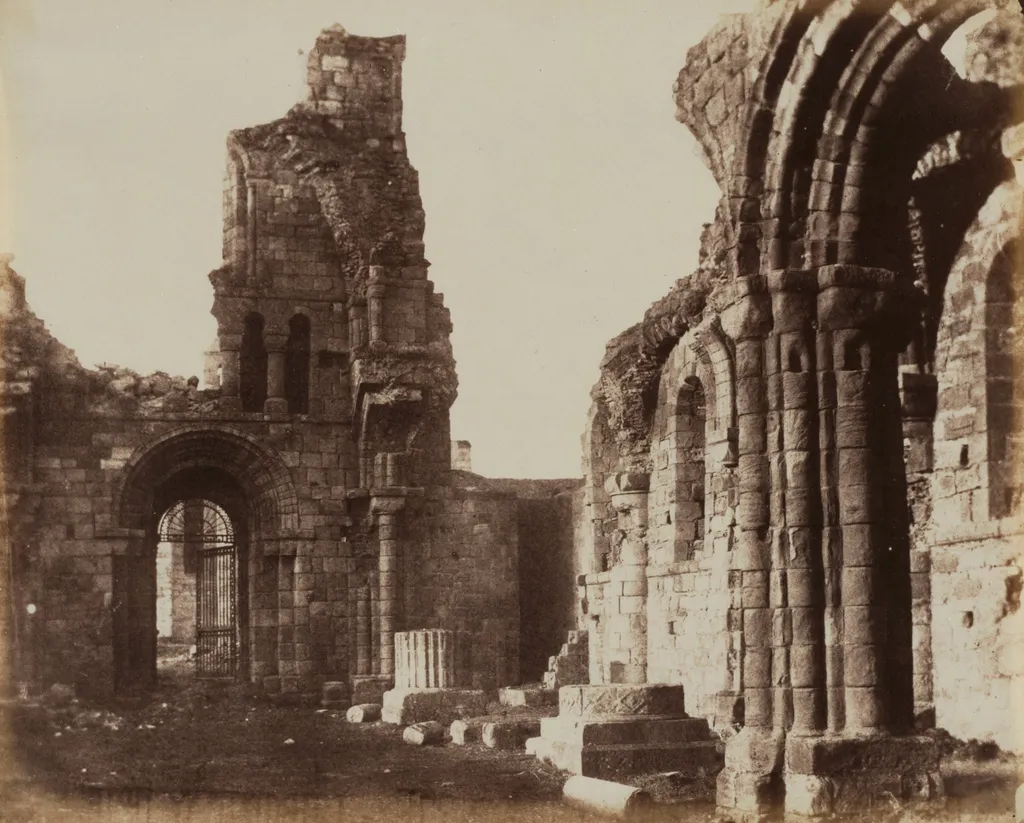
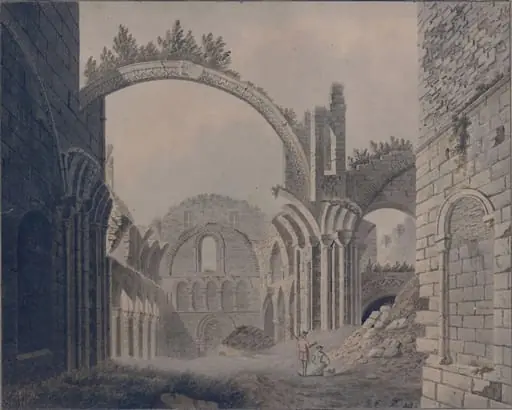
Lindisfarne is a photography by the Romanticist artist Robert Henry Cheney. It dates from 1853 and is held in the collection of the Cleveland Museum of Art.
About this work
Overview
Robert Henry Cheney’s photograph titled Lindisfarne, dated circa 1853, is part of the Cleveland Museum of Art’s collection. The image records the dilapidated remains of a stone structure, emphasizing broken arches, missing walls, and a solitary tower. The composition captures the uneven ground strewn with fallen stones and fragments of columns, presenting a stark view of architectural decay.
Subject & Meaning
The photograph depicts the ruins of an ancient building, its fragmented arches and a narrow tower suggesting a once‑grand edifice now reduced to skeletal remains. By foregrounding the emptiness and the weathered stone, Cheney invites contemplation of impermanence and the passage of time, themes frequently explored in 19th‑century visual culture.
Technique & Style
Taken with mid‑19th‑century photographic processes, the image exhibits the high contrast and fine detail characteristic of early wet‑plate work. Cheney’s framing isolates the ruin’s structural elements, while the tonal range accentuates texture, allowing the viewer to discern the rough surfaces of broken columns and the shadowed interior doorway.
History & Provenance
Created around 1853, the photograph entered the Cleveland Museum of Art’s holdings through acquisition (specific acquisition details are not recorded in the source). Its survival in the museum’s collection provides a rare visual record of the Lindisfarne site as it appeared in the mid‑1800s.
Context
During the Romantic era, artists often employed ruins to evoke nostalgia, melancholy, and the sublime. Cheney’s focus on decay aligns with this tradition, using the crumbling architecture as a visual metaphor for the transitory nature of human achievement and the enduring power of the natural landscape.
Artist & collection

 L.D. Campbell's Tomb (verso)
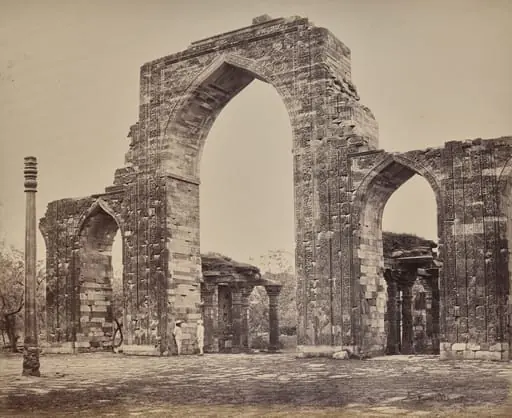 Delhi. Great Arch and Iron Pillar Near the Kootub Minar, Ruin of Old Delhi
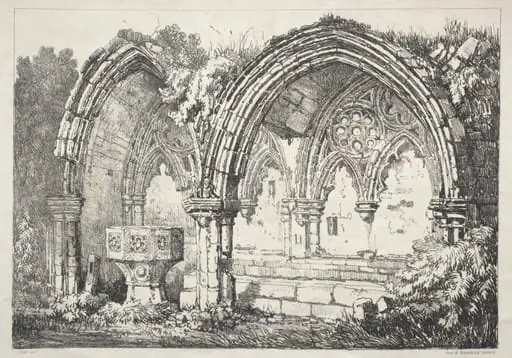 A Series of Ancient Buildings and Rural Cottages in the North of England: Part of Kirkham Abbey
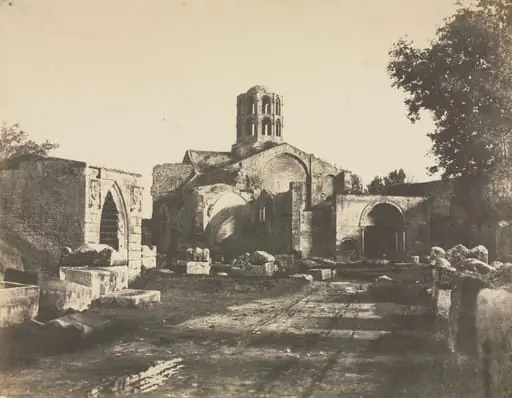 Saint-Honorat, Prés d'Arles
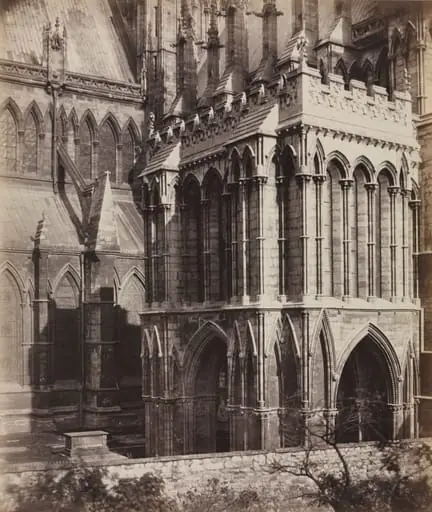 Lincoln Cathedral: The Galilee Porch
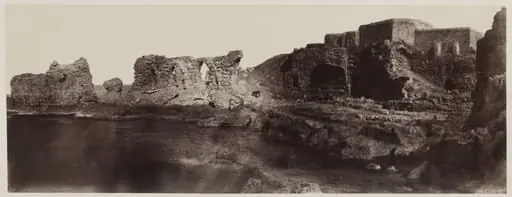 Kaalat el Athlit, Syria, View from the Seaside
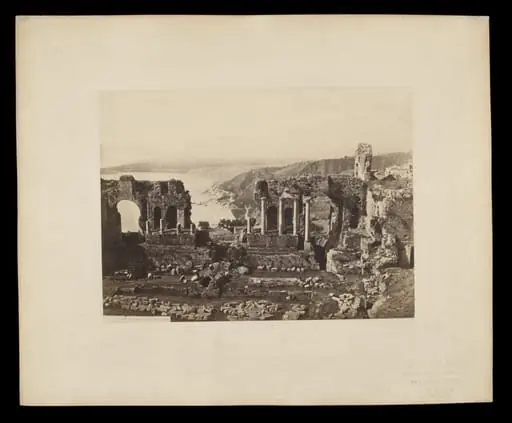 H Beard Print Collection
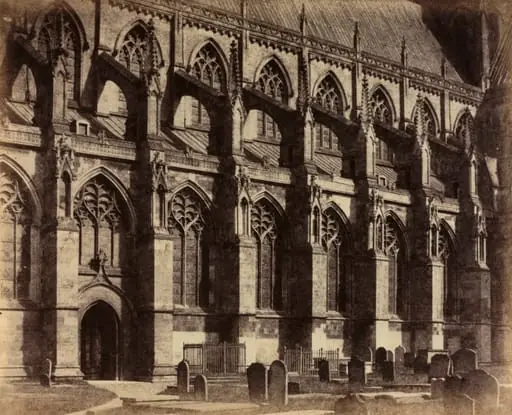 South Side Beverley Minster
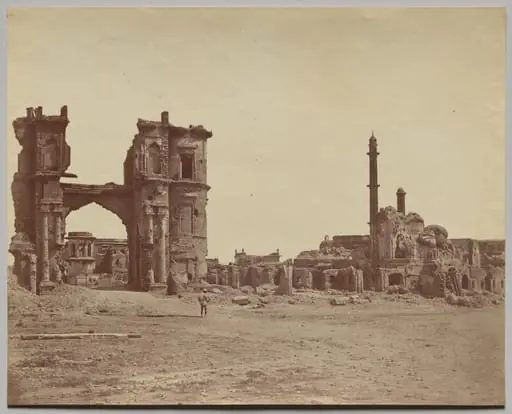 The Clock Tower in Front of the Bailee Guard Gate
 Croyland Abbey
 Liber Studiorum: Holy Island Cathedral
 Lindisfarne Abbey, Northumberland